He cracked the blue LED that giants gave up on, and his reward was a $180 bonus
For thirty years the world's biggest electronics firms threw money at the same impossible goal and failed. Then a frustrated engineer at a small chemical company in rural Japan, working largely alone, made the light no one else could. His company handed him a bonus of about $180. Two decades later he was standing on a stage in Stockholm.
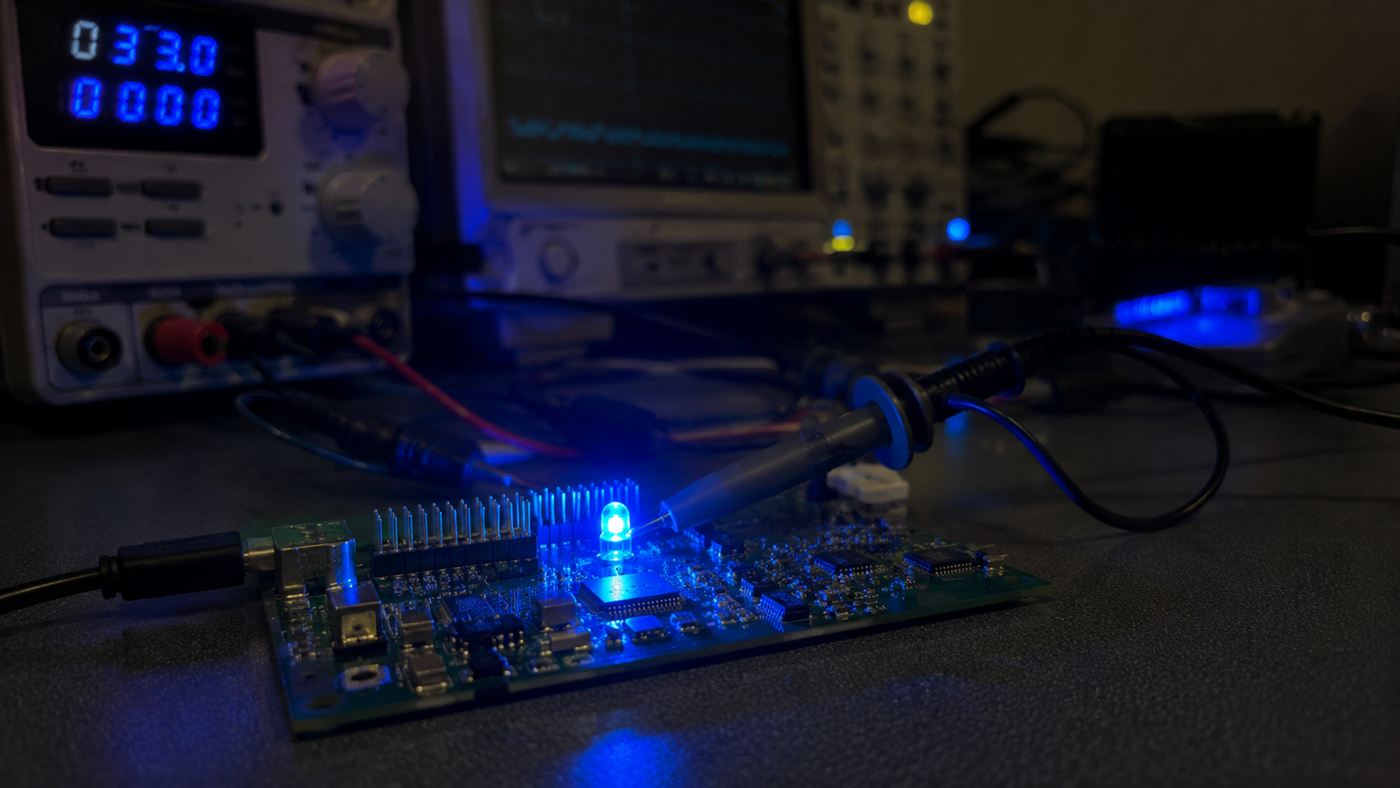
The blue LED was the last and hardest of the three primary colors of light to build. Illustration: Watts & Wild.
Red and green light-emitting diodes had been around since the 1960s, glowing on calculators and stereo fronts. The one that would not come was blue, and without blue you cannot mix true white light. The man who finally delivered a bright blue LED was Shuji Nakamura, an engineer almost nobody outside his company had heard of, working at Nichia in Tokushima, a quiet corner of southern Japan.
Nakamura was paid roughly 20,000 yen, about $180, as the company reward for the patent that underpinned a product line worth hundreds of millions of dollars a year. The gap between those two numbers is the heart of one of the strangest stories in modern science, a tale of a brilliant invention and a man who felt cheated by it.
Why the blue LED was the missing piece
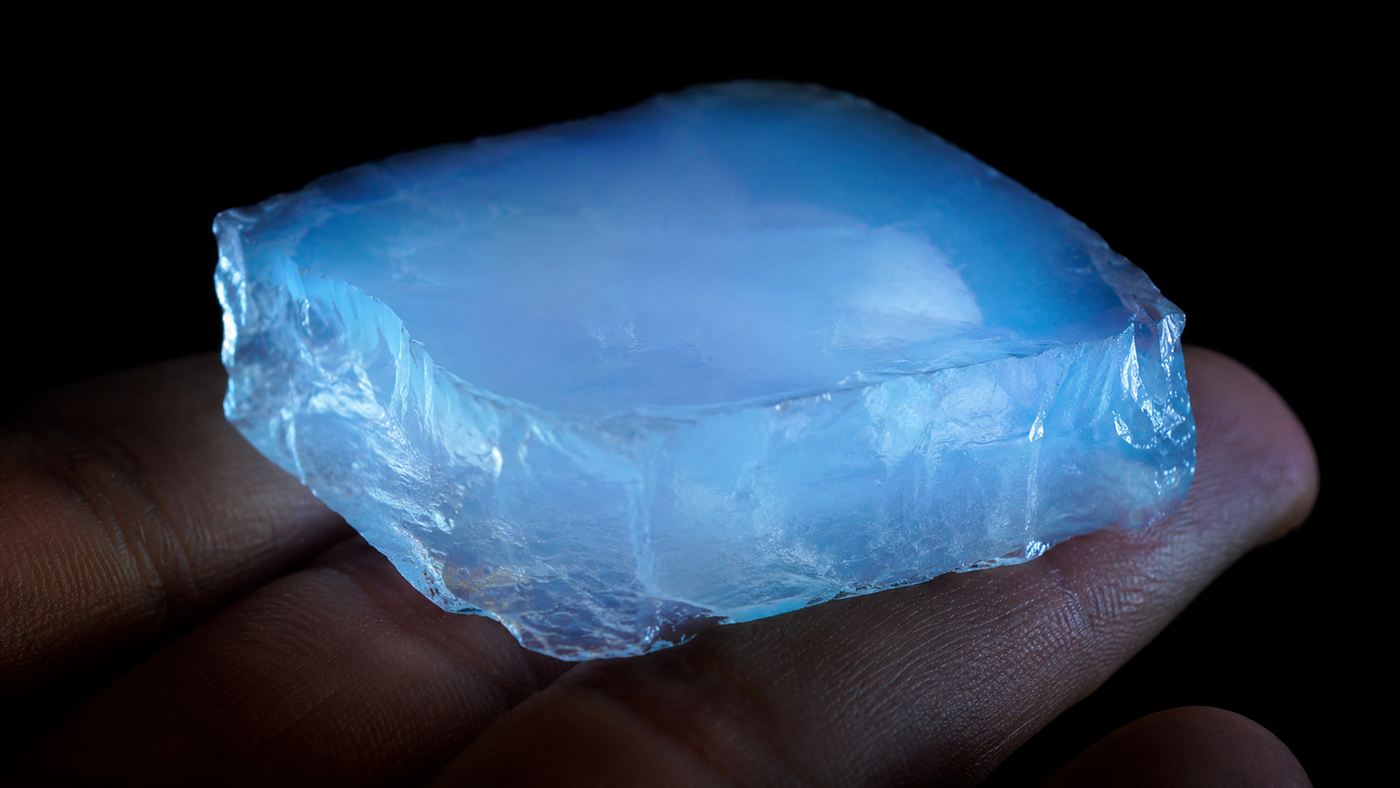
An LED makes light when electrons drop across a gap in a semiconductor, and the size of that gap sets the color. Red was easy, green followed, but blue needed a wide-gap material that was brutally hard to grow as a clean crystal. Crack blue, and you complete the set of red, green and blue that can be blended into any color, including the white light that lights homes, screens and streets. That is why blue was the holy grail, and why its absence held back a lighting revolution for a generation.
The stakes were enormous. White LED bulbs sip a fraction of the power of the old incandescent bulb, and lighting eats up a large slice of the world's electricity. As the Nobel committee put it when it awarded the 2014 physics prize, incandescent bulbs lit the twentieth century while the LED will light the twenty-first.
The bet everyone told him was wrong
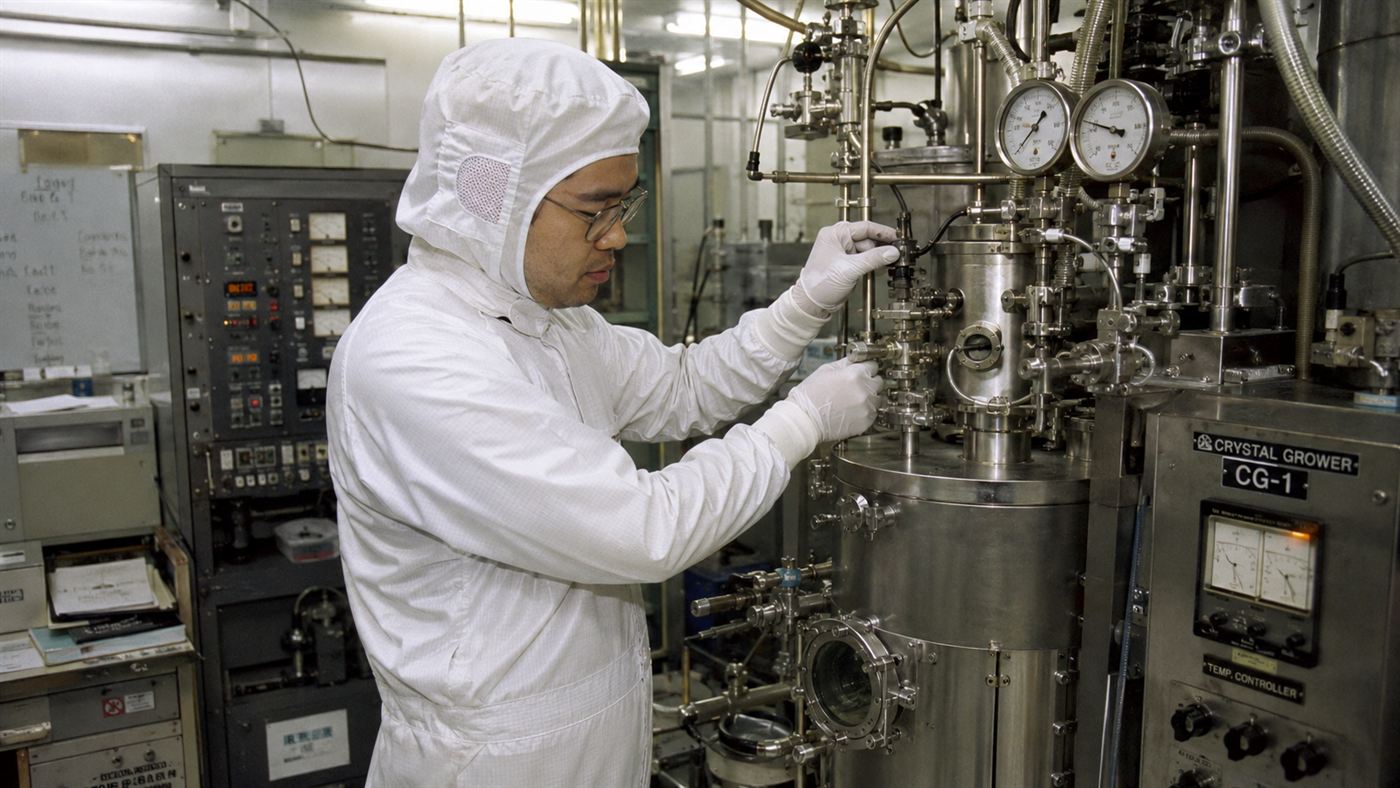
By the early 1990s nearly every serious lab had settled on the same material to chase blue: zinc selenide, which grew into far cleaner crystals. Nakamura went the other way and bet on gallium nitride, a material riddled with so many defects that the experts considered it a dead end. At a 1992 conference, as SPIE has recounted, he noticed the zinc selenide talks drew hundreds of people while the gallium nitride session had four. He chose the empty room.
He had reasons beyond stubbornness. Nichia was a small company that had sent him to the University of Florida in 1988 to learn crystal growth, and he came back determined to build something that would finally sell. So he reworked his equipment himself, inventing a two-flow reactor that washed away the powdery waste ruining his crystals, and he ran it morning after morning, alone, often modifying the machine before lunch and testing it after.
The defects that everyone feared turned out not to matter the way the textbooks said. Gallium nitride glowed anyway, brightly, defects and all, and the material the giants had abandoned became the one that won. In late 1993 Nichia announced a high-brightness blue LED, and the technology the world had waited thirty years for was suddenly real and on a price list.
A $180 bonus for a billion-dollar idea
Blue LEDs poured money into Nichia. Company revenue climbed from around 20 billion yen in 1993 toward 80 billion yen by 2001, with a large share of that growth driven by the new blue and white devices. The product Nakamura had invented was, by then, a substantial chunk of the entire business.
His personal reward for the foundational patent was the standard company bonus of about 20,000 yen, near $180. For years he stayed and kept working, but the sense of being a tool rather than a partner curdled. He has spoken about feeling like a corporate servant, ignored and underpaid while the thing he made earned fortunes. In 1999 he left Japan for a professorship at the University of California, Santa Barbara, and later became an American citizen.

The lawsuit that shook Japan
In 2001 Nakamura sued Nichia for a fair share of the invention, an almost unheard-of move in a culture where company loyalty ran deep. In 2004 a Tokyo district court stunned corporate Japan by valuing his contribution at about 60 billion yen and ordering the company to pay him 20 billion yen, roughly $180 million, the largest such award the country had seen.
It did not last. Nichia appealed, and in 2005 the two sides settled for about 840 million yen, near $8 million, a fraction of the original ruling but still a fortune compared with $180. The case forced Japanese companies to rethink how they reward the inventors on their payroll, and it made Nakamura a folk hero to engineers who felt invisible inside big firms.
Who really invented the blue LED?
Nakamura did not do it entirely alone, and the honest version of the story matters. The crucial groundwork on taming gallium nitride was laid by Isamu Akasaki and Hiroshi Amano at Nagoya University, who first coaxed the material into the right electrical behavior. Nakamura built on that and made the device bright, reliable and cheap enough to mass-produce. In 2014 all three shared the Nobel Prize in Physics, a rare case of a university breakthrough and an industrial one being honored side by side.
Why did Shuji Nakamura get only $180?
The $180 was simply Nichia's flat internal bonus for an employee patent, the same token sum any staff inventor received regardless of how valuable the idea turned out to be. That was normal practice in Japanese industry at the time, where inventions were treated as company property and the inventor's salary was considered reward enough. Nakamura's lawsuit was an argument that this arrangement had become indefensible once a single patent was earning a company hundreds of millions.
One stubborn engineer, one empty conference room, and one material everybody else had written off rewired how the world makes light. Should the inventor inside a company share in the fortune their idea earns, or is a salary enough? Tell us what you think in the comments.
Related reading: Vantablack was so dark that one artist bought the exclusive rights to it, and the art world went to war, or Douglas Engelbart, who demonstrated the mouse and the modern computer in 1968 and never grew rich from it.