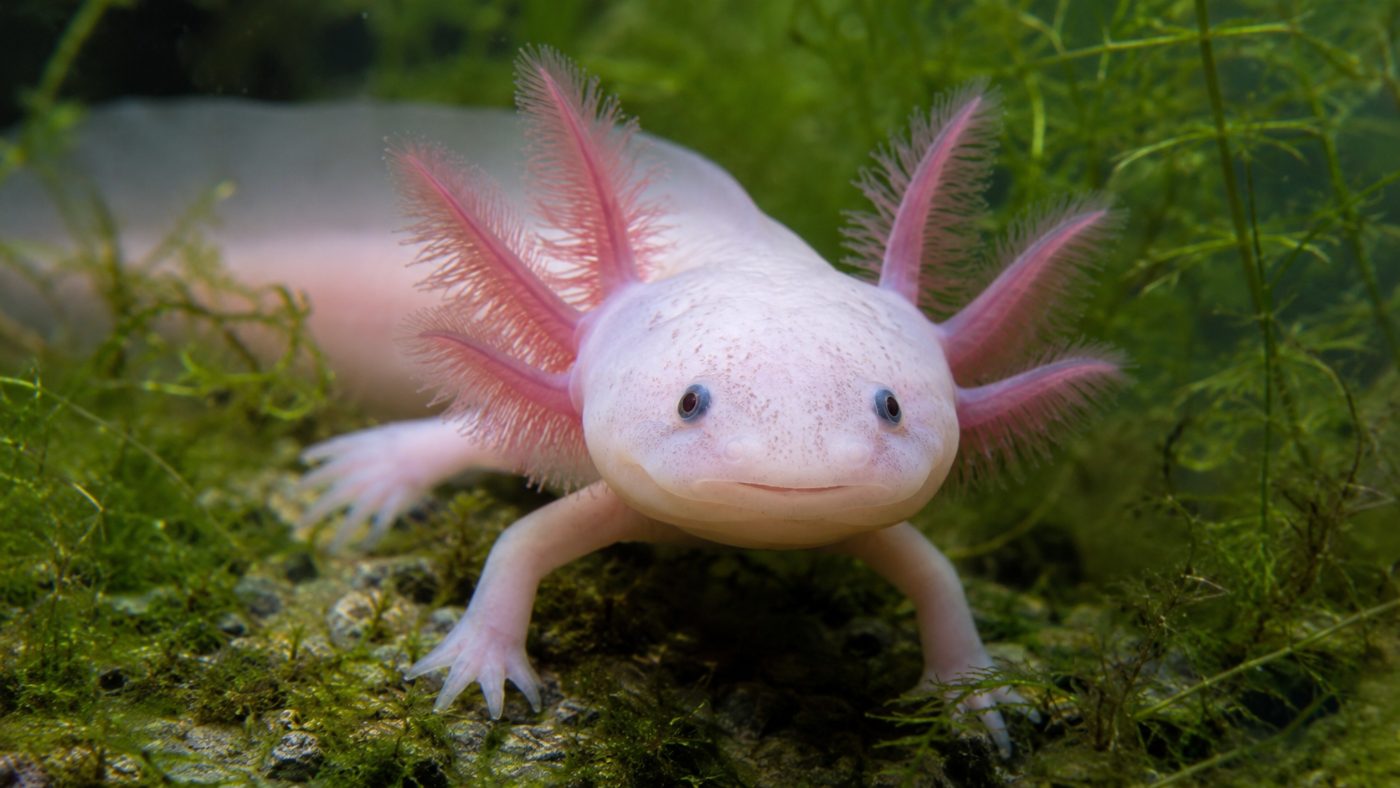
A microscopic animal called the tardigrade can survive being boiled, frozen near absolute zero, blasted with radiation and even the vacuum of space, by drying itself into a near-dead husk
Smaller than a grain of salt, the tardigrade is the closest thing nature has to an indestructible animal. The chubby little water bear shrugs off conditions that would kill almost anything else, and it can even let a tardigrade survive the vacuum of space, all thanks to one astonishing trick.
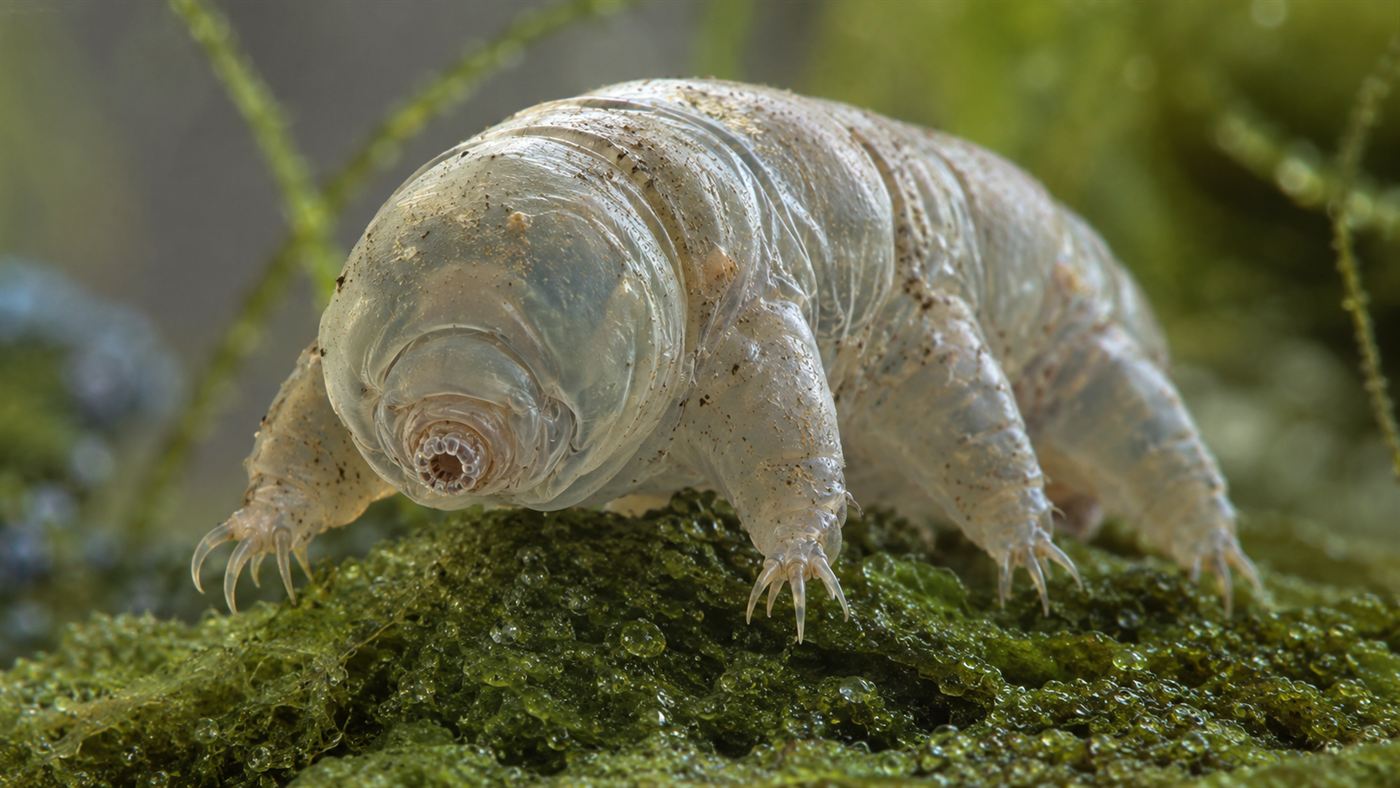
The tardigrade, or water bear, is about half a millimetre long and nearly impossible to kill. Illustration: Watts & Wild.
If you took a poll of the toughest creatures alive, you might think of cockroaches or deep-sea worms, but the real champion is something you need a microscope to see.
The tardigrade is a plump, eight-legged animal about half a millimetre long that can endure things no other creature comes close to surviving.
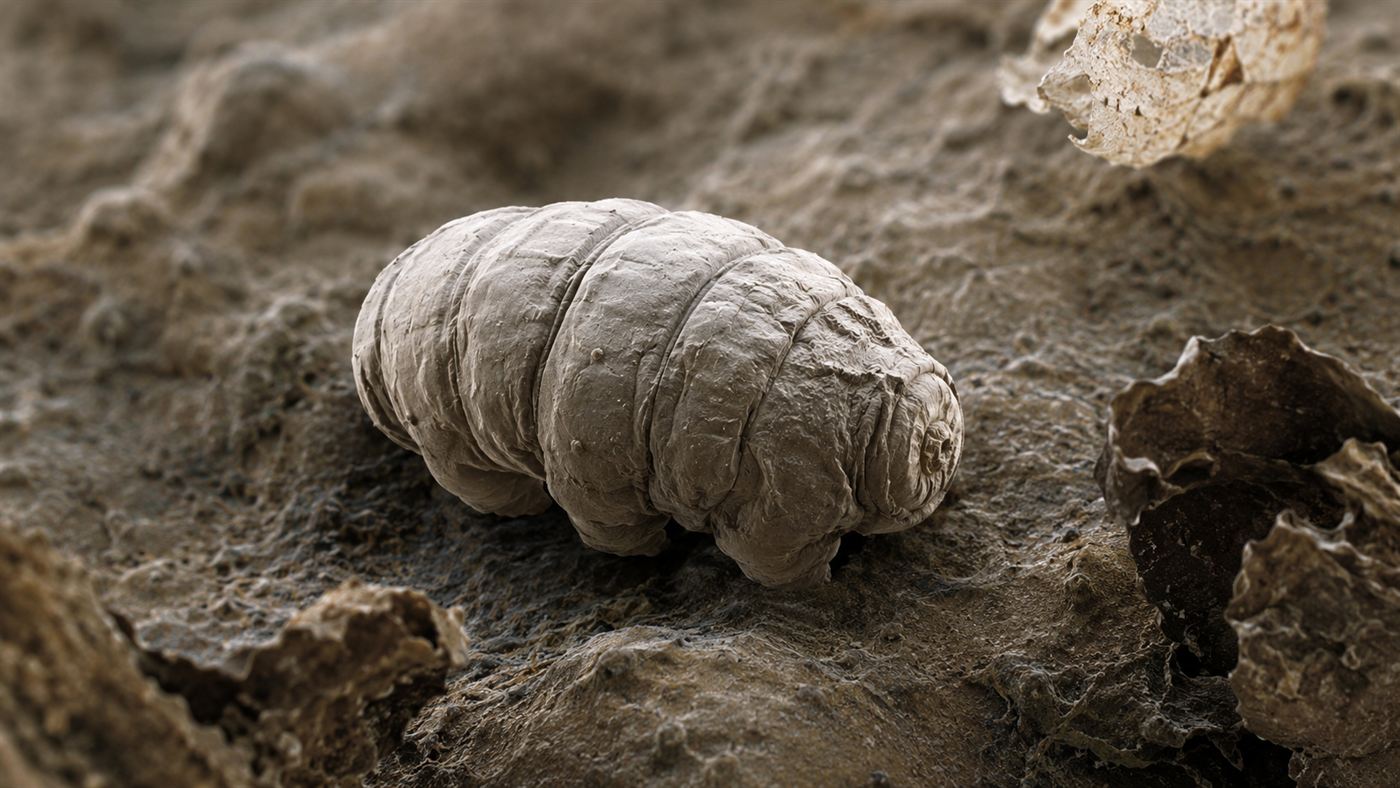
How does a tardigrade survive in space? A tardigrade survives extremes by entering cryptobiosis: it expels almost all its water, curls into a dormant husk called a tun, and replaces the water with protective sugars and proteins. In that state it can endure the vacuum of space, intense radiation, boiling and near absolute zero.
The toughest animal on Earth
The tardigrade earned its nickname, the water bear, from the lumbering way it walks on eight stubby, clawed legs.
There are more than 1,300 species, and they live almost everywhere, in moss and lichen, on mountaintops, under glaciers and in the deep sea.
In the lab the water bear has survived temperatures from around 150 degrees Celsius down to a whisker above absolute zero, pressures many times those of the deepest ocean, and decades without water.
It can also shrug off doses of radiation hundreds of times higher than what would kill a person.
No other animal we know of is so casually indestructible across so many different threats.
The trick is to almost die
The secret to all of this is a survival state called cryptobiosis.
When its world dries out, the water bear squeezes almost all the water from its body, pulls in its legs and shrinks into a tiny barrel-shaped husk called a tun.
In cryptobiosis its metabolism falls to as little as a fraction of a percent of normal, so the animal is barely alive at all.
As it dries, it floods its cells with a sugar and special proteins that harden into a glass-like scaffold, holding the delicate machinery of life in place.
Add a drop of water and, even years later, the tun can swell, stir and walk away as if nothing happened.
How a tardigrade survived space and came back
The most famous test came in 2007, when European scientists launched a batch into orbit.
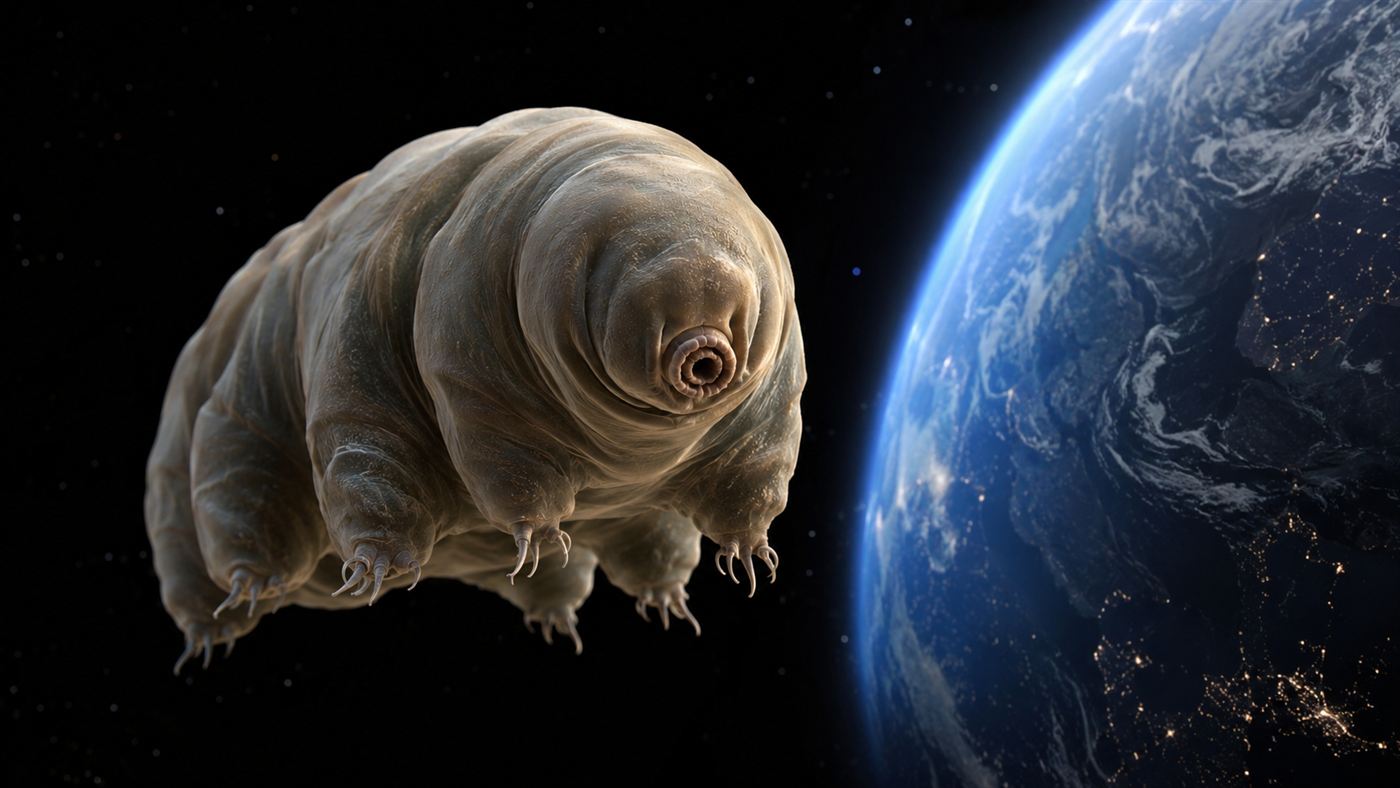
On a mission nicknamed TARDIS, the dried water bears were exposed directly to the open vacuum of space and the Sun's raw ultraviolet radiation.
When they came home and were rehydrated, many of the water bears revived, making them the first animals known to survive open space.
Pretty much anything else exposed like that would have been killed instantly by the vacuum and the radiation.
The humble water bear had quietly become a space survivor.
The water bears on the Moon
The water bear's space story took a stranger turn in 2019.
An Israeli lander called Beresheet, carrying a cargo of dried water bears, crashed into the Moon during a failed landing, and the crash is thought to have scattered the dormant tardigrades across the lunar surface.
For a while, headlines cheerfully announced that the Moon was now home to thousands of water bears.
It made for a wonderful image, an invasion of indestructible microbeasts seeded by accident on another world.
The reality, as we will see, is more sober than the headlines suggested.
Why scientists love them
Beyond the spectacle, the water bear is genuinely useful to science.
Researchers are fascinated by the protective proteins, sometimes called tardigrade-specific proteins, that let the water bear survive drying out.
One dream is to borrow those molecules to stabilise vaccines and medicines so they no longer need to be kept cold, which could transform health care in hot, remote places. Extreme-loving organisms keep turning up in useful places: microbes pulled from the toxic water of Montana's Berkeley Pit are already yielding new antibiotic and anticancer compounds.
Others study how the water bear shields its DNA from radiation, hoping to better protect human cells one day.
A creature you can barely see may end up teaching us how to keep our own fragile bodies and medicines intact.
The honest catch
The tardigrade is astonishing, but the word indestructible oversells it.
It only shrugs off these extremes while dormant in cryptobiosis, not while it is going about its ordinary, active life in a film of water.
Out of cryptobiosis, an active water bear is soft and vulnerable, and water bears are eaten, get sick and die like anything else.
Even the Moon story comes with an asterisk, because surviving the crash dormant is not the same as living there, since a tardigrade cannot wake, feed or breed on the dry, airless Moon.
Even with the caveats, the tardigrade remains one of the most extraordinary animals on the planet, a near-invincible survivor hiding in the moss on your roof.
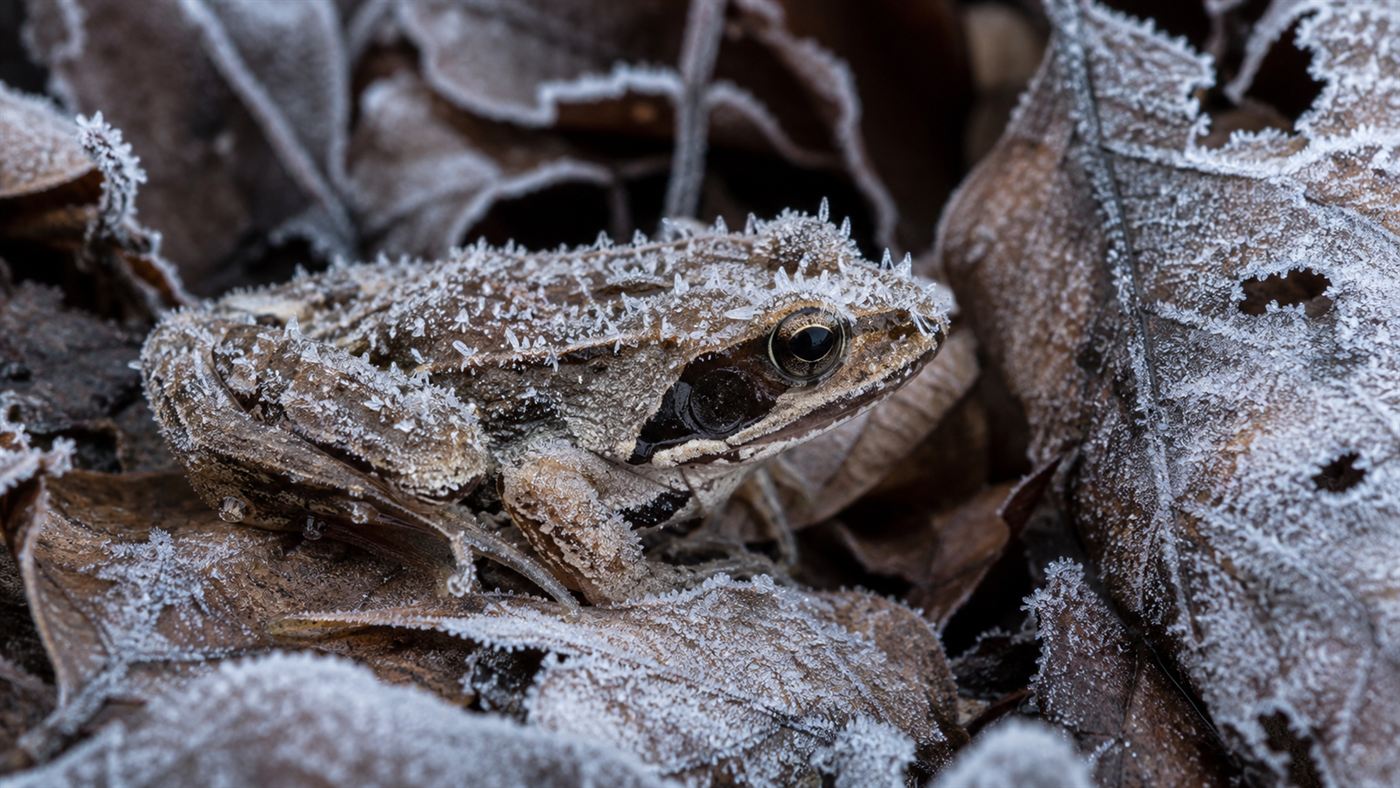
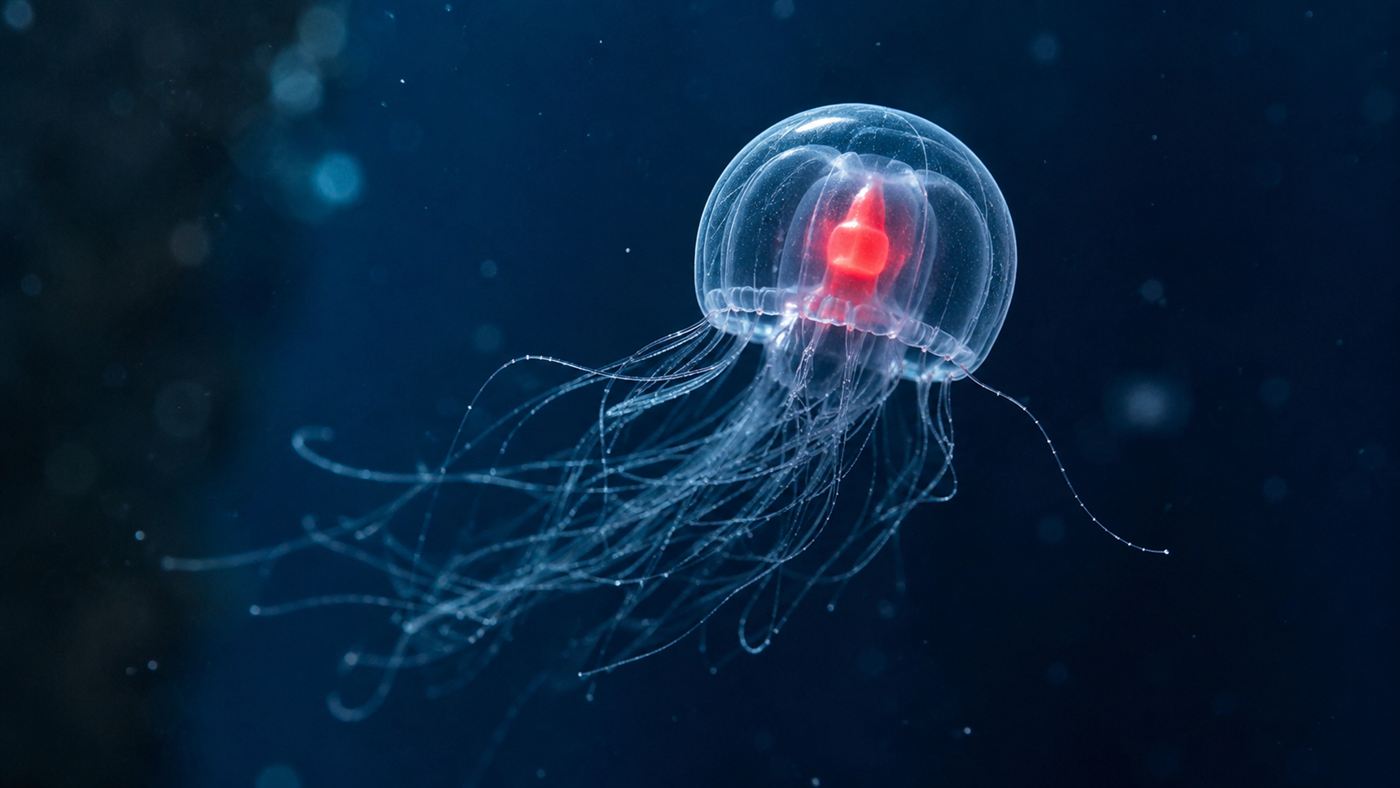
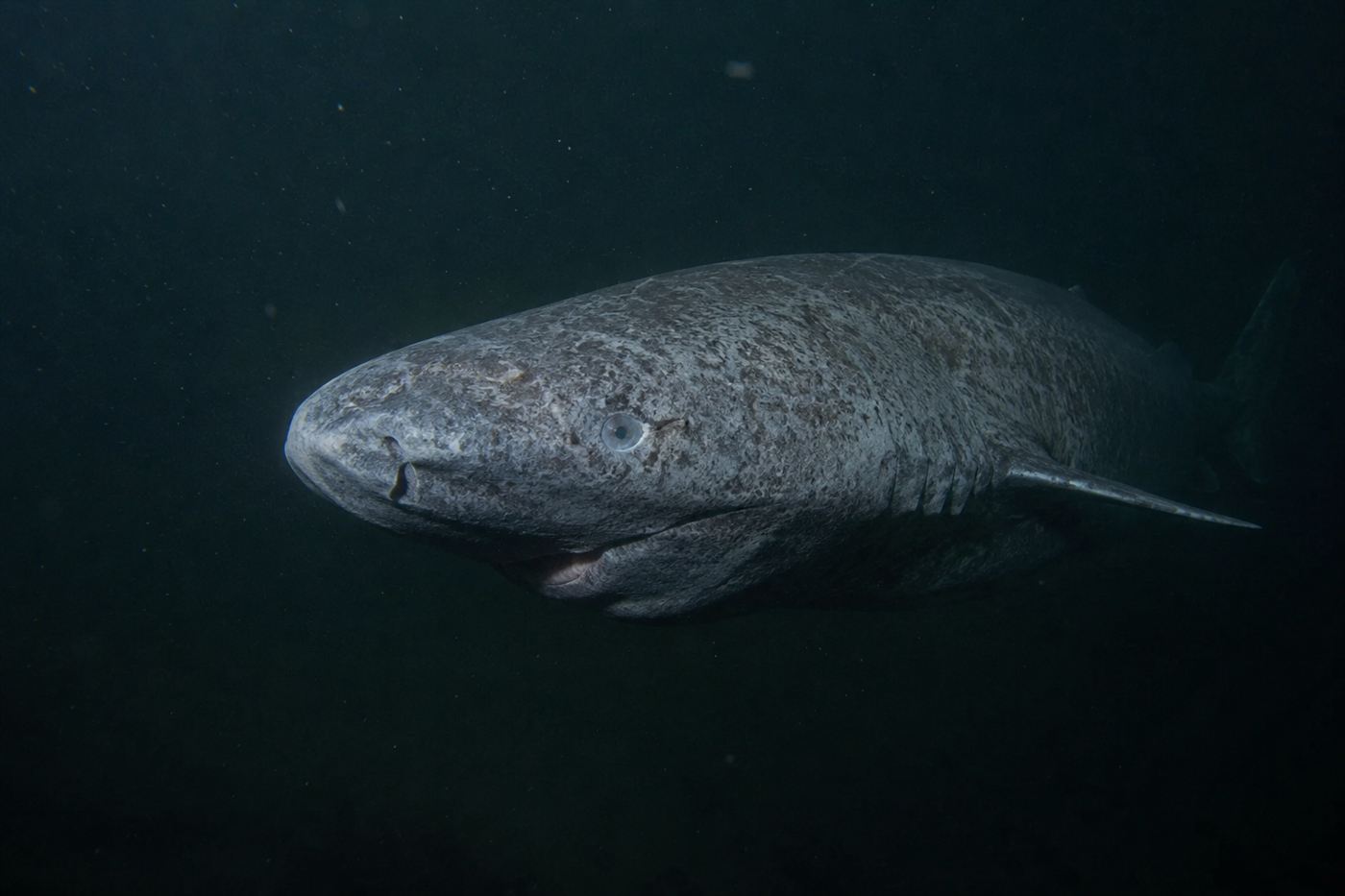
It belongs with the other creatures that bend the rules of life and death, like the wood frog that freezes solid each winter, the jellyfish that ages in reverse and the shark that lives for four centuries.
If a tardigrade can sleep through the vacuum of space and wake up unharmed, what could we learn from it about surviving the extremes, and does its toughness change how you see the tiny life all around us? Tell us in the comments.