A sea-level ditch dug by hand across a desert still holds the world's trade hostage
In 2021, a single container ship turned sideways in a narrow channel of water in the Egyptian desert and, for almost a week, choked off something like a tenth of all global trade. The world suddenly remembered that the modern economy still leans on a hand-dug ditch from the 1860s. That ditch is the Suez Canal, and the story of how it was carved is far darker and stranger than most people know.
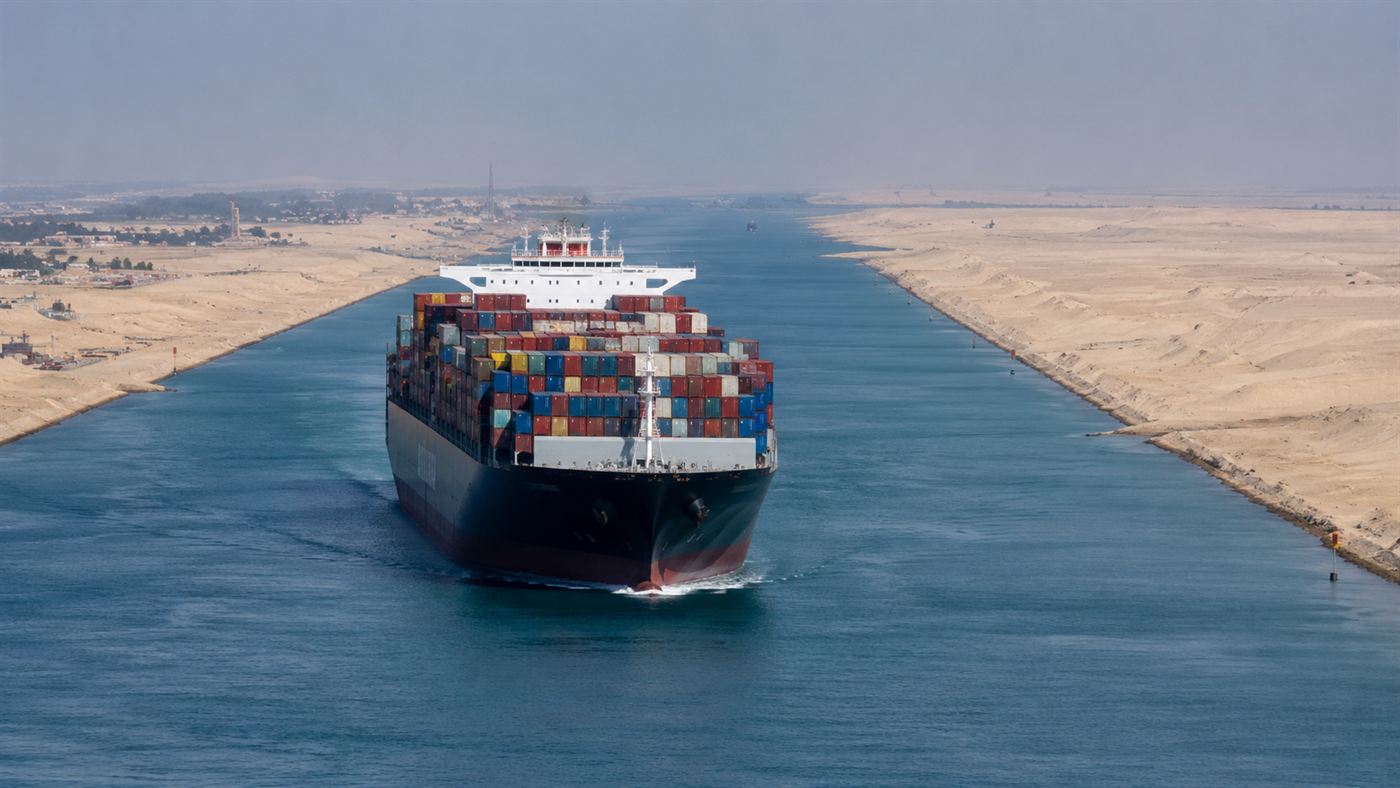
Ships in the Suez Canal seem to glide straight through the desert itself. Illustration: Watts & Wild.
The Suez Canal cuts across the narrow strip of Egypt that separates the Mediterranean Sea from the Red Sea, joining Europe to Asia without the long, dangerous voyage all the way around the bottom of Africa. When it opened in 1869, it instantly shrank the world, cutting thousands of miles and many weeks off the journey between the two halves of the planet, and it has been one of the most important pieces of infrastructure on Earth ever since.
It is also a monument to a brutal truth about the great works of the nineteenth century: that many of them were dug, by hand, by people who had no choice in the matter.
A shortcut everyone wanted and no one could build
The dream of a canal here was ancient; pharaohs and later rulers had cut channels across the desert before, only for them to silt up and vanish. The man who finally made it happen was Ferdinand de Lesseps, a French diplomat rather than an engineer, who in the 1850s charmed and pressured Egypt's ruler into granting him a concession to build a canal and run it. He was a salesman of vision more than a builder of bridges, and his greatest skill was convincing a sceptical world that the impossible was merely difficult.
For years critics insisted the project could not work. Some, including engineers attached to an earlier French survey, even believed the two seas stood at wildly different heights, which would have made the whole idea a non-starter. They were wrong, and that error points straight to the canal's most elegant feature.
Why the Suez Canal needed no locks
The Mediterranean and the Red Sea, it turned out, sit at almost exactly the same level. That single fact changed everything. Because the water at each end is at the same height, the Suez Canal could simply be a long, open trench at sea level, with no locks at all to raise and lower ships along the way. Boats sail straight through from one sea to the other as if through a river.
This makes it a fundamentally different beast from the Panama Canal, built decades later, which has to hoist ships up and over a spine of higher ground using a chain of enormous locks. Suez is, in engineering terms, almost shockingly simple: a ditch joining two seas. The difficulty was never the design. It was the sheer, grinding labour of digging it across a hundred and sixty kilometres of desert.
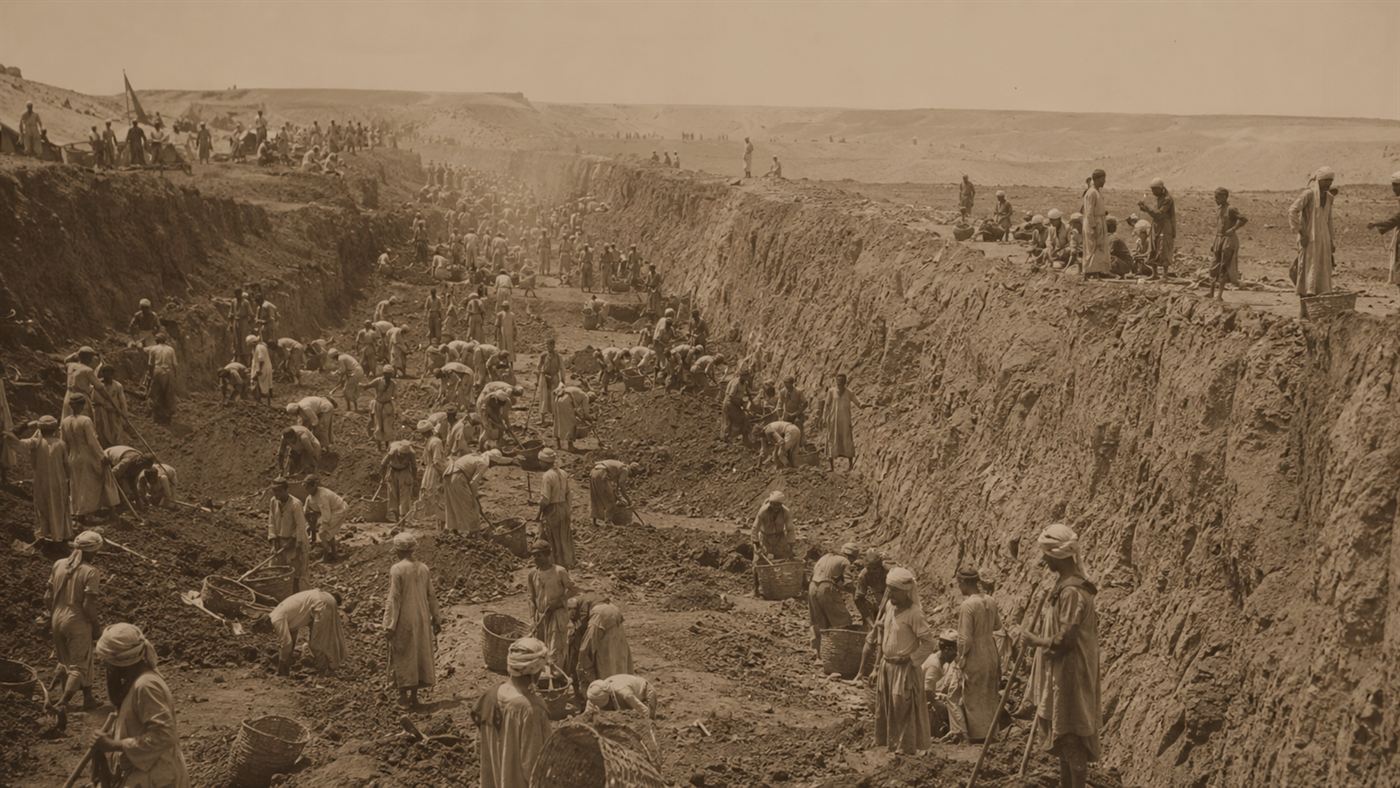
Dug by the forced hands of a nation
In its early years the canal was built using the corvée, a system of forced labour under which Egyptian peasants were conscripted and marched out to dig. Hundreds of thousands of them passed through the works, hauling sand and earth out of the trench in baskets under a punishing sun, with poor food, little water and disease all around. It was a vast public works project powered not by wages but by compulsion, and the human cost was severe.
Under international pressure the forced labour was eventually scaled back, and the company turned instead to a then-astonishing fleet of mechanical dredgers and steam excavators, along with paid workers brought in from around the Mediterranean. In a strange way the canal sits on the hinge of an age, begun with the forced muscle of the ancient world and finished with the machines of the modern one.
Egypt dug it, and others took the profit
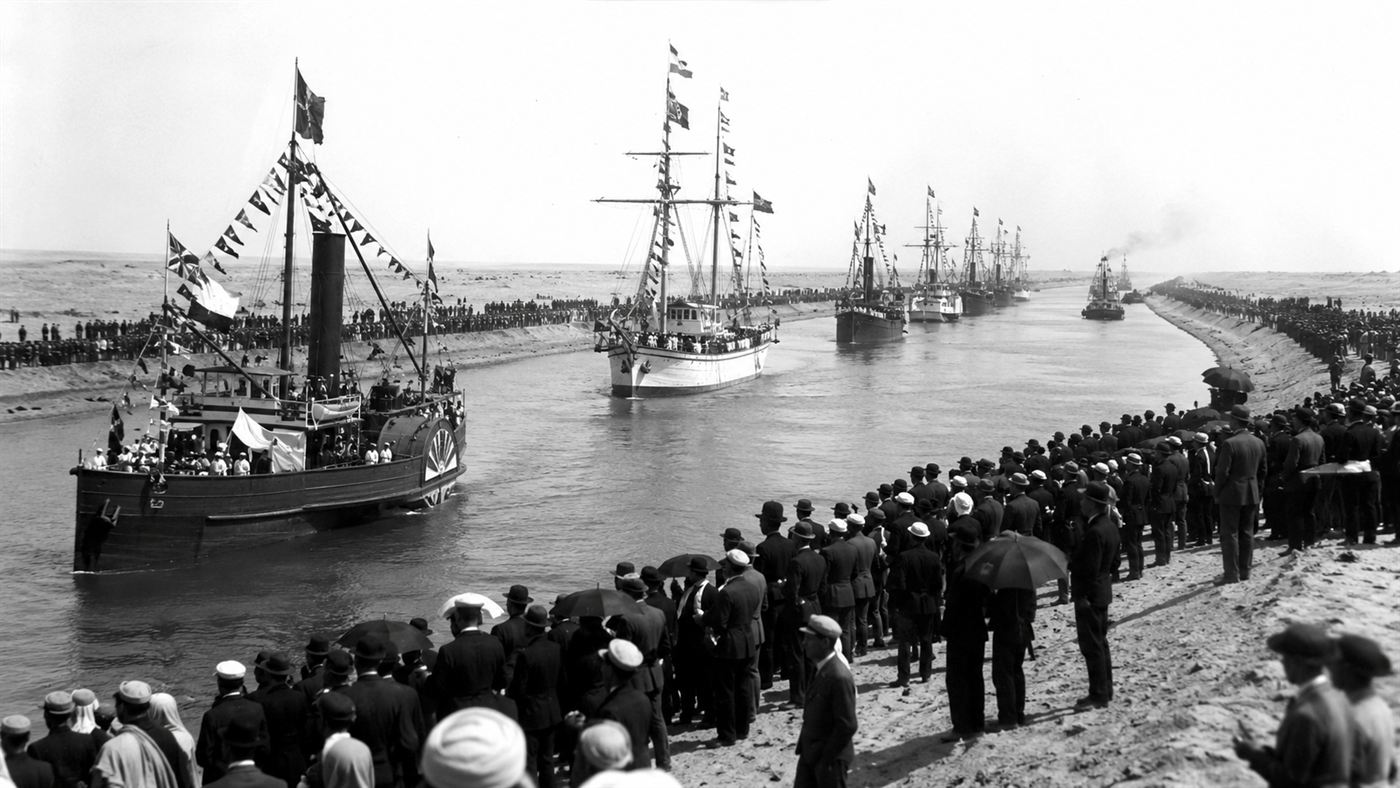
When the canal opened in 1869 it did so with breathtaking pomp, royalty and fireworks and a fleet of ships gliding through to mark the new age. But the triumph belonged mostly to others. Egypt had supplied the land and the labour and much of the money, and yet the costs helped push the country toward bankruptcy, after which it was forced to sell its share in the canal cheaply, and control passed largely into foreign hands for generations.
The nation that dug the great ditch spent the better part of a century watching other powers profit from it and use it as a strategic prize, until Egypt finally took it back in the 1950s. The Suez Canal is a masterpiece of engineering and also a textbook case of who pays for such masterpieces and who collects.
The honest catch
A few honest caveats are important here. The death toll is genuinely uncertain. The figure you often see, around 120,000 deaths, is poorly documented and widely thought to be exaggerated, but it stands in for a real and terrible truth: that an unknown but large number of forced labourers died building it, and their names were never recorded. The exact number is lost, which is its own kind of injustice.
What is not in doubt is the canal's strange grip on the present. A century and a half later, that simple sea-level trench still carries a huge share of the world's oil and goods, and in 2021 the world watched, half amused and half horrified, as one stuck ship paralysed global trade for six days. The Suez Canal proves that the most consequential machines are sometimes the simplest, and that we never quite escape the works of the past, for good and for ill.
A hand-dug trench from the 1860s still decides whether the world's goods arrive on time. Should we admire the Suez Canal as a triumph, mourn it as a tragedy of forced labour, or both at once? Tell us what you think in the comments.
Related reading: the Panama Canal, the other great shortcut, which needed locks, mountains of concrete and a war on mosquitoes. See also the Transcontinental Railroad, built across America by Chinese workers later written out of its history. And see how in 2021 the Ever Given jammed this very canal and stalled world trade for six days.