People dreamed of slicing through this Greek isthmus for 2,000 years, an emperor tried it with thousands of slaves, and when it was finally cut it was almost too narrow to use
Few engineering projects can claim a to-do list two thousand years long. The Corinth Canal, a knife-thin slot of water sliced clean through the rock of the Isthmus of Corinth in Greece, was dreamed of by ancient kings, attempted by the emperor Nero, and only finished in 1893, just in time to be left behind by the modern ships it was meant to serve.
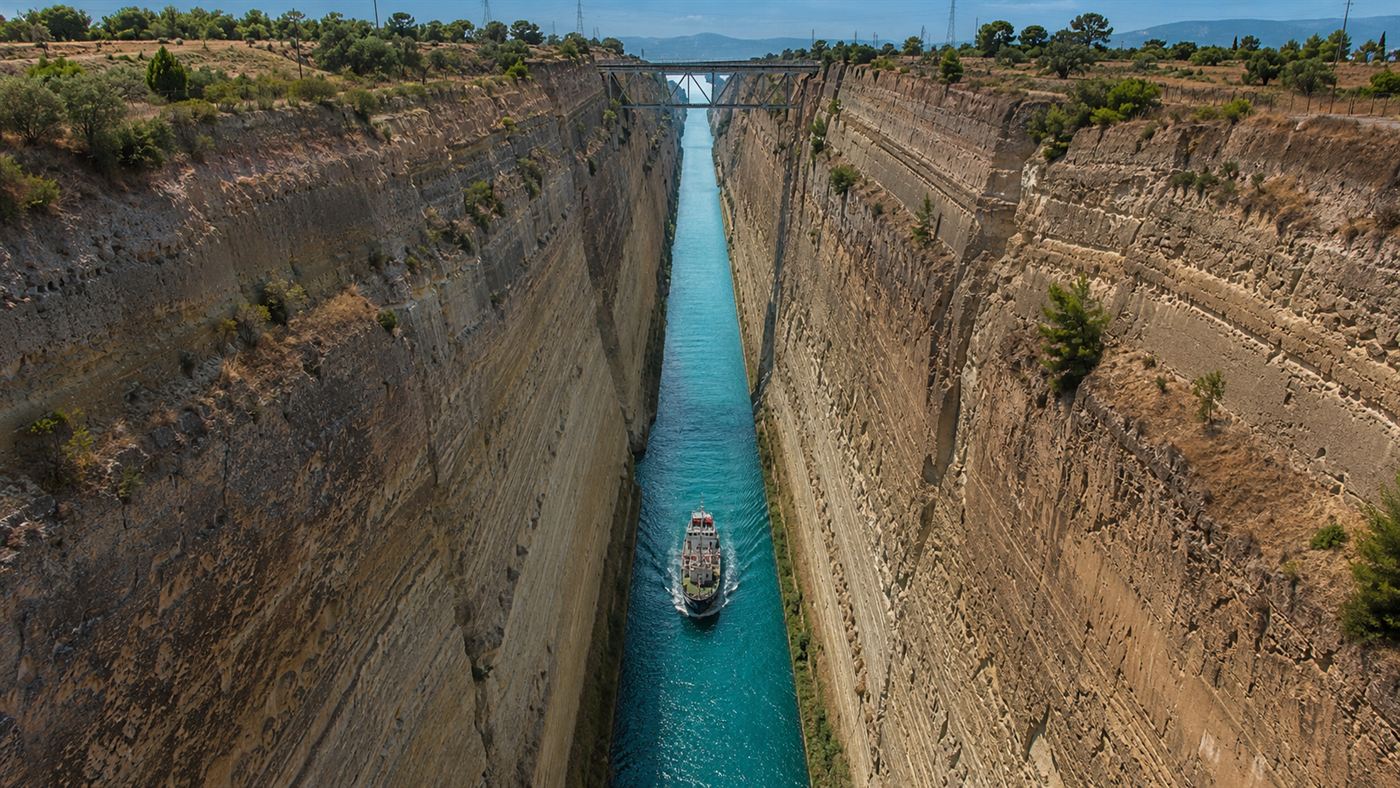
The canal slices through solid rock in a slot barely wide enough for one ship. Illustration: Watts & Wild.
Look at a map of Greece and the temptation is obvious. The Peloponnese peninsula hangs off the mainland, joined only by a narrow neck of land, the Isthmus of Corinth, just a few kilometres wide. For a sailor, that thin barrier of rock meant the difference between a quick hop and a long, dangerous voyage of hundreds of kilometres all the way around the bottom of the Peloponnese.
The ancient Greeks understood this perfectly, and the dream of cutting through the isthmus is almost as old as Greek civilisation itself. As Wikipedia records, as far back as the 7th century BC the tyrant Periander of Corinth is said to have considered it, then balked at the sheer scale and, the legend goes, was warned off by the gods. Instead the Greeks built something almost as remarkable in its place.
The ancient road that carried ships
Unable to dig a canal, the ancients built a paved trackway across the isthmus called the diolkos, and they hauled entire ships overland on it. Boats were dragged out of the water onto wheeled cradles and pulled across the neck of land by teams of men and animals, then floated again on the far side. For a small vessel it was faster and safer than the long sea route, and the diolkos was used, on and off, for centuries.
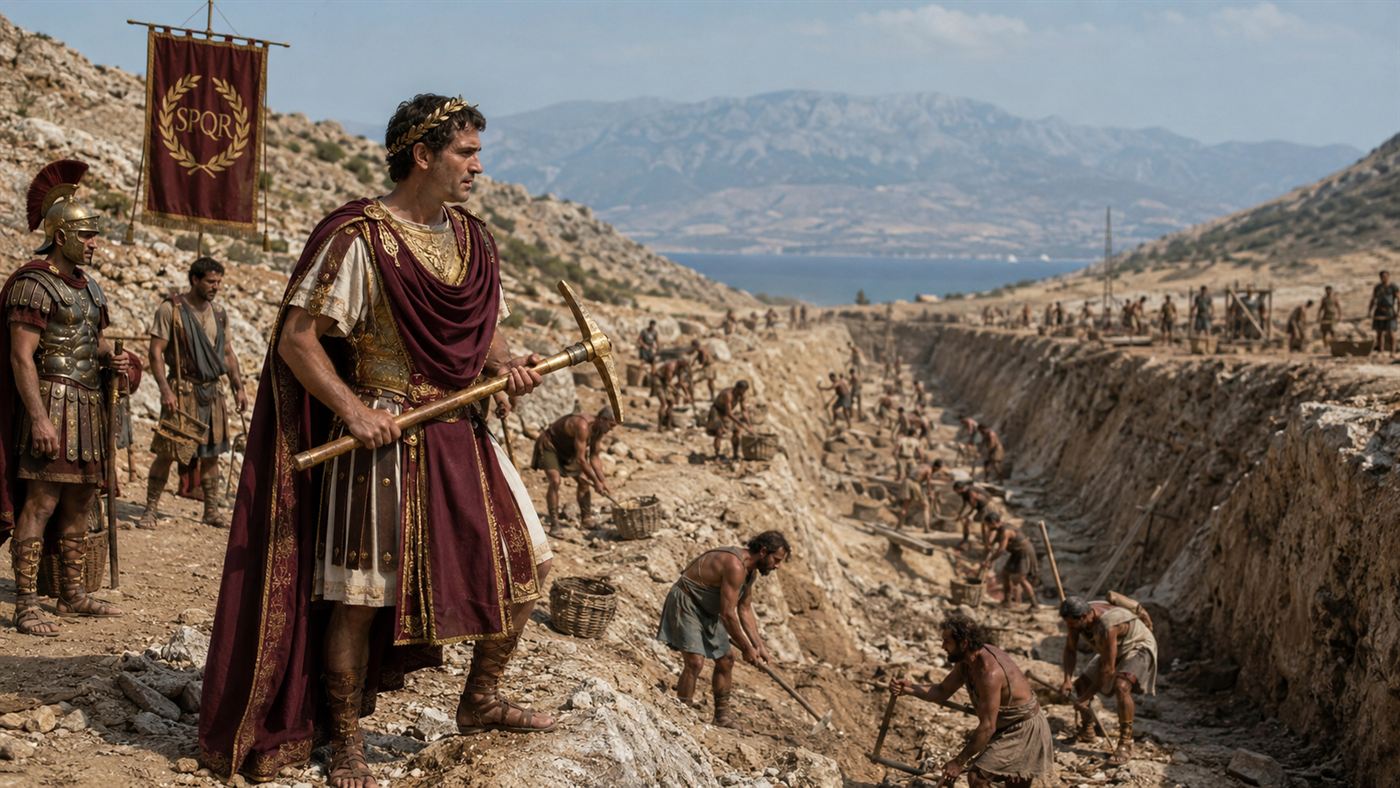
Still, the idea of a true water channel never died. Several rulers toyed with it, but the most famous attempt came from one of Rome's most notorious emperors. As Britannica recounts, in 67 AD Nero himself arrived at the Isthmus of Corinth and ceremonially broke the first ground with a golden pickaxe before handing the real work to a labour force said to number in the thousands.
Why the Corinth Canal took 2,000 years
Nero's workforce, made up largely of slaves and prisoners, actually made real progress, digging trenches from both coasts. But the emperor died soon after, in 68 AD, and without his will and money behind it the project was abandoned almost immediately. The half-dug cuttings sat in the rock as a monument to ambition for the better part of two millennia.
The problem was never just willpower; it was the rock itself. The isthmus is not soft earth but hard ground that has to be carved down through a deep, narrow trench, and to do that by hand was almost impossible at the scale required. It took the machines of the industrial age, dynamite and steam-powered excavators, to finally make the Corinth Canal a realistic proposition rather than a fantasy.
Finished at last, and already obsolete
As Atlas Obscura describes, the modern canal was built between 1881 and 1893, largely by a French and then Greek company, and the finished cut is genuinely breathtaking. It runs about 6.3 kilometres in a dead-straight line, with sheer rock walls rising as much as 80 metres above the waterline, so that a ship passing through looks like a toy in the bottom of a colossal trench. As a piece of engineering theatre, it is one of the most dramatic waterways on Earth.
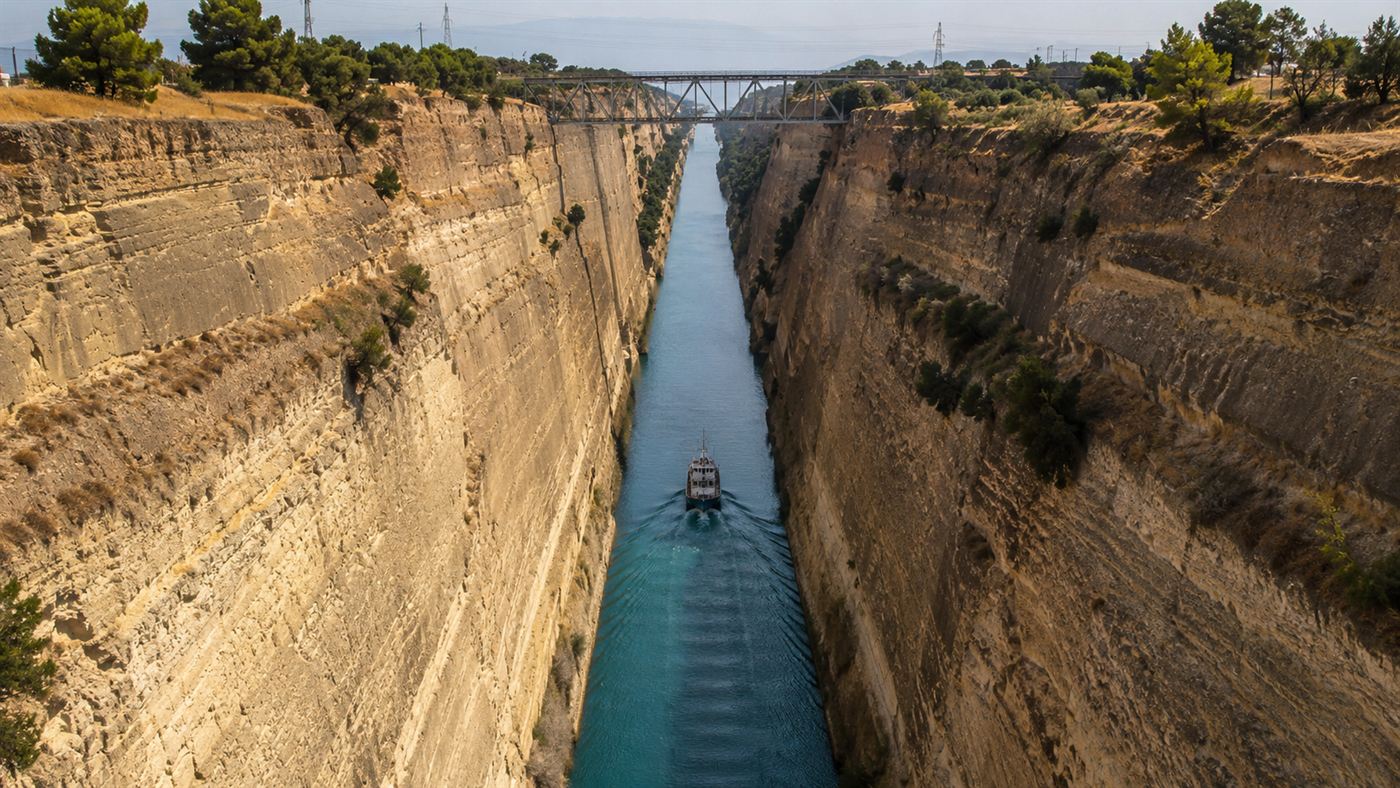
And yet it arrived a beat too late. The canal is only about 21 metres wide at the waterline, which was reasonable for the ships of the 1890s but hopelessly cramped for the steadily growing vessels of the twentieth century. The very same decades that built the canal also built ships too large to use it, so the Corinth Canal never became the busy commercial artery its makers had imagined.
The honest catch
It would be neat to call the Corinth Canal a triumph, but it is closer to a magnificent near-miss. Because it is so narrow and its walls so steep, it has never carried much serious traffic, and it is mostly used today by small tourist boats and the occasional cruise ship squeezing through for the spectacle. As a piece of transport infrastructure, judged by the cargo it moves, it has been something of a commercial disappointment for its whole life.
Those towering walls cause practical trouble too. The soft upper rock is prone to landslides, and the canal has had to be closed repeatedly for long periods to clear collapses and shore up the sides, including major works in recent years. A waterway that took two thousand years to dream up and dig now spends a good deal of its time shut for repairs, which is a humbling footnote to all that ambition.
Why a half-empty canal still matters
For all that, the Corinth Canal is a perfect little parable of human engineering. It shows how a single obvious idea can sit in people's minds for two thousand years, defeating everyone from Greek tyrants to Roman emperors, until technology finally catches up. And it shows the cruel timing that haunts big projects, where the world you built for can change faster than you can finish building.
Standing on a bridge above it, watching a small boat creep along the bottom of that impossibly deep, straight slot in the rock, you are looking at one of the longest-held ambitions in engineering history, finally realised. That it turned out to be more wonder than workhorse does not really diminish it. Sometimes the dream was always the point.
A canal that took two thousand years and an emperor to start was finished just as ships grew too big to use it. Is the Corinth Canal a triumph of persistence or a monument to terrible timing? Tell us in the comments.
Related reading: The brutal decades it took to cut the Panama Canal through disease and mountain.