The US Coast Guard left 29 reindeer on a remote Alaskan island in 1944, and with no predators the herd exploded to 6,000, then crashed to 42 in a single brutal winter
It is one of the cleanest experiments nature never meant to run. Drop 29 reindeer on an empty island with endless food and nothing to hunt them, then come back twenty years later. What a biologist found on St. Matthew Island became a textbook warning about what happens when a population grows faster than the land beneath it can feed.
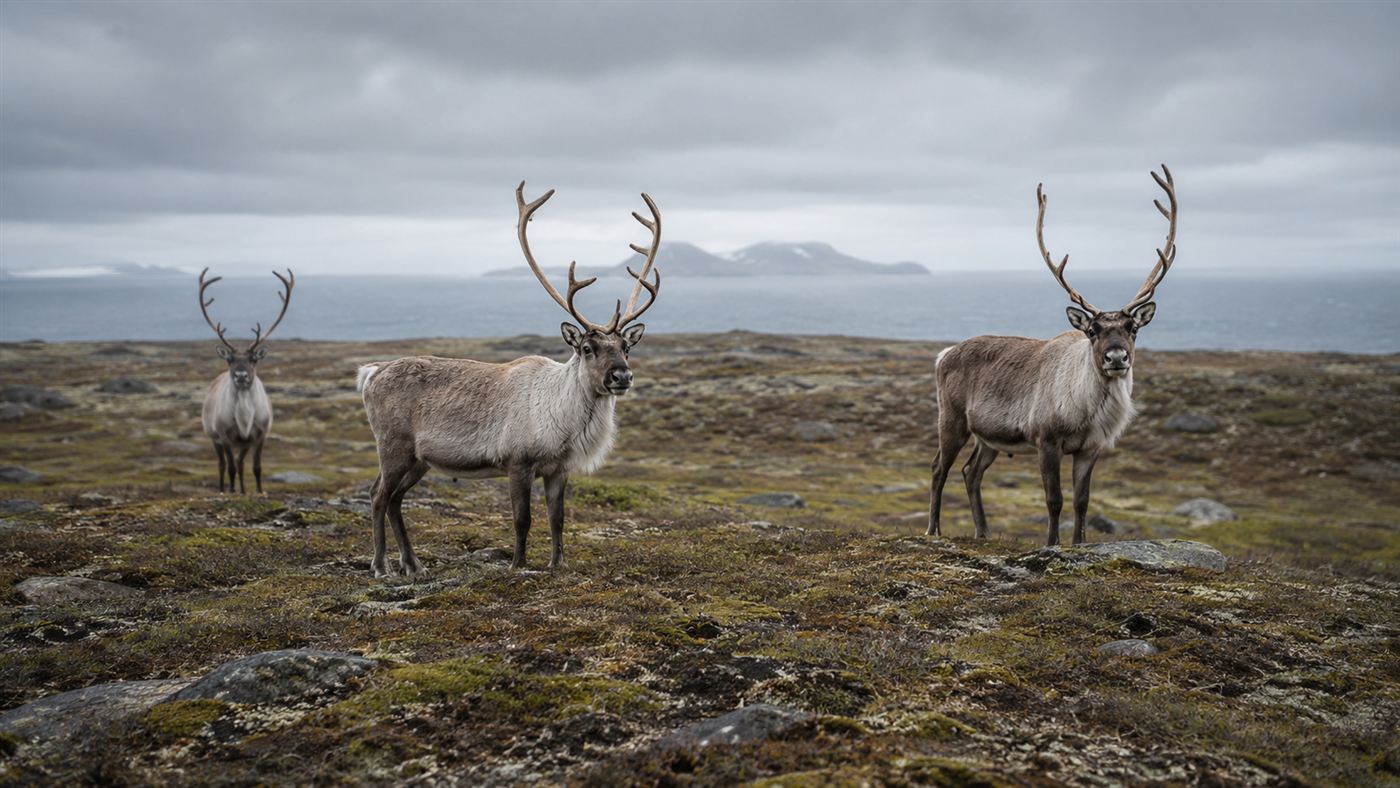
St. Matthew Island, a speck in the Bering Sea, became an accidental lesson in boom and bust. Illustration: Watts & Wild.
The story of the St. Matthew Island reindeer begins in 1944, near the end of the Second World War, when the US Coast Guard ran a small station on St. Matthew Island, a remote and uninhabited scrap of land in the middle of the Bering Sea, far off the coast of Alaska. As insurance against the men being cut off and going hungry, the Coast Guard unloaded 29 reindeer onto the island, a living larder to be eaten if supplies ever failed.
The supplies never failed. The war ended, the station closed, the men left, and the reindeer stayed behind on an island with no people, no wolves, no bears, nothing at all that might eat them. What happened to those 29 animals over the next two decades became one of the most quoted stories in ecology, and it did not end well.
Why anyone put reindeer on an empty island
The idea was practical, not scientific. A wartime crew on a far-flung rock needed a backup food source, and reindeer are hardy, travel in herds and survive Arctic winters. Turning a few loose seemed like sensible insurance. Nobody was running an experiment, which is exactly what makes the result so striking.
St. Matthew was, from a reindeer's point of view, paradise. The island was carpeted in lichen, the slow-growing tundra plant that reindeer live on through winter, and that lichen had been piling up undisturbed for centuries because no grazing animal had ever lived there. The new arrivals walked into a banquet that had taken hundreds of years to set.
A paradise with no brakes
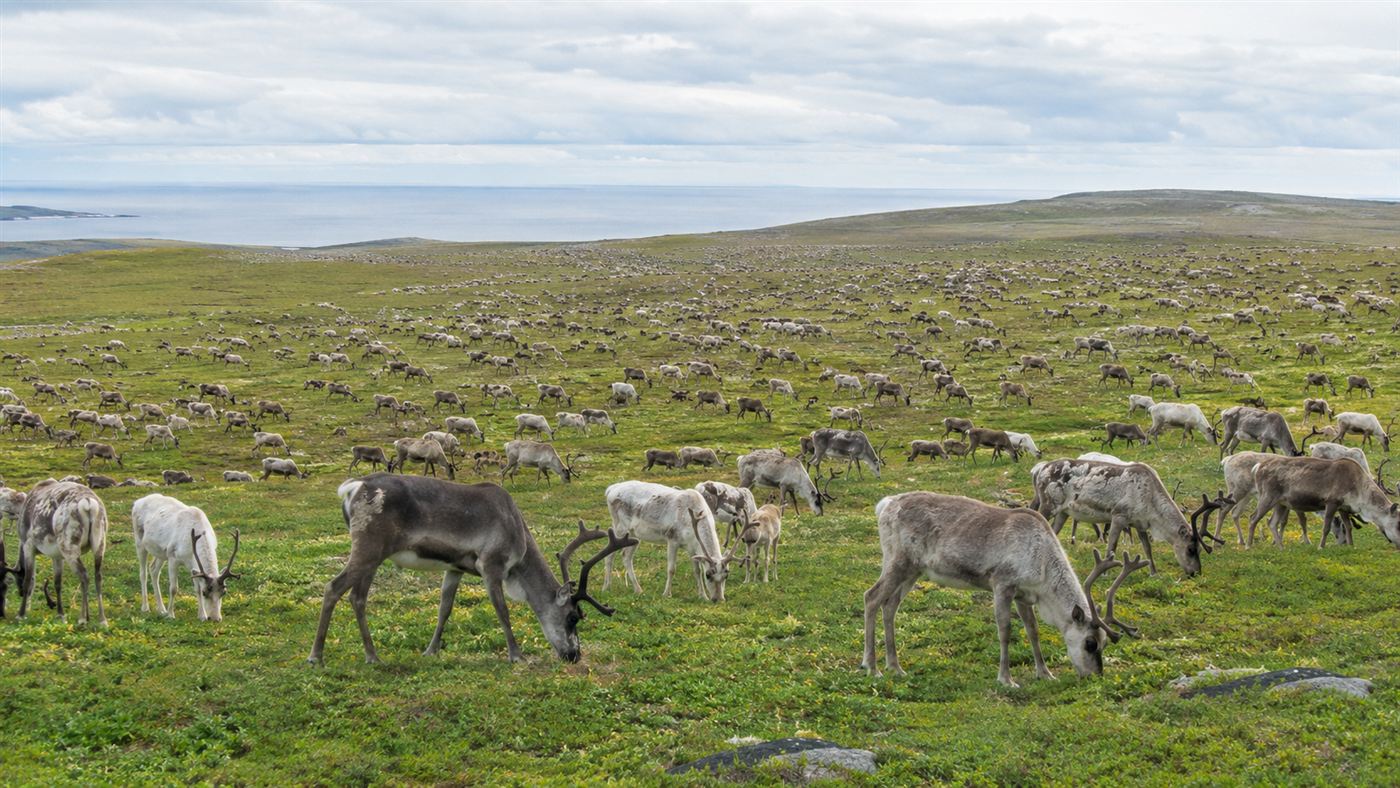
With unlimited food and zero predators, the herd did the only thing it could: it multiplied. As the University of Alaska's Geophysical Institute recounts the story, biologist Dave Klein first visited in 1957 and counted around 1,350 reindeer, almost all of them fat and in superb condition. The animals were thriving beyond anything they could manage on the mainland.
Six years later the banquet was still going, and the numbers had gone vertical. By the summer of 1963, the herd had reached roughly 6,000 animals, a more than two-hundred-fold increase from the original 29. But by then the reindeer had also become noticeably smaller and thinner than the well-fed animals Klein had seen in 1957, a quiet sign that the island could not actually carry this many. The lichen that took centuries to grow was being eaten far faster than it could ever come back.
The winter everything caught up
A population can run on borrowed food for a while, right up until the moment it cannot. For the St. Matthew reindeer, that moment was the winter of 1963 to 1964, one of the harshest ever recorded in the Bering Sea. Relentless storms, brutal cold and a record depth of snow buried what was left of the already exhausted lichen.
The herd was going into that winter overcrowded, underfed and standing on a range it had stripped nearly bare. With the remaining food locked under deep snow, the animals had nothing left to fall back on. What followed was not a slow decline. It was a collapse.
The island of skeletons
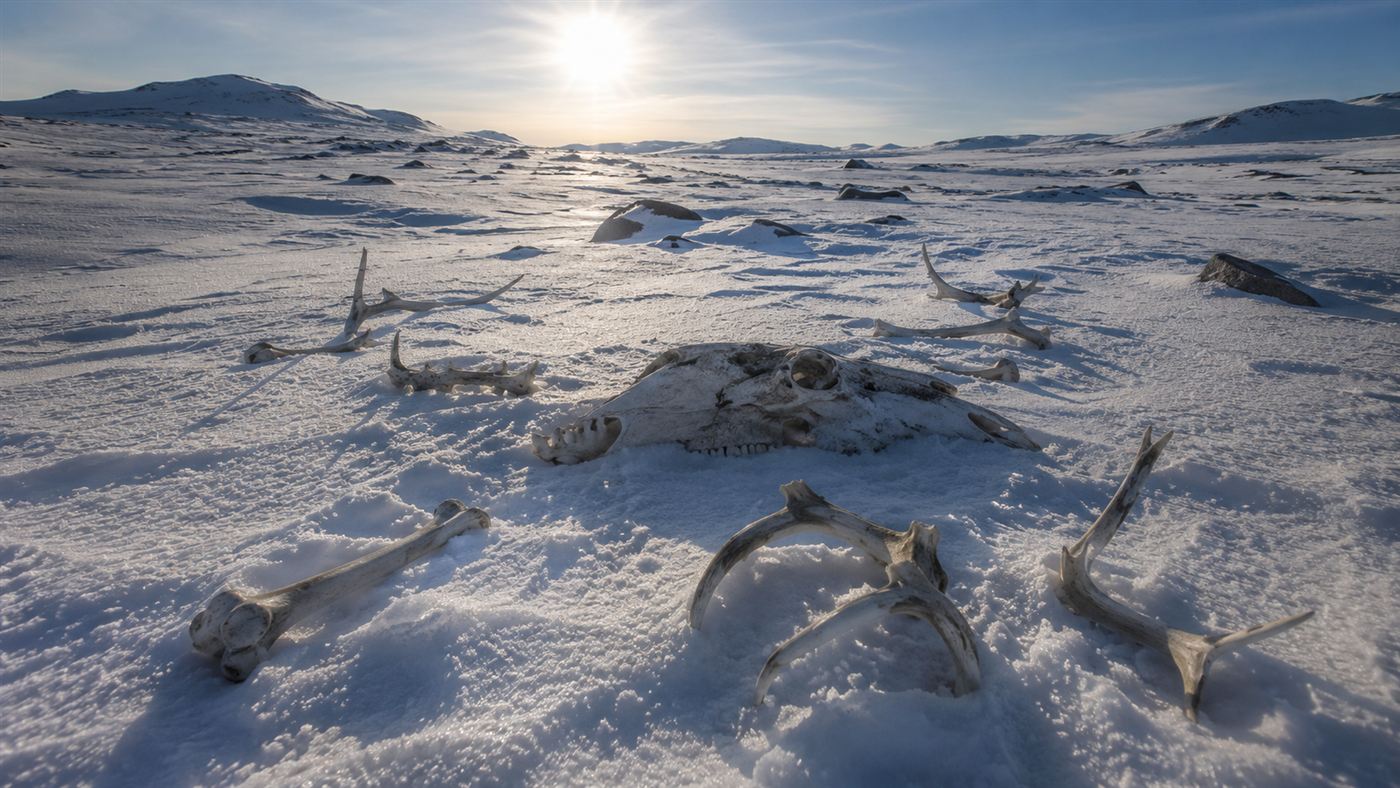
When Klein made it back to St. Matthew in the summer of 1966, the island had become a graveyard. As the Anchorage Daily News later described his return, he found the ground littered with skeletons and counted just 42 living reindeer, scattered survivors on an island that had held thousands two years earlier.
The makeup of those survivors was the grimmest detail of all. Of the 42, there were 41 females and a single male, and that lone male had deformed antlers and was almost certainly unable to breed. There were no fawns at all. The herd had not just crashed by 99 percent in a single winter; what remained had no real future. By the 1980s, the reindeer of St. Matthew Island were gone completely.
The honest catch
This story gets told a lot, often as a tidy parable: a population grows too big, destroys its food, and dies. That is roughly true, but the tidy version flattens something important. The crash was not caused by overpopulation alone. It took the collision of two things, a herd that had badly overshot its food supply and then one of the worst winters on record, hitting at the same time.
It is also worth being careful about how far the lesson stretches. The reindeer of St. Matthew are often hauled out as a direct warning about human overpopulation, and that leap is more contested than the confident retellings suggest. People are not reindeer on a sealed island, and we can trade, adapt and change behaviour in ways a herd cannot. The island is a real and sobering case study, not a prophecy.
Why the St. Matthew Island reindeer still matter
Stripped of the overreach, what is left is still a genuinely important idea, and a rare chance to see it play out cleanly. Ecologists talk about carrying capacity, the number of animals a piece of land can feed over the long run, and about what happens when a population shoots past it. Usually that process is tangled up with predators, disease and migration. St. Matthew, by accident, stripped all of that away and showed the raw mechanism on its own.
The reindeer did nothing wrong. They simply did what any animal does when handed unlimited food and no limits: they ate and they bred, right up to the edge and then over it. The island remembered what they forgot, that a banquet built over centuries can be emptied in a few short years, and that the bill, when it comes, comes all at once.
Twenty-nine reindeer became six thousand, and then almost nothing, on an island that never said a word. Is St. Matthew a fair warning about any population that outgrows its resources, or is it a one-off accident we read too much into? Tell us what you think in the comments.
Related reading: Scientists released just 14 wolves into Yellowstone in 1995, and the predators reshaped the elk, the forests, and eventually the very paths the rivers carve through the valley. See also the Kaibab deer, a herd that boomed and starved once its predators were gone.