In the 1920s America shot every wolf and cougar to save the Kaibab deer, and the herd promptly exploded to 100,000 and then starved to death on its own ruined range
It began as an act of protection. A wild plateau above the Grand Canyon was set aside as a refuge, and its enemies were hunted down so its deer could thrive in peace. Instead the herd bred out of control, ate the forest to the roots, and then died by the thousands, teaching a hard lesson about what really keeps nature in balance.
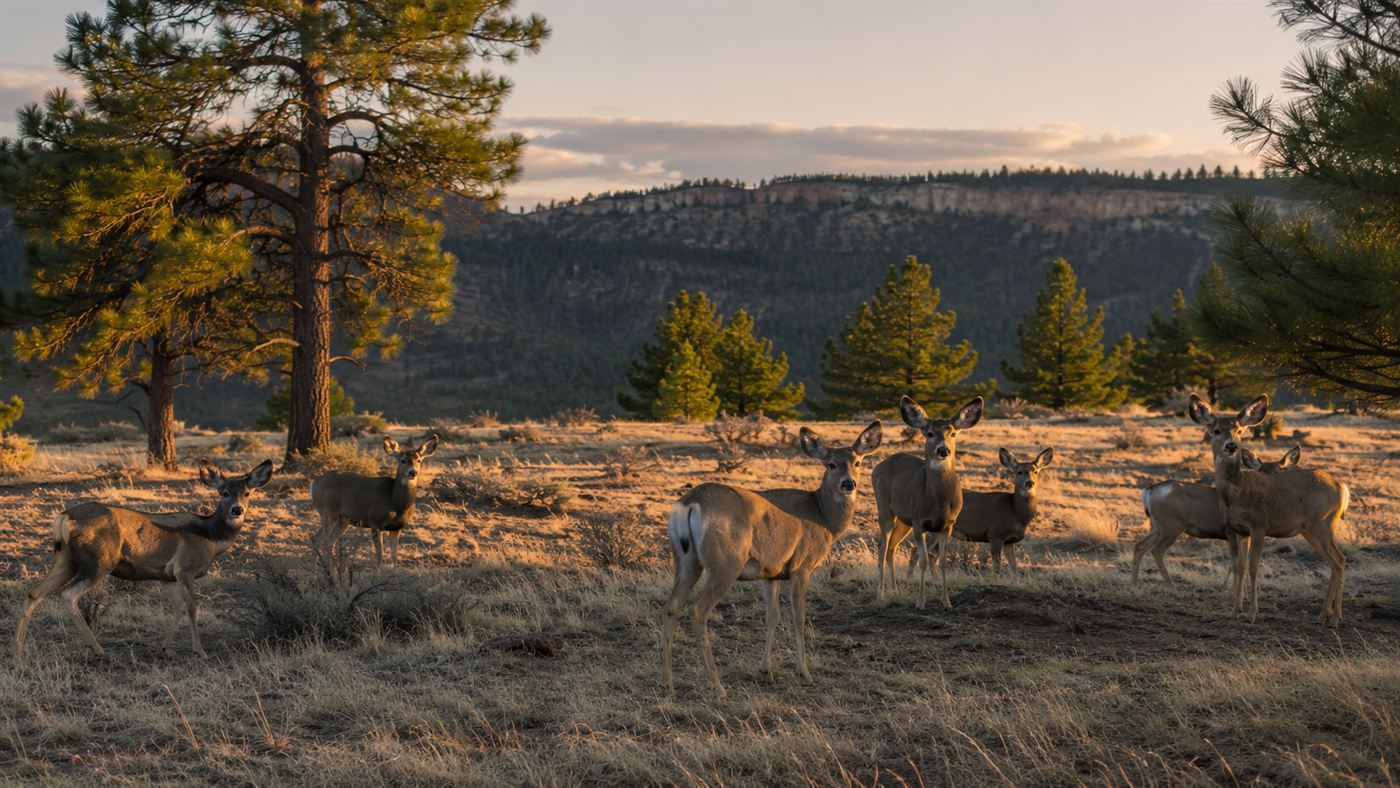
The Kaibab Plateau above the Grand Canyon was meant to be a deer paradise. Illustration: Watts & Wild.
Just north of the Grand Canyon in Arizona lies the Kaibab Plateau, a cool island of forest and meadow raised high above the desert. In 1906 President Theodore Roosevelt made it a national game preserve, a place where the region's mule deer would be safe. Hunting the deer was banned, and their predators were treated as vermin to be wiped out.
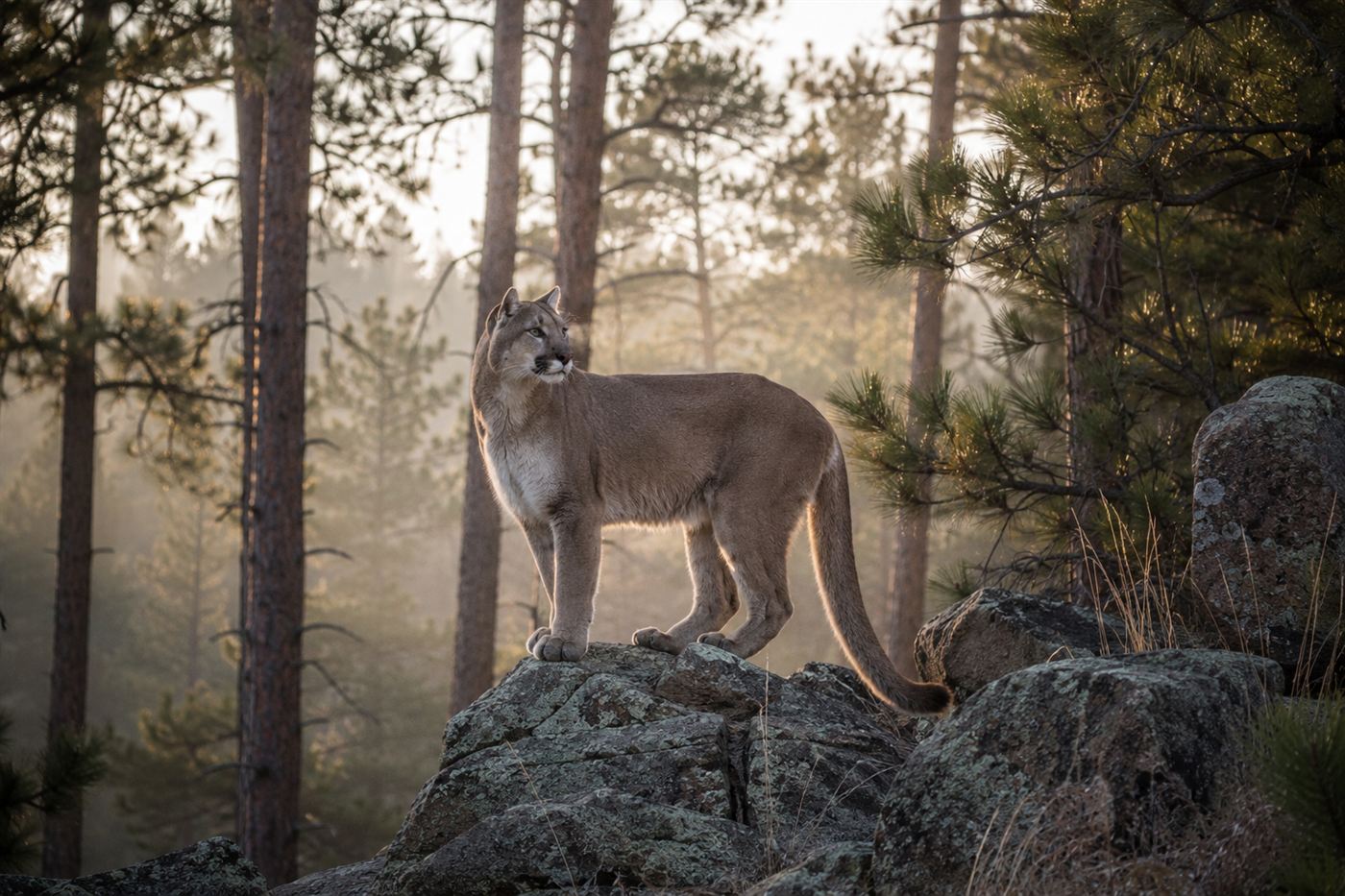
Over the following two decades, government hunters and bounty seekers killed thousands of mountain lions, along with wolves, coyotes and bobcats, across the plateau. The idea seemed simple and kind. Remove the killers, and the gentle deer would flourish. What actually followed became one of the most famous cautionary tales in all of ecology.
The short version is that the plan worked far too well. Freed of nearly every predator, the Kaibab deer multiplied until there were too many to feed, and the land itself turned against them.
Why did anyone kill the predators?
To the conservationists of the early 1900s, predators were not part of nature's balance but obstacles to it. A mountain lion that ate a fawn was simply a thief stealing game that people wanted to see and hunt. So the government put a price on their heads and sent professional hunters into the forest.
The campaign was brutally effective. By the 1920s the great cats and wolves of the plateau had been all but exterminated, and the deer had lost almost every natural enemy they had ever known. For a few years the result looked like a triumph, as fawns survived in record numbers and the herd swelled year after year.
Why the Kaibab deer exploded and then starved
The trouble is that a forest can only grow so much food. Every meadow and every reachable branch can feed a certain number of mouths, a limit ecologists call the carrying capacity of the land. As long as predators trimmed the herd, the Kaibab deer had stayed comfortably within that carrying capacity. Once the predators were gone, nothing did.
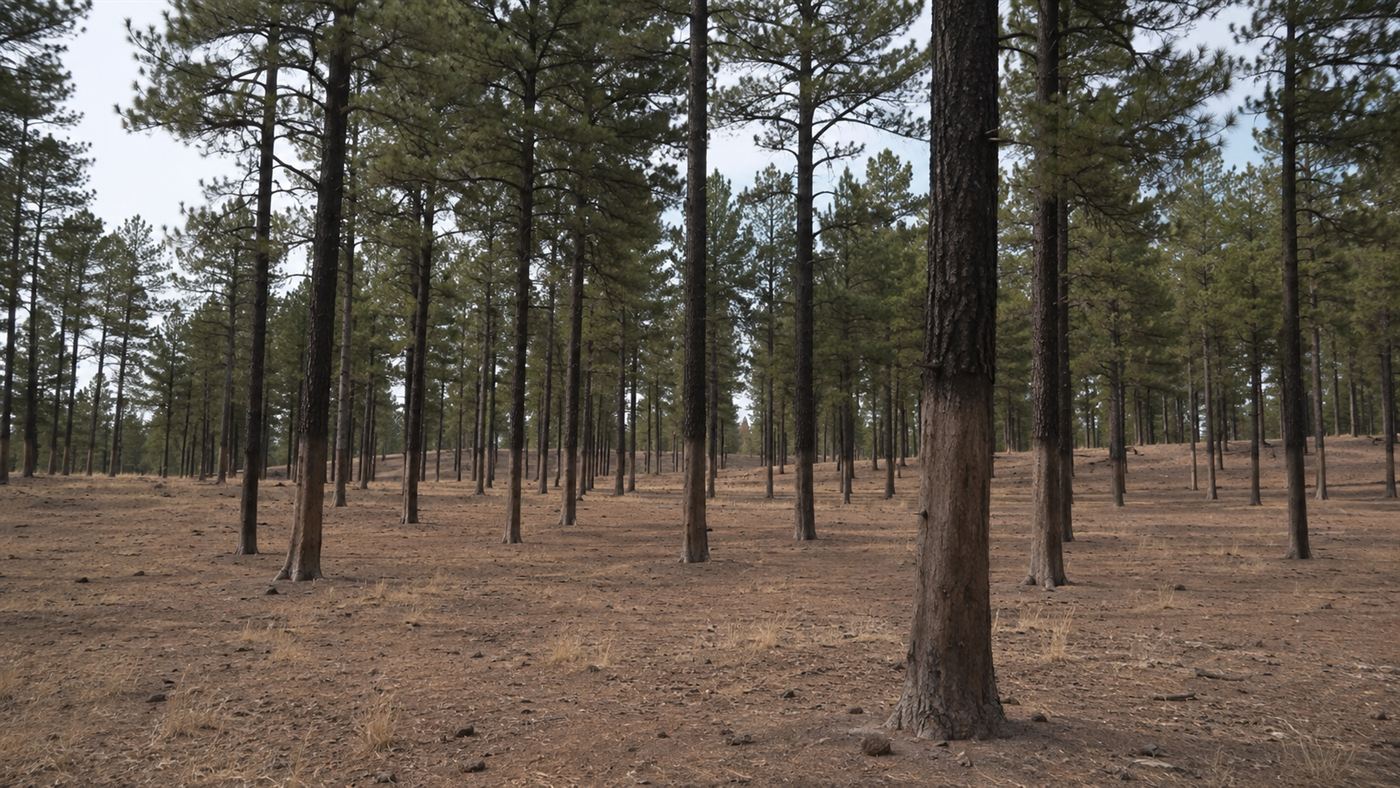
By the middle of the 1920s the plateau is said to have held around 100,000 deer, where a few thousand had lived before. They ate everything within reach, stripping the meadows and gnawing a stark line across the trees, until the once-lush range was worn down to bare dirt and twigs. The Kaibab deer had eaten themselves out of house and home.
The winters that emptied the plateau
Then came the reckoning. In the harsh winters of the mid-1920s, with the range already ruined and snow burying what little remained, the Kaibab deer began to die in enormous numbers. Reports told of a herd that fell by tens of thousands in only a couple of seasons.
The survivors faced a plateau so damaged it could no longer support even a modest population. Some of the forest scars from that overgrazing took decades to heal. In the space of a generation, a well-meaning rescue had produced a boom, a bust, and a lasting wound in the land, all without a single wolf left to blame.
The naturalist who learned to think like a mountain
One young forester had taken part in that war on predators, and it haunted him. His name was Aldo Leopold, and years earlier he had helped shoot a wolf and watched what he called a fierce green fire die in its eyes. The Kaibab disaster helped turn Aldo Leopold into the most important conservation thinker of his age.
Leopold came to argue that predators were not the enemies of a healthy landscape but essential to it, that a mountain and its deer needed the wolf as much as they feared it. His famous plea to think like a mountain, to see the whole living system rather than just the animals we like, grew directly out of tragedies like the one on the Kaibab.
The honest catch
For all its power as a parable, the Kaibab story needs a note of caution. The dramatic population numbers, the leap to 100,000 and the sudden crash, were rough guesses made at the time, and later researchers found them wildly inconsistent. Drought, heavy grazing by cattle and sheep, and changes in the range all played their part alongside the missing predators.
So the tidy graph in the old textbooks oversells a messier truth. What is not in doubt is the core lesson: strip a landscape of its predators and you do not save the animals beneath them, you set them up for a fall. The deer of the Kaibab paid for that lesson, and thanks to people like Leopold, the rest of us got to learn it more cheaply.
A plateau was cleared of wolves and cougars to protect its deer, and the deer responded by breeding into a famine that killed them by the thousands. Does the Kaibab story change how you think about predators, or about our habit of deciding which animals deserve to live? Tell us what you think in the comments.
Related reading: the island reindeer that boomed to thousands and then almost vanished in a single winter. See also the black-footed ferret, pulled back from the edge of extinction, and the last heath hen, whose lonely call ended a species.