Norway built Europe's largest onshore wind farm on the Sami's reindeer pastures, its own Supreme Court ruled it a violation of their rights, and still the turbines kept turning for years
Wind power is supposed to be the clean, easy answer. On the Fosen peninsula it collided with the oldest way of life in the north. The reindeer that the Sami have herded for centuries will not graze under the turbines, and in 2021 Norway's highest court agreed that was a breach of their rights.
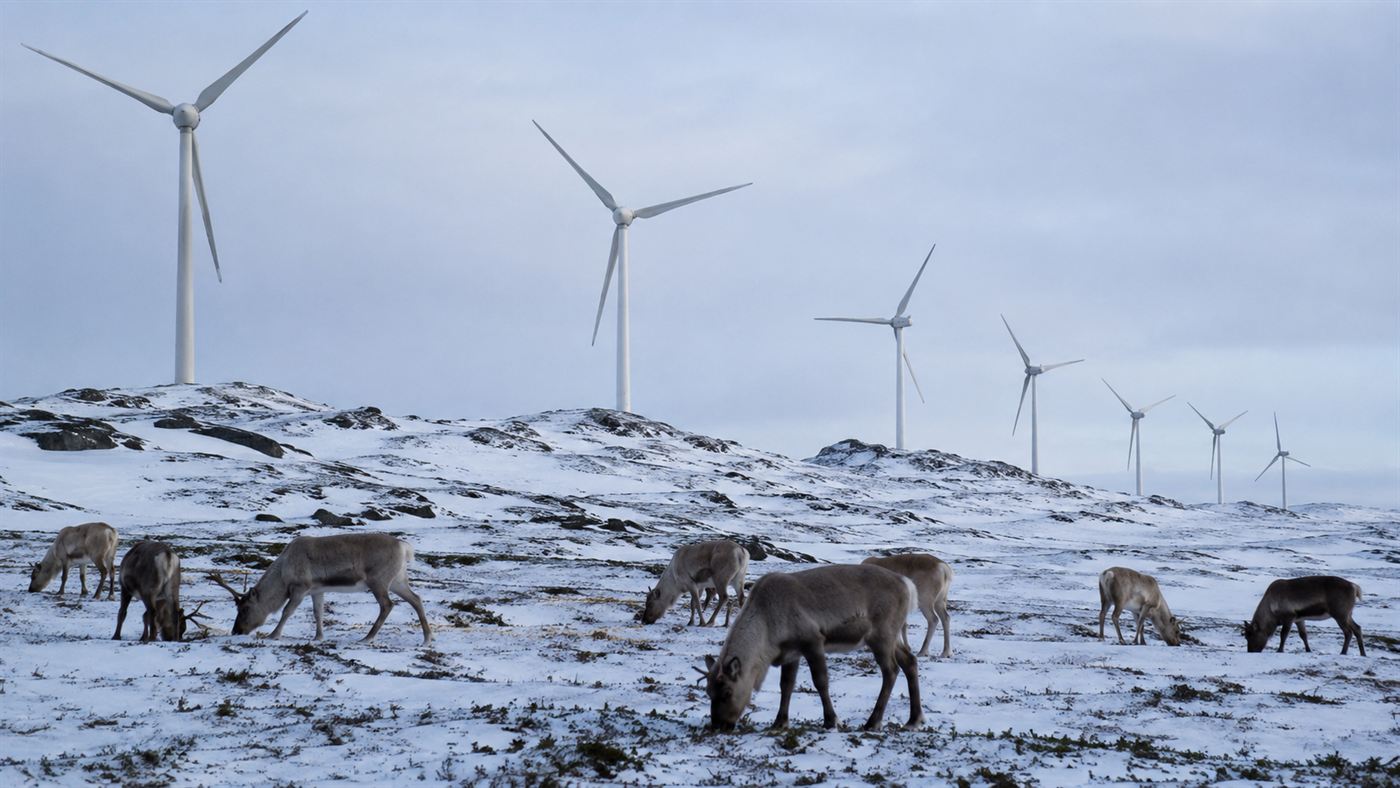
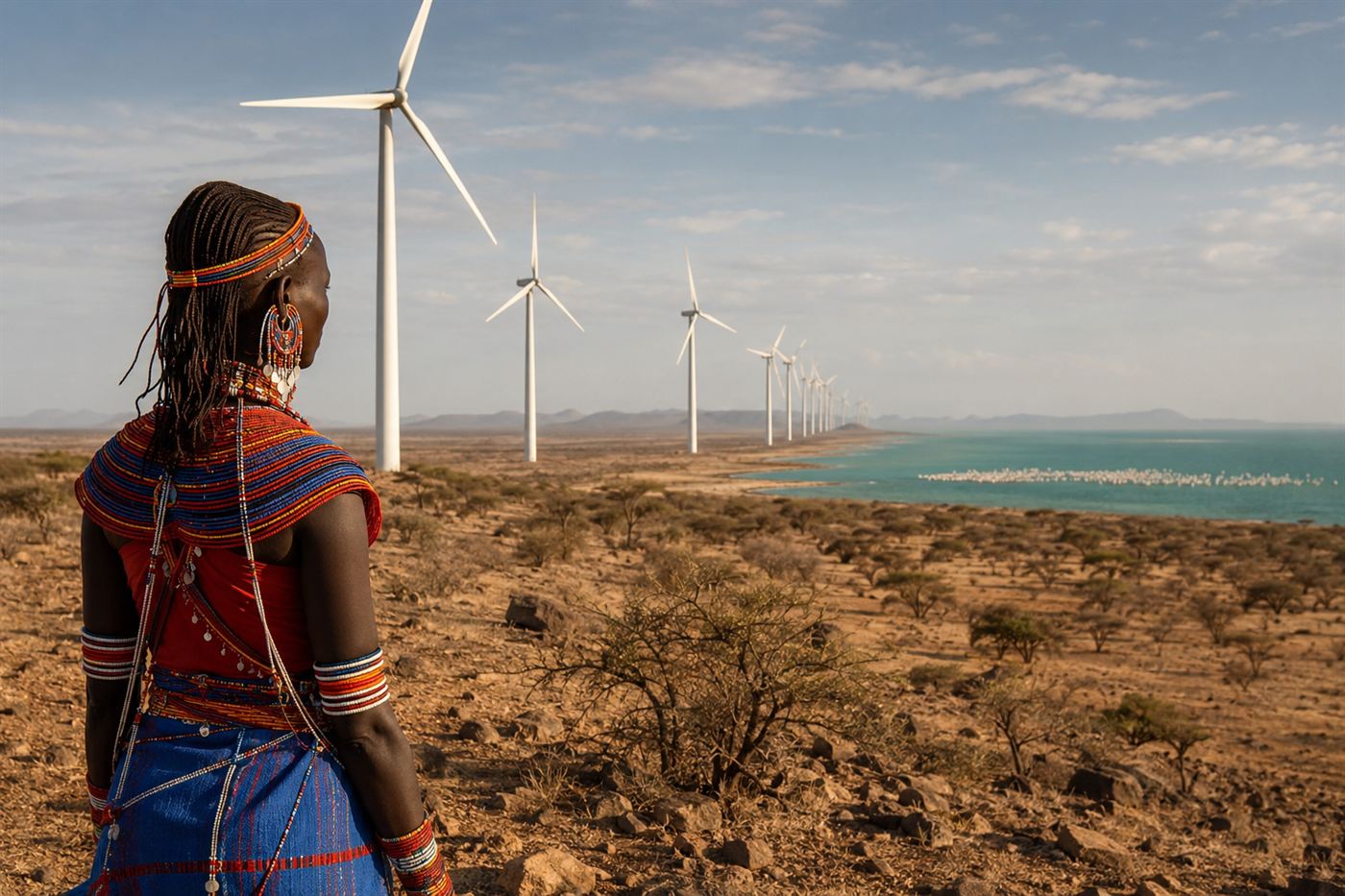
On the Fosen uplands, the blades of Europe's largest onshore wind farm turn over land the reindeer now avoid. Illustration: Watts & Wild.
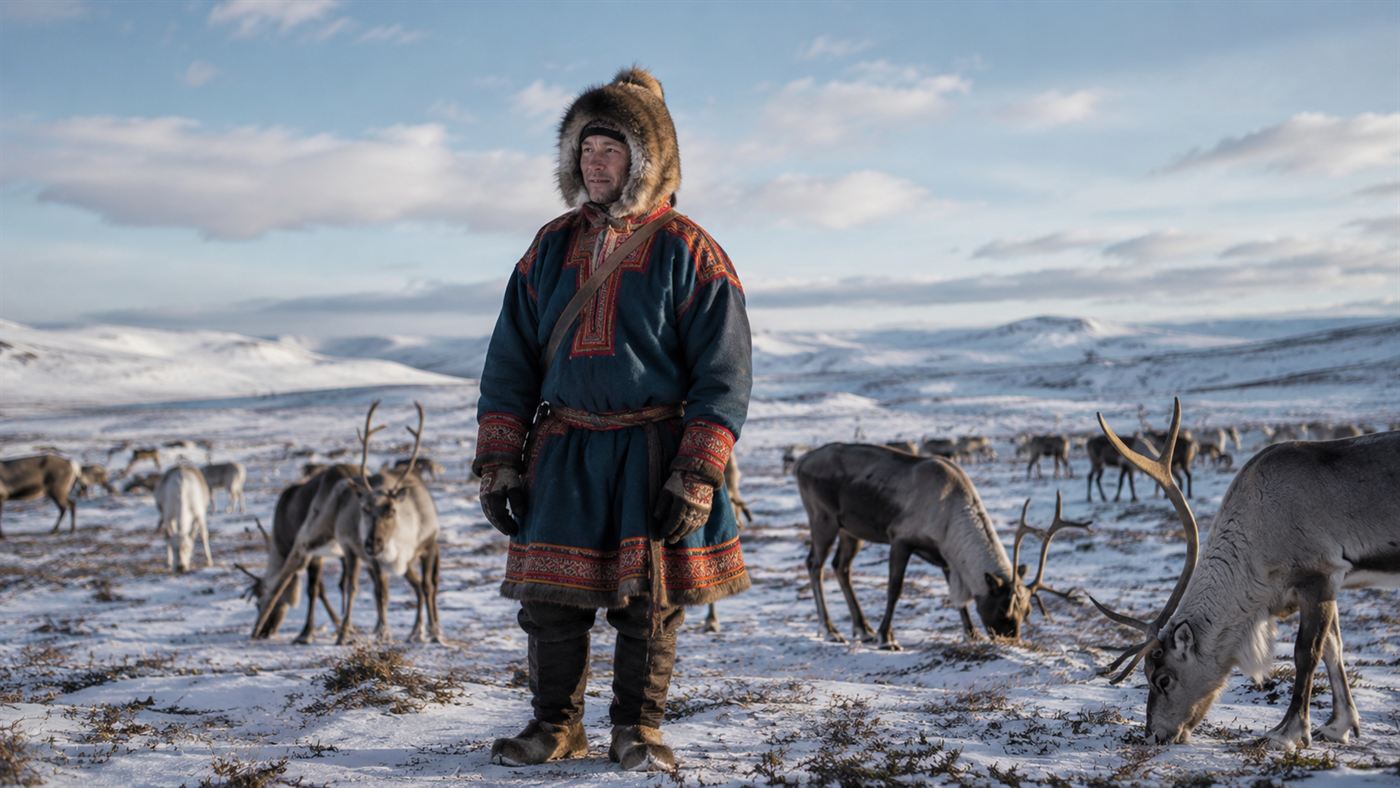
On the snowy uplands of the Fosen peninsula in central Norway, reindeer have wintered on the same ground for centuries, watched over by Sami herders whose entire culture is built around the animals. Then the turbines came. Towering over the ridgelines, the blades of the Fosen wind farm, Europe's largest onshore wind project, now turn over pasture the reindeer will no longer go near.
In October 2021, Norway's own Supreme Court agreed that this was wrong. In a unanimous grand chamber decision, it ruled the wind farm's licences and land seizures invalid because the project violates the Sami's right to enjoy their own culture. And then, in one of the strangest stand-offs of the green transition, almost nothing happened. The turbines kept turning for years after they had been declared unlawful.
The Fosen wind farm, a clean-energy giant on ancient ground
The Fosen development is enormous, a cluster of wind farms that together form the largest onshore wind project in Europe. Two of them, Storheia and Roan, were built directly on the winter grazing lands that South Sami herders have relied on for generations. This is not marginal scrubland. It is the specific, hard-won pasture that gets a reindeer herd through the cruellest months of the year.
And the footprint is not small. By the herders' account, Storheia alone swallowed more than 40 percent of their winter grazing. Take that much of the most important ground out of a herding system and you do not simply shrink it, you risk breaking it. The turbines did not just share the landscape with the reindeer. They displaced them from the land they needed most.
Why the reindeer will not go there
To an outsider, a wind turbine and a grazing reindeer might seem able to coexist. The herders say they cannot. Reindeer are wary animals, and the herders argued in court that the sight, the movement and the low sound of the spinning blades frighten the animals so badly that they avoid the area altogether, leaving good grazing unused because the herd will not set foot there.
For a reindeer-herding culture, that is not an inconvenience, it is an existential threat. The animals are not just livelihood but language, identity and a way of moving through the world that goes back long before Norway was Norway. Lose the winter pasture and you lose the herd. Lose the herd and you lose the culture that is wrapped around it. That is the stake the herders brought to the highest court in the land.
The day the Supreme Court agreed
On 11 October 2021, the Sami won. As Norway's national human rights institution has explained, the Supreme Court found that the development breaches Article 27 of the International Covenant on Civil and Political Rights, which protects the right of minorities to practise their own culture, and that making reindeer herding impossible or extremely difficult crosses that line. The licences and the expropriation were declared invalid.
It was a landmark, the first time affected Sami parties had won a case about a development on their traditional lands in the Supreme Court on human rights grounds. On paper, it should have been the end of the story. The country's own highest court had said, clearly and unanimously, that the wind farm should never have been built there.
And still the turbines turned
Then came the part that turned a legal victory into a national scandal. The ruling did not order the turbines down, and the government did not act. The blades kept spinning, month after month, on land the court had said they had no right to occupy. The herders watched the machines run on while officials studied the problem.
More than 500 days after the judgment, in early 2023, young Sami activists and climate campaigners had had enough. As documented by the Business and Human Rights Resource Centre, protesters, joined at one point by Greta Thunberg, occupied government ministries in Oslo, blocking doorways and refusing to move while a human rights violation, confirmed by the country's own court, was still running at full power. A government minister apologised. The turbines stayed up.
A deal, not a teardown
The resolution, when it finally came, was a compromise rather than a reckoning. A partial agreement was reached at the end of 2023, and in early 2024 a deal closed the three-year dispute. Crucially, the wind farm was not torn down. It keeps operating.
In exchange, the Sami families won real concessions: compensation, additional grazing land to replace what the turbines took, and a right of veto over any extension if the operator seeks to keep the wind farm running after its licence expires in 2045. It is a settlement that lets the green infrastructure stand while trying to repair the harm under it, and it leaves the most uncomfortable question unanswered: whether the turbines should ever have gone up at all.
The honest catch
It would be easy to read this as a story about bad wind power, and that is not the lesson. Norway genuinely needs clean electricity, the climate crisis is real, and onshore wind is one of the cheapest ways to cut emissions fast. The herders themselves have not generally argued against wind power everywhere, only against it being built on the specific land their survival depends on.
The real catch is harder. The cheapest, windiest, emptiest-looking land is very often someone's land, and the rush to decarbonise can quietly repeat the oldest pattern of all, taking from indigenous people in the name of a greater good. Fosen is proof that green does not automatically mean just. The settlement keeps the turbines and compensates the herders, but the replacement pasture is not the old pasture, and some Sami feel the culture was sacrificed for a target. A clean grid is worth building. Fosen is the warning that how we build it, and whose consent we ask for, matters just as much as how much carbon it saves.
A country put up Europe's biggest onshore wind farm, its own court called it a violation of indigenous rights, and the blades kept turning anyway. When clean energy and indigenous rights collide, which one should give way, and who gets to decide? Tell us what you think in the comments.
Related reading: Engineers pulled four dams off the Klamath River in the largest dam removal in US history, a win driven by the tribes who had fought for it for decades.