He inspected his dam and called it safe, twelve hours before it killed more than 400 people
On the morning of March 12, 1928, the most powerful engineer in California stood at the foot of a new concrete dam, looked at a muddy leak that had frightened the dam keeper, and pronounced it nothing to worry about. Twelve hours later that dam was gone, and a wall of water as tall as a ten-story building was racing fifty-four miles to the sea.
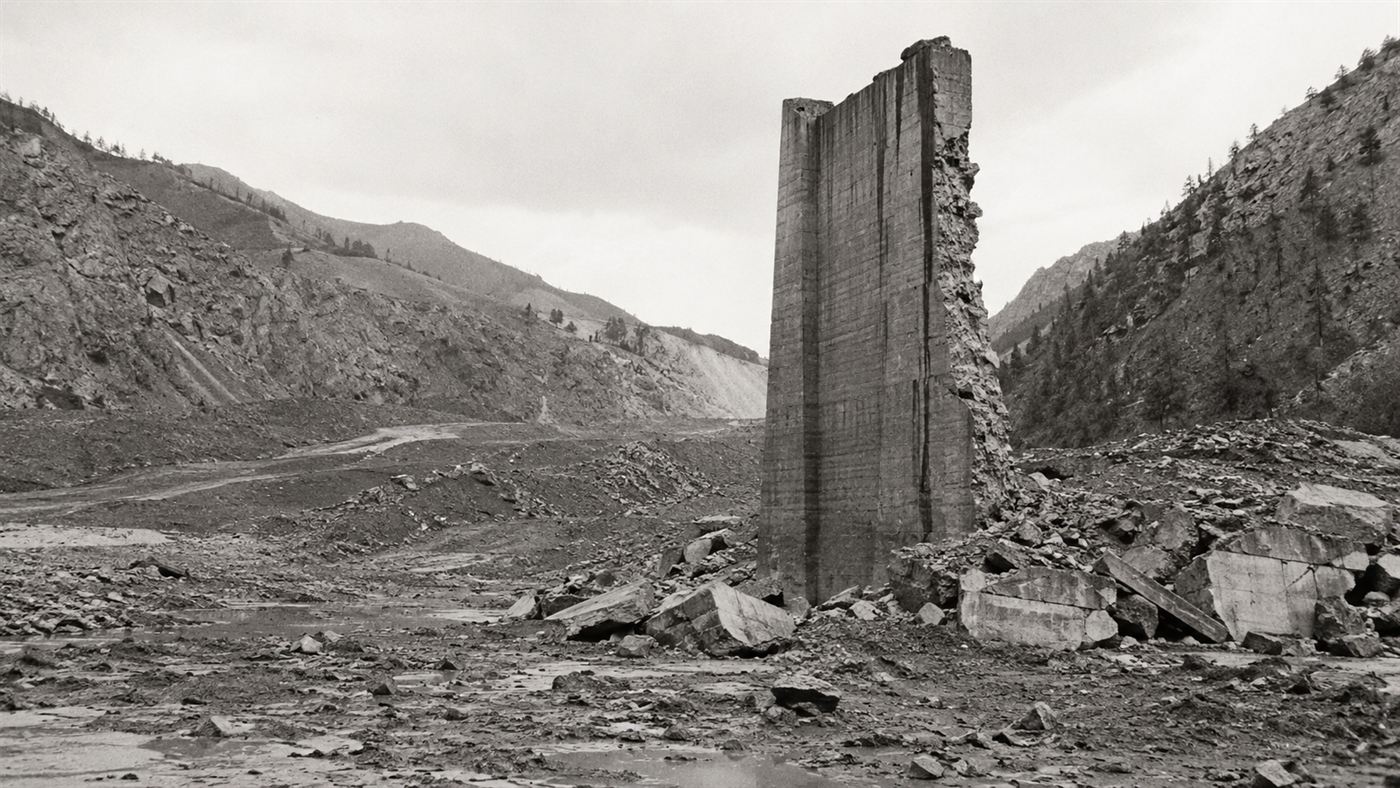
After the St. Francis Dam failed, a single slab was left standing in the canyon, nicknamed the Tombstone. Illustration: Watts & Wild.
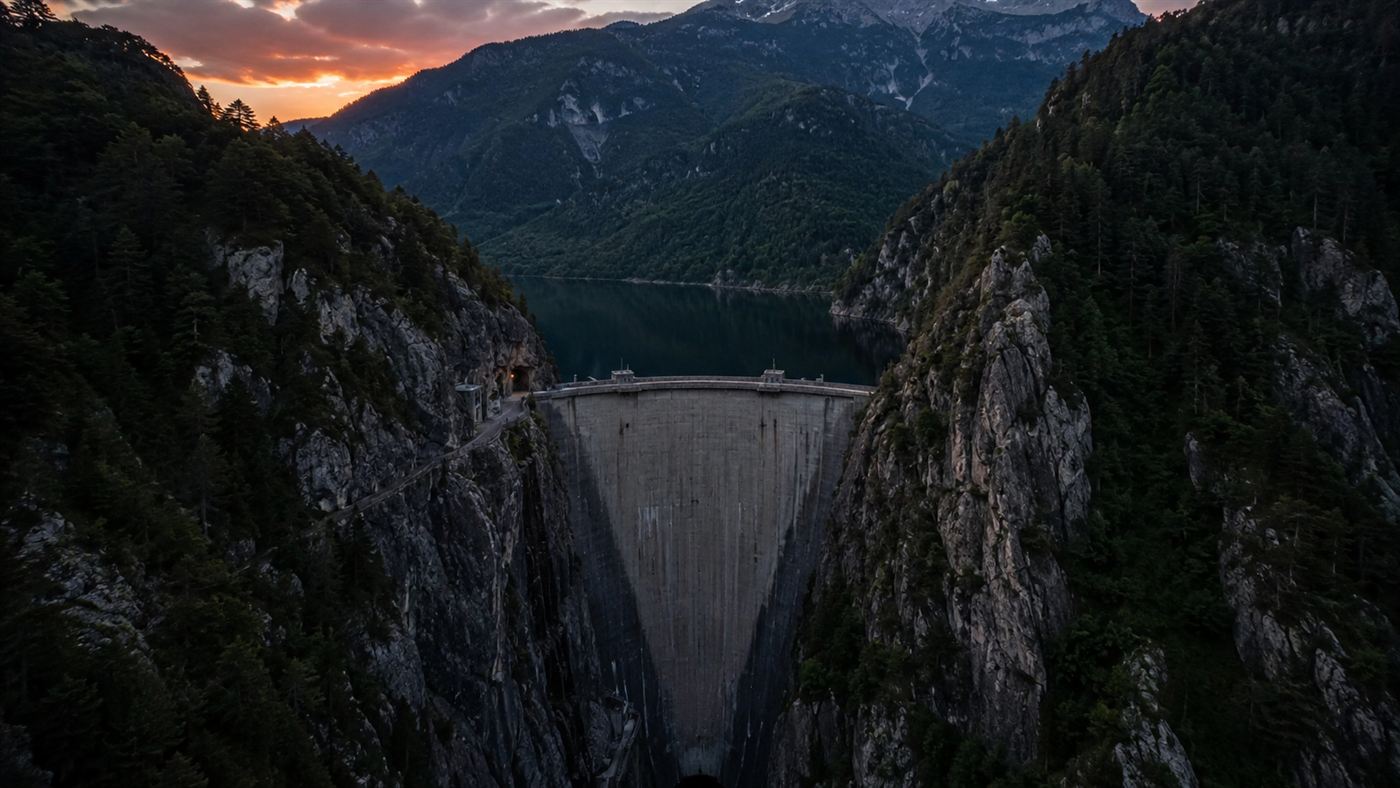
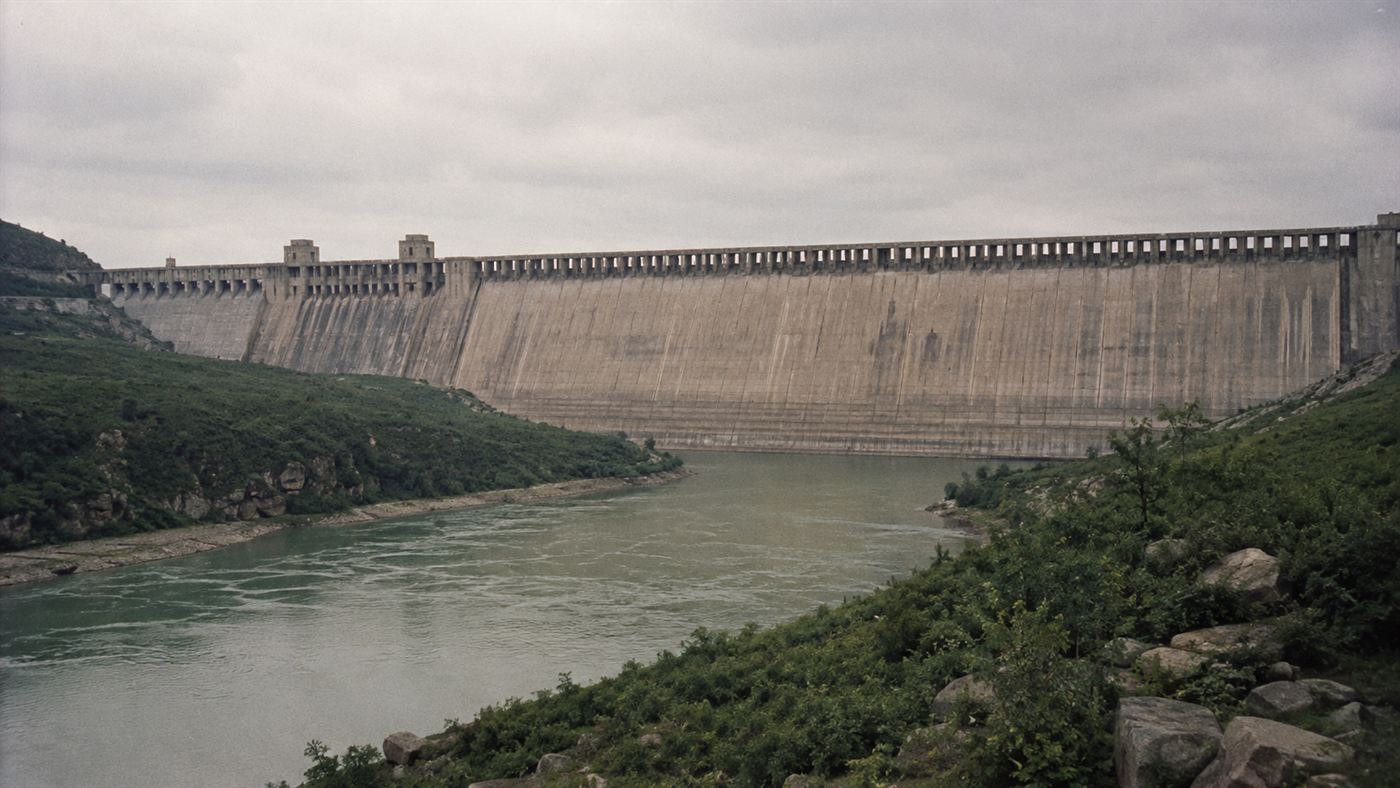
The St. Francis Dam stood in San Francisquito Canyon, about forty miles north of downtown Los Angeles, and it was the proudest piece of a water empire one man had spent his life building. When it broke just before midnight, it unleashed twelve billion gallons of water and, as Britannica records, became one of the worst civil engineering failures in American history, second in California only to the 1906 San Francisco earthquake.
The story is not really about concrete. It is about William Mulholland, a self-taught immigrant who rose from digging ditches to running the water of an entire city, and about the terrible moment when the thing he trusted most turned on the people he had promised to serve.
Who was William Mulholland
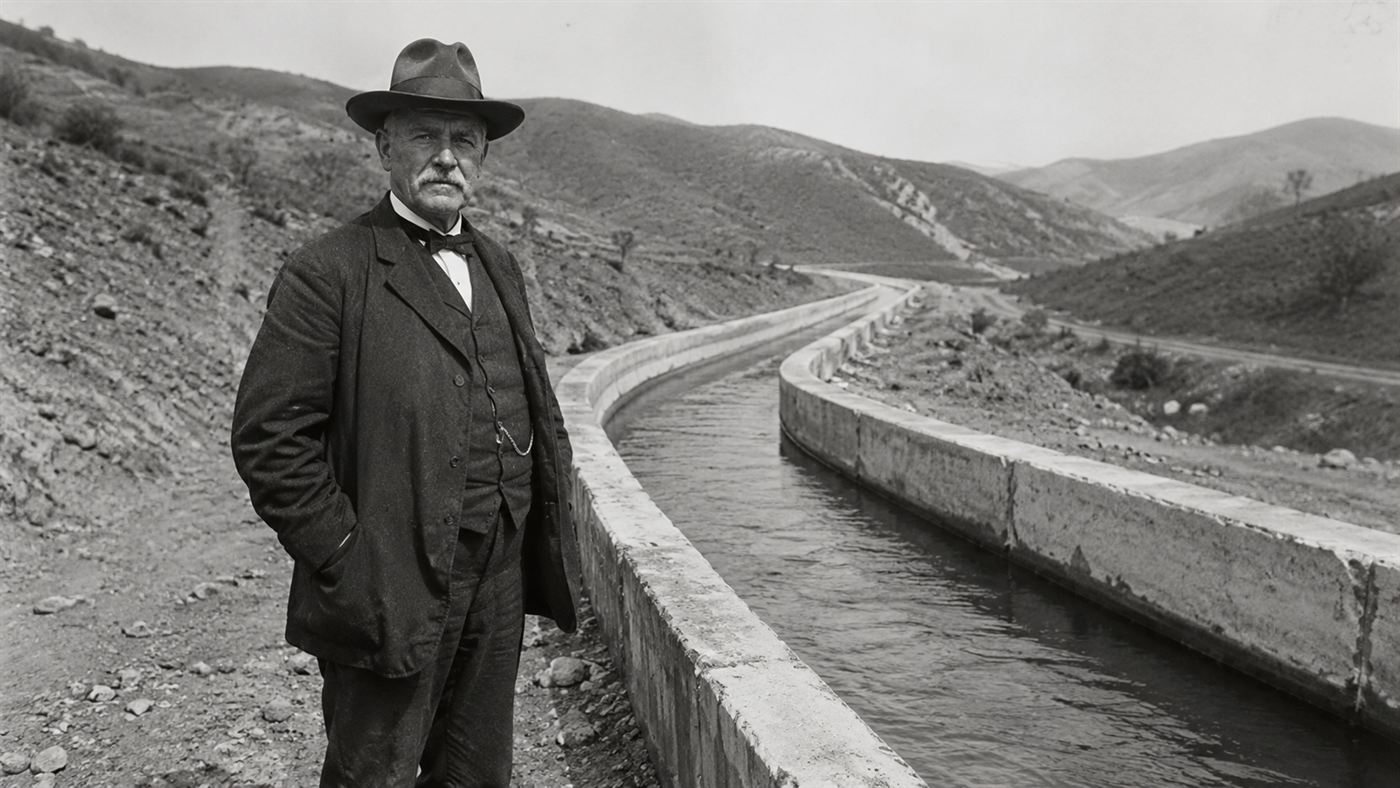
Mulholland arrived from Ireland with almost nothing and took a job as a ditch tender for the Los Angeles water company in the 1870s. He had no university degree and learned engineering from borrowed textbooks at night, yet he had a gift for water that bordered on genius. By 1913 he had driven the Los Angeles Aqueduct 233 miles across desert and mountain to bring the Owens River to the city, the project that let Los Angeles explode from a dusty town into a metropolis.
At the opening of that aqueduct, as the water came rushing down, Mulholland turned to the crowd and said just five words: "There it is. Take it." He was, by then, the most trusted man in Southern California. When he said a dam was safe, the city believed him, because he had never been wrong about water before.
The leak that everyone called normal
The reservoir behind the dam had just been filled to capacity for the first time, and new dams always weep a little as the pressure settles. On the morning of the disaster the dam keeper, Tony Harnischfeger, found a fresh leak running muddy, which can mean the water is carrying away the ground the dam stands on. Worried, he called Mulholland out to look.
Mulholland and his deputy, Harvey Van Norman, spent two hours studying the leaks and seepage. They traced the muddy water to a nearby construction road, decided it was harmless, and drove back to Los Angeles. It was the last engineering judgment of Mulholland's career, and it was wrong. Harnischfeger, the man who raised the alarm, would be among the first to die that night, his body never found.
Why the St. Francis Dam really failed
For decades people blamed shoddy concrete, but modern forensic work tells a colder story. The St. Francis Dam was anchored into rock that no one at the time could properly read. One side sat on an ancient landslide that had been quietly sleeping in the canyon wall for thousands of years, and the other on a rock that softened and crumbled once it soaked up reservoir water. The dam did not fail because the concrete was weak. It failed because the mountain it leaned on was never strong.
It did not help that during construction Mulholland had raised the dam's height twice without widening its base to match, quietly shrinking its margin of safety. The science of soil and rock mechanics barely existed in 1928, so the warning signs that scream at a modern engineer were, to the best minds of the day, just the ordinary grumbles of a new dam. At about two and a half minutes before midnight, the abutment gave way and the whole structure came apart.
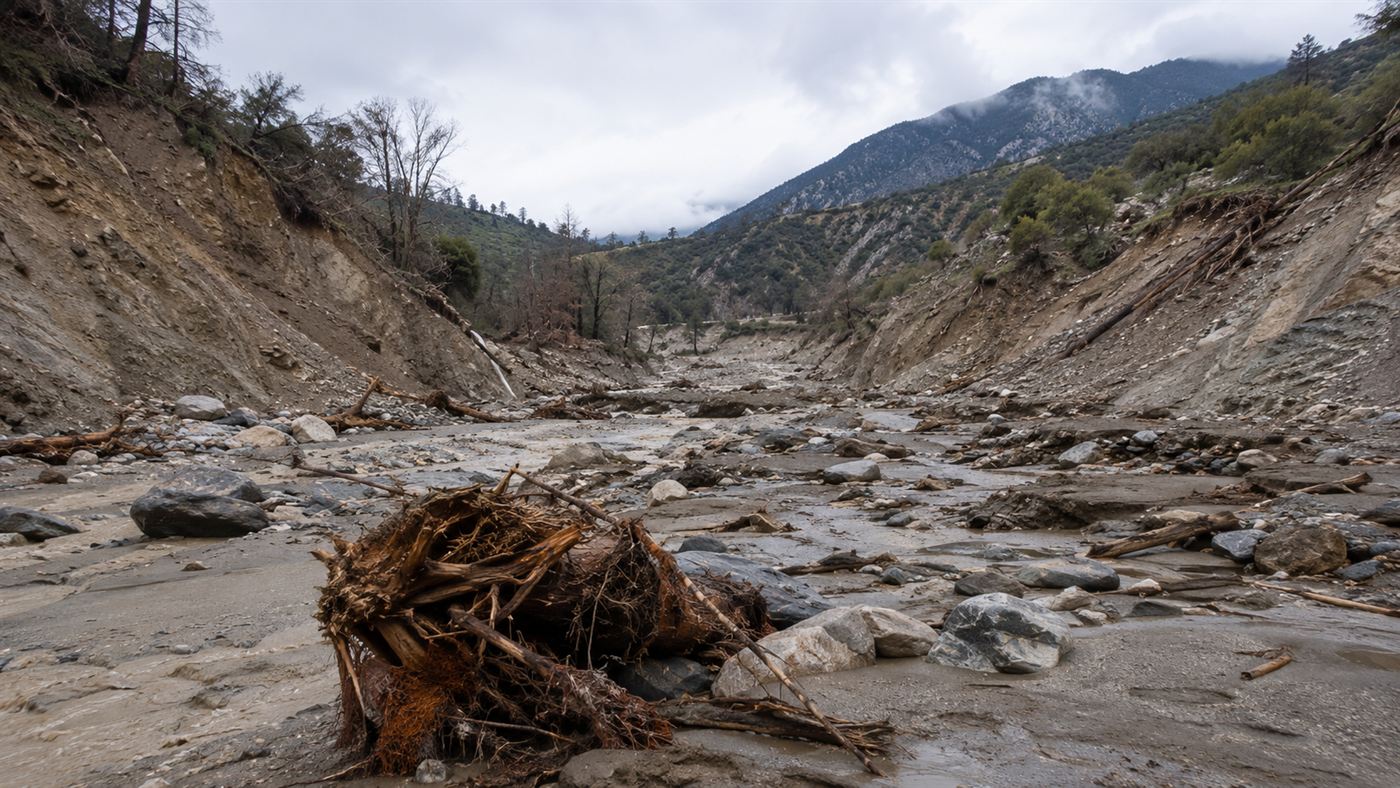
A wall of water around 140 feet high tore down San Francisquito Canyon at the speed of a car, smashing through the powerhouse below, then the towns of Castaic Junction, Fillmore, Santa Paula and on toward the ocean. Whole families sleeping in the dark were gone before any warning could reach them. By the time the flood emptied into the Pacific near Ventura, more than 400 people were dead, and bodies were later found as far south as the Mexican border.
Mulholland took all the blame
At the coroner's inquest, Mulholland did not hide behind his deputies or the contractors. He stood up and asked for the blame to land on him alone, saying that if there had been an error of human judgment, he was the human. "Don't blame anyone else," he told the inquest. "The only ones I envy are the dead."
The inquest cleared him of criminal wrongdoing, concluding that the failure came from the treacherous geology of the site rather than any crime. But it was the end of him. The man who had carried Los Angeles on his back retired within months, broken and largely silent, and he died in 1935 still haunted by that night. His reputation, once untouchable, never recovered.
What the St. Francis Dam disaster changed
Out of the wreckage came something that has quietly saved a great many lives since. The catastrophe ended the era when a single trusted expert could build a giant dam on instinct and a handshake. California responded by creating real state oversight of dam safety, requiring independent review of design and geology, and the rest of the country followed. Almost every modern rule that forces engineers to prove the ground beneath a dam, not just the dam itself, traces back in part to this canyon.
How many people died in the St. Francis Dam collapse?
The official count settled at around 431, but that number is almost certainly low. The flood path was full of migrant farm workers and their families living in camps that kept no careful records, and many of the dead were swept out to sea and never recovered. Most historians now place the true toll well above 450, with some estimates approaching 600, which would make it one of the worst engineering disasters in American history.
Was William Mulholland blamed for the disaster?
He blamed himself, openly and immediately, which was rare then and is rare now. Formally the inquest did not find him criminally responsible, pinning the cause on the unstable rock of the site. The honest verdict is somewhere in between: Mulholland was not a reckless man or a fraud, but a brilliant, overconfident one who built beyond the limits of what anyone in 1928 could safely know, and who paid for it with his name and his peace.
A self-made genius built a city its water, then signed off on the dam that drowned hundreds and took the blame to his grave. Was Mulholland a villain, or simply a man who trusted his own judgment a few feet too far? Tell us what you think in the comments.
Related reading: Vajont, the Italian dam that survived a landslide while the water it threw over the top killed 2,000 people. See also how Oroville, the tallest dam in America, nearly emptied a region through its spillway. See also the Teton Dam, which failed the first time it was ever filled.