A crater tore open the spillway of the tallest dam in America during a flood, and within days 188,000 people downstream of Oroville Dam were told to run for higher ground
In February 2017, Oroville Dam in California scared an entire region half to death, and it never actually broke. The dam held. What nearly failed were its spillways, the giant concrete chutes that let a full reservoir bleed off safely, and their collapse came within a crumbling hillside of drowning the towns below.
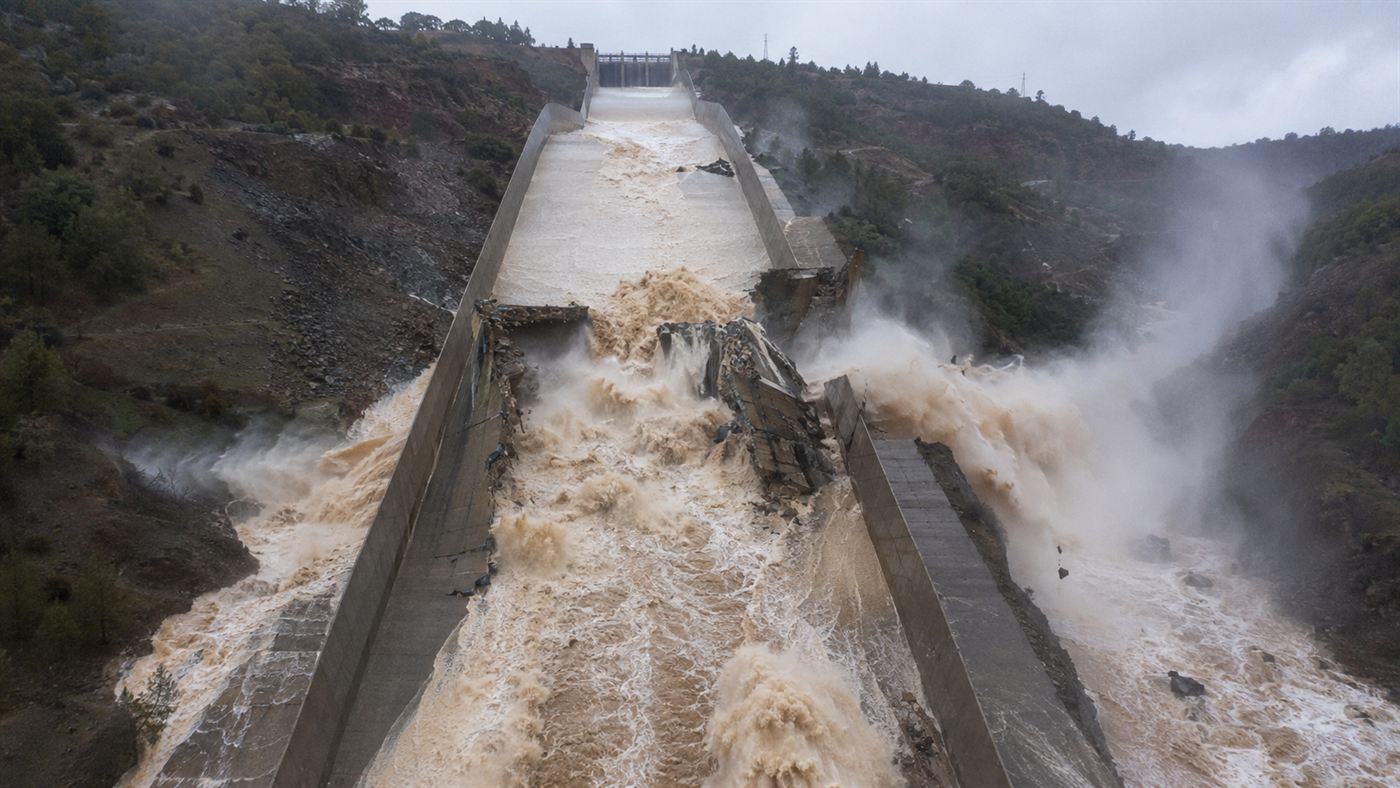
Floodwater blasts through the crater that opened in the Oroville Dam main spillway in February 2017. Illustration: Watts & Wild.
Oroville Dam rises 770 feet above the Feather River in Northern California, which makes it the tallest dam in the United States, taller even than the Hoover Dam. For nearly 50 years it did its job without drama, holding back a reservoir that helps water much of the state. The trouble in 2017 did not come from the great earthen wall itself. It came from the parts everyone had stopped worrying about.
The winter of 2017 was ferociously wet, one atmospheric river after another dumping rain and snow across California and filling Lake Oroville toward the brim. As the public record of the crisis lays out, on February 7 operators running water down the main spillway spotted something terrible: a crater had opened in the concrete chute, and it was growing. What began as a hole widened to some 300 feet across, chewing the spillway apart from the inside.
The short version: In February 2017, a wet winter filled California's Oroville Dam, the tallest in the US. Its main spillway cratered during releases, and when crews backed off, the lake rose over an emergency spillway that started eroding toward collapse. Fearing a wall of water, officials evacuated 188,000 people. The dam held, and no one died.
The tallest dam in America, and its weak point
To see how a dam that never broke could empty a hundred thousand homes, you have to understand what a spillway does. A big dam cannot just hold water forever. When the reservoir fills, the excess has to go somewhere controlled, so engineers build a spillway, a broad concrete ramp that carries floodwater down and around the dam and back into the river. It is the safety valve, and at Oroville there were two of them.
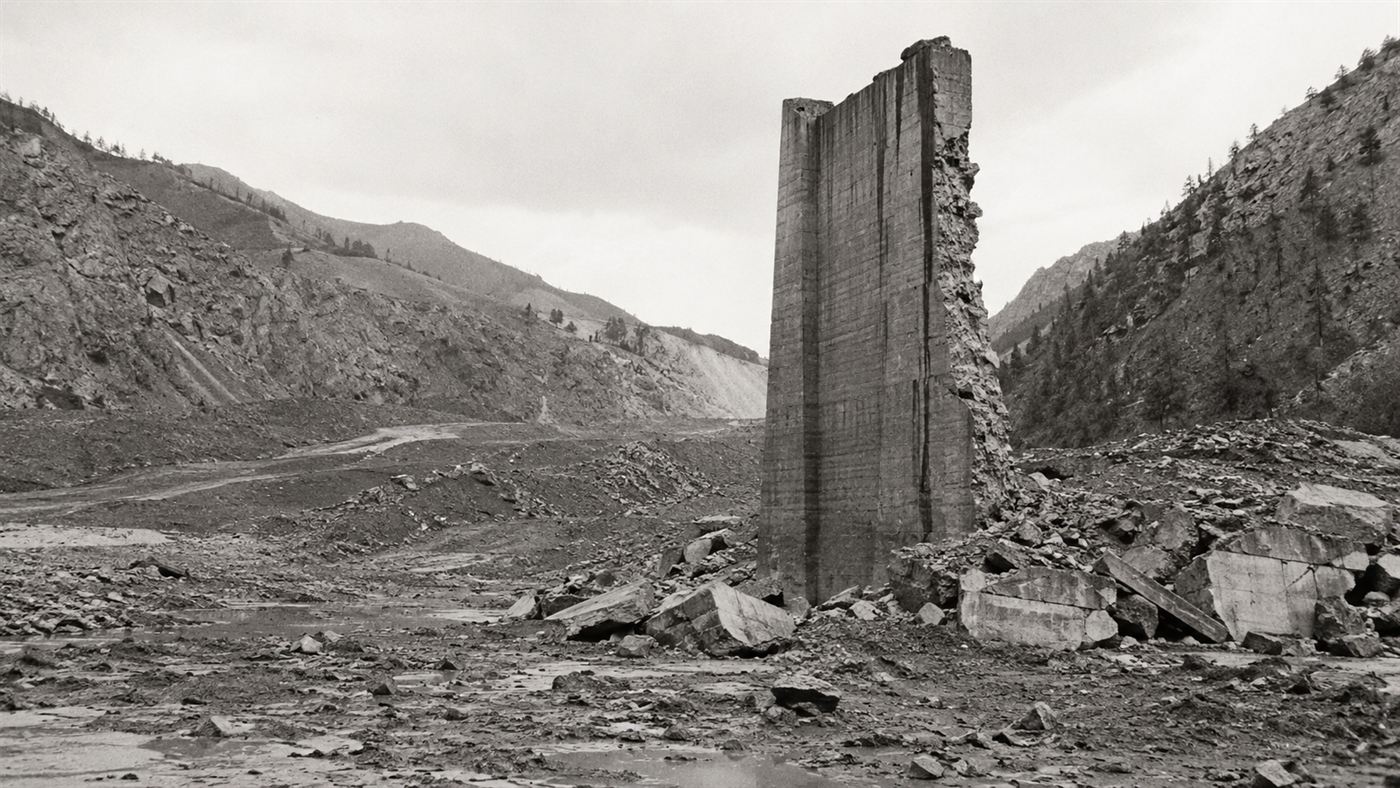
The main one is a gated concrete chute nearly the length of several football fields. The second is an emergency spillway, really just a long concrete lip on the hillside meant to overflow only in the direst flood. In 50 years it had never been used. The comforting assumption was that it would never need to be, and that assumption was about to be tested to destruction. The lesson is old and keeps getting relearned, from the St. Francis Dam that killed hundreds in 1928 to modern failures.
Why they had to use a spillway nobody trusted
Once the main spillway cratered, the operators were trapped in a cruel bind. Running more water down the broken chute would rip it apart even faster and could threaten the power plant and the dam's foundations. So they throttled the flow back to inspect the damage. But the storms did not care, and the water kept pouring into the lake faster than the crippled spillway could safely release it.
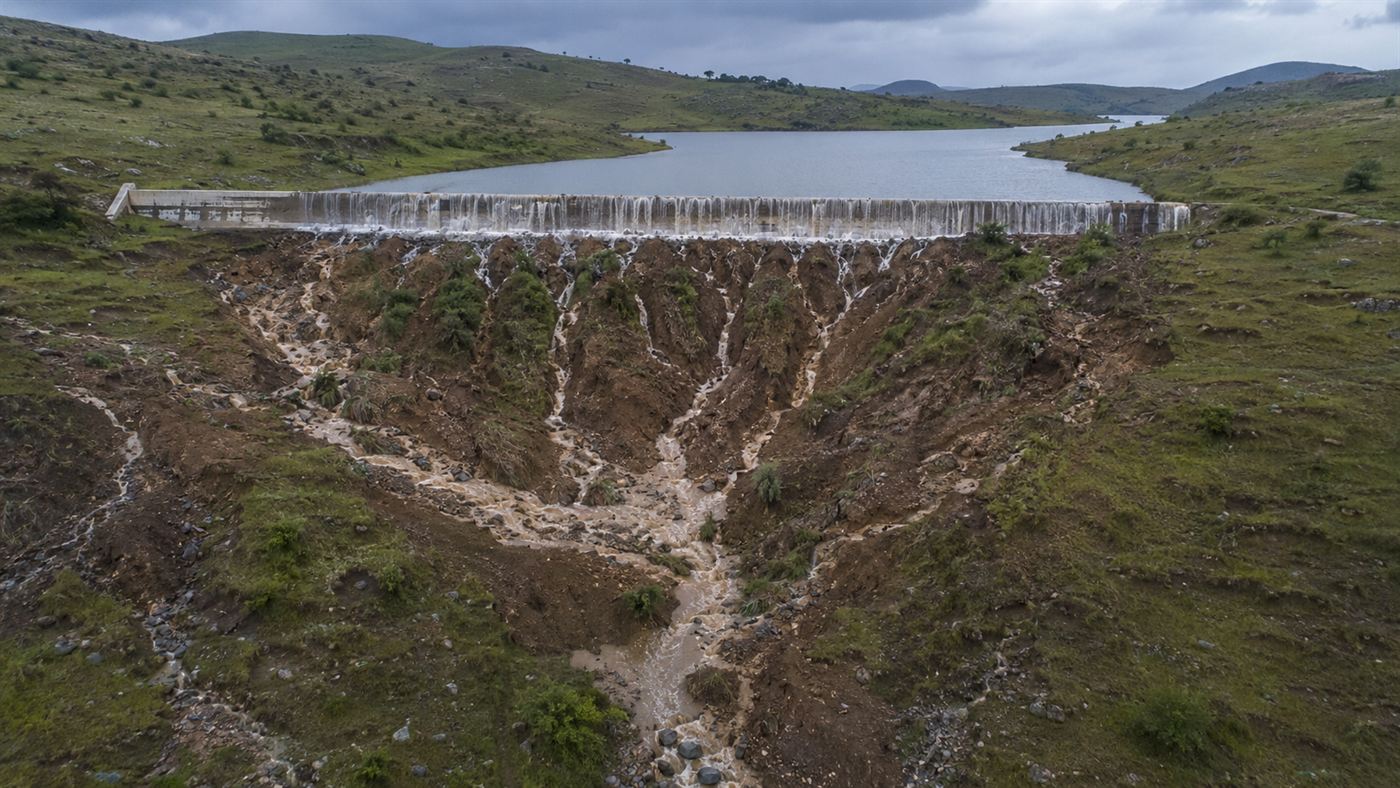
The reservoir climbed until, on February 11, it did the thing no one had ever seen: it spilled over the top of the emergency spillway for the first time in the dam's history. The overflow was modest, peaking around 12,600 cubic feet per second, but it was landing on a bare, ungarmored hillside. Almost immediately, the California flood water began cutting deep gullies into the earth below the concrete lip, and the erosion raced uphill far faster than anyone had predicted.
188,000 people, a few hours to leave
This was the nightmare scenario. If that headward erosion ate back far enough to undermine the concrete weir, the lip could collapse, and a wall of water estimated at up to 30 feet high would be released uncontrolled into the Feather River and the towns strung along it. On February 12, authorities pulled the trigger on a mass evacuation. Within hours, roughly 188,000 people across Butte, Yuba, and Sutter counties, from Oroville down through Marysville and Yuba City, were ordered to get out.
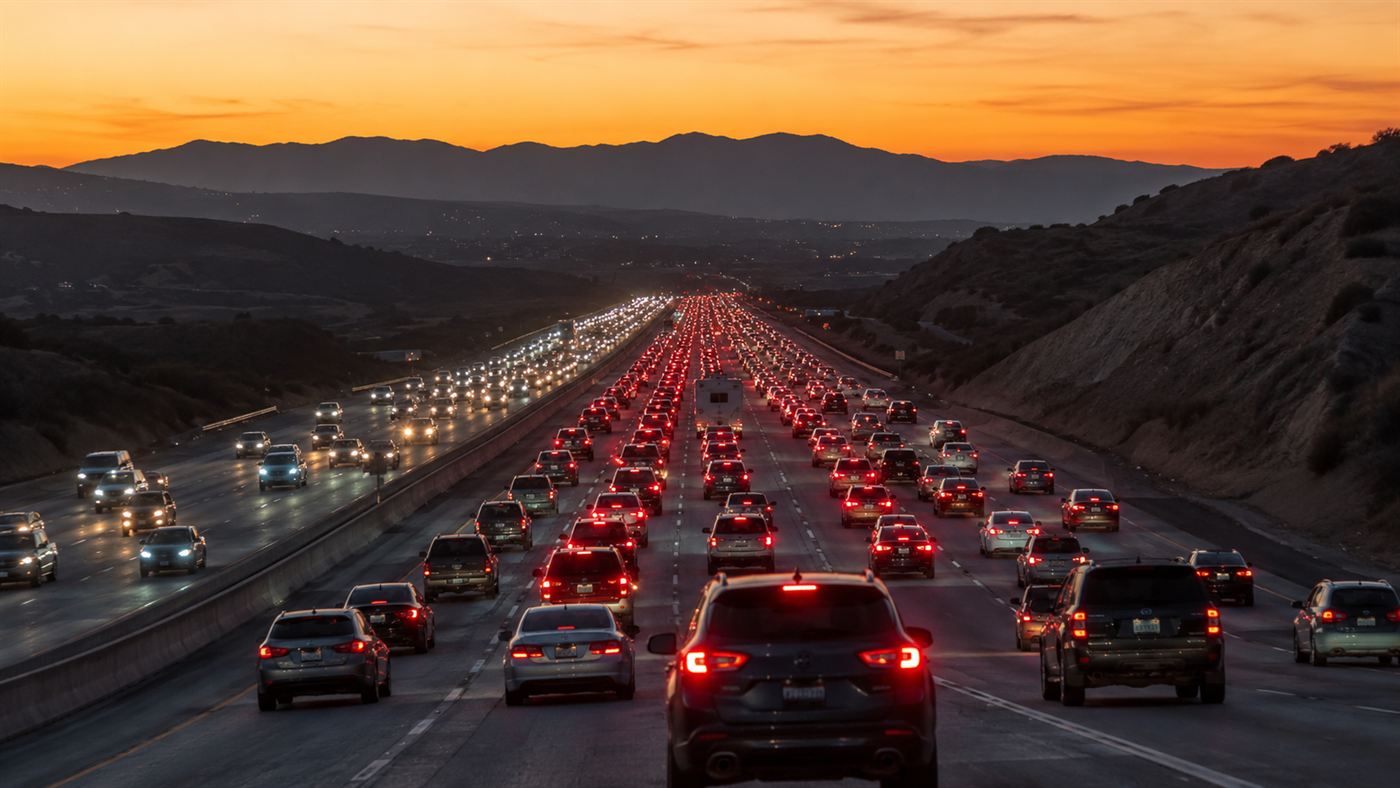
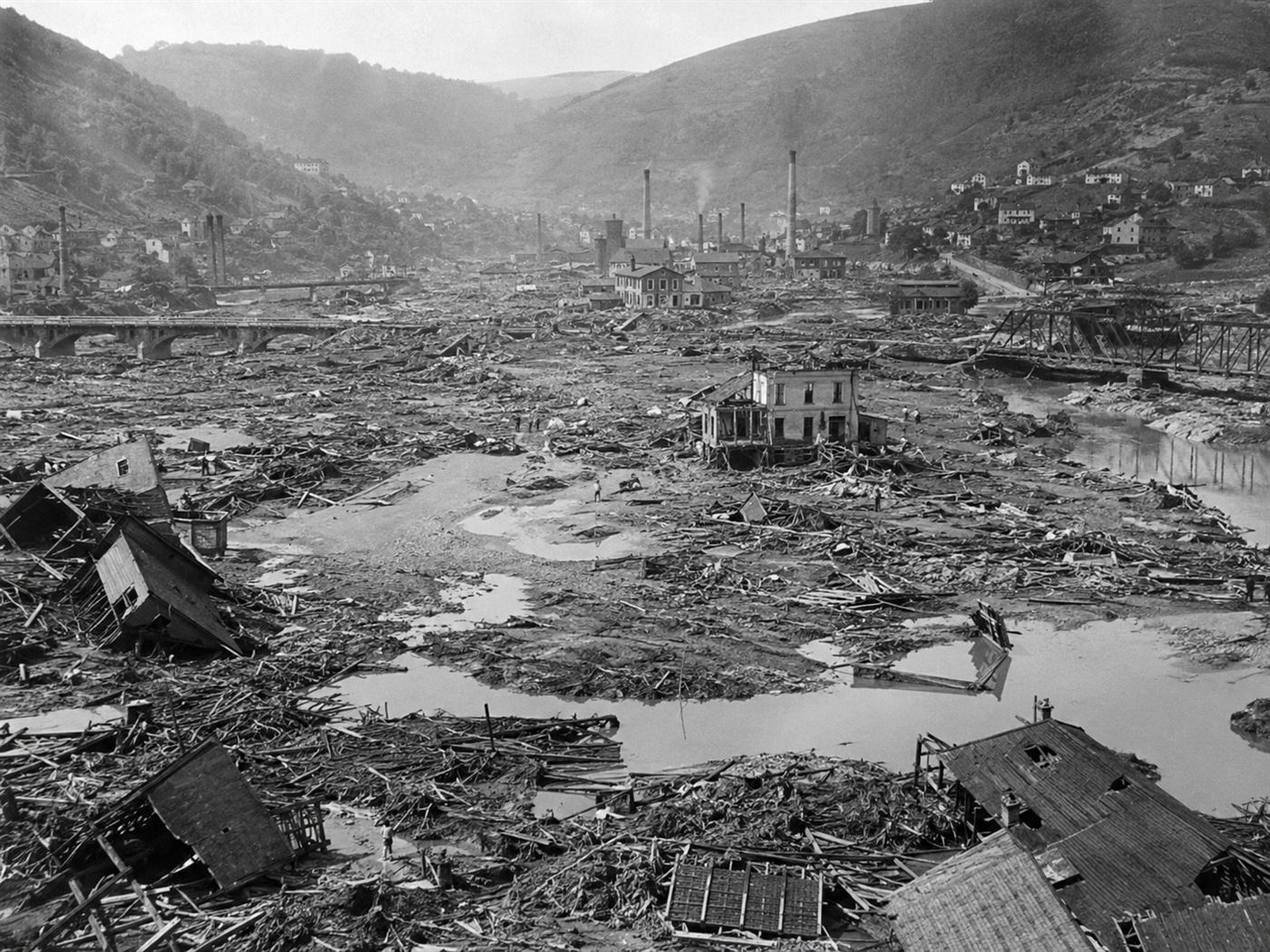
What followed was the ragged reality of a sudden emergency evacuation: highways clogged with taillights, gas stations run dry, families grabbing what they could and fleeing in the dark on a few hours' notice. Meanwhile, crews scrambled to slow the erosion, dropping bags of rock from helicopters onto the raw hillside while carefully draining the lake through the ruined main spillway. The gamble held. The weir did not fail, the evacuation orders were lifted on February 14, and remarkably, nobody died. This was a near-miss on the same scale as the disasters that did not stop in time, like the Banqiao dam collapse in China.
Why did the Oroville Dam spillway fail?
Once the water receded, the question was how the tallest dam in America had come so close to catastrophe through its own safety system. An independent forensic team led by engineer John France spent months on it and reported in January 2018 that there was no single villain. The failure was systemic, decades in the making. The main spillway's concrete slab was too thin and poorly anchored in places, and water had been seeping through cracks and joints for years.
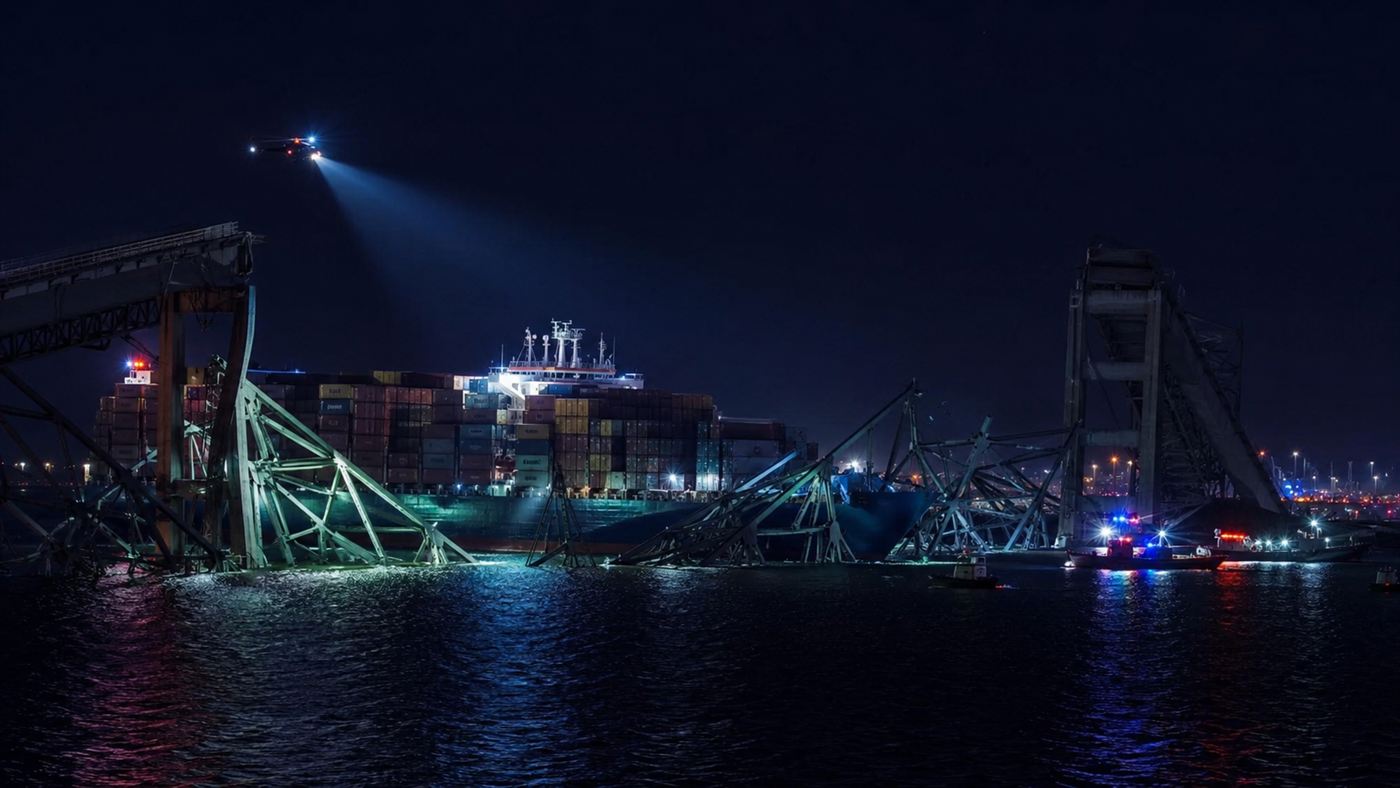
When enough water got under the slab during that February release, the pressure lifted a section right off its foundation, exposing rock that turned out to be weak and weathered rather than the solid bedrock the 1960s design had assumed. From there it unzipped. The report's most damning line was not about concrete at all: it blamed a long-term failure of the dam's owner, its regulators, and the wider dam safety industry to recognize a risk that had been hiding in plain sight since the dam was built. This kind of quiet, cumulative neglect is exactly what dropped Baltimore's Key Bridge a continent away.
The honest catch
The happy ending, no deaths and a rebuilt spillway, can make Oroville sound like a system that worked. It is more honest to say it was a system that got lucky. The weir held by a margin measured in hours and feet of eroding dirt, and the rock dropped from helicopters was a desperate improvisation, not a plan. California went on to spend about $1.1 billion rebuilding both spillways, finishing the main chute in late 2018. The money proved the danger was real.
The bigger warning is that Oroville is not special. The United States is dotted with thousands of aging dams, many built on the same mid-century assumptions and inspected with the same blind spots the forensic team found here. A hotter, stormier climate is loading those old structures with floods their designers never imagined. Oroville was a chance to learn that a dam can be perfectly sound and still nearly kill a region through the part nobody was watching. The real question is how many other spillways are quietly waiting for their own wet winter.
The tallest dam in America nearly emptied a region through a safety system nobody had checked closely in decades, and only luck and dropped rock kept the water back. With thousands of aging dams facing wilder floods, should the US be spending far more to inspect and rebuild them before the next Oroville? Tell us what you think in the comments.
Related reading: The deadliest dam disaster in history, when 62 dams fell in a single night in China.
More from Watts & Wild
More in Industry & Mega-Builds →

Bruno writes about energy history, industrial disasters, and the people who shaped the technologies we take for granted. He is based in Brazil.