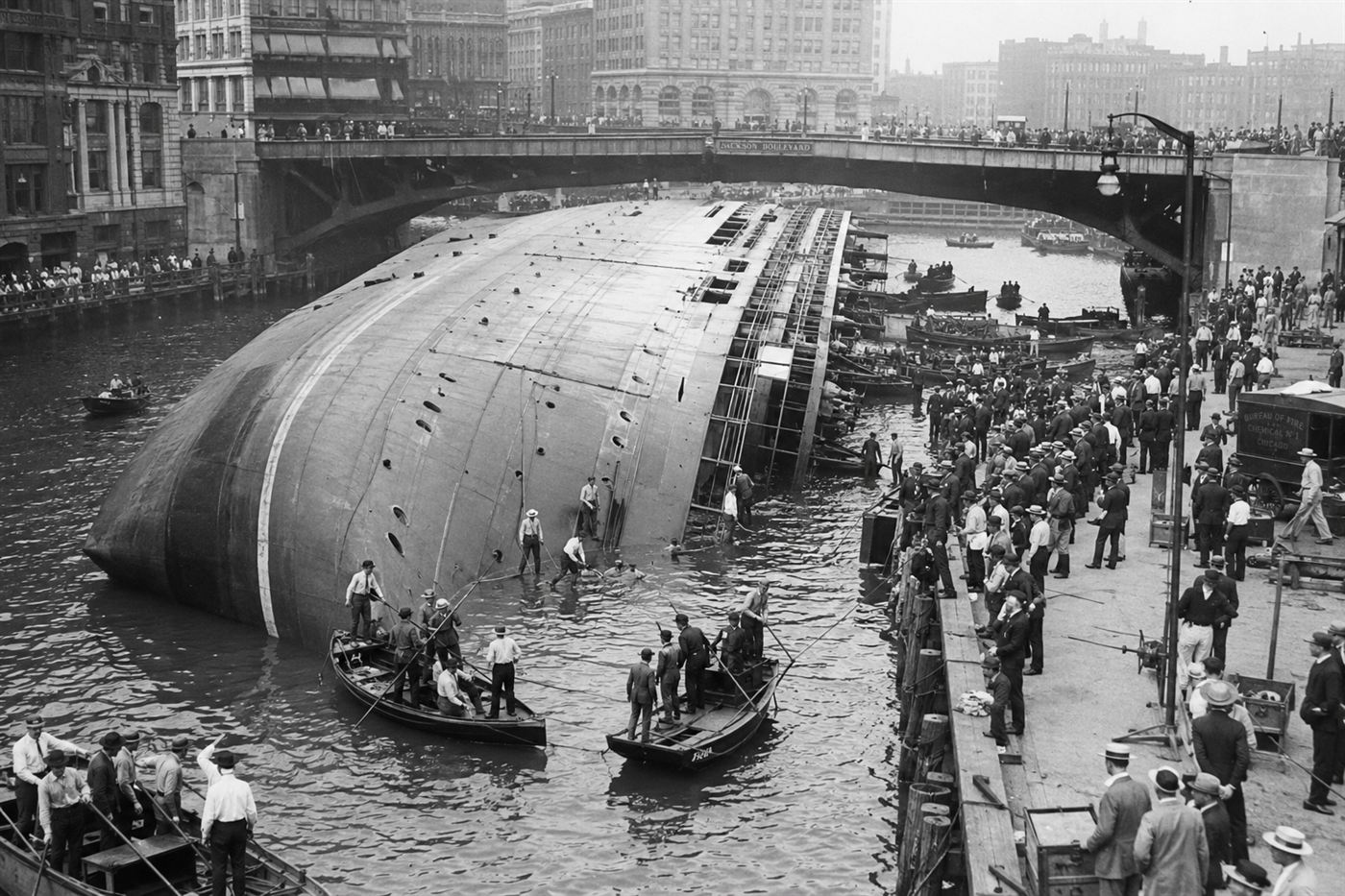
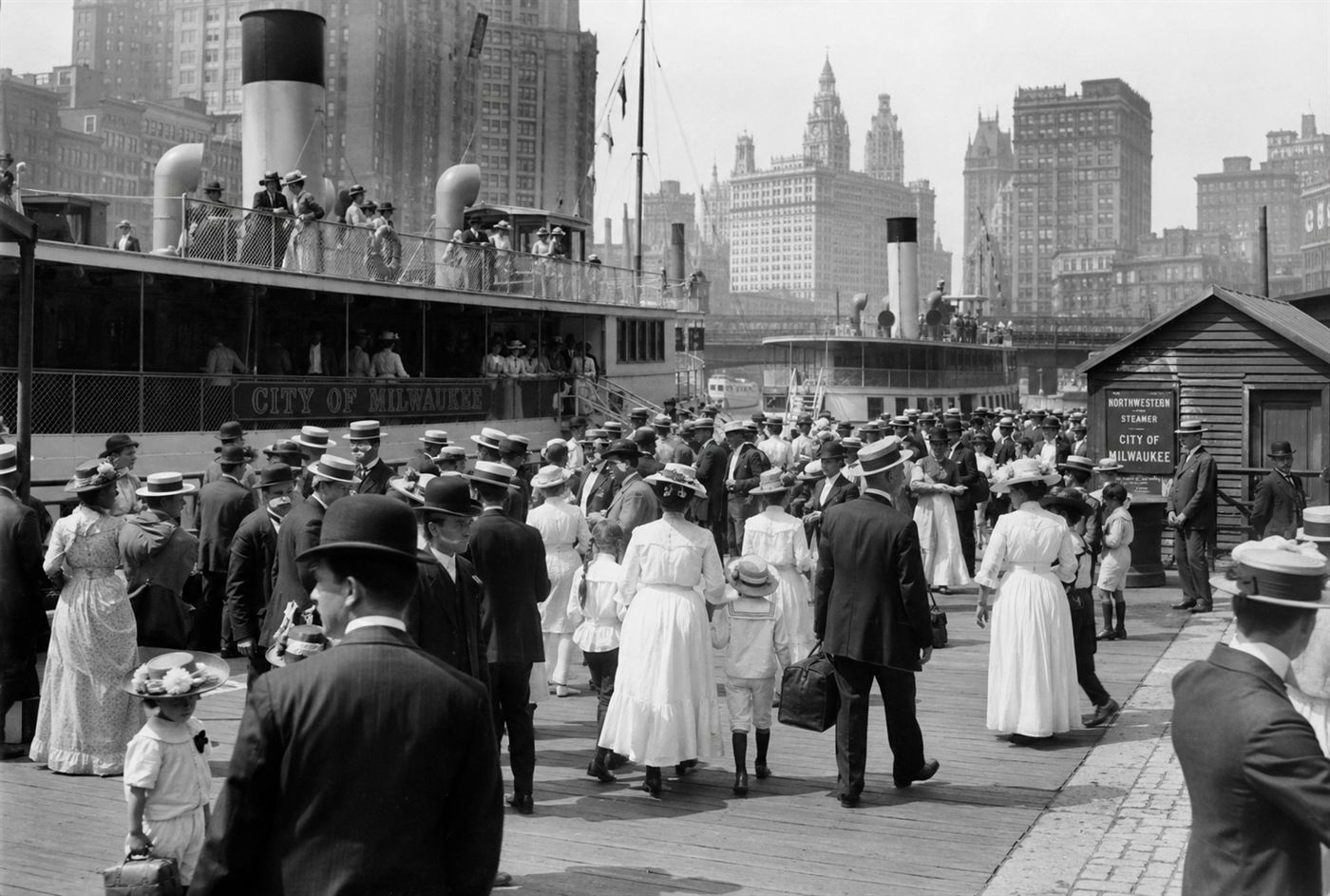
The SS Eastland disaster struck at approximately 7:28 in the morning. The Western Electric Company had chartered five passenger ships to carry roughly 7,000 workers and their families from the Chicago River docks to a picnic at Washington Park in Michigan City, Indiana. The Eastland was the first to load. Passengers crowded the upper decks to get a good view of the river, and the ship began to list to port almost immediately as they boarded.
The crew opened ballast tanks to correct the lean. The ship swung back, then listed to starboard, then back to port again. A few passengers noticed the floor tilting and moved toward the dock side. At 7:28 AM, the SS Eastland rolled completely onto its port side and lay against the dock in the Chicago River. Most of the people who died were not on deck. They were below, in the ship's enclosed lower compartments, and they never had a chance to get out.
The Eastland disaster killed 835 people in the Chicago River on July 24, 1915, making it the deadliest maritime disaster on the Great Lakes. The victims were Western Electric factory workers going to a company picnic. The ship had a documented history of instability and capsized while still moored at the dock, in water less than twenty feet deep, with the hull visible above the surface from the street.
Why did the SS Eastland capsize in the Chicago River?
The SS Eastland had been known as a problem ship since not long after it was launched in 1903.
It was a Great Lakes passenger vessel, built long and flat-bottomed for speed and shallow draft, designed to run between ports across Lake Erie, Lake Huron, and Lake Michigan.
The flat bottom gave the ship a high center of gravity relative to its width.
Inspectors and engineers noted the Eastland's tendency to list as early as 1904, when it tilted alarmingly during a routine run with passengers aboard.
Over the following decade the ship changed hands several times.
Each time it was sold, the new owners managed the instability through ballast water adjustments rather than structural changes.
In 1915, the federal steamboat inspection service certified the SS Eastland to carry 2,500 passengers, despite the documented history.
The ship loaded roughly that many people on the morning of July 24.
What followed would become the worst maritime disaster in Great Lakes history and one of the deadliest maritime disasters in American history.
The Eastland disaster did not happen because the ship was overloaded beyond its certified capacity.
It happened because the ship's instability was never corrected, because no one in the inspection chain required the owners to fix it, and because the months before the accident had seen additional weight added to the top deck.
How did Titanic lifeboats contribute to the SS Eastland disaster?
On April 15, 1912, the Titanic sank in the North Atlantic and killed more than 1,500 people, partly because the ship did not carry enough Titanic lifeboats for everyone aboard.
Congress responded by passing the La Follette Seamen's Act, signed by President Woodrow Wilson in March 1915, which required passenger ships to carry sufficient lifeboats and life preservers for every person on board.
For the Eastland, compliance meant adding new lifeboats to the upper decks and increasing the number of life preservers stored there.
The additional Titanic lifeboats and safety equipment raised the ship's center of gravity further.
Inspectors who signed off on the Eastland's 1915 certification were aware of its history of listing.
The Titanic lifeboats were not the sole cause of the Eastland disaster.
The ship had been dangerously designed from the start.
But the weight added to comply with the Titanic lifeboats requirement pushed an already-compromised ship closer to its limit.
A maritime safety law passed because too few Titanic lifeboats let 1,500 people drown had, within three years, contributed to conditions that killed another 835 people in a river no deeper than a swimming pool.
Who were the Western Electric workers who died in the Eastland disaster?
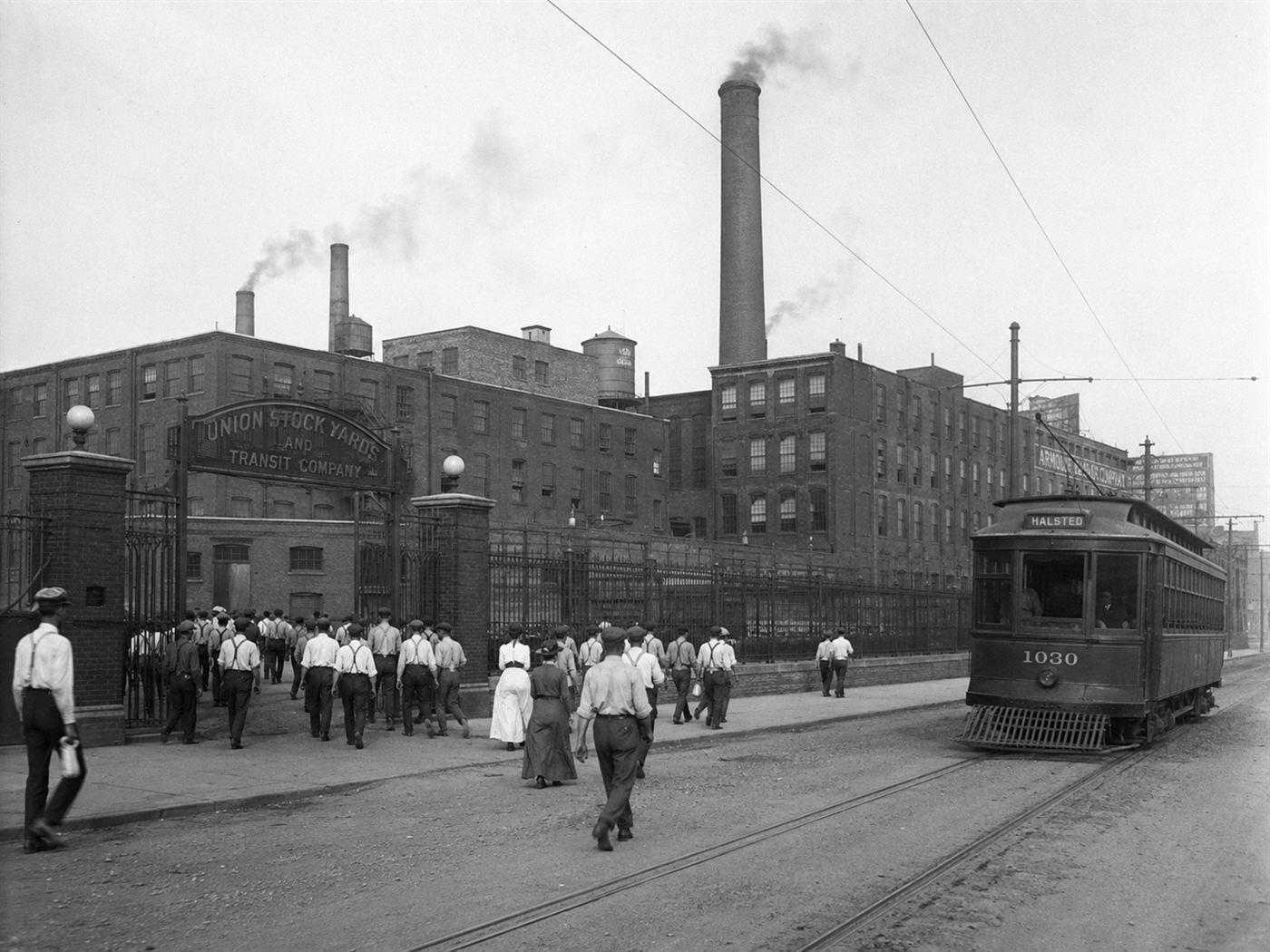
The Western Electric Company operated the Hawthorne Works in Cicero, Illinois, a sprawling factory complex southwest of Chicago that employed tens of thousands of people making telephone equipment and electrical supplies.
Many of the Western Electric employees who boarded the SS Eastland on July 24 were Czech and Polish immigrants who had come to Chicago in the early decades of the twentieth century to work in manufacturing.
They dressed in their best clothes that morning.
They brought their children, their parents, their neighbors from the same tenement buildings.
Twenty-two families were completely wiped out in the Eastland disaster.
The band had been playing on the upper deck as passengers boarded.
Entire departments of the Western Electric factory lost almost everyone who worked there.
In the days after the SS Eastland sank, Chicago neighborhoods with large Czech and Polish populations went quiet.
Churches held simultaneous memorial masses.
The city's coroner identified victims from photographs and letters found in their clothing.
One Chicago newspaper ran a photograph of 22 names under the headline "Complete Families Wiped Out."
What happened in the hours after the SS Eastland capsized?
The rescue began within minutes of the capsize.
Workers on the dock threw ropes and planks to passengers clinging to the hull.
Divers entered the Chicago River to search the enclosed lower decks, pulling out survivors and then bodies.
The river in that stretch was narrow enough that people on the Clark Street Bridge could see the overturned hull clearly from above.
A nearby armory was converted into a makeshift morgue where families came to identify the dead.
By the following morning, the SS Eastland disaster had claimed more lives than any other single maritime disaster in Great Lakes history.
It had also killed more Americans in a single incident than the sinking of the Lusitania three months earlier, in May 1915, which had killed 128 American passengers and pushed the United States toward entering the First World War.
That comparison was made in some newspapers at the time and then forgotten, because the Lusitania was a German target and changed geopolitics.
A capsized ship in the Chicago River, as devastating as it was, did not change foreign policy.
The SS Eastland disaster moved off the front pages within weeks.
Why did no one go to prison for the Eastland disaster?
Captain Harry Pedersen and several steamship company officials were indicted in the months after the Eastland disaster.
The charges centered on criminal carelessness and the negligent operation of an unsafe vessel.
The case moved through the courts for years.
Charges were dismissed, refiled, and dismissed again as the legal proceedings stretched across two decades.
In 1935, twenty years after the Western Electric workers died in the Chicago River, a federal court dismissed all remaining charges.
No one served time in connection with the maritime disaster.
Civil claims from survivors' families were settled for minimal amounts.
The SS Eastland itself was sold to the United States Navy, rechristened USS Wilmette, and used as a naval training vessel during the First and Second World Wars.
The same hull that killed 835 people in the Chicago River was repurposed to train American sailors.
USS Wilmette was decommissioned in 1945 and scrapped.
The dock where the Eastland capsized, between the Clark Street and LaSalle Street bridges, still exists.
There is a historical marker on the riverbank.
The honest catch
The argument that the La Follette Seamen's Act caused the Eastland disaster is sometimes overstated.
The SS Eastland was a dangerous ship before the Titanic sank.
Inspectors had documented its instability for a decade.
Owners had managed the problem with ballast adjustments and then sold the vessel rather than fix it.
What the Titanic lifeboats requirement did was add weight to an already-compromised ship and allow federal inspectors to certify it for 2,500 passengers one final time without requiring structural repairs.
The Eastland disaster also raises the question of why some maritime disasters are remembered and others are not.
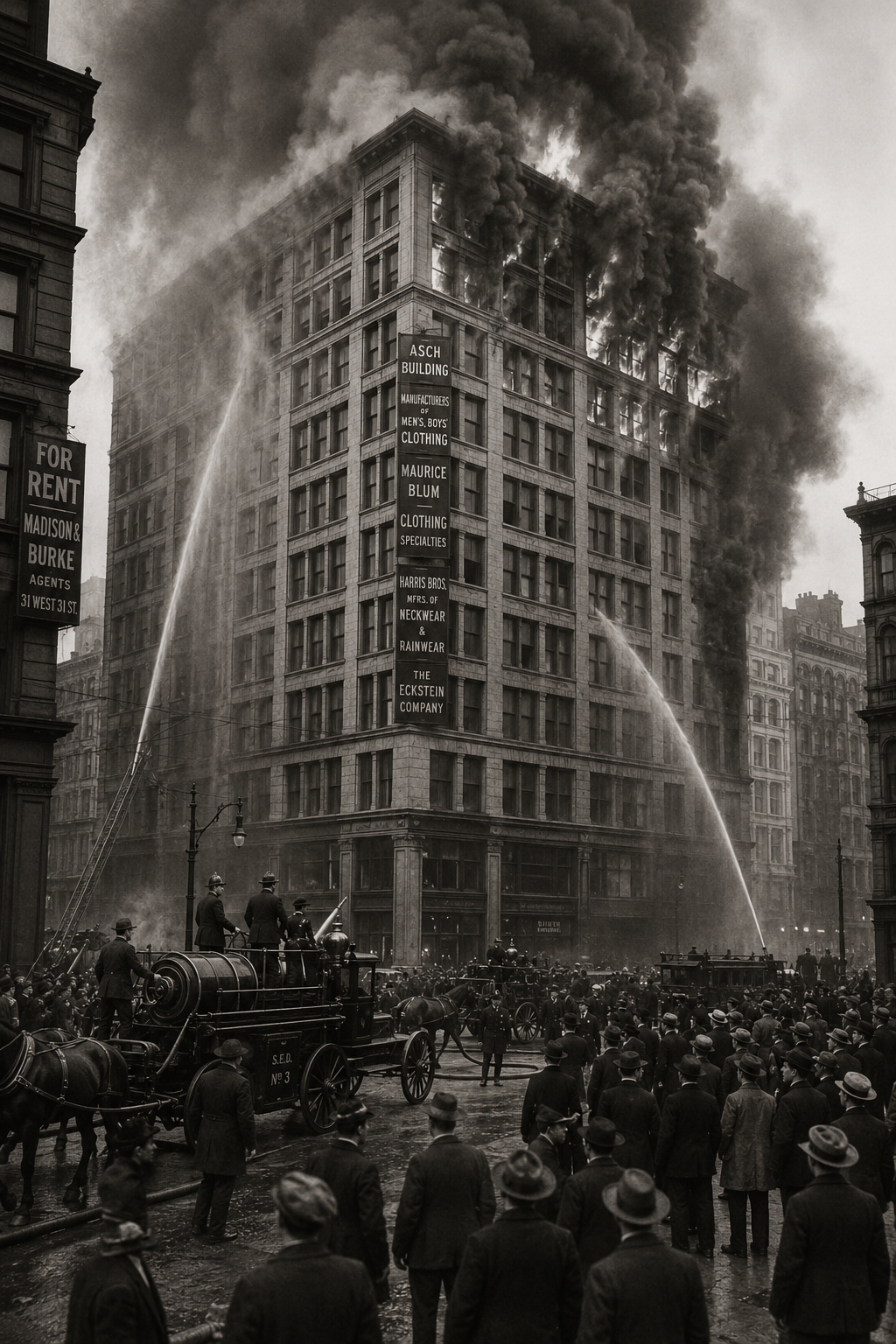
The SS Eastland killed more people in a single maritime disaster than the Triangle Shirtwaist fire of 1911, which became a turning point in American labor history and is taught in schools.
The Shirtwaist fire produced a clear villain, a clear victim group, and arrived at a moment of rising labor-movement power.
The Eastland disaster was messier: a ship certified by federal inspectors, operated by a company that had transferred the vessel multiple times, carrying workers from an employer that had done nothing obviously wrong except choose that ship.
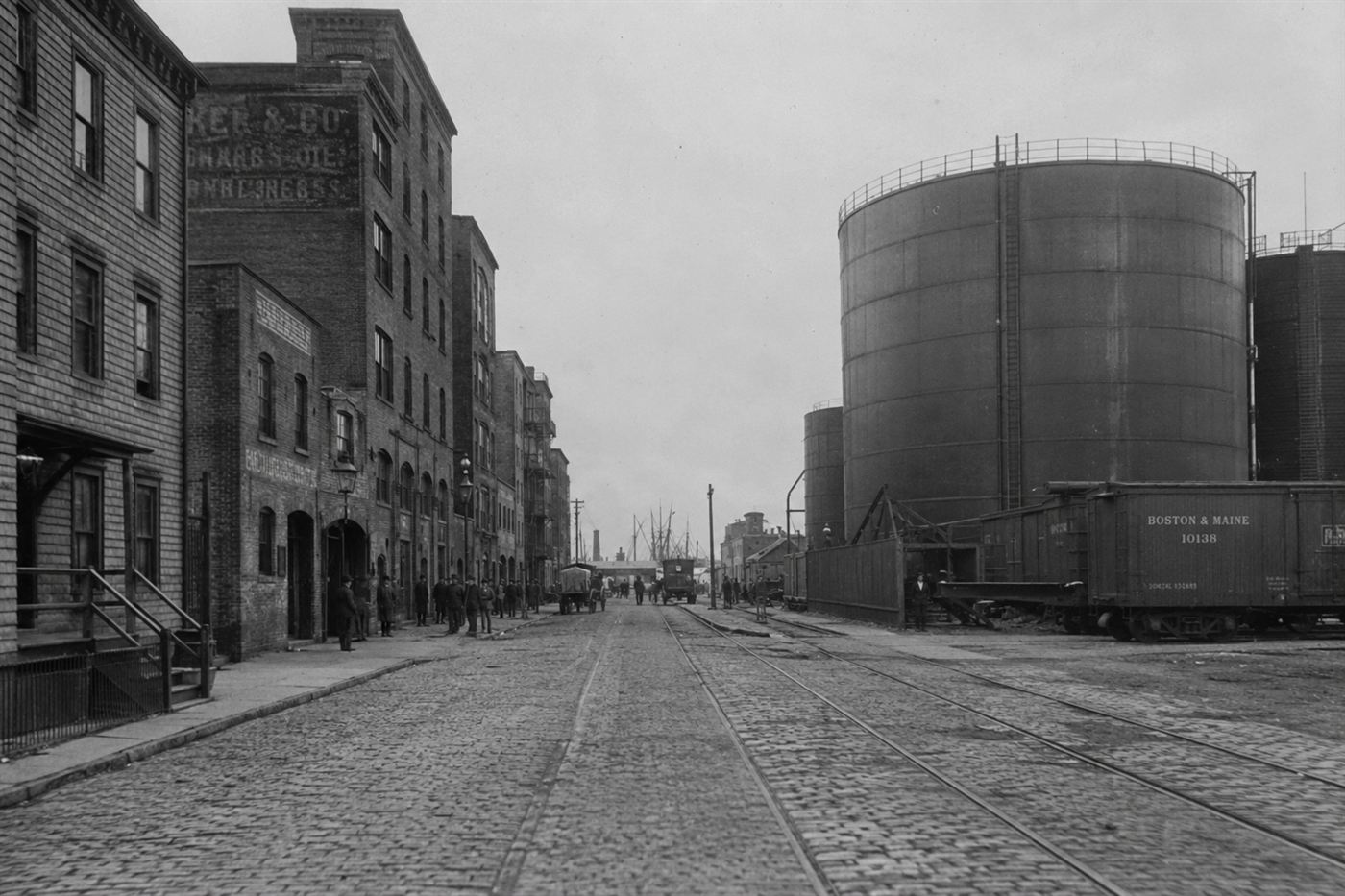
Similar questions about who bears the cost of known risks would surface decades later when Union Carbide built its pesticide factory inside the residential districts of Bhopal, and when the owners of a molasses tank in Boston spent six years blaming anarchists rather than acknowledge the tank they built had been defective from the start.
Eight hundred and thirty-five people went to a company picnic on a summer morning and never came home, and no one was ever convicted.
At what point does a chain of known risks and ignored warnings become criminal negligence rather than bad luck?
Leave a comment below.