Thousands of Union soldiers survived the Civil War and its deadliest prison camps, then died within days of freedom when the overloaded steamboat Sultana blew apart on the Mississippi in 1865
It is the worst shipwreck in American history, worse than the Titanic, and almost no one has heard of it. The Sultana disaster killed more than a thousand freed prisoners of war on April 27, 1865, and the timing of it, days after a president was murdered, erased it from memory almost as it happened.
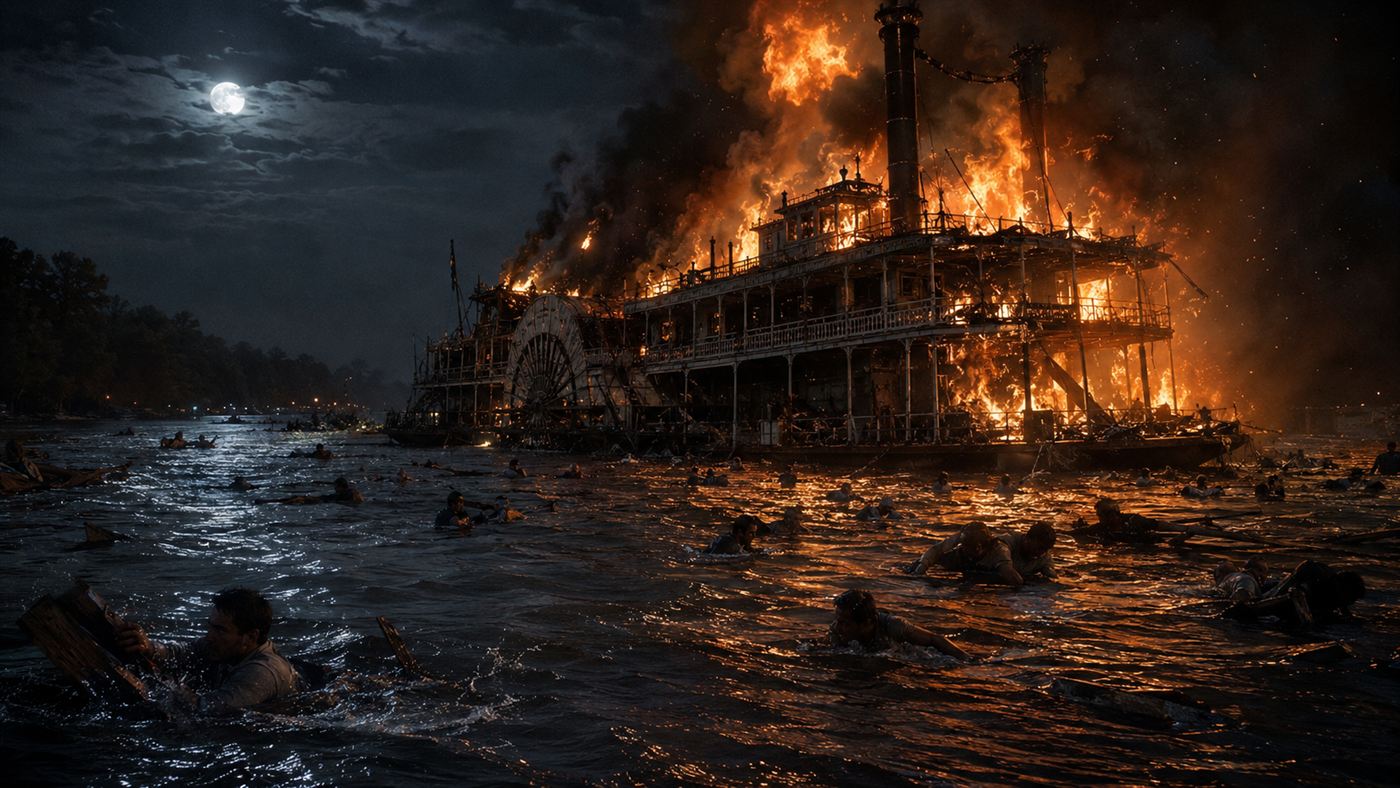
The Sultana explodes on the Mississippi, the deadliest maritime disaster in US history. Illustration: Watts & Wild.
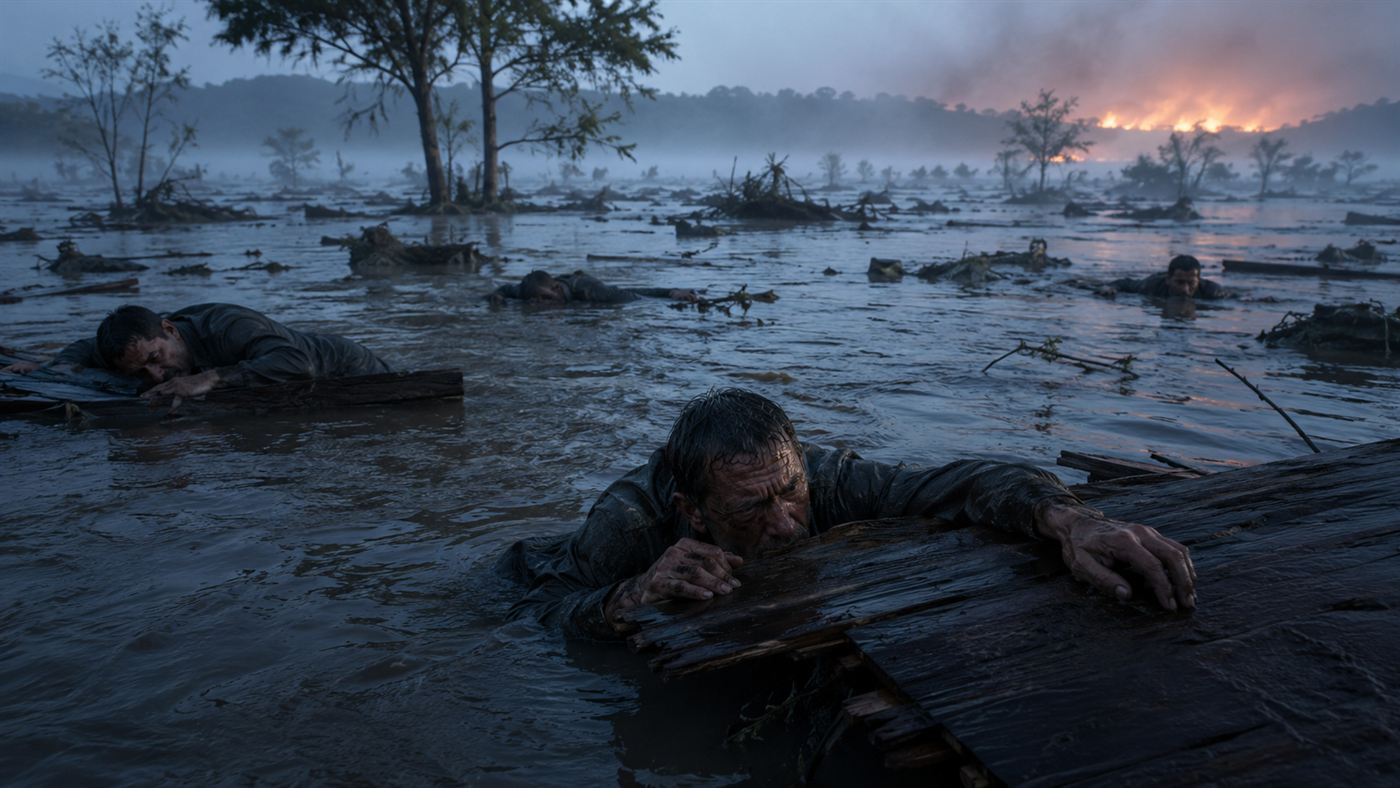
The Sultana disaster should be as famous as any tragedy in American history, and instead it is a footnote. As the documented record shows, in the early hours of April 27, 1865, three of the steamboat Sultana's four boilers exploded on the Mississippi River about seven miles north of Memphis. The blast tore the wooden boat apart and set the wreckage ablaze, hurling men into a cold, flooded river in the dark. More than a thousand of them never came out.
What makes it unbearable is who they were. The overwhelming majority were Union soldiers who had just survived the Civil War and its most notorious prison camps, and who were finally going home.
The short version: On April 27, 1865, the steamboat Sultana, built to carry 376 people but packed with more than 2,100, exploded on the Mississippi near Memphis. Most aboard were freed Union prisoners of war heading home. Around 1,164 or more died, making it the worst maritime disaster in US history, yet Lincoln's assassination buried the news.
A boat built for 376, packed with more than 2,000
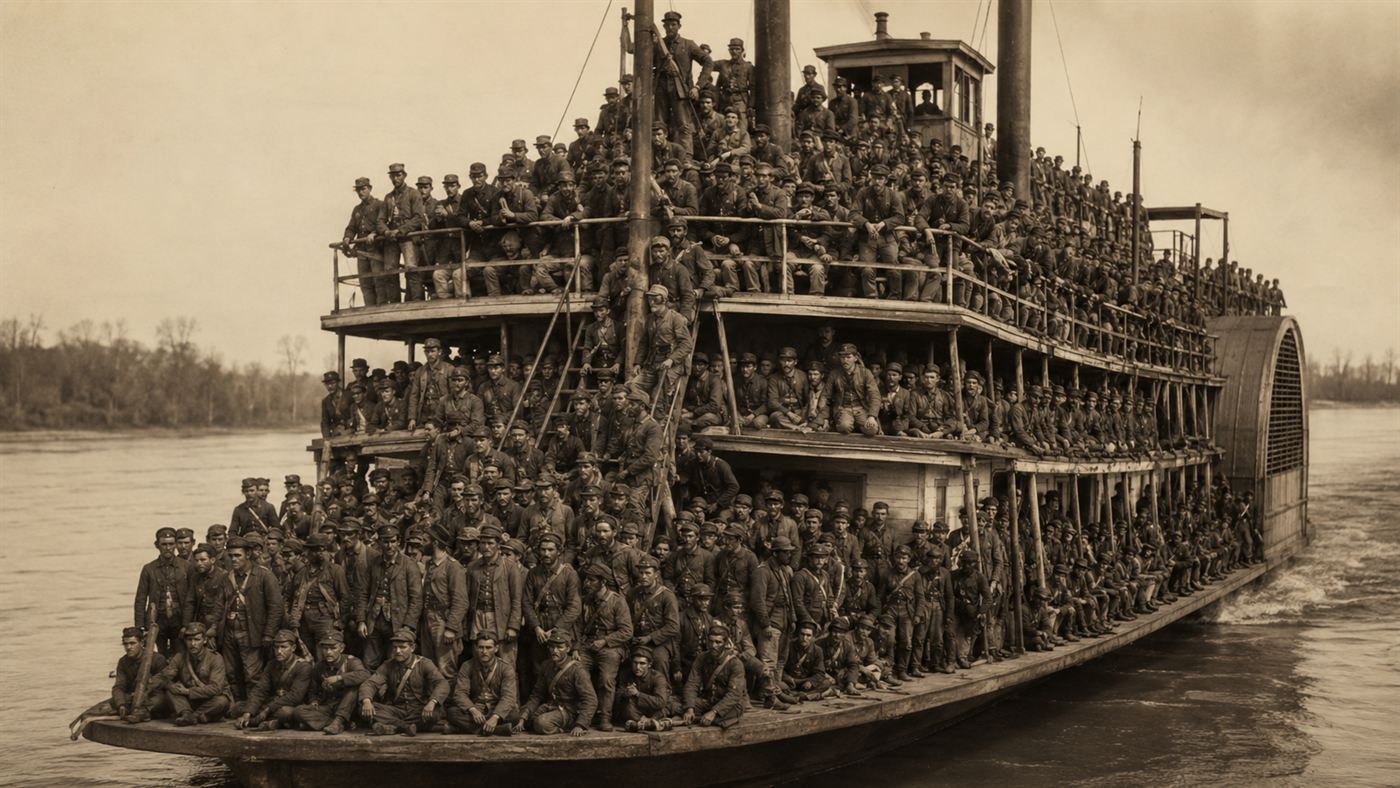
The Sultana was a wooden side-wheel steamboat, 260 feet long, with a legal capacity of 376 passengers plus a crew of about 85. On its final voyage it carried nothing like that number. Crammed onto its decks were roughly 1,950 recently paroled Union prisoners, along with guards, civilian passengers, and crew, for a total of around 2,127 human beings, more than five times what the boat was ever meant to hold.
Photographs taken of the Sultana the day before it sank show the decks black with men, packed shoulder to shoulder along every rail. The boat was dangerously top-heavy and riding a Mississippi swollen and fast with spring floodwater. Everything about the voyage was an accident waiting to happen, and the reasons it happened anyway are as damning as the disaster itself.
Men who had already survived hell
To understand the cruelty of it, you have to know where these men had been. Most were survivors of Confederate prison camps, above all the infamous Andersonville in Georgia and Cahaba in Alabama, places of starvation, disease, and death so severe that surviving them at all was a kind of miracle. Thousands of their fellow prisoners had died behind those stockades.
Now the war was over. Lee had surrendered on April 9, the fighting was ending, and these gaunt, weakened Union prisoners of war were being sent north to be discharged and reunited with families who had feared them dead. They were, in the most literal sense, almost home. That is the picture to hold onto: men who had endured the unendurable, packed onto a boat for the last leg of the journey back to their lives. It is a reversal as bitter as any in the annals of war, echoing the way other disasters strike just as safety seems near, like the Eastland rolling over at its own dock.
What caused the Sultana disaster?
The mechanical trigger was a boiler that should never have been trusted. One of the Sultana's boilers had been leaking, and rather than replace it properly, which would have taken days, the chief engineer authorized a quick, temporary patch so the boat could stay on schedule. The reason for the rush was money, and the boat pressed on with a bodged repair holding back scalding, high-pressure steam.
Out on the river, the overcrowding turned deadly. As the top-heavy Sultana leaned into the bends of the flooded Mississippi, the water in its boilers sloshed to one side, leaving parts of the hot metal suddenly exposed and then flooded again, a punishing cycle that helped push the strained boiler past its limit. Three of the four let go almost at once, and the steamboat explosion ripped through the sleeping men above. This is the same lethal chain of a cut corner meeting a heavy load that runs through so many industrial tragedies, from the dam above Johnstown to a modern power line.
The kickback that killed them
Behind the overcrowding was plain corruption. Transporting discharged soldiers was a lucrative government contract, and the officers arranging it were paid by the head, a set fee for every enlisted man and more for every officer loaded aboard. A quartermaster and the Sultana's captain, J. Cass Mason, worked out a kickback scheme to cram as many men as possible onto this one boat rather than spreading them across several, so more of that per-head money flowed their way.
So the men were packed on not by accident but by greed, their safety traded for a few dollars a head. It is the oldest and grimmest equation in industrial disaster: a known danger accepted because someone stood to profit. Captain Mason died in the explosion he helped cause, and of the others accused, essentially no one was ever punished, their convictions overturned or their careers shielded by rank.
Why almost no one remembers it
By any measure the Sultana was a catastrophe of the first order. The most careful modern research puts the death toll around 1,164, and some estimates run much higher, which makes it the deadliest maritime disaster in United States history, worse than the Titanic that the world would mourn half a century later. And yet it vanished from the national memory almost immediately.
The reason is timing. The country was drowning in enormous news. President Abraham Lincoln had been assassinated on April 14, and the manhunt for John Wilkes Booth ended with his death on April 26, the very day before the Sultana sank. As the American Battlefield Trust notes, the disaster was overshadowed in the press by the events surrounding the end of the war. A thousand dead soldiers on a river simply could not compete with a murdered president, and so the men who survived the Civil War only to die going home were quietly forgotten.
The honest catch
History owes these men remembrance, but it should be careful remembrance. The exact death toll will never be known, because the passenger lists were chaotic, nobody was sure how many men were even aboard, and estimates have ranged from about 1,100 to as high as 1,800. The round numbers we use are best guesses drawn from bad records, and honesty means admitting that.
It is also too simple to say the disaster was hidden or covered up. Much of its obscurity is just the brutal accident of the calendar, a tragedy that happened in the loudest week in American history. But the negligence underneath it was real, the boiler was knowingly patched, the boat was knowingly overloaded for profit, and no one truly answered for it. The Mississippi River took more Americans that night than any shipwreck before or since, and their story deserves to be remembered not as a footnote to an assassination, but on its own terrible terms.
The worst shipwreck in American history killed men who had already survived a war and its prison camps, and the country barely noticed. Why do you think some disasters become legends while others, even deadlier ones, are forgotten? Tell us what you think in the comments.
Related reading: The excursion ship that rolled over at its Chicago dock and drowned 844 people before it ever left. See also the General Slocum fire that killed over 1,000 people on New York's East River.
More from Watts & Wild
More in Curiosities →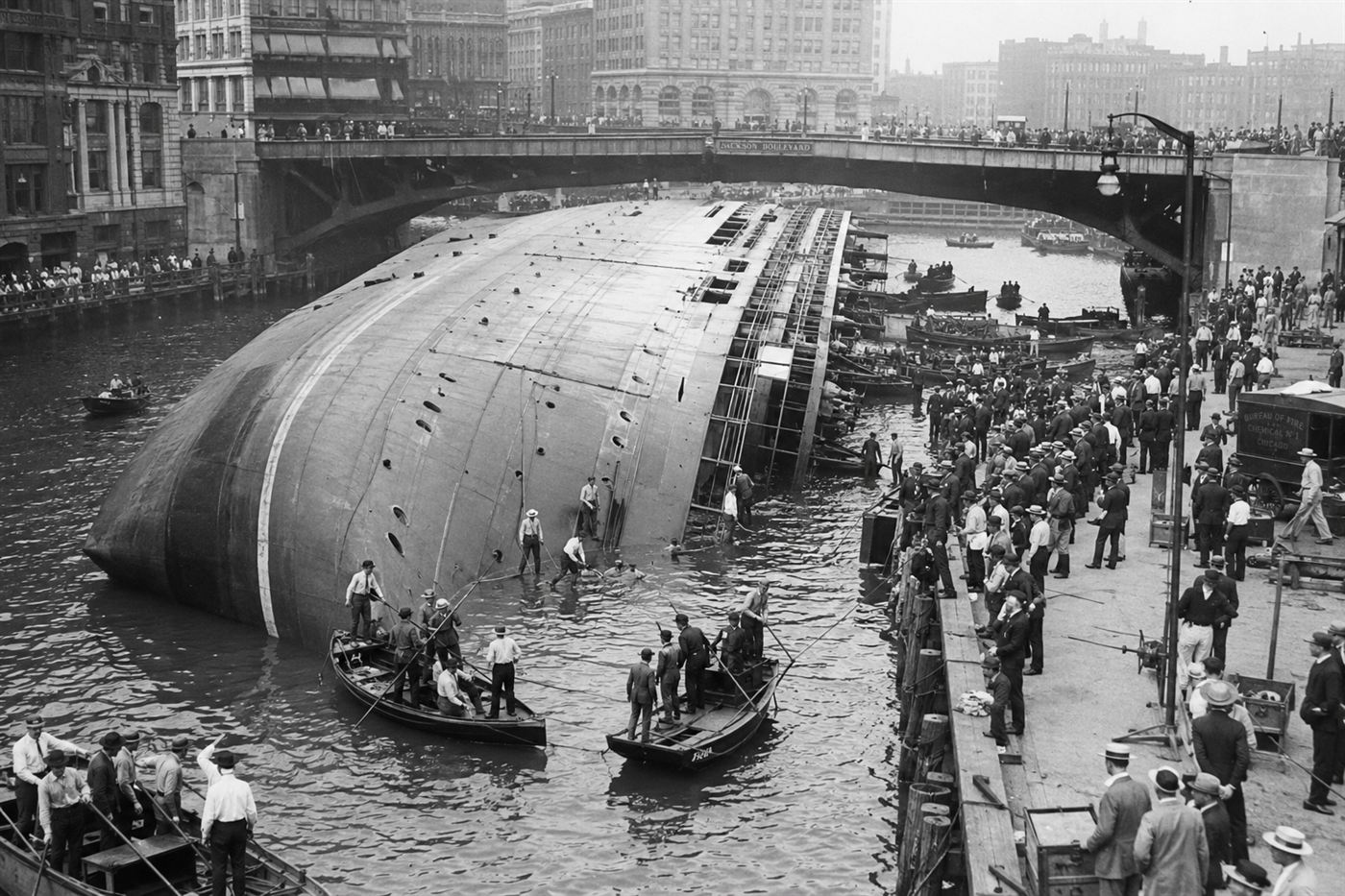

Bruno writes about energy history, industrial disasters, and the people who shaped the technologies we take for granted. He is based in Brazil.