A single crack no wider than a few millimeters, hidden deep inside one steel bar, dropped the Silver Bridge and dozens of Christmas shoppers into the Ohio River in under a minute
On a cold December evening in 1967, rush-hour traffic sat bumper to bumper on a bridge between West Virginia and Ohio. Then, with almost no warning, the whole structure fell. The Silver Bridge did not fail because of a storm or a flood. It failed because of a flaw the size of a fingernail.
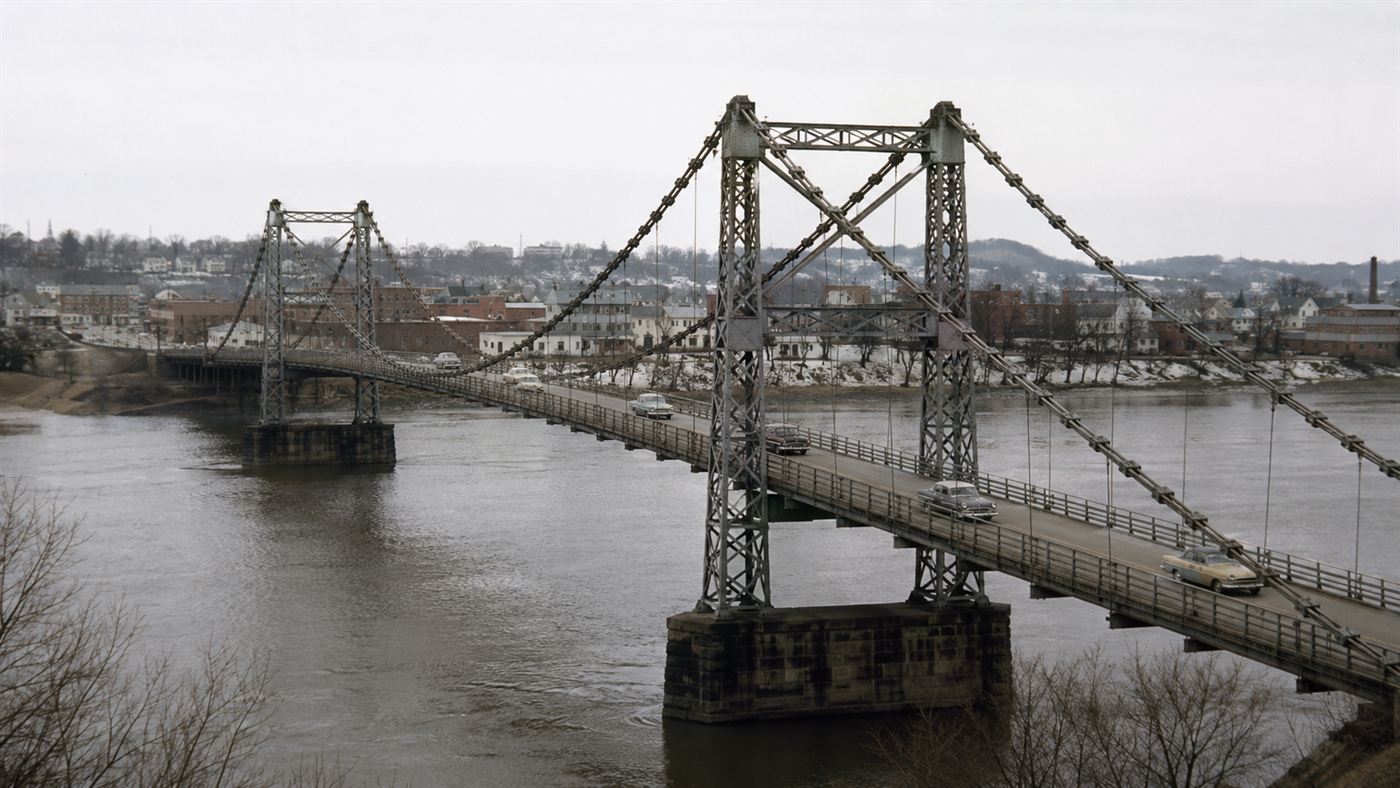
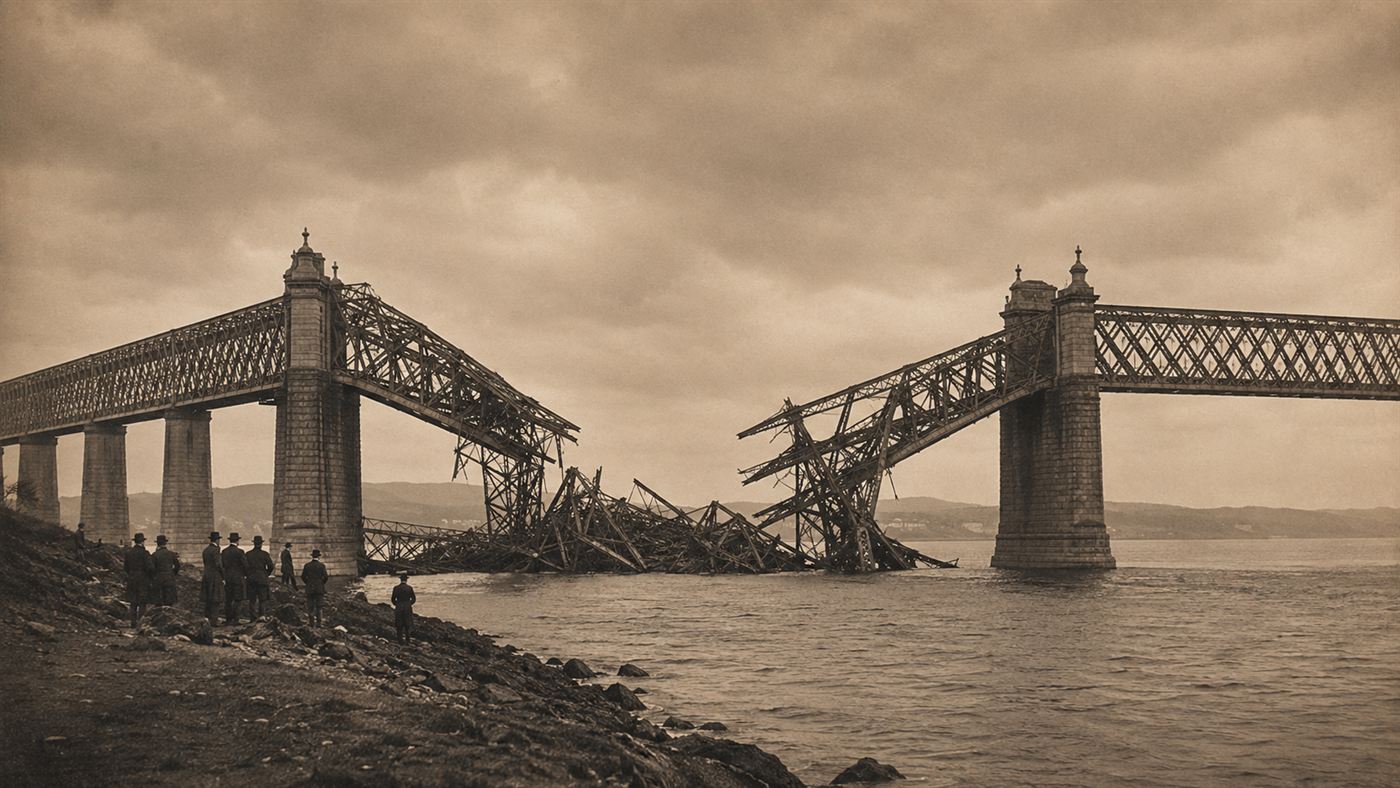
The Silver Bridge over the Ohio River, an eyebar-chain span built in 1928. Illustration: Watts & Wild.
The Silver Bridge was an elegant thing, an eyebar-chain suspension bridge that opened in 1928 and got its name from the aluminum paint that made it gleam. It carried US Route 35 across the Ohio River, linking the town of Point Pleasant, West Virginia, with Gallipolis, Ohio. For nearly forty years it did its job without complaint, which was exactly the problem: nobody was looking closely at what was happening inside its steel.
As the record of the disaster shows, on December 15, 1967, the bridge collapsed into the river during heavy rush-hour traffic, killing 46 people. Cars full of Christmas shoppers dropped into the freezing water in seconds. It remains one of the deadliest bridge failures in American history, and its cause is a lesson every engineer now learns.
The short version: The Silver Bridge, over the Ohio River between West Virginia and Ohio, collapsed on December 15, 1967, killing 46 people. The cause was a tiny crack in a single steel link, an eyebar, that had grown invisibly for decades. Because the design had no backup, that one failure brought down the entire bridge, and the tragedy created America's first national bridge inspection program.
A bridge full of Christmas shoppers
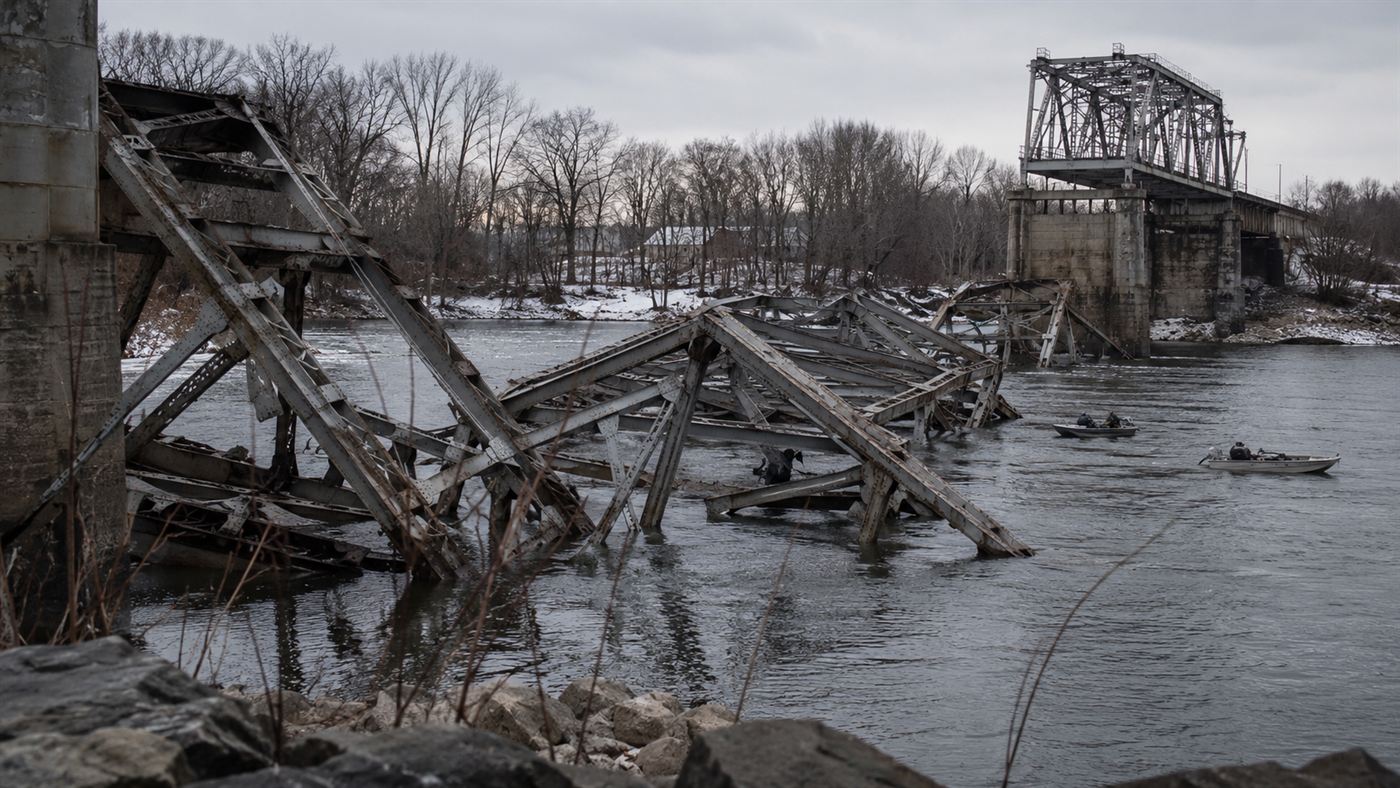
The evening of December 15 was ordinary. Ten days before Christmas, traffic was thick with people heading home and into town to shop, and the deck of the bridge was packed with slow-moving cars and trucks. At around five o'clock, without any real warning, the bridge simply let go. In under a minute the entire span twisted and dropped into the Ohio River.
Thirty-one vehicles went into the water. Forty-six people died, and two of them were never found, lost to the cold December river. In a small community where nearly everyone knew someone on that bridge, the loss was staggering. And in the shocked days that followed, investigators faced a hard question: how could an entire steel bridge, standing solidly for nearly forty years, collapse all at once on a calm winter evening?
The flaw the size of a fingernail
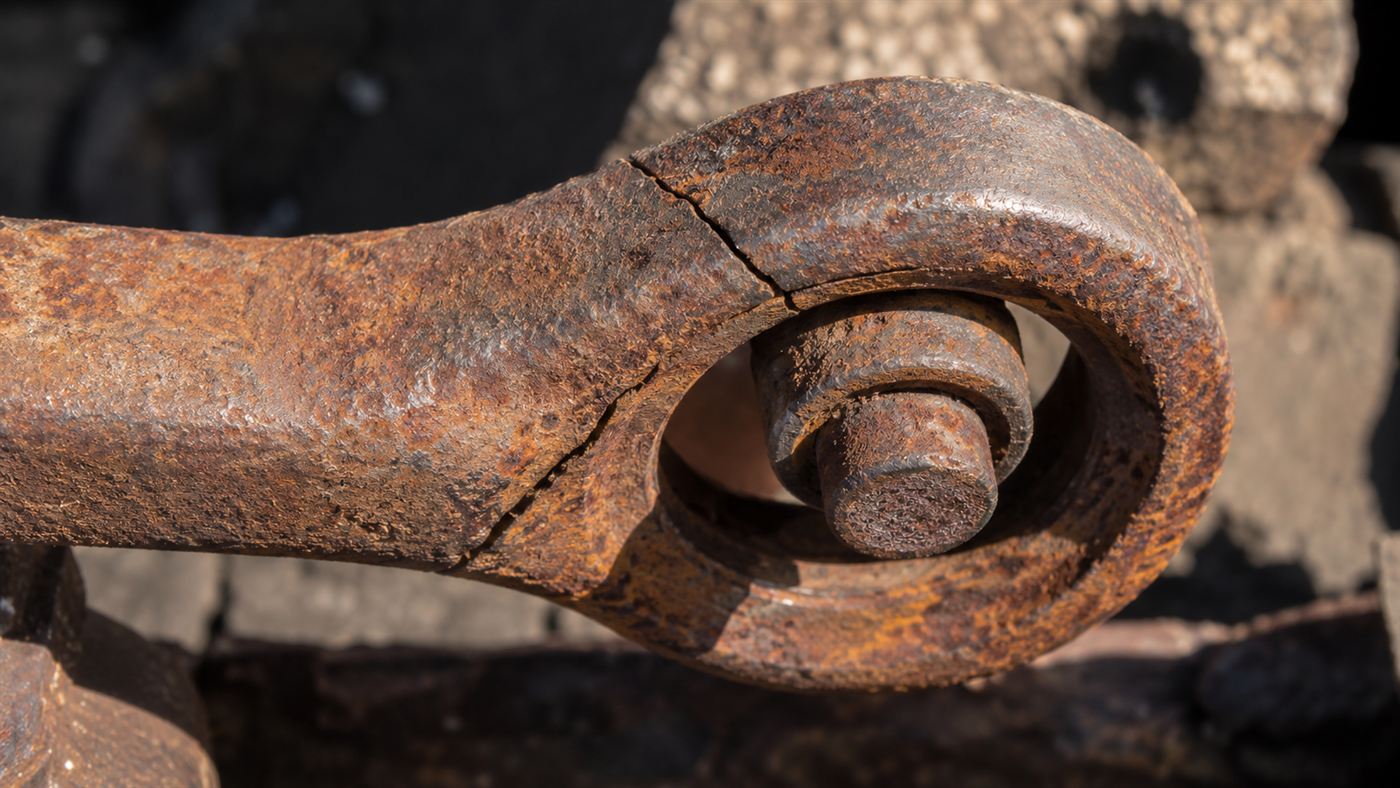
The answer was almost unbelievably small. Investigators traced the failure to a single link in one of the suspension chains, an eyebar known as number 330. Deep inside its joint, where it pivoted on a steel pin, a tiny crack had formed through years of tiny rubbing movements, a process called fretting.
As STRUCTURE magazine's engineering analysis explains, that crack grew slowly through stress corrosion, eating into the metal from within until the eyebar could no longer hold. Crucially, the flaw was internal and hidden, invisible to the kind of visual, from-a-distance checks that bridges of that era received, if they were checked at all. The bridge was doomed from a defect no one could see.
Why one crack could kill a whole bridge
A hidden crack should not, by itself, drop a bridge. What made the Silver Bridge so vulnerable was its design. Instead of the thick woven steel cables most suspension bridges use, it hung from chains made of flat steel eyebars, linked together in pairs like an enormous necklace. It was a lighter, cheaper design, and for decades it worked.
But it had a fatal weakness: it was not redundant. In a cable made of thousands of wires, a few can snap and the rest carry the load. In the eyebar chain, each link was essential, and its partner could not survive alone. When eyebar 330 failed, its neighbor was instantly overloaded and broke too, and the whole chain unzipped in a chain reaction that no part of the structure could stop. There was no second line of defense, so a single point of failure took everything.
How the Silver Bridge changed every bridge in America
The most important part of the story is what came next. The collapse exposed a shocking gap: the United States had no organized system for inspecting its bridges. Structures were built and then largely left alone, trusted to keep standing until, one day, one of them did not.
As the American Society of Civil Engineers notes, the disaster led directly to the creation of the first National Bridge Inspection Standards through the Federal-Aid Highway Act of 1968. For the first time, the country required regular, systematic inspection of its bridges, the same framework that still keeps watch over hundreds of thousands of American spans today. The 46 people who died on the Silver Bridge did not die for nothing, and this bridge inspection system is their legacy.
The Mothman and the bridge
There is a strange coda to the tragedy. In the year or so before the collapse, the town of Point Pleasant had been buzzing with reports of a winged, red-eyed creature that locals called the Mothman. The sightings were already local legend when the bridge came down.
Years later, the writer John Keel wove the two together in his book The Mothman Prophecies, casting the creature as a kind of dark omen of the disaster. The idea took hold, and today Point Pleasant hosts an annual Mothman Festival and even a statue of the creature. It is a piece of American folklore now, though it is worth remembering that underneath the spooky story is a real event in which dozens of ordinary people lost their lives.
The honest catch
Calling it a story of one tiny crack is neat, but a little misleading. The deeper causes were a non-redundant design that left no margin for error, the limits of 1920s steel and engineering knowledge, and decades of traffic far heavier than the bridge was ever built to carry. The crack was the trigger, not the whole explanation, and blaming a single flaw lets the bigger design lessons off the hook.
The reforms were real and they saved lives, but they did not make bridges perfectly safe. America has suffered other deadly collapses since, including a highway bridge in Minneapolis in 2007, a reminder that inspection is only as good as the will to fund and act on it. The Silver Bridge teaches something humbling about big engineering: the things that kill you are often the parts you cannot see, in the places you forgot to look.
A flaw no one could see dropped a whole bridge and 46 people into a winter river. Do disasters like the Silver Bridge prove that inspection can never fully protect us, or that it is the one thing standing between us and the next collapse? Tell us what you think in the comments.
Related reading: The Quebec Bridge, which collapsed twice and gave engineers their iron ring, or the Bessemer process that made the cheap steel our world is built from. See also how a tornado and rusted bolts toppled the Kinzua Bridge in seconds.
More from Watts & Wild
More in Industry & Mega-Builds →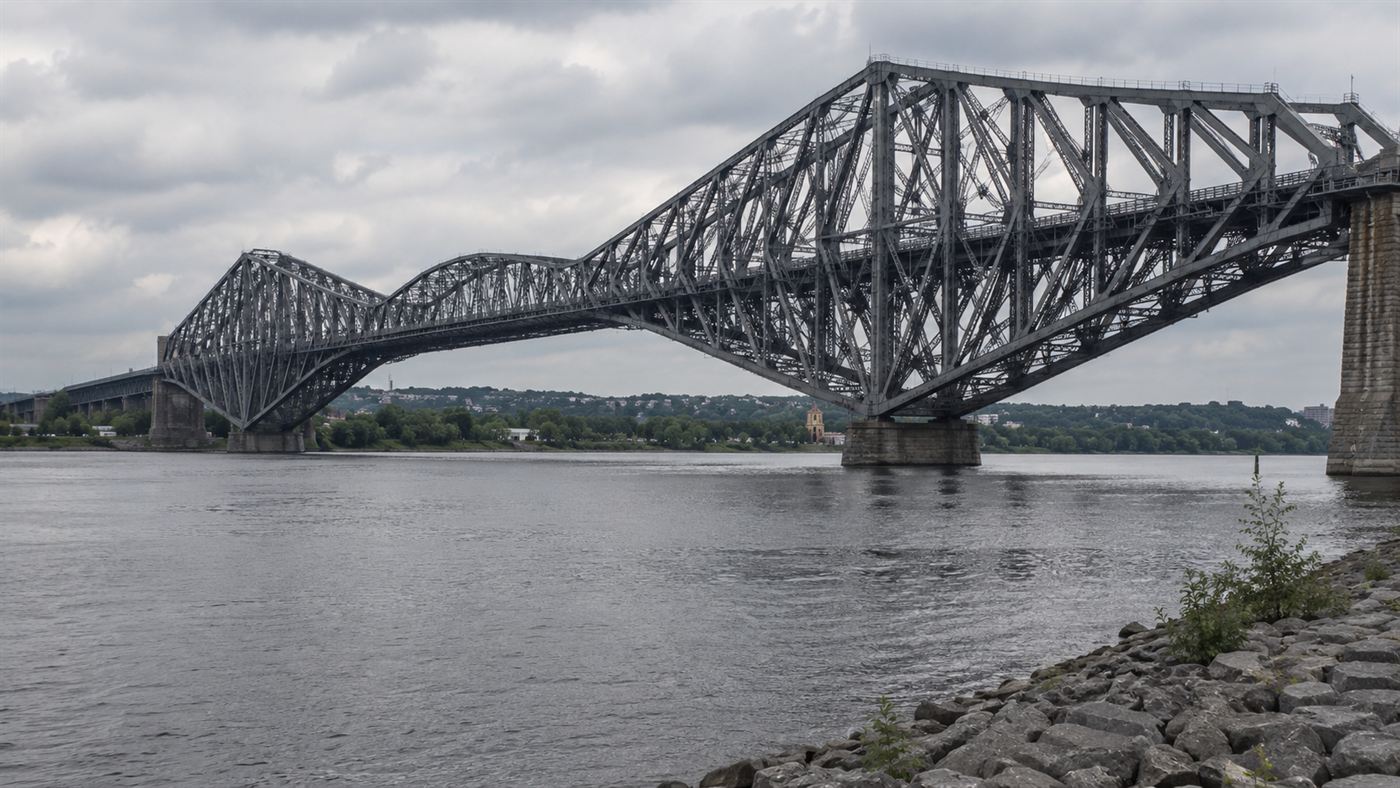

Bruno writes about energy history, industrial disasters, and the people who shaped the technologies we take for granted. He is based in Brazil.