Scotland's longest bridge collapsed in a gale and took a whole train into the river
On the last Sunday of 1879, a passenger train steamed out onto the longest bridge in the world, a two-mile marvel of iron crossing a Scottish firth in a screaming storm. Halfway across, the bridge simply gave way. The Tay Bridge disaster dropped the train and everyone on it into the black water below, and not a single soul survived.
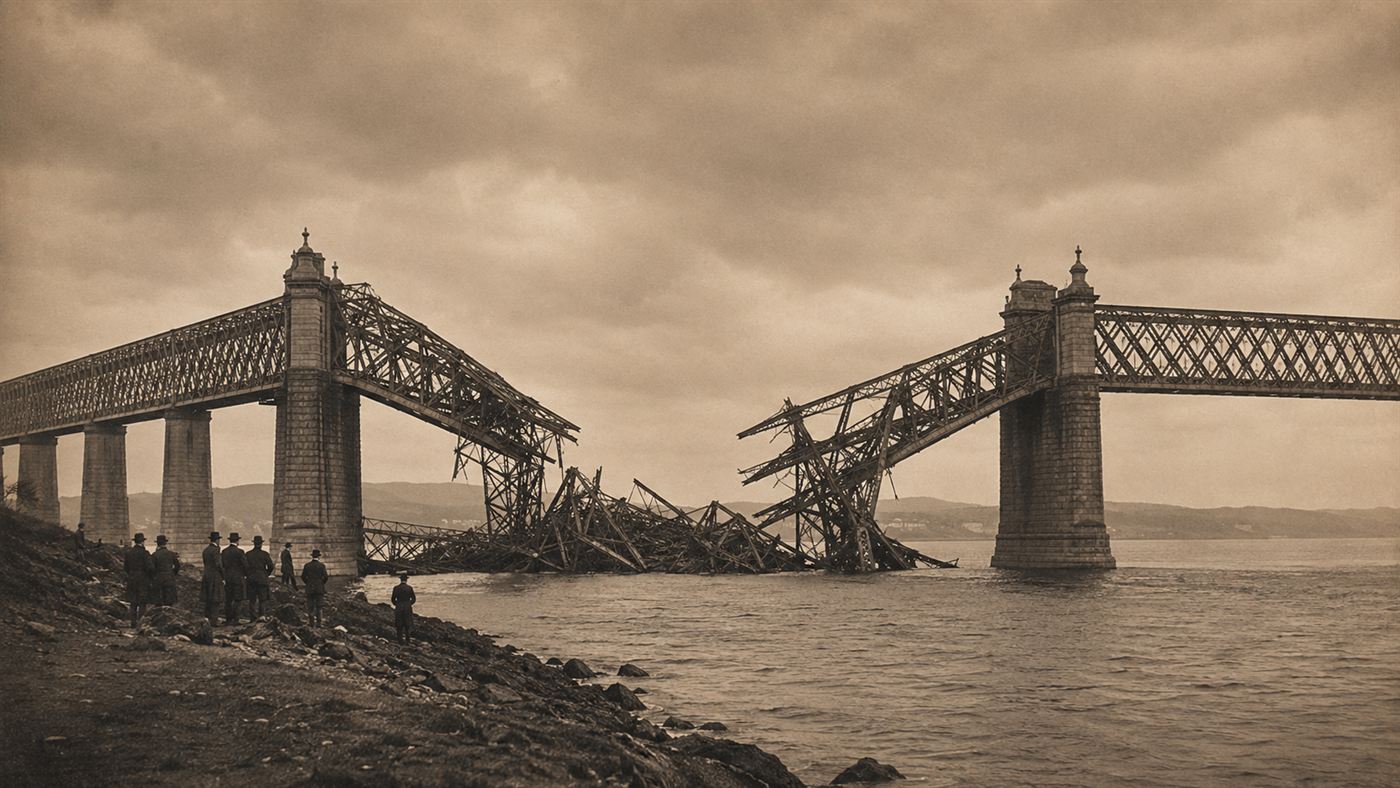
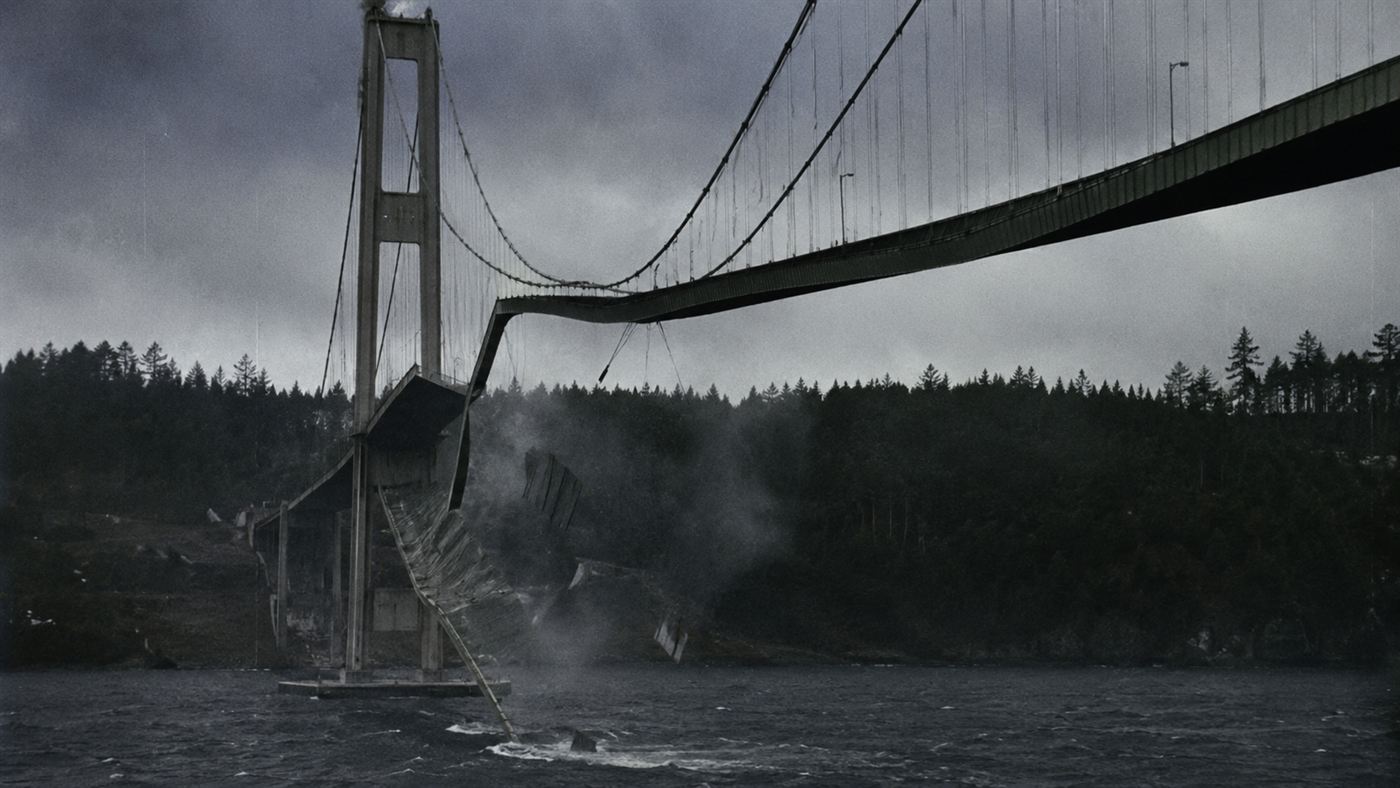
Where the high girders had stood, there was only a gap, and the river below. Illustration: Watts & Wild.
It was meant to be the proudest achievement of Victorian engineering, a bridge so long and so bold that Queen Victoria herself crossed it and knighted the man who built it. Eighteen months later, that same man was a broken figure and his bridge was lying in pieces under the Firth of Tay. The Tay Bridge disaster is one of the worst engineering failures of the railway age, and a stark lesson in what happens when a builder underestimates the wind.
It is a story of soaring ambition and a single fatal blind spot, told in the space of one terrible night.
The pride of Victorian engineering
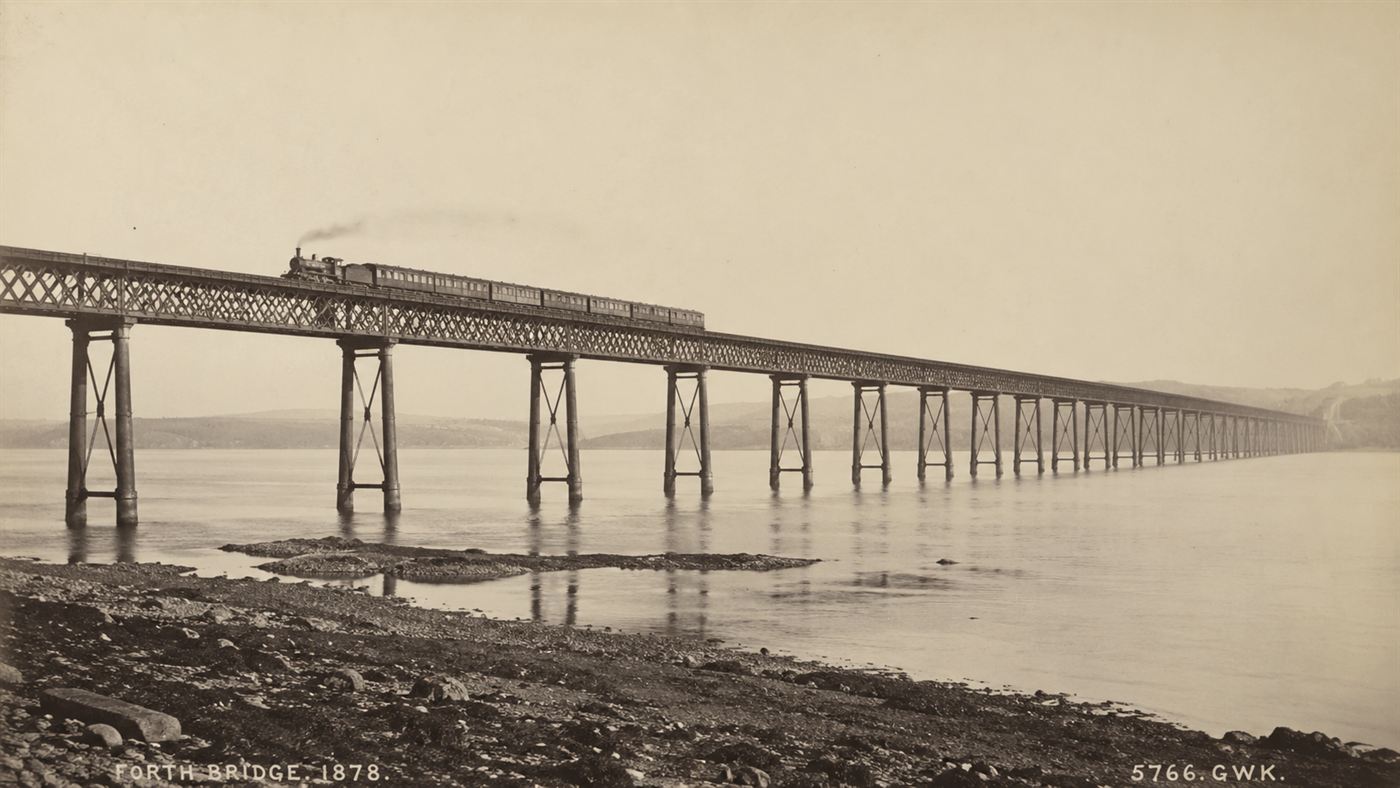
The first Tay Bridge opened in 1878, carrying the railway across the wide Firth of Tay near Dundee. At nearly two miles long it was the longest bridge in the world, a slender ribbon of iron lattice on tall piers, and it was celebrated as a triumph. Its designer, Thomas Bouch, was the toast of the engineering world.
When Queen Victoria rode across it in 1879, Bouch was knighted for his achievement. He was, for a few short months, the most admired bridge engineer in Britain, already drawing up plans for an even greater crossing of the Firth of Forth. Almost no one suspected that his masterpiece over the Tay had a fatal weakness hidden in its slender iron frame.
The night the bridge went down
The evening of 28 December 1879 brought one of the fiercest storms anyone could remember, a gale howling straight across the line of the bridge at the worst possible angle. As darkness fell, the Edinburgh to Dundee train rolled onto the bridge with dozens of passengers aboard, heading for the high central spans known as the high girders.
Out in the storm, watchers on the shore saw the train's lights move onto the bridge, then a sudden shower of sparks, and then darkness. The entire high-girder section had torn away in the wind and plunged into the river, taking the train and all aboard with it in a matter of seconds. When the storm cleared, a long gap stood where the centre of the bridge had been.
What caused the Tay Bridge disaster
The official inquiry laid the blame squarely on the bridge itself. Bouch had not made a proper allowance for the force of the wind, treating it almost as an afterthought rather than a central design problem. The cross-bracing that was supposed to stiffen the tall piers against side winds was too weak, its fastenings were inadequate, and the cast iron used in places was flawed and poorly made.
Maintenance had been poor as well, with cracks reportedly patched rather than properly fixed. The inquiry concluded that the bridge had been badly designed, badly built and badly maintained, and that a well-made bridge of that type should have survived the storm. The wind did not so much defeat good engineering as expose the lack of it.
The engineer who was knighted then broken
For Thomas Bouch, the fall of the bridge was the fall of everything. The plans for his grand Forth bridge were immediately abandoned, no one willing to trust the man whose last great work had killed dozens. Less than a year after he had been knighted as the conqueror of the Tay, Bouch died, his health collapsing under the weight of the disgrace.
It is a genuinely tragic arc, a talented engineer raised to the highest honour and then destroyed by the same structure that earned it. Yet the inquiry's verdict was hard to argue with, and the lesson it carried was too important to soften: the people who cross a bridge are trusting the quiet sums of the person who designed it.
How many people died in the Tay Bridge disaster?
The confirmed death toll was 59, the number for which death certificates were finally issued. Rescuers recovered 46 bodies from the firth, and investigators proved that another 13 people known to have boarded the train must also have died. The real number may have been a little higher, since in the days before careful passenger records no one could ever be completely sure how many had been on that train.
Whatever the exact figure, an entire trainload of people vanished into the river in moments, on a journey home that should have been utterly routine. It remains one of the deadliest structural failures in British history.
Did the Tay Bridge disaster change how bridges are built?
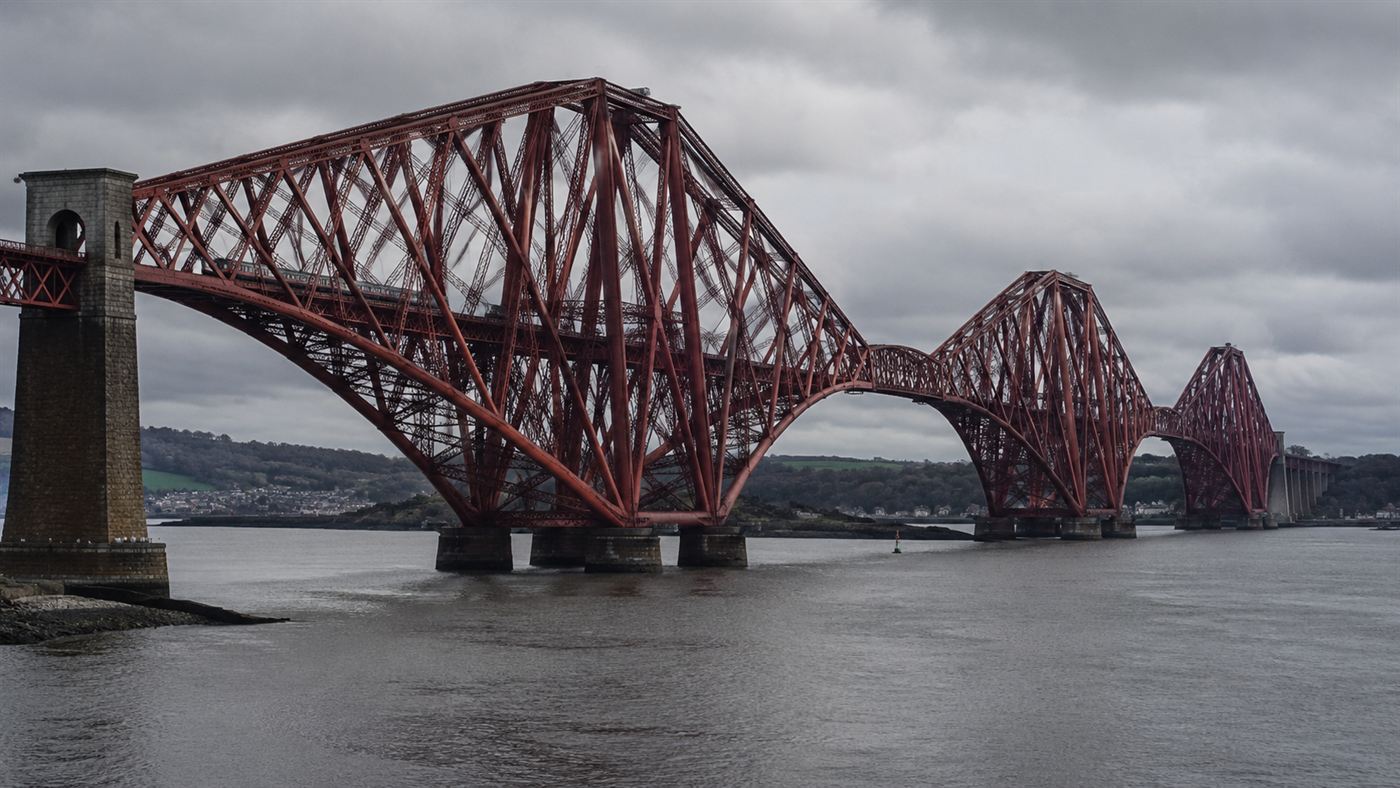
Profoundly. After 1879, no serious engineer could ever again treat wind as a minor detail, and calculating wind loads became a fundamental part of designing any large structure. The clearest answer to the disaster still stands a few miles away: the Forth Bridge, built soon after to be almost defiantly massive, as if to promise that this one would never, ever fall.
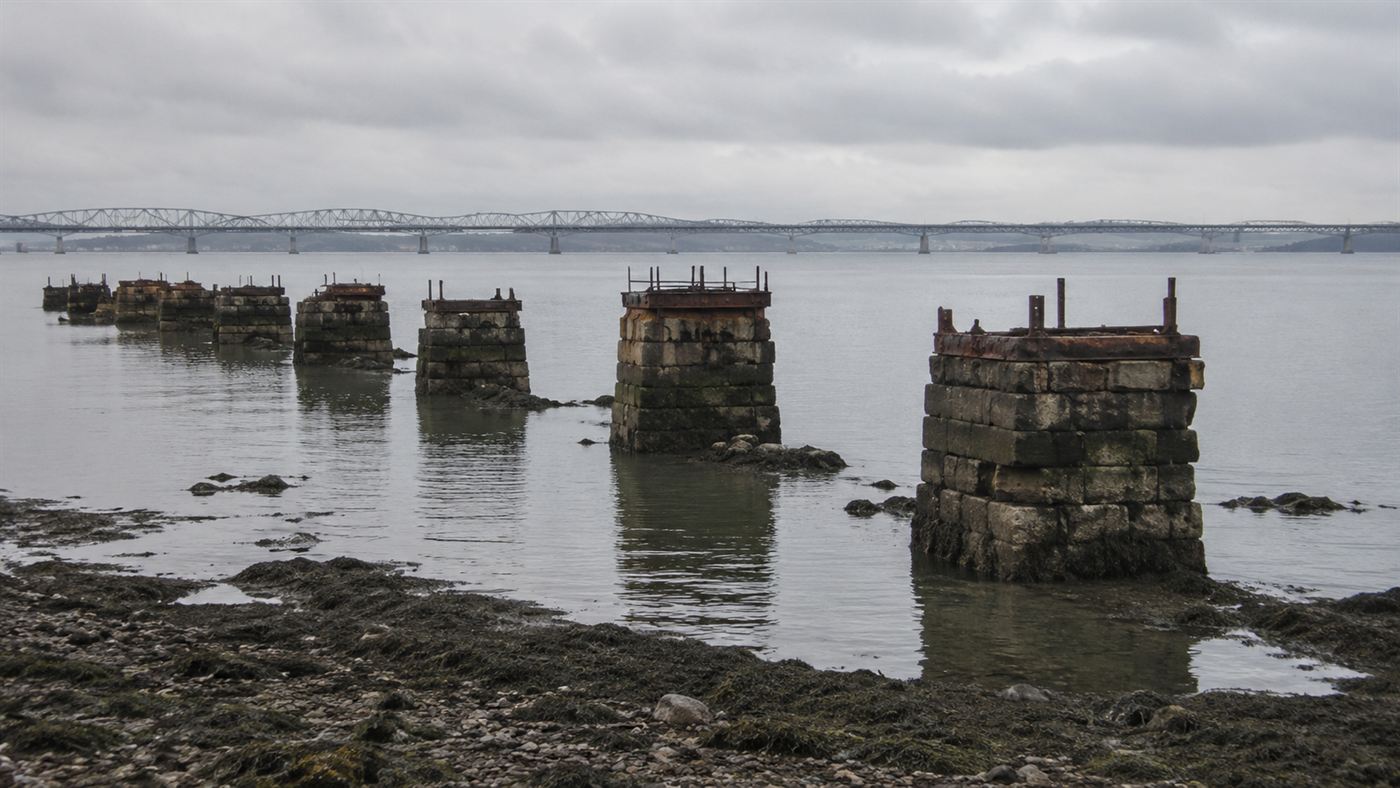
A second Tay Bridge was built in 1887 with far greater strength, and it still carries trains across the firth today. Beside it, the stumps of Bouch's original piers still break the surface at low tide. The disaster also inspired one last, stranger memorial, a famously dreadful poem by William McGonagall, whose clumsy verses about the fallen bridge are now almost as well remembered as the bridge itself.
A celebrated bridge, a knighted engineer, and a single storm that exposed everything left out of the design. When a structure fails this badly, should we remember the ambition that built it or only the corners that were cut? Tell us what you think in the comments.
Related reading: the Forth Bridge, the deliberately over-built giant that rose nearby as an answer to the Tay disaster.