Roman concrete has stood for 2,000 years while modern concrete crumbles in decades, and in 2023 MIT scientists finally worked out the strange self-healing secret hiding inside it
Modern concrete starts cracking within decades, yet Roman harbours and domes have survived two thousand years of waves and weather. For centuries the recipe looked lost. In 2023 a team at MIT found the answer hiding in tiny white flecks that everyone had dismissed as sloppy work, the lime clasts behind Roman concrete self-healing.
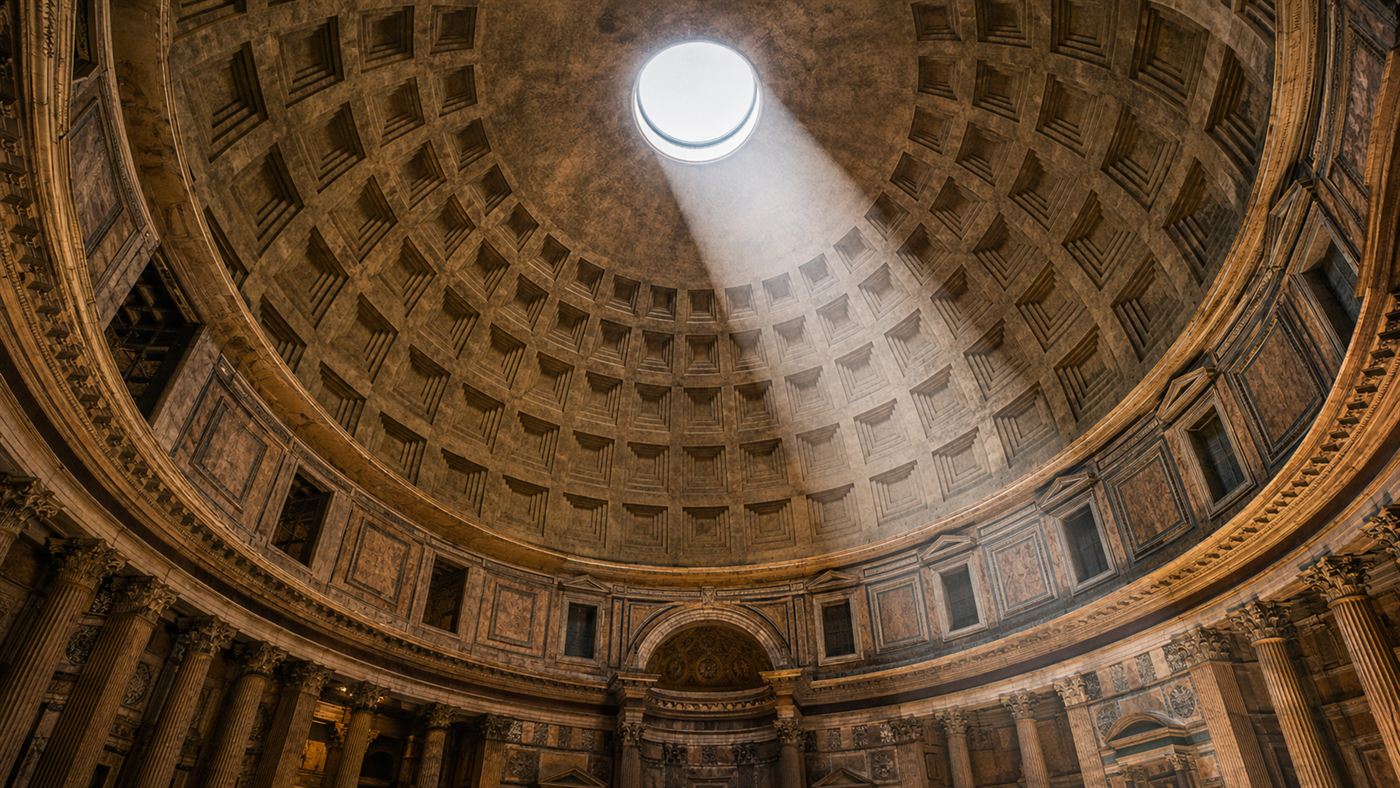
The Pantheon's dome, poured nearly 1,900 years ago, is still the largest unreinforced concrete dome on Earth. Illustration: Watts & Wild.
The Pantheon in Rome has been standing for nearly 1,900 years. Its huge dome, almost 43 metres across, is still the largest unreinforced concrete dome on Earth, and it was poured by Roman builders who died eighteen centuries before anyone wrote down the chemistry of cement. Modern concrete, by comparison, often needs major repairs within fifty years.
For a long time this was an awkward mystery. How could a material mixed by hand two thousand years ago outlast the engineered concrete we pour today? In January 2023, a research team led by MIT finally published a convincing answer, and it turned on a detail that scientists had spent decades writing off as a mistake.
Roman concrete lasts so long because it can heal its own cracks. It was made by hot mixing with quicklime, which leaves tiny lime clasts scattered through the material. When water seeps into a crack, it dissolves these clasts and redeposits calcium carbonate, sealing the gap before it can spread.
A material that has already lasted millennia
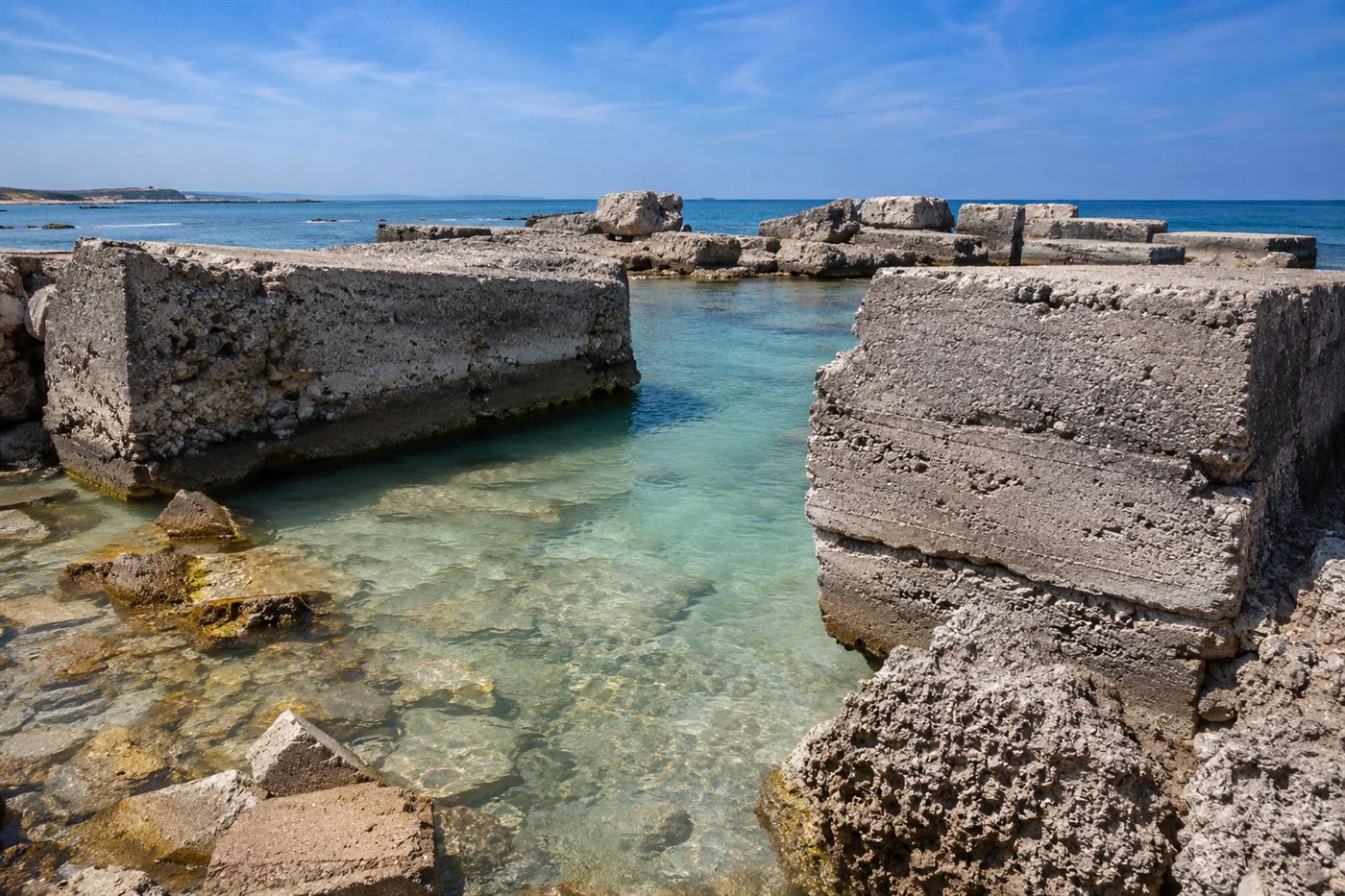
Roman concrete is scattered across the ancient world, and most of it is still standing.
The dome of the Pantheon, the towering markets of Trajan and the vast public baths of the empire were all built from it.
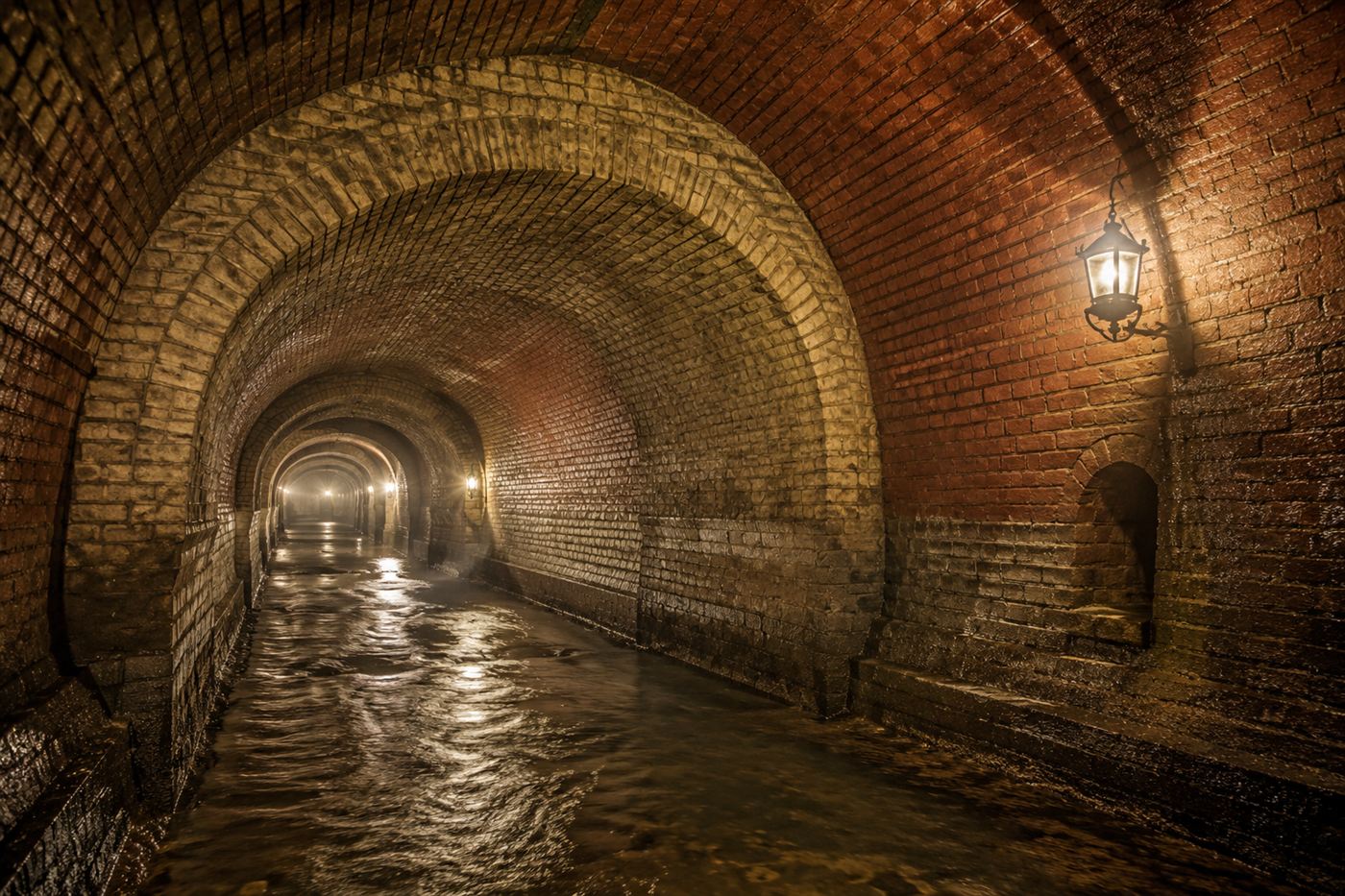
Most striking of all are the harbour walls, concrete piers that have sat in salt water since the age of the Caesars, the same instinct for durable public works that later gave London sewers still running after 150 years.
Modern marine concrete would crumble in those conditions within decades, yet the Roman version often grows stronger the longer it sits in the sea.
The flaw that turned out to be a feature
For years the secret seemed to be the ingredients.
The Romans mixed lime with volcanic ash, a material called pozzolana from the area around Pozzuoli near Naples, and this was long known to make a tough, water-resistant cement.
But the ingredients alone never quite explained the longevity, and one feature kept nagging at researchers.
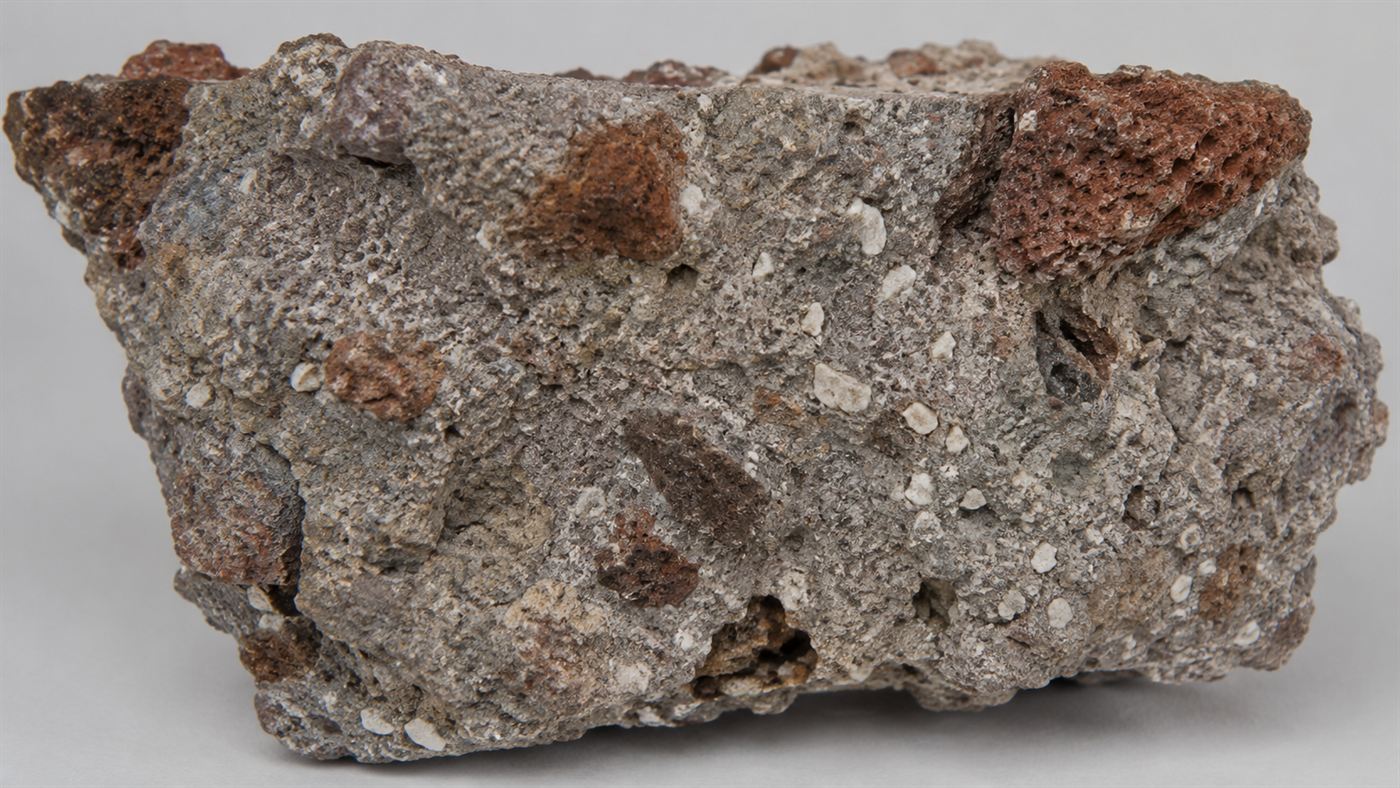
Scattered through almost every sample are small white lumps of lime, known as lime clasts.
For decades these were read as a sign of cheap material or careless mixing.
Hot mixing and the Roman concrete self-healing trick
The answer lay in how the lime was added.
Instead of slaking the lime with water first, the Romans appear to have used quicklime, calcium oxide, mixed in while the reaction was still fiercely hot, a process the researchers call hot mixing.
That violent, high-temperature reaction leaves the brittle lime clasts behind as a kind of built-in repair kit.
When a crack forms and water trickles in, it reaches a nearby clast and dissolves it into a calcium-rich solution.
That solution quickly recrystallises inside the crack as fresh calcium carbonate, gluing the fracture shut before it can grow.
Proof in the laboratory
To test the idea, the team made two batches of concrete, one with lime clasts and one without.
They deliberately cracked both blocks and then ran water through the gap for thirty days.
The plain sample kept leaking the whole time, but in the Roman-style block the crack sealed itself and the water stopped flowing completely.
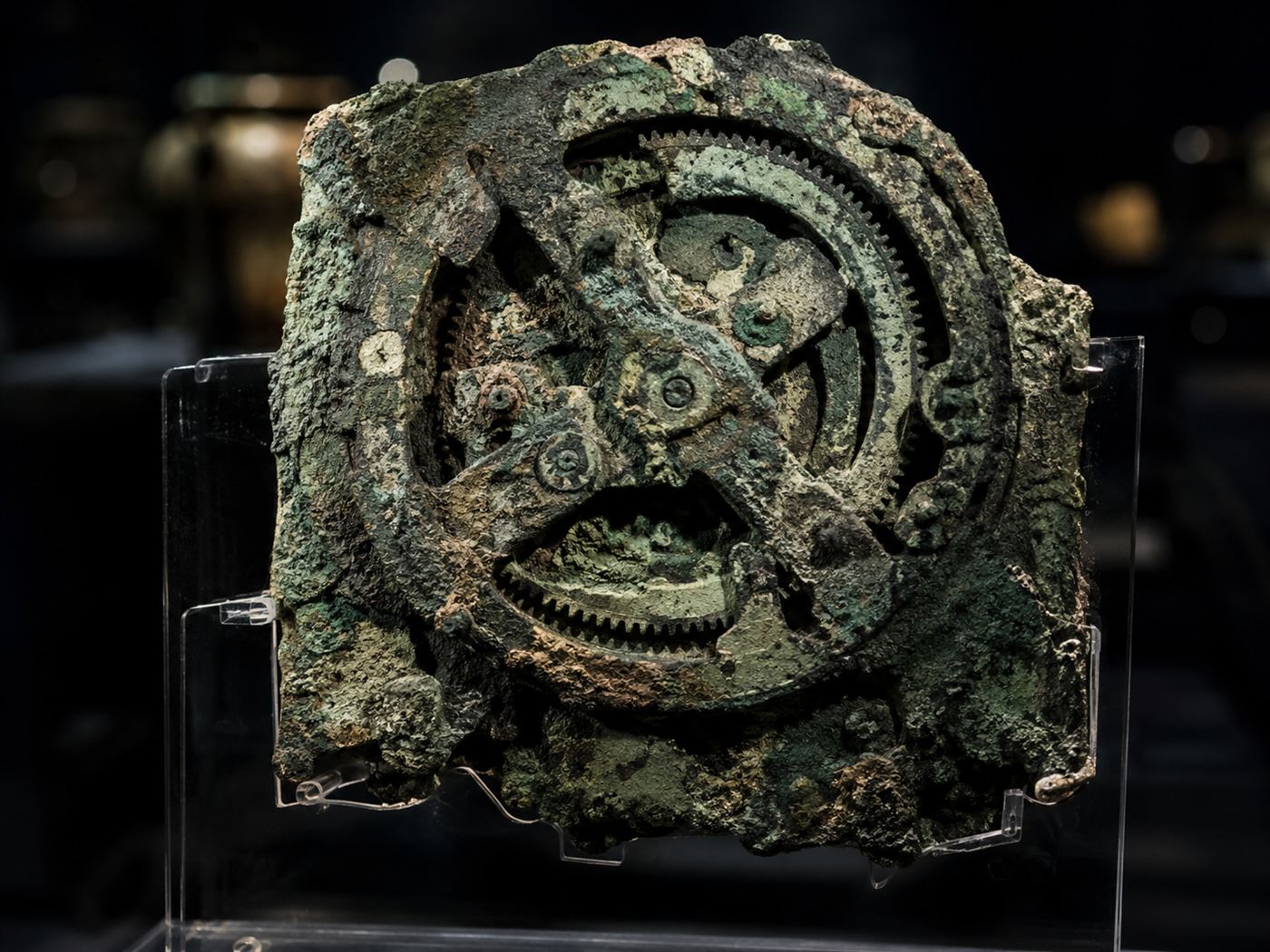
It was the vindication of a humble idea, that an ancient defect was actually clever engineering, the same lesson taught by the 2,000-year-old Greek computer pulled from a shipwreck.
Why we stopped building this way
If Roman concrete is so durable, the obvious question is why we ever stopped using it.
Part of the answer is that modern concrete is built for very different demands.
Since the 19th century we have reinforced concrete with steel, which lets it carry the huge tension loads of bridges, towers and motorway flyovers.
Roman concrete has no steel and is comparatively weak in tension, so it could never hold up a modern skyscraper.
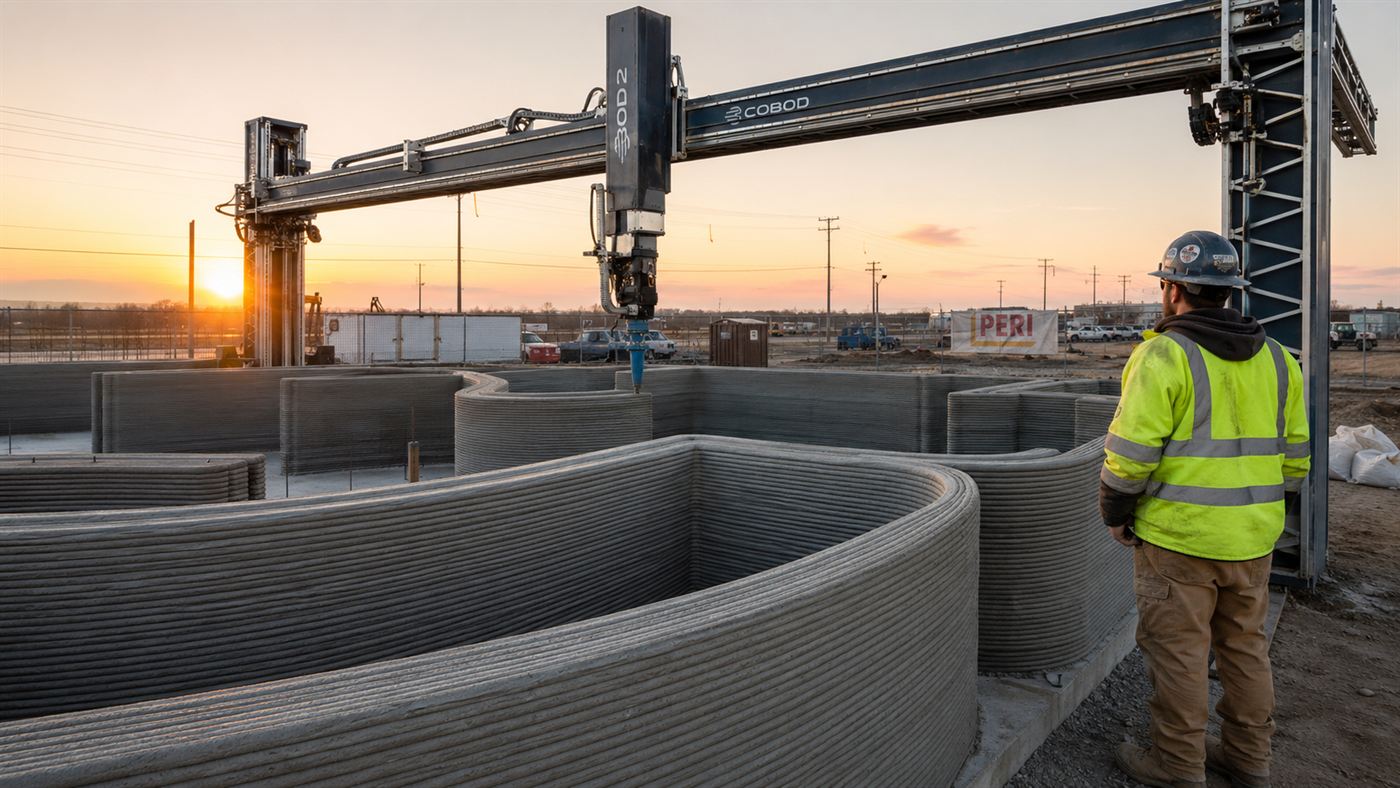
We also traded durability for speed, because ordinary Portland cement sets fast and pours easily, which suits a world that now even prints concrete houses in a day.
The Roman recipe, by contrast, took centuries of trial and error and leaned on one specific kind of volcanic ash.
The honest catch
It is tempting to say the Romans simply did it better, but that is too neat.
Roman concrete is more durable, not stronger, and it would fail quickly under the loads a steel-reinforced beam carries every day.
The famous recipe was also local and slow, tied to the volcanic ash of one corner of Italy. Not every ancient recipe survived at all; some, like Greek fire, the Byzantine weapon that burned on water, were guarded so jealously they were lost for good.
And durability is only part of concrete's problem, because making cement of any kind still pours huge amounts of carbon into the air, around eight percent of global emissions.
Self-healing could help by making structures last far longer and cutting the endless need for repairs, but it does nothing to clean up how cement itself is made.
The real prize is not copying Rome exactly, but borrowing its trick to build concrete that lasts for centuries instead of decades.
Researchers are already trying to build hot-mixed lime clasts into modern mixes, chasing concrete that quietly repairs itself for hundreds of years, the same long view that keeps a cathedral rising for 144 years.
Two thousand years after the Pantheon was poured, its anonymous builders may yet teach us how to build for the next millennium.
If a 2,000-year-old recipe can outlast our modern materials, how many other ancient techniques do you think we have been too quick to dismiss? Tell us in the comments.