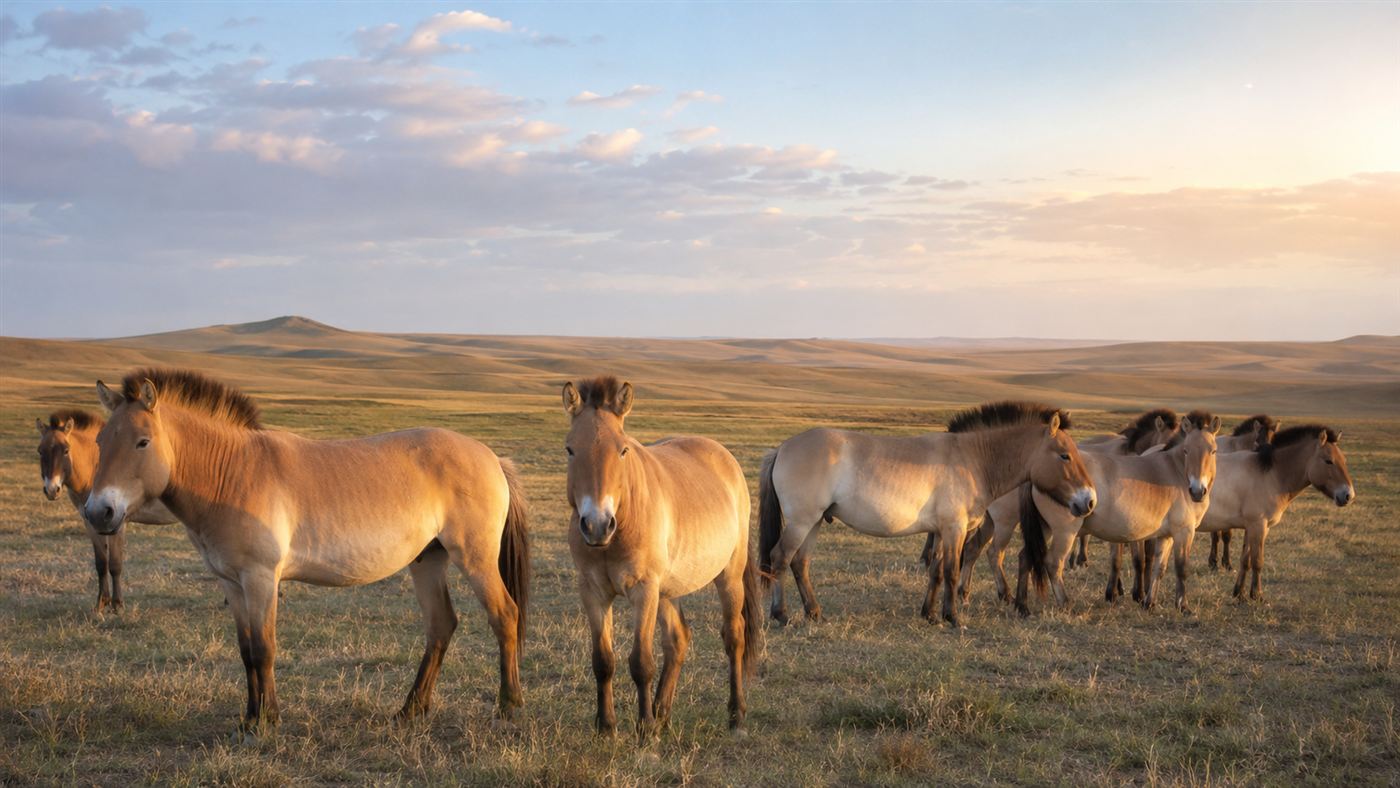
In June 1992, a crate containing a Przewalski's horse arrived at Khustain Nuruu in central Mongolia. The landscape it was released into was the same flat steppe where its ancestors had been hunted, and then simply pushed out, across the previous century. Przewalski's horse extinction in the wild had been declared two decades earlier, and the horse that stepped out of the crate had been born in a Dutch zoo, the descendant of animals caught in the wild generations before and shipped to Europe.
It was the first Przewalski's horse to stand on Mongolian soil in decades, and the moment the crate door opened, a species that had ceased to exist as a wild animal began, slowly and carefully, to exist again.
Przewalski's horse was declared extinct in the wild in 1969, with twelve wild-caught ancestors surviving in captivity. A coordinated captive breeding programme starting in the 1950s and reintroductions beginning in 1992 have put approximately two thousand of the animals back on the Mongolian steppe. In 2020, a Przewalski's horse was cloned from DNA frozen since 1980 to widen a gene pool narrowed to twelve founding individuals.
Why is Przewalski's horse different from every other wild horse on Earth?
The horses that run free in the American West, the Camargue of southern France, and the islands off the coast of Virginia are feral horses.
They are descended from domestic horses that escaped or were released, sometimes centuries ago.
They are genuinely wild in behaviour but domesticated in ancestry.
Przewalski's horse is different.
It is a separate species, Equus ferus przewalskii, distinct from the domestic horse Equus caballus, with 66 chromosomes where domesticated horses have 64.
The two species can interbreed and produce fertile offspring, but they diverged from a common ancestor hundreds of thousands of years ago, and Przewalski's horse followed its own evolutionary path across the Central Asian steppe without ever being broken to a saddle or bred for human purposes.
The Mongolians call it the takhi, a word meaning spirit, or worthy of worship.
It looks the part: compact and muscular with a dun coat, a dark dorsal stripe, a stiff upright mane without a forelock, and the dark legs and muzzle of an animal adapted to the steppe.
It is shorter and stockier than a domestic horse, with a large head built for grazing on coarse grass.
Western science became aware of it in 1881, when the Russian geographer Nikolai Przewalski returned from an expedition to Central Asia with specimens and a description of a previously unknown equid.
European collectors and zoologists began sending expeditions to capture live animals almost immediately.
How did hunting and competition with livestock drive Przewalski's horse to extinction in the wild?
The last stronghold of the wild takhi was the Dzungarian Gobi, a desert steppe region straddling what is now the border between China and Mongolia.
Through the first half of the twentieth century, the species was squeezed by several forces at once.
Hunters shot it for meat and for sport.
The Soviet collectivization of the 1920s and 1930s pushed herds of domestic livestock deep into the Dzungarian steppe, competing with the takhi for water and grazing.
Military activity during the Second World War brought additional hunters and disruption into the region.
As the population shrank, the remaining horses became more vulnerable to particularly harsh winters, known as dzud, when ice covers the grass and animals starve.
The last reliable wild sighting was recorded in 1969.
A wild species had vanished from the face of the Earth, and a number of European zoos held the only surviving members.
How did twelve zoo animals become the founders of a living wild species?
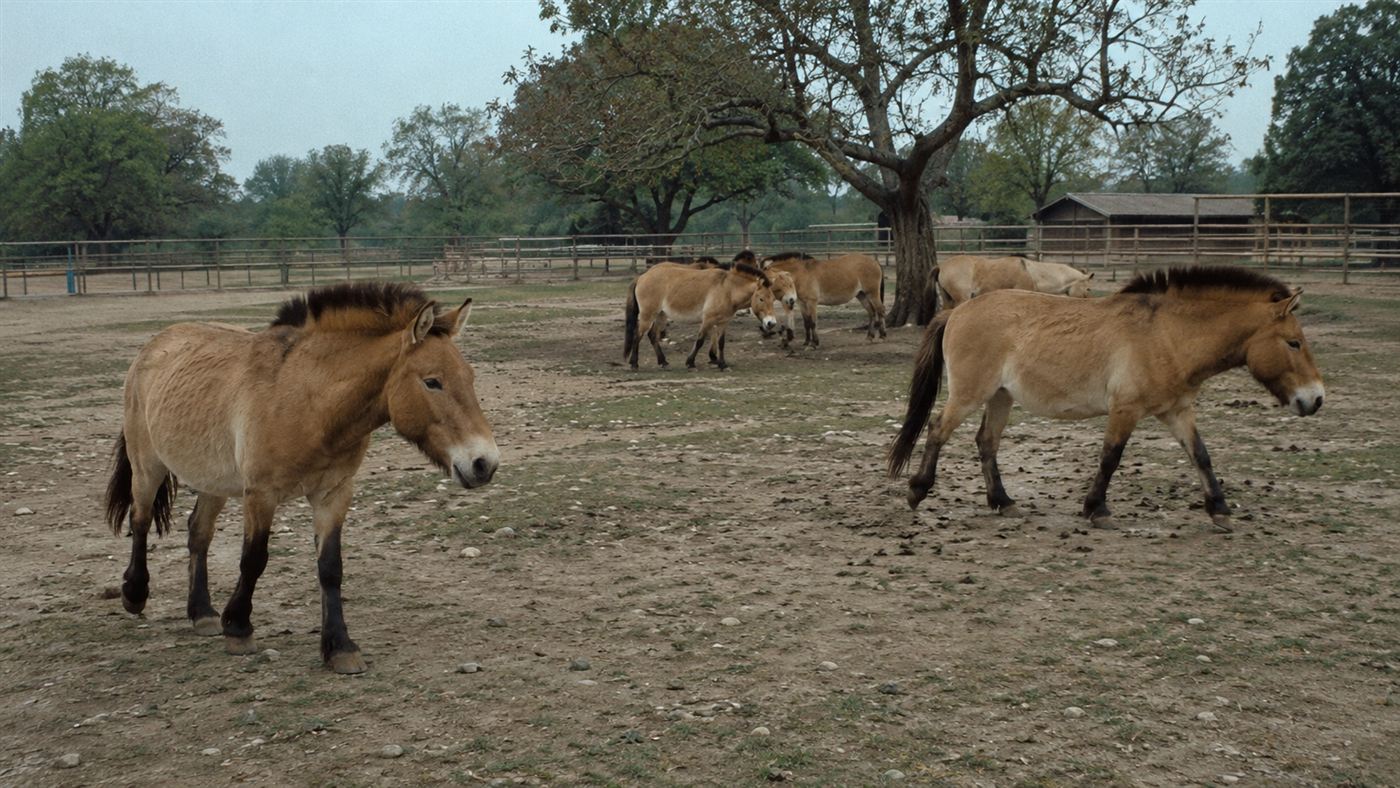
The capturing expeditions of the late nineteenth and early twentieth centuries had brought perhaps seventy or eighty Przewalski's horses to Europe.
Most died in the transition.
By the 1940s, the viable captive population had collapsed to a handful of animals in a small number of zoos.
Genetic analysis later established that all living Przewalski's horses are descended from just twelve wild-caught individuals, plus one domestic mare whose influence entered the line decades ago.
It is one of the most extreme genetic bottlenecks of any rewilding effort in history.
The effort to prevent a total collapse began at Prague Zoo, where the zoologist Jan Volf and his colleagues started the International Studbook for Przewalski's horse in 1959.
The studbook tracked every individual in captive breeding programmes worldwide, recording parentage and coordinating transfers between zoos to prevent inbreeding.
The work was painstaking and unglamorous: decades of paperwork, cage measurements, and careful captive breeding decisions in which every mating mattered because there were so few animals and the gene pool was so narrow.
By the 1980s, the population in captive breeding facilities had grown to several hundred animals across zoos in Europe, the United States and elsewhere.
The question was no longer whether the species would survive in captive breeding, but whether it could be returned to the wild through rewilding.
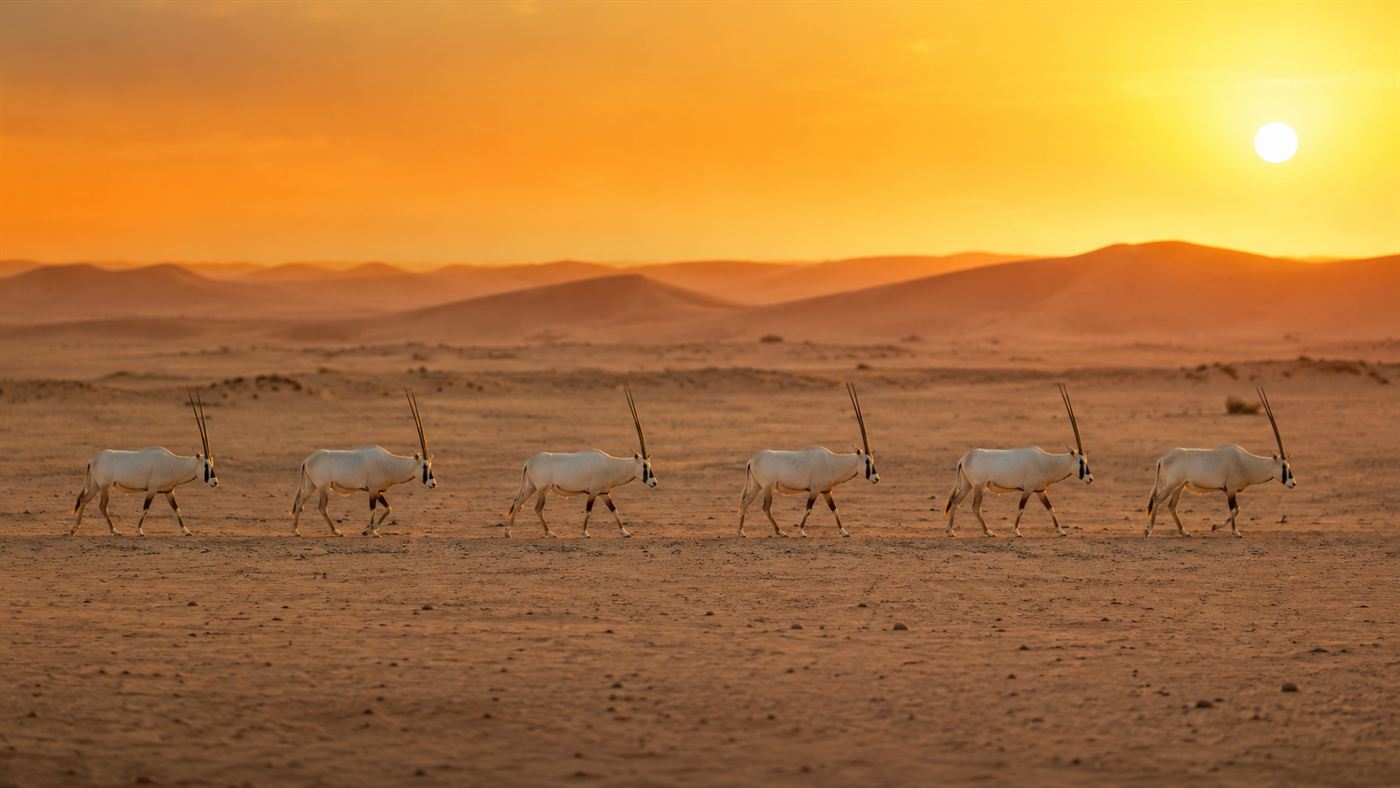
The Arabian oryx recovery had shown, just a few years earlier, that a species could be brought back from a zoo bottleneck to free-living animals in its original habitat, and the Przewalski's horse rewilding programme drew on those lessons.
What happened when Przewalski's horses were reintroduced to Mongolia?
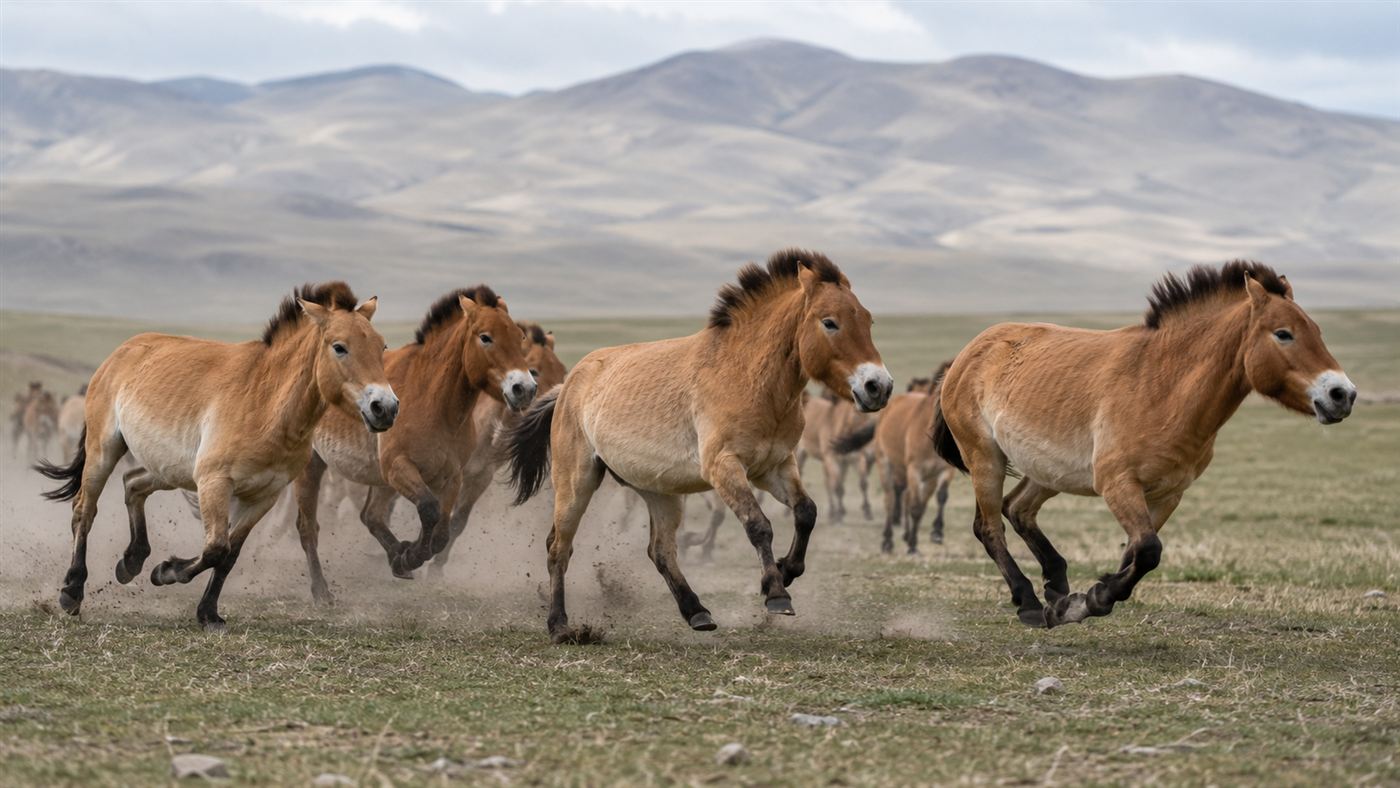
The first reintroductions took place at two sites in Mongolia: Khustain Nuruu in 1992 and Takhin Tal in 1992 and 1993.
The animals arrived from zoos in the Netherlands, Germany and the United States, having spent their entire lives in enclosures.
They had to learn to graze on steppe grass, to navigate open terrain, to form functional social groups, and to defend themselves and their foals from wolves without any experience of doing so.
The early years were difficult.
Mortality was high, and some of the first cohorts struggled to adapt.
But the horses that survived began to breed, and their foals were born into the wild and learned from the start what it was to live on the steppe.
By the mid-2000s, Khustain Nuruu held a self-sustaining population that no longer required supplementation from zoos.
Today the national park at Khustain Nuruu is home to more than five hundred free-living Przewalski's horses, the largest single wild population in the world.
A third population was established in 1998 in the Chernobyl exclusion zone in Ukraine, where the absence of humans has created unexpected sanctuary for wildlife.
The horses there have thrived, establishing a feral population in the radioactive landscape.
Reintroductions have also taken place in China's Kalamaili Nature Reserve and in the Loire Valley in France.
The global wild population now stands at approximately two thousand animals.
Why did scientists clone a Przewalski's horse from DNA frozen for forty years?
Two thousand animals sounds like recovery.
The problem is that almost all of them are descended from the same twelve wild-caught ancestors, and the genetic diversity within the population is critically low.
Low genetic diversity makes a species less resilient to disease, parasites, and environmental change.
In 2020, an organization called Revive & Restore worked with ViaGen Pets and Equine, and San Diego Zoo Wildlife Alliance, to clone a Przewalski's horse from a cell line that had been held in the San Diego Zoo's Frozen Zoo since 1980.
The source material came from a stallion who had died, but whose cells had been cryopreserved decades earlier.
Crucially, that stallion's genetics were not well represented in the living population, meaning the clone carried rare variants that had nearly been lost.
A foal, named Kurt, was born on 6 August 2020 to a domestic horse acting as a surrogate.
Kurt is genetically identical to the stallion who died in 1998, and his unusual genetic profile makes him a potentially valuable breeding animal once he is old enough to reproduce.
It is the first time cloning technology has been deployed specifically to address the genetic bottleneck of a conservation recovery, rather than to resurrect a charismatic animal for public attention.
The parallel with Yellowstone's wolf reintroduction is instructive: both recoveries depend not just on numbers but on the ecological and genetic fitness of the animals returned, and both have forced conservationists to think carefully about what a successful return to the wild actually requires.
The honest catch
The story of the takhi's return contains one genuinely unsettling complication.
In 2018, a landmark genetic study published in Science analyzed ancient DNA from horse remains found at the Botai culture sites in Kazakhstan, where horses were first domesticated approximately 5,500 years ago.
The researchers found that Botai horses were not the ancestors of modern domestic horses, as had long been assumed.
Instead, they discovered that Botai horses are the genetic ancestors of Przewalski's horse.
This suggests that what we call the last wild horse may actually be a population of ancient domestic horses that escaped or were released thousands of years ago, went feral, and over millennia became the creature Nikolai Przewalski described in 1881.
If this is correct, the takhi is not the pure wild ancestor of the horse at all, but the oldest known feral horse.
It is still a distinct evolutionary lineage, still a conservation priority, and still a genuinely remarkable animal.
But the story of the last wild horse on Earth is more complicated than the clean narrative of extinction and rewilding suggests.
The honest version is that we are returning to the steppe an animal whose true status as either wild or feral we are still working out, and that the rewilding effort is worth making in any case.
Sources
If the Przewalski's horse is descended from ancient domestic horses that escaped thousands of years ago, does that change how we think about what rewilding means, or is the outcome the same regardless of whether the ancestors were wild or feral?