In America's most wired age, a 13,000 square mile National Radio Quiet Zone bans WiFi and cell phones so one West Virginia telescope can hear a whisper from across the universe
Somewhere in the Appalachian mountains sits a 13,000 square mile patch of America where WiFi, cell phones and even some microwave ovens are switched off on purpose. The reason is a single machine: one enormous ear pointed at the sky, listening for the faintest sounds in the cosmos.
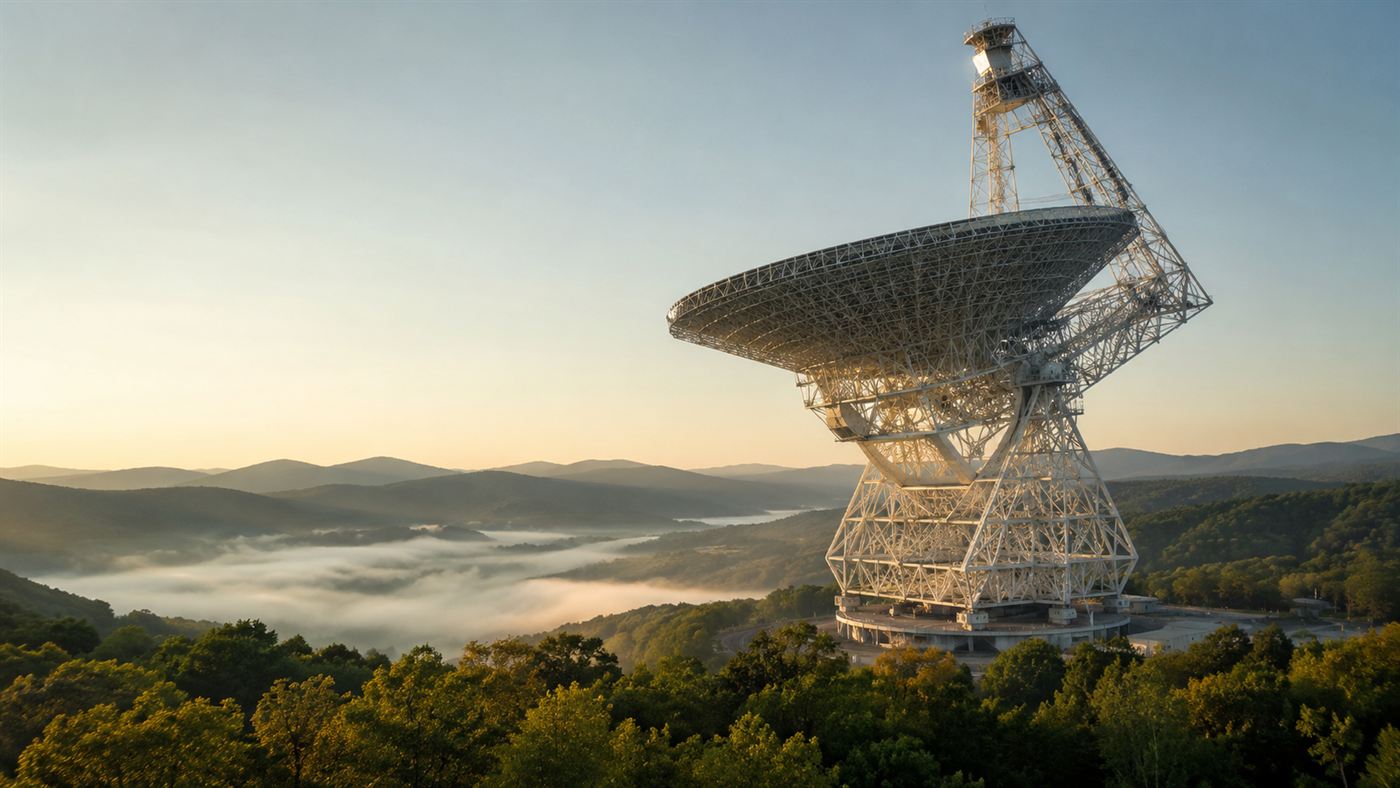
The Green Bank Telescope towers over a valley kept deliberately silent so it can hear the sky. Illustration: Watts & Wild.
Deep inside the National Radio Quiet Zone, Diane Schou finally slept through the night. She had left a research farm in Iowa in 2007, convinced that the cell tower near her home was making her physically ill, and she drove east until she reached Green Bank, West Virginia, one of the last inhabited places in the country where the air carries almost no wireless signal at all.
The strange part is that nobody switched off the signals for people like Schou. As NPR reported from the town, the silence exists to protect a machine: the Green Bank Telescope, the largest fully steerable radio telescope on Earth, a white dish taller than the Statue of Liberty that listens for signals so faint that a single ringing phone on a distant ridge can drown them out. The refugees who come here to escape technology are really taking shelter under rules built to feed a telescope.
The National Radio Quiet Zone is a roughly 13,000 square mile area straddling West Virginia and Virginia, created by the Federal Communications Commission in 1958. Inside it, radio transmitters are tightly restricted so that the sensitive dishes at Green Bank can pick up whispers from the far edge of the universe, energy so weak that ordinary electronics would bury it in noise. Green Bank inherited even more of that burden after the great Arecibo dish in Puerto Rico collapsed in 2020.
What is the National Radio Quiet Zone?
The National Radio Quiet Zone was drawn on the map in 1958, when the Federal Communications Commission set aside a rectangle of about 13,000 square miles, roughly 34,000 square kilometers, across West Virginia, Virginia and a thin sliver of Maryland. As documented in the FCC's own arrangement, the zone is centered on two sites: the Green Bank Observatory and a former Navy listening post at nearby Sugar Grove.
Federal rules set the outer boundary, but West Virginia added a tighter ring of its own. The state's Radio Astronomy Zoning Act, Chapter 37A of the West Virginia Code, splits the land near the dishes into bands, with the strictest sitting within two miles of the Green Bank Observatory and looser limits stretching out to about ten miles. Get close enough and a transmitter that is legal everywhere else in America becomes something the observatory can knock on your door about. The rules are the same instinct that gives astronomers dark-sky reserves, only here the enemy is not light but stray radio noise.
Why a radio telescope needs a whole zone of silence
A radio telescope does not photograph the sky. It collects radio waves, the same slice of the spectrum your phone and your microwave live in, and the cosmic version is absurdly weak. The Green Bank Observatory likes to point out that the total energy its dish has gathered from space across its entire history is less than the energy of a single snowflake striking the ground. Against a whisper that faint, a mobile phone a few miles away is a scream, and a laptop searching for WiFi is a foghorn.
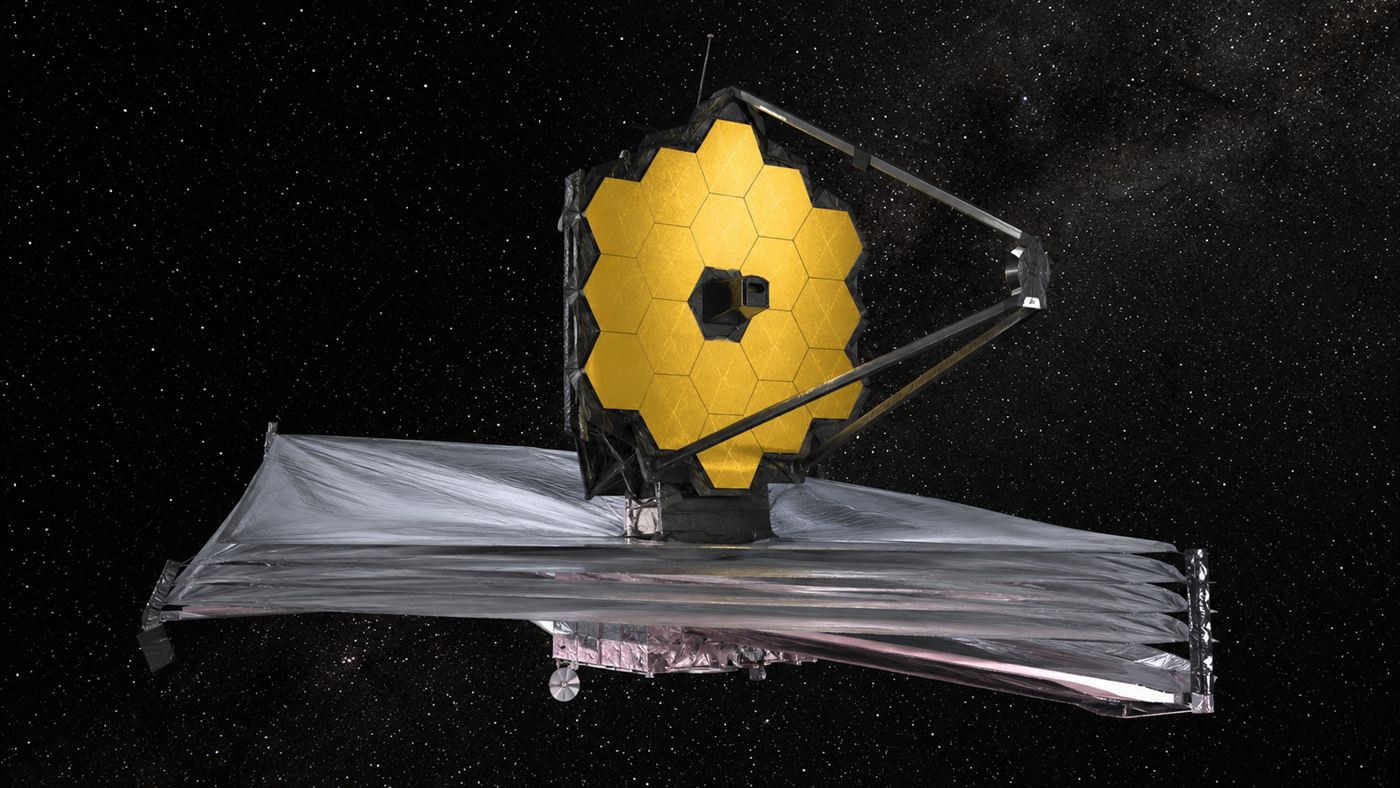
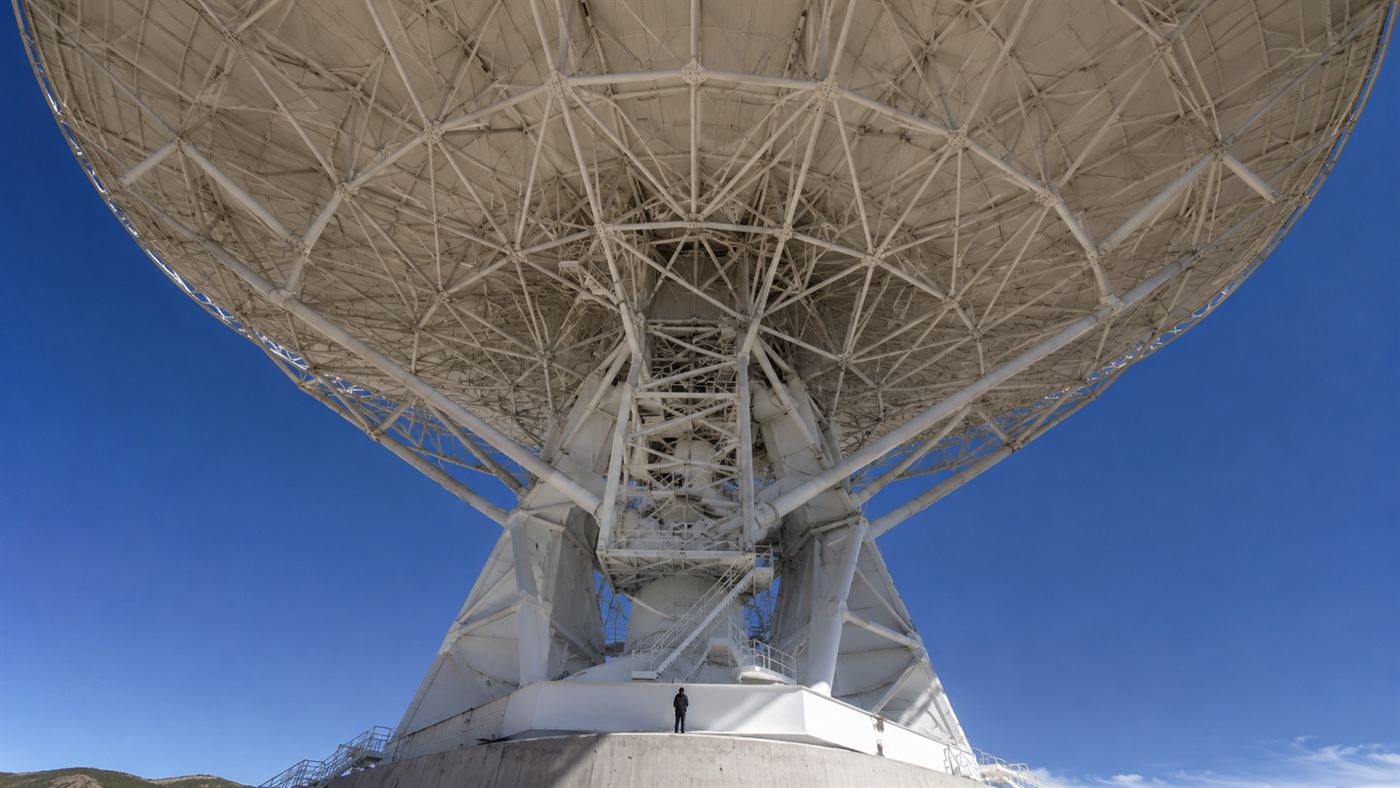
The instrument doing the listening is the Robert C. Byrd Green Bank Telescope, and its scale is hard to hold in your head. According to the Green Bank Observatory, the dish measures 100 by 110 meters, it carries around 7,700 tonnes of moving steel, and its reflecting surface is stitched from 2,004 computer-controlled panels that flex to hold their shape as the whole structure sags under its own weight. Unusually, the reflector is offset to one side so that no support struts hang in front of it, giving the radio telescope a clean, unblocked view of the sky. It chases the same faint edges of the cosmos as the James Webb Space Telescope, only in radio rather than light.
The town where a spark plug is contraband
That sensitivity turns everyday technology into a hazard, and daily life inside the zone bends around it. As the American Physical Society has described, only diesel vehicles are used at the observatory site, because a gasoline engine's spark plugs throw off little bursts of radio noise every time they fire. Diesel engines ignite by compression, with no spark at all, so they stay quiet. It is the kind of detail you only notice once you know the whole valley is engineered around a microphone.
When a stray signal does creep in, the Green Bank Observatory sends someone out to hunt it down. Chuck Niday, an electronics technician, drives the back roads with detection gear tracing the culprits, and the culprits are gloriously ordinary: a failing heating pad, a leaky microwave oven, a bad power line, a buzzing doorbell transmitter, an electric blanket. In the houses closest to the dish, families have gone without WiFi, and sometimes without a working microwave, for years. Tracking down a rogue signal in the hills has more in common with chasing a mysterious sound in the deep ocean than most people would guess.
Why do people move to Green Bank to escape WiFi?
People move to Green Bank, West Virginia because it is one of the few inhabited places in the United States where wireless signals are legally kept to a minimum, and some of them believe those signals make them sick. The first well-known arrival was Diane Schou, who settled near the town in 2007 after failing to get anyone to act on the cell tower she blamed back home in Iowa.
As Slate reported, Schou and others describe a condition they call electromagnetic hypersensitivity, or EHS, blaming headaches, nausea, burning skin and worse on exposure to the radiation from cell towers, WiFi routers and power lines. Schou has estimated that around 36 people who report electromagnetic hypersensitivity have moved to the area to find relief. For them the National Radio Quiet Zone is not an inconvenience but a sanctuary, the one corner of modern America where the thing they fear is simply switched off.
From a telescope that collapsed to a search for alien life
The Green Bank Observatory has been a landmark of American radio astronomy since the 1950s, and its most famous instrument exists only because an earlier one fell down. On the night of November 15, 1988, the observatory's 300-foot telescope, then a workhorse of radio astronomy, suddenly collapsed into a tangle of steel when a single gusset plate deep inside its structure failed after decades of service.
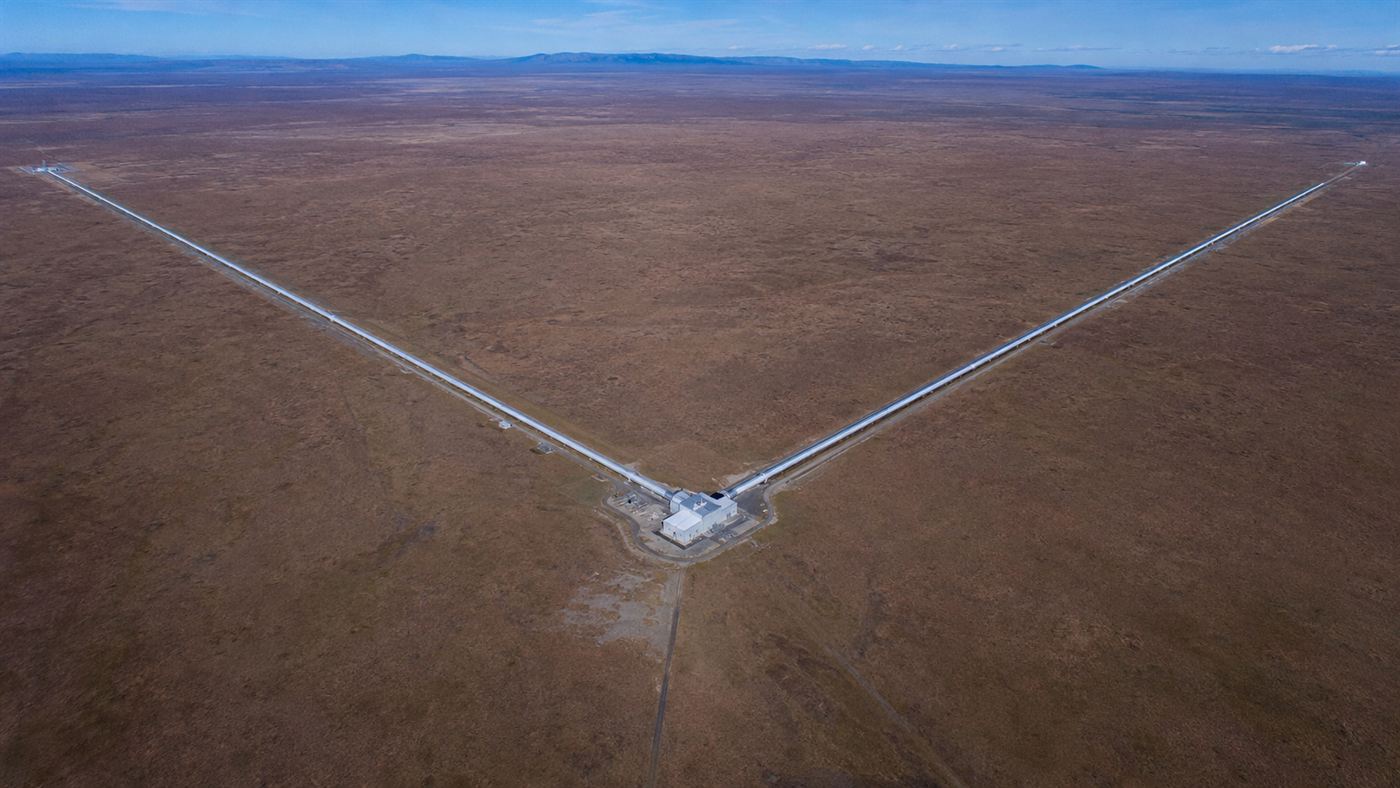
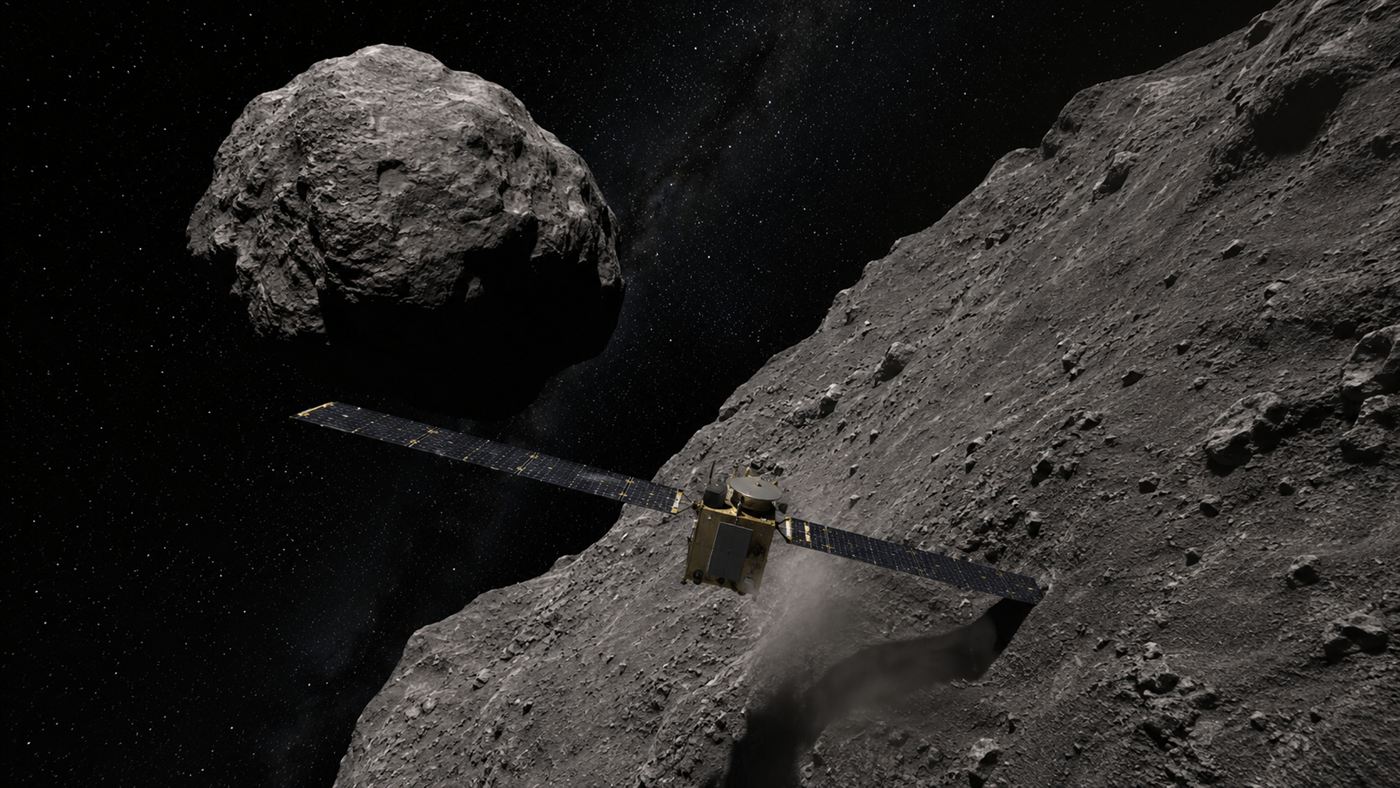
Congress rushed through emergency money, and the replacement that rose in its place, the Green Bank Telescope, cost nearly 95 million dollars and began science work in 2001. Today it does some of the most ambitious listening on Earth. Since 2015 it has been a main dish for Breakthrough Listen, the largest search for alien signals ever mounted, and on December 18, 2025 it was aimed at a genuine interstellar visitor. A Breakthrough Listen team reported using the Green Bank Telescope to scan the interstellar object 3I/ATLAS from 1 to 12 gigahertz, the day before its closest approach to Earth, listening for any artificial transmission. They found none, ruling out even a faint 100 milliwatt beacon. It is the same restless instinct behind missions like the DART strike that nudged an asteroid and the detectors sensitive enough to feel gravitational waves: we keep building better ears and hands for the universe.

The honest catch
There is a hard truth under the story of the refugees who come here. The science does not support the idea that WiFi or cell signals cause physical illness. Repeated double-blind studies have found that people who report electromagnetic hypersensitivity cannot tell, better than chance, when a real signal is switched on or off, and researchers largely attribute their very real symptoms to the nocebo effect, the mind's power to make you feel unwell when you expect to. The suffering is genuine. The trigger, as far as controlled testing can show, is not the radiation, and that gap is at the heart of every serious study of electromagnetic hypersensitivity.
The silence itself is also softer than the legend. The Green Bank Observatory has quietly relaxed its enforcement over the years, and plenty of locals now run cell phones, WiFi and microwave ovens without the sky falling. The National Radio Quiet Zone was never a perfect bubble, and it cannot block the satellites passing overhead or a phone in a car rolling through town. What it protects is a margin, thin and shrinking, of sky quiet enough to hear. Cold War history runs under it too, since the Sugar Grove site was built to eavesdrop on Soviet signals, a listening past it shares with machines like the SR-71 Blackbird.
Strip away the myths and Green Bank is still one of the strangest places in the country: a town that gave up the modern signal so the rest of us could hear the oldest one, the faint hiss of the universe itself. Would you last a week with no cell phone, no WiFi and no microwave, just to live under the quietest sky in America? Tell us in the comments.
Related reading: explore more from our Science & Tech desk, from telescopes to the machines that push the edge of what we can sense.