A young biologist fell in love with the salt lake Los Angeles was quietly draining, and the fight David Gaines started to save California's Mono Lake was won six years after a snowstorm killed him
For forty years, Los Angeles piped away the streams that fed Mono Lake, and the strange desert sea shrank toward a poisoned dust bowl. Then a handful of people decided a lake could have rights. The fight they started rewrote how the American West shares its water.
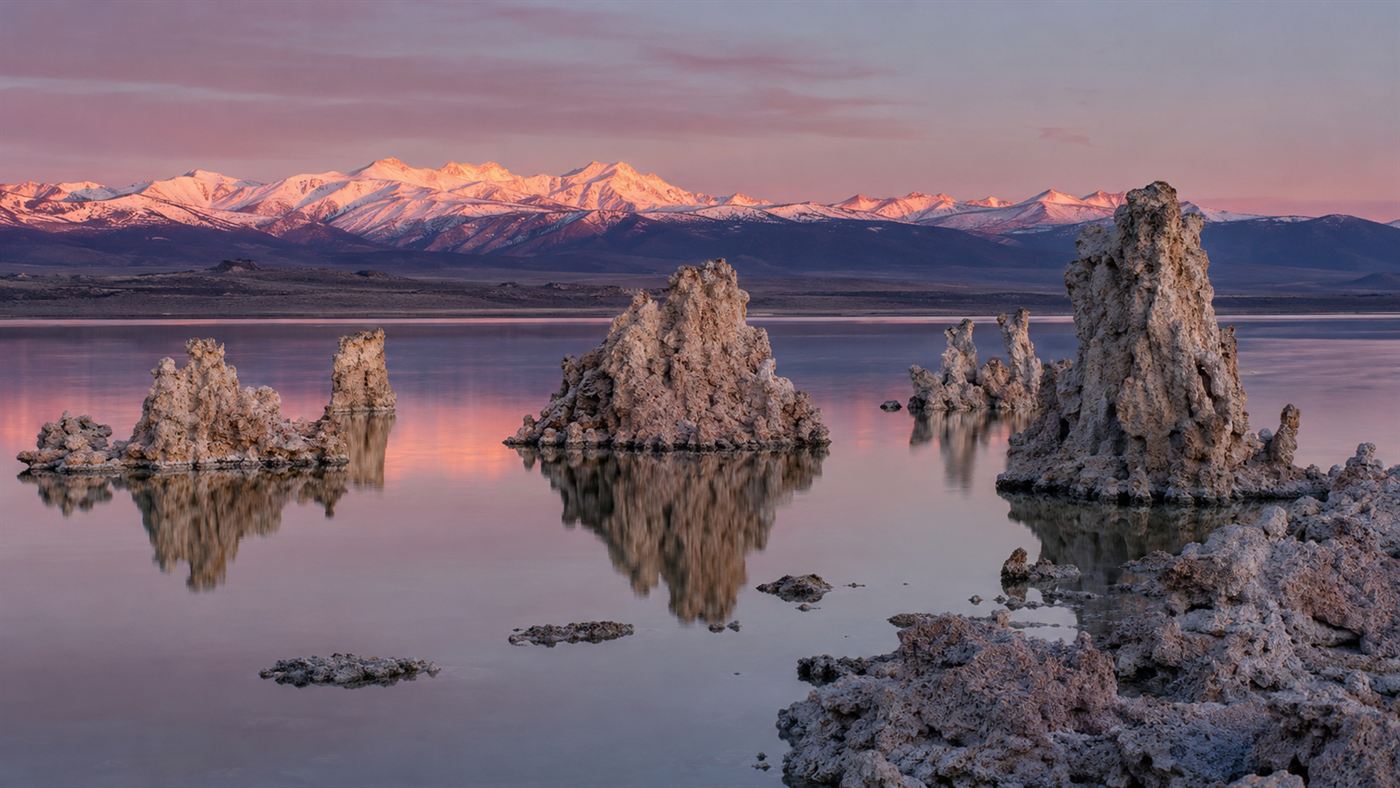
The tufa towers, exposed as the water dropped, became the symbol of the fight to save the lake. Illustration: Watts & Wild.
Mono Lake sits in a high desert basin on the dry side of the Sierra Nevada, a vast sheet of salty water more than three times older than most lakes on the continent. It has no river carrying water out, so everything that flows in stays and concentrates, leaving a lake so briny and alkaline that no fish can live in it. What thrives instead is stranger and, in its way, more important.
For most of the twentieth century almost no one outside eastern California thought about the place. That changed because of what happened after 1941, when Los Angeles reached hundreds of miles north and began siphoning off the creeks that kept Mono Lake alive. Over the next four decades the lake dropped foot by foot, and a young biologist decided that was not going to be the end of the story.
The short version: Los Angeles began diverting Mono Lake's tributary streams in 1941, and the lake lost half its water and doubled in salinity. A biologist named David Gaines rallied the public, and in 1994 a landmark ruling built on the public trust doctrine ordered the city to let the lake refill, one of the biggest wins in American conservation history.
Why is Mono Lake so strange?
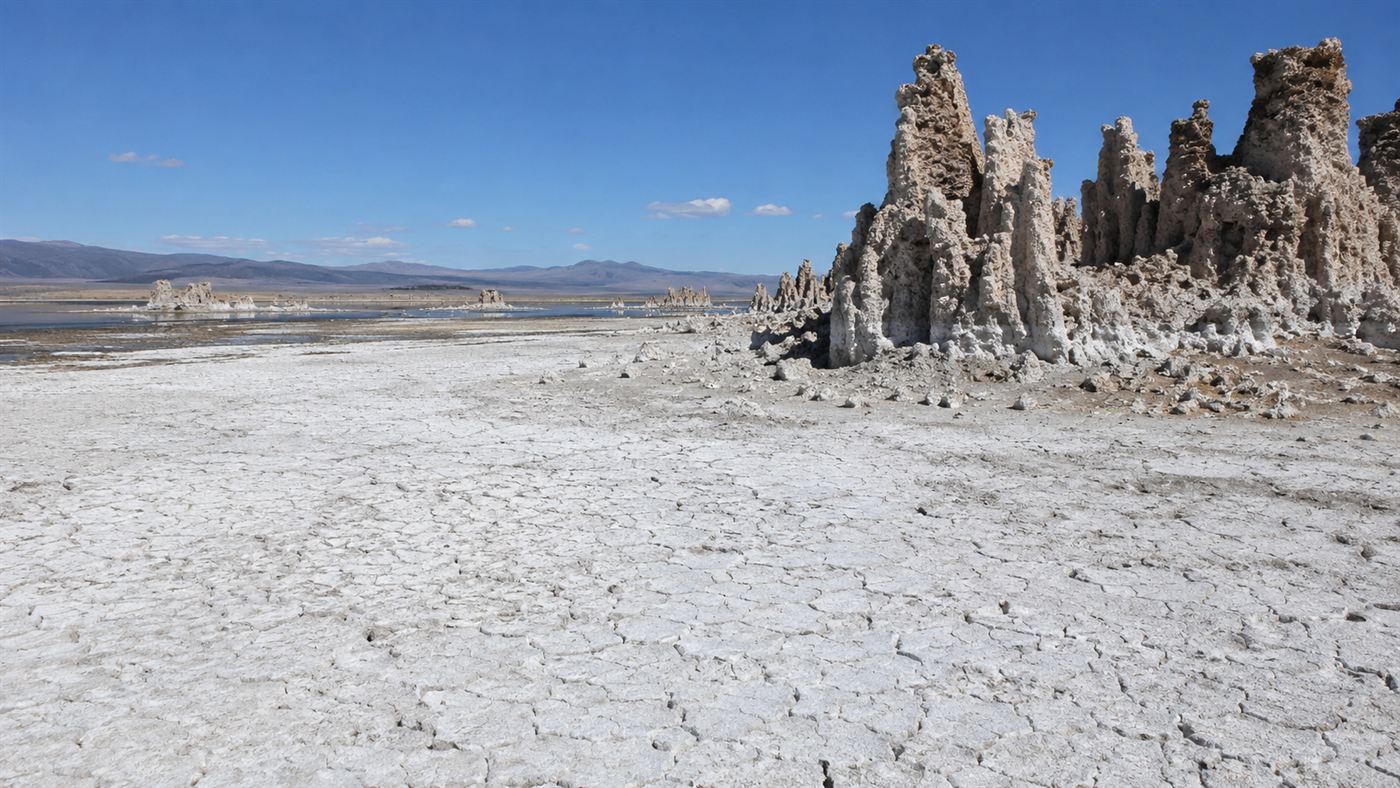
The thing everyone photographs here is the tufa. These knobby limestone towers form underwater, where freshwater springs rich in calcium bubble up into the carbonate-heavy lake and the two react into stone. Normally you would never see them. They loom over the shoreline today only because the water that once hid them is gone, which makes the tufa towers both a natural wonder and a measuring stick of how far the lake fell.
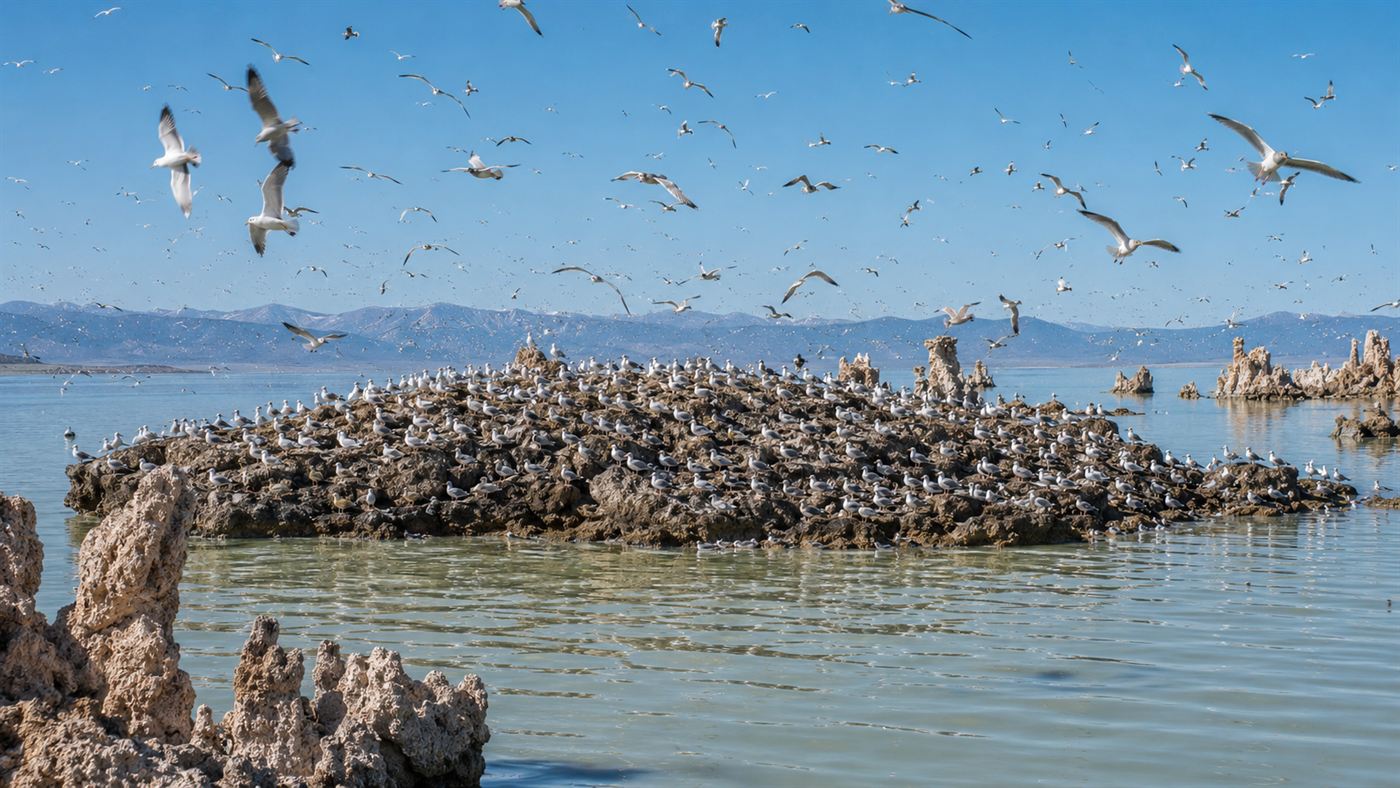
Below the surface, the lake runs on an odd little food web with no fish in it at all. Trillions of brine shrimp and clouds of alkali flies feed on algae, and in turn they feed birds by the million. Nearly every eared grebe in western North America stops here, phalaropes drop in on their way to South America, and the islands host one of the largest breeding colonies of California gulls anywhere. Drain the lake and that entire staircase of life comes down with it.
How Los Angeles drank a lake
The trouble arrived through a tunnel. In 1941 the Los Angeles Department of Water and Power extended the Los Angeles Aqueduct into the Mono Basin, capturing the mountain streams that had fed the lake for millennia and sending them south to a growing city's taps and lawns. It was legal, it was celebrated, and for years hardly anyone counted the cost.
The arithmetic was brutal once evaporation outran the trickle that was left. By the early 1980s the lake had fallen about 45 vertical feet and lost roughly half its volume, and the salinity had doubled toward levels the brine shrimp could not survive. Worst of all, the falling water turned Negit Island, the gulls' main nesting ground, into a peninsula, and coyotes simply walked across and raided the colony. The Los Angeles Aqueduct had quietly put an entire ecosystem on a countdown.
The biologist who would not let it die
In 1974 a young ornithologist named David Gaines led the first full ecological survey of the lake, and what his team found alarmed them. The lake was not a lifeless curiosity but a linchpin for millions of birds, and it was disappearing. Gaines could have written a paper and moved on. Instead, in 1978 he and his wife Sally founded the Mono Lake Committee, a scrappy group that would spend the next decades making a remote salt lake impossible to ignore.
Gaines was, by every account, a persuader rather than a fighter, someone who preferred to bring the water agency to the table than to shout at it. He never saw how the story ended. On January 11, 1988, weeks after his fortieth birthday, Gaines was killed in a car crash during a snowstorm on Highway 395, six years before the final victory. The committee he built carried the fight the rest of the way without him.
How do you sue on behalf of a lake?
The legal breakthrough came from an old idea with a grand name. In 1979 the Audubon Society, the Mono Lake Committee and Friends of the Earth sued Los Angeles using the public trust doctrine, the centuries-old principle that some resources, navigable waters among them, are held by the state in trust for everyone and cannot simply be handed away. In 1983 the California Supreme Court agreed in National Audubon Society v. Superior Court, ruling that California had to reconsider the city's water rights in light of the public trust.
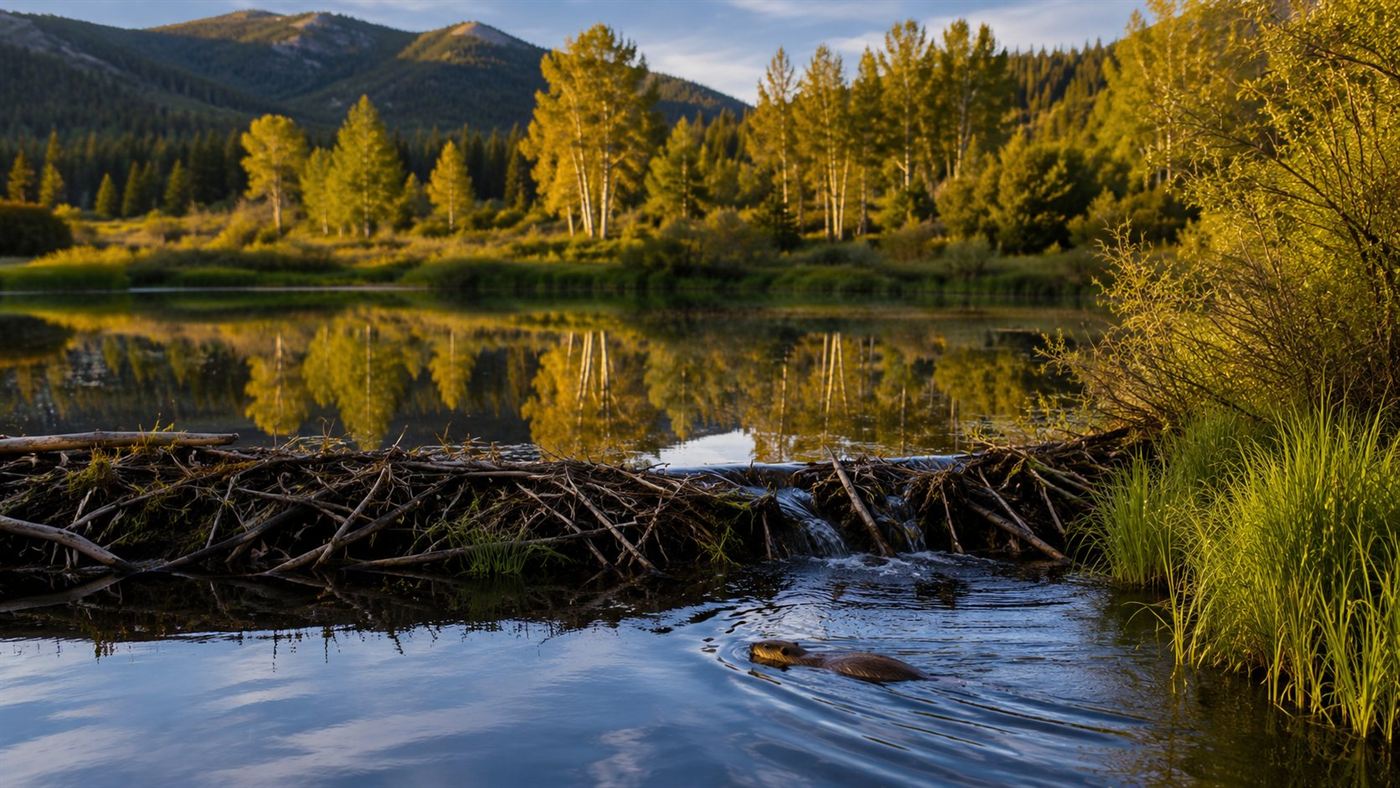
That principle did the heavy lifting. After years of hearings, the State Water Resources Control Board issued Decision 1631 in 1994, ordering Los Angeles to cut its diversions and let Mono Lake rise back to 6,392 feet above sea level. It was a stunning result, a city of millions told to give a desert lake its water back, and the public trust doctrine it rested on has shaped water fights across the West ever since. Similar reckonings have since played out from the largest dam removal in US history on the Klamath to the return of beavers rewilding California's rivers.
Is Mono Lake saved now?
Partly, and that word matters. The lake stopped falling, the California gulls have their islands back, and the brine shrimp and birds are still here, which on its own is an enormous win compared with the dust bowl that was coming. It became the rare environmental story where the ecosystem people fought for is measurably better off decades later, not worse.
But the number tells a more sober tale. The 1994 order set a target of 6,392 feet and expected the lake to reach it within about twenty years. More than thirty years on, it has not. As the Mono Lake Committee's own monitoring shows, the surface sat around 6,383 feet in early 2026, still roughly nine feet short of the level California promised. Drought years and continued diversions keep dragging it back, and the last stretch of recovery has stalled.
The honest catch
Mono Lake is usually told as a clean triumph, and it mostly deserves to be, but the caveats are real. The lake is protected, not restored. The legal win capped the damage and reversed the worst of it, yet the water level that judges and scientists agreed was healthy remains out of reach, and every dry year reopens the argument over how much Los Angeles should still take.
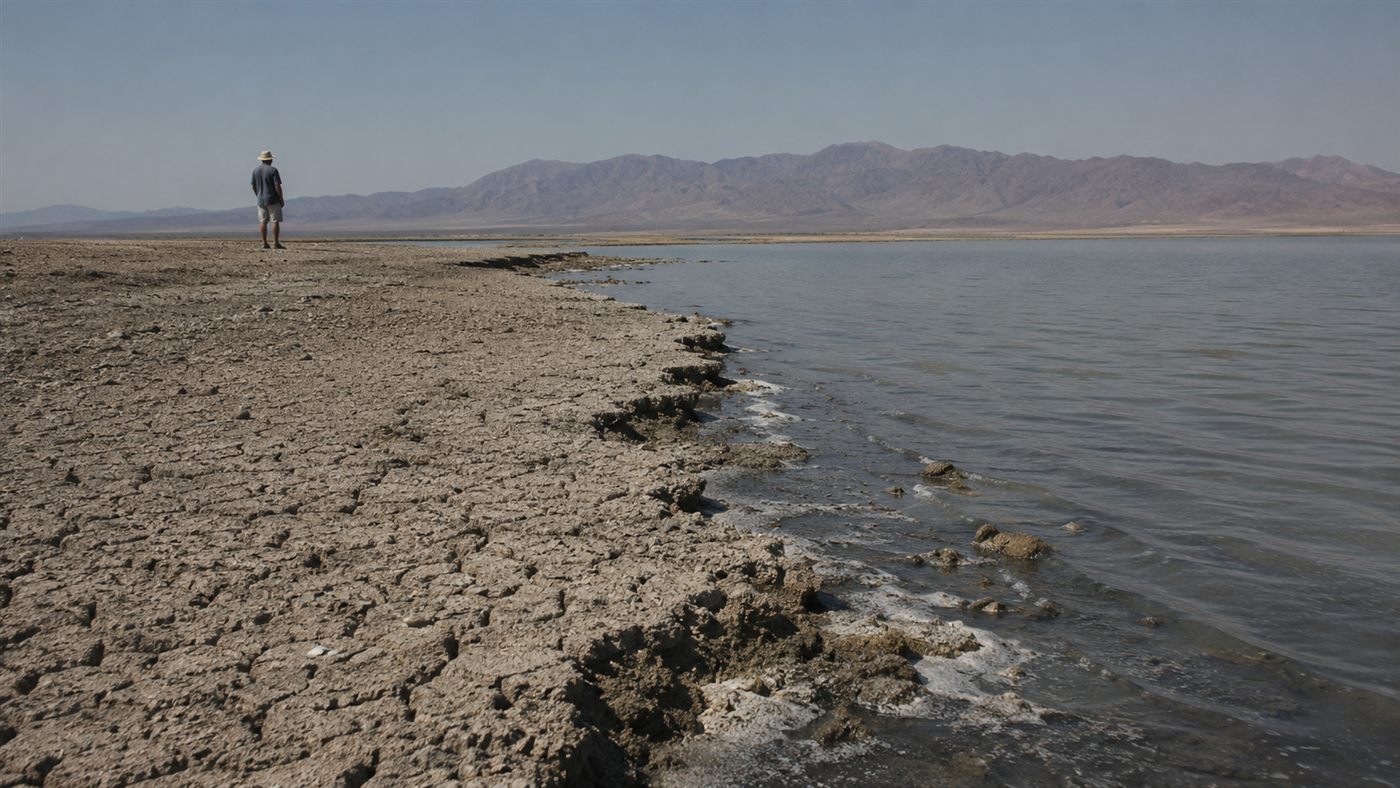
There is also a tension the story rarely names. Los Angeles did not take that water for nothing. It flowed to real homes, and every gallon left in the lake is a gallon the city has to find somewhere else, through conservation, recycling, or supplies with their own environmental costs. The lasting lesson here is not that the fight was won, but that these fights never fully end. They just change shape, like the Salton Sea down south, where a different California water story is still unfolding.
A remote salt lake most Americans have never seen became the place that taught the West a city's thirst does not outrank a living ecosystem. Should a wild place have a legal right to the water it needs, even when a city of millions wants it? Tell us what you think in the comments.
Related reading: how four dams came down on the Klamath to bring the salmon back, and why California's first documented extinction still haunts conservation. See also Owens Lake, the bigger lake Los Angeles drained into a poison dust bowl.