Everyone wrote off California's shrinking Salton Sea, then geologists found 18 million tons of lithium in the brine and the children breathing its toxic dust became America's clean energy problem
In April 2026, researchers published a study tracking 700 children growing up near California's receding Salton Sea and found that children living closest to its shrinking shoreline are growing slower lungs than almost any others in the state. Beneath those same children, dissolved in scalding underground brine, sits the largest known lithium deposit in the United States, and the rush to tap Salton Sea lithium could supply batteries for 11 million electric cars every year.
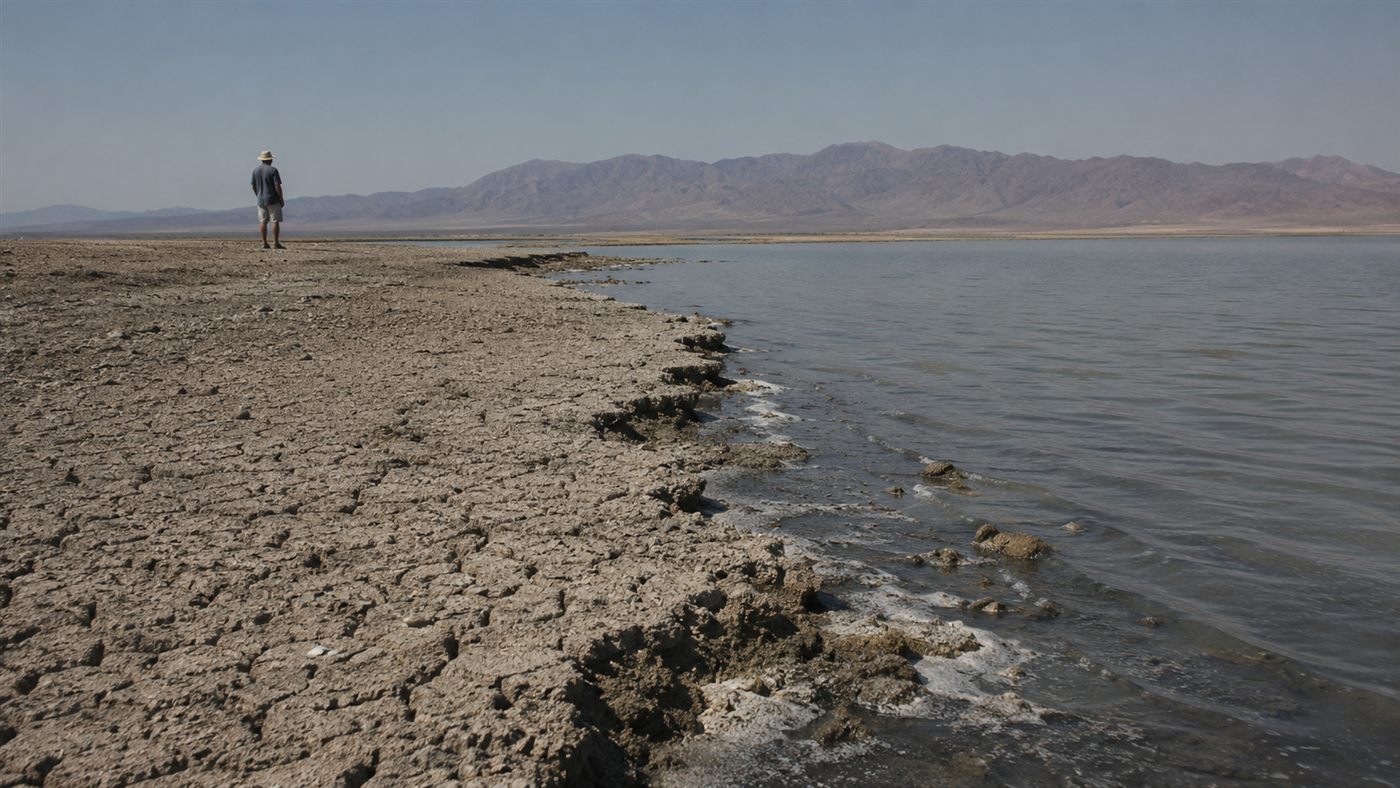
The Salton Sea has been losing surface area for decades. What lies dissolved in the brine beneath it has changed how America thinks about the place. Illustration: Watts & Wild.
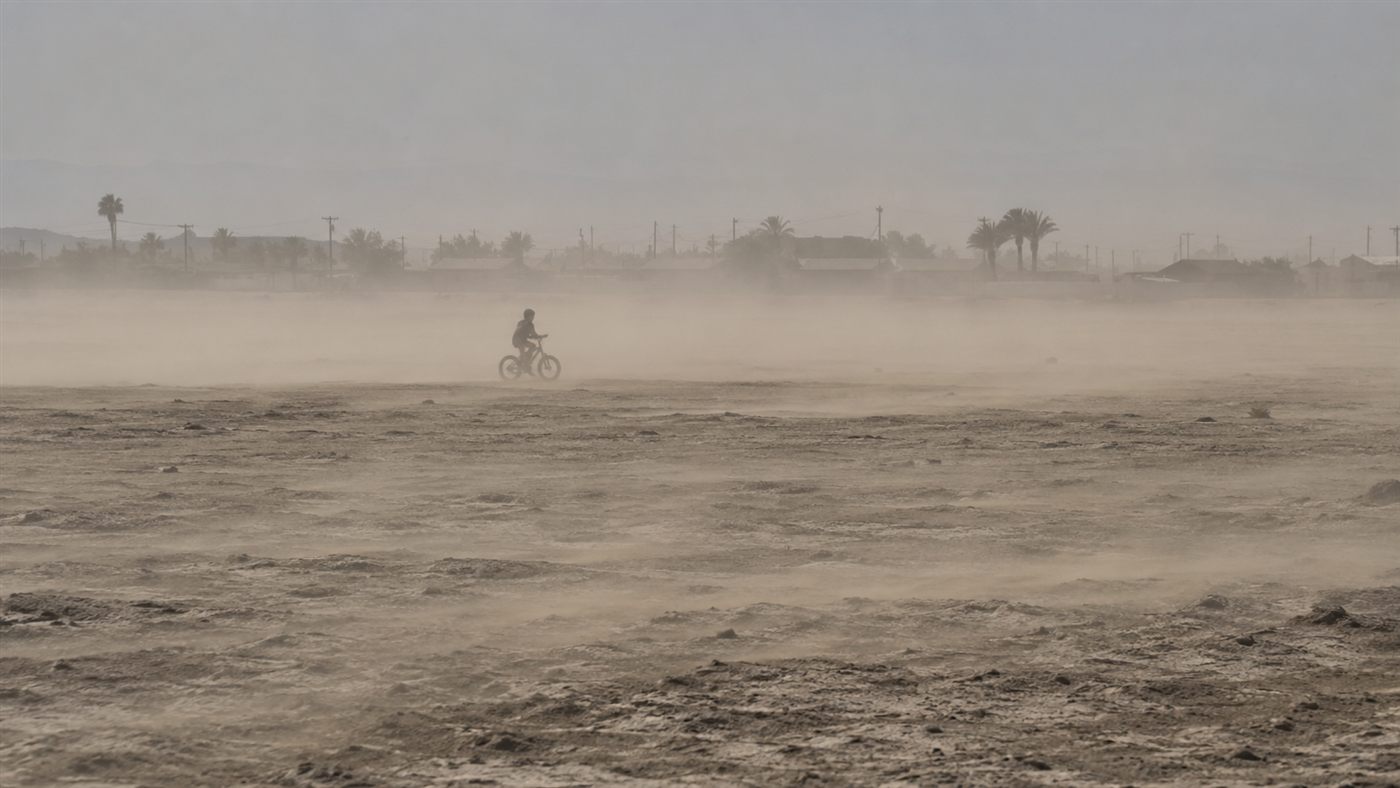
In April 2026, a research team from UC Irvine and the University of Southern California published the results of a study that had tracked 700 children growing up in California's Imperial Valley, measuring their lung development year after year. The finding was blunt: children who live within 11 kilometers of the Salton Sea are growing slower lungs than almost any other group of children in California. The effect is comparable, the researchers said, to spending your childhood within 500 meters of a freeway, a difference that can shape respiratory health for life. Nearly one in five children in the northern part of the valley has been diagnosed with asthma. In Imperial County, emergency room admissions for asthma-related illness run 22 percent above the California average.
The source of the dust is the sea itself. As the lake recedes, the exposed lakebed releases agricultural chemicals and heavy metals that accumulated from decades of runoff, and wind carries them across the communities on its margins. But here is the part that changes everything about how to read this story. The same scalding underground brine that heats the earth beneath the Imperial Valley carries an estimated 18 million metric tons of dissolved lithium, the largest known deposit in the United States, possibly in the world. Enough, according to projections from Berkshire Hathaway Energy, to supply batteries for 11 million electric cars every year. The dying sea that is quietly damaging the children above it may be the most strategically important piece of real estate in America's electric future.
An accident that became a sea, and then a liability
The Salton Sea was never supposed to exist. In 1905, a poorly engineered irrigation canal intake breached along the Colorado River and sent water flooding into the Salton Sink, a below-sea-level desert basin in Southern California. The break ran for nearly two years before engineers could stop it, and by then a large inland lake had formed where there had been nothing but desert. For a while it was glamorous. Frank Sinatra and Dean Martin came to boat on it. Resort towns sprung up along its banks. The California Department of Fish and Game stocked it with corvina and tilapia and billed it as a sportfishing destination.
Then the arithmetic of an inland sea with no outlet caught up with it. Agricultural runoff brought salts, fertilizers, and pesticides into water that had nowhere to drain. Salinity climbed past ocean levels. Fish died by the tens of millions. The resorts were abandoned. By the 1990s the Salton Sea had become a national symbol of environmental neglect, its shoreline white with salt and fish bones, its surface releasing hydrogen sulfide into the air. A 2003 water agreement diverted a portion of the Colorado River flow that had been keeping the sea from shrinking faster, and the surface area began dropping at an accelerating rate. As it shrank, more lakebed was exposed. More lakebed meant more toxic dust. More toxic dust meant more children in emergency rooms.
What the brine carries
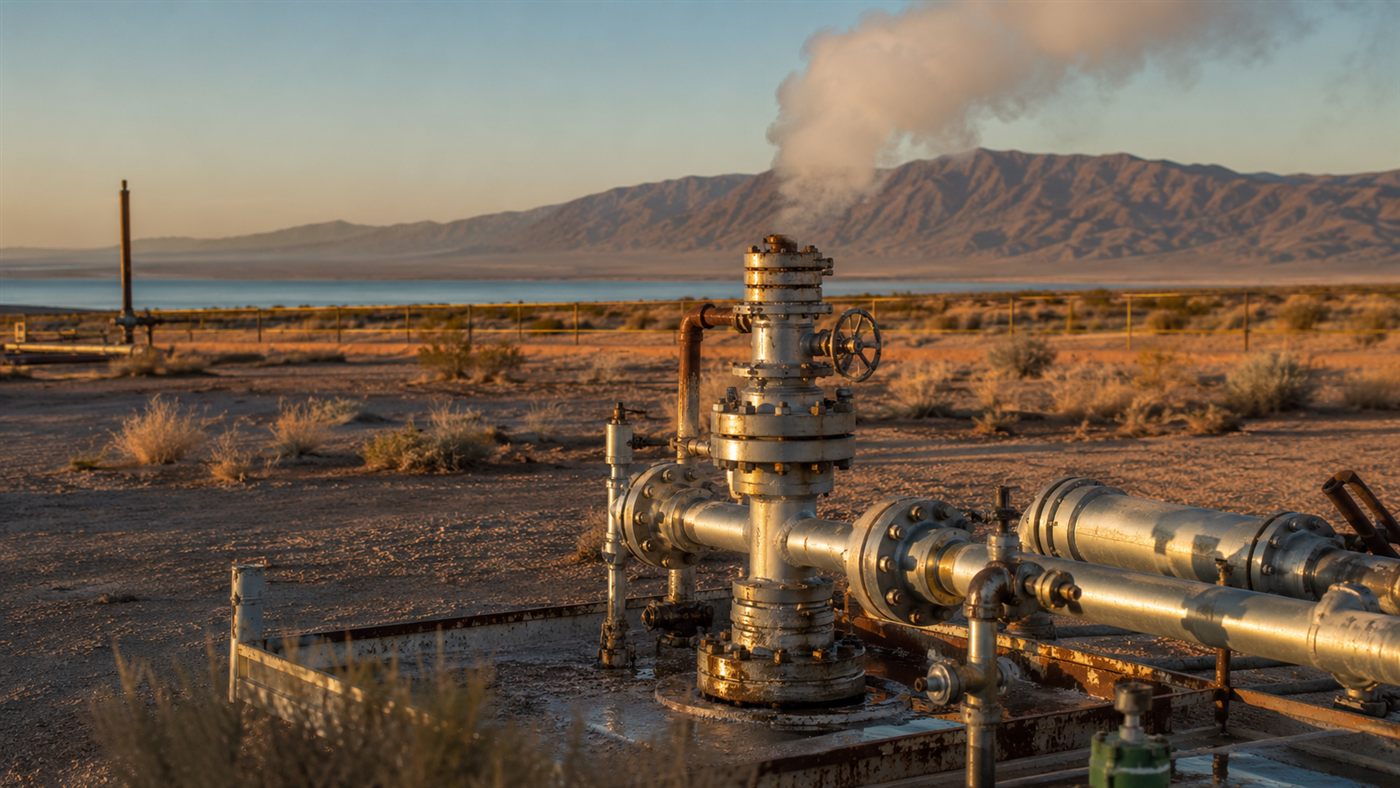
Berkshire Hathaway Energy has been operating geothermal power plants in the Imperial Valley since the 1980s, drawing heat from the same volcanic system that created the Salton Sea. It runs 10 plants in the region today, generating 345 megawatts of electricity. The heat comes from geothermal brine, superheated water forced up through fractured rock by the geology below. That brine was always pumped back underground after the heat was extracted. For decades, nobody was paying much attention to what else was dissolved in it.
When geologists and energy researchers began analyzing the brine carefully in the early 2020s, the U.S. Department of Energy confirmed what the samples were suggesting: the geothermal brines beneath the Imperial Valley contain an extraordinary concentration of lithium. The figure that consolidated was staggering, around 18 million metric tons of lithium in the ground. Governor Gavin Newsom declared the region "Lithium Valley." The electric vehicle industry, which had been watching global lithium supply chains with growing anxiety, took notice.
The race to extract Salton Sea lithium
Three main players moved into position. Berkshire Hathaway Energy formed a joint venture in June 2024 with Occidental's TerraLithium subsidiary to develop direct lithium extraction from its existing geothermal infrastructure. Its own projections put the potential output at 90,000 metric tons of lithium carbonate equivalent per year, enough for those 11 million EV batteries annually. EnergySource Minerals secured a $1.4 billion Department of Energy loan to build a dedicated extraction plant in Imperial County, targeting 20,000 metric tons of lithium hydroxide per year, with trial operations expected in 2026 and full production by 2027.
Controlled Thermal Resources is developing what it calls Hell's Kitchen, a combined geothermal power and lithium extraction project. In January 2025, a county judge dismissed a legal challenge to the project's environmental review and cleared it to proceed. The plan calls for 49.9 megawatts of geothermal electricity and 25,000 metric tons of lithium hydroxide per year, with power generation scheduled to begin by the end of 2026 and lithium production to follow. By spring 2026, however, the CEO was also emphasizing other minerals: zinc for steel production, potash for fertilizers, and cheap geothermal electricity for AI data centers. The lithium price that had surged above $80,000 per metric ton in 2022 had fallen below $12,000 by 2024 and stayed there. The boom had arrived into a complicated market.
The community caught in the middle
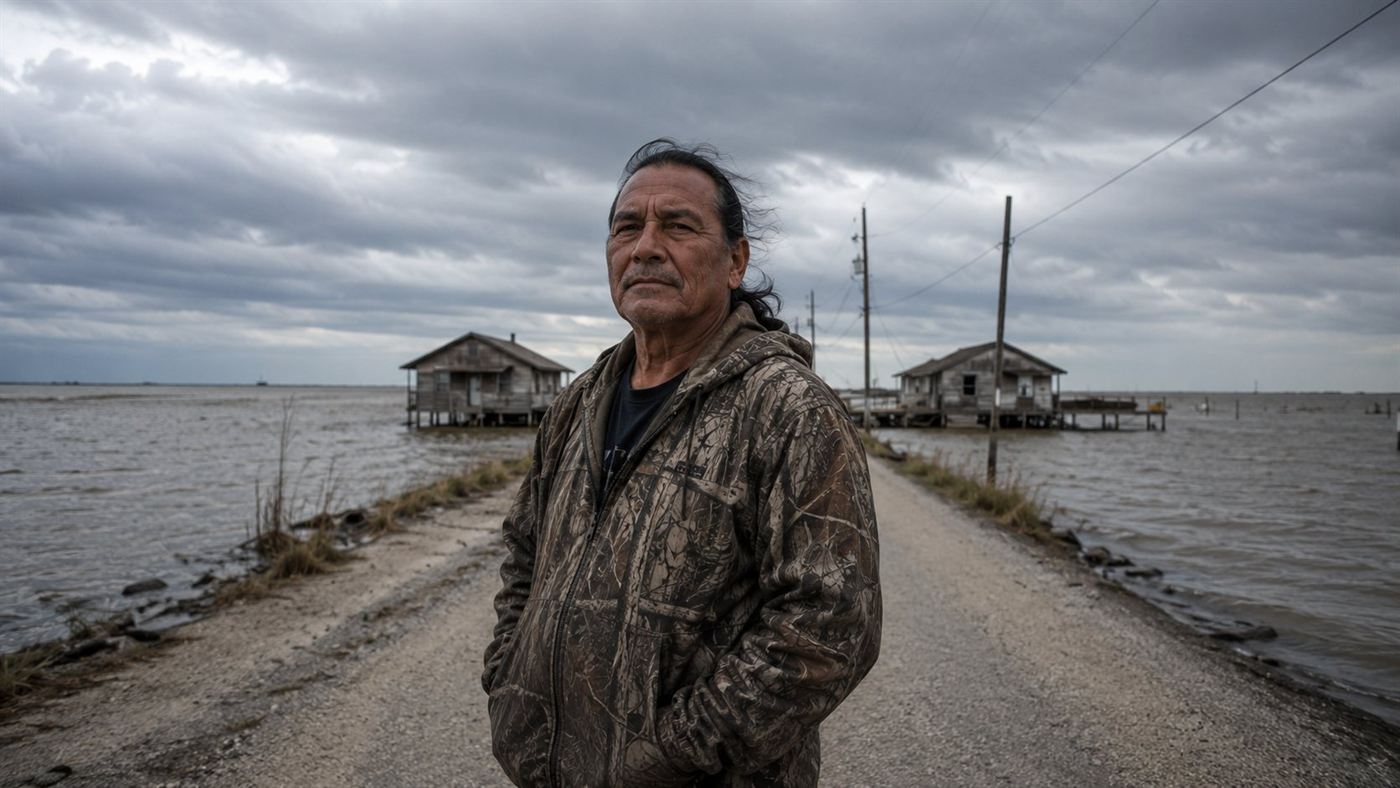
The Torres Martinez Desert Cahuilla Indian reservation sits just north of the geothermal plants where the brine is already being pumped. The Cahuilla are among the peoples whose ancestors have lived in and around this basin for thousands of years, long before the Salton Sea existed and through every phase of its accidental creation, its resort era, and its long decline. They have watched the environmental deterioration of the region across generations and are watching the lithium boom arrive with a combination of cautious interest and hard experience.
During the environmental review for one of the extraction projects, Tribal Elder Carmen Lucas of the Kwaaymii Laguna Band submitted formal objections, citing inadequate recognition of cultural resources in the county's review process. Project documents from several companies include language promising that at least 15 percent of jobs will go to local residents. Advocates and tribal leaders have pointed out that a promised jobs percentage in a future extraction economy is not the same as Free, Prior and Informed Consent, the standard recognized under international indigenous rights frameworks. Extraction economies in the American Southwest have a documented history of delivering wealth to shareholders and a legacy of pollution and depleted resources to the communities that hosted the extraction.
Imperial County has some of the highest unemployment rates in California. The farmworkers and families who make up most of its population are not opposed to economic development. They are being told, simultaneously, that the sea wrecking their children's lungs might also be their economic rescue. It is not a comfortable position to stand in while making decisions with multigenerational consequences.
The honest catch
Direct lithium extraction from geothermal brine has never been operated at commercial scale anywhere in the world. Every project under development in the Imperial Valley is, in one form or another, still proving that the technology can sustain the throughput its business plan requires, for years at a time, without brine chemistry or equipment degrading in ways that are hard to predict. A $1.4 billion DOE loan is a substantial bet on a process that has not yet crossed that threshold. The optimism among engineers is genuine. The distance between a successful pilot and 20,000 metric tons per year is also real.
The policy environment shifted as well. The Trump administration's 2025 funding freeze disrupted several federal commitments, and the One Big Beautiful Bill reshaped clean energy incentives, restricting the clean electricity credits that the geothermal side of these projects had been counting on, while leaving advanced manufacturing credits for lithium refining intact. The result is a different investment calculus than the one that drew these companies in. Multiple project timelines have slipped since 2023.
And the extraction itself raises questions that studies are still answering. Pumping large volumes of brine, even in a designed closed loop, affects subsurface pressure and carries risks for the regional hydrology and seismic profile. Communities that have already absorbed decades of uncompensated environmental costs are being asked to evaluate those questions in real time, while companies and state officials are projecting confidence about outcomes that are not yet certain.
The children are not waiting for the market to recover
The Salton Sea became what it is through a slow accumulation of decisions: a failed engineering call on a canal intake, agricultural policy that treated the basin as a drain with no consequences, a water agreement that accelerated the shrinking, and decades of state and federal indifference to what was happening to the people who lived on its margins. No single actor caused it. Many actors looked at it and chose to look somewhere else.
The lithium beneath it was always there, a geological fact that had nothing to do with the human situation above it. What changes now is that the situation has someone's attention, and attention brings decisions with it. The companies developing extraction technology have legitimate reasons for optimism about what the brine contains. The DOE has legitimate reasons to want domestic lithium supply. The state has legitimate reasons to call this a clean energy opportunity. All of those things can be true and still leave the most important question unanswered: who actually benefits, and in what timeframe, compared to who continues to absorb the cost.
The children whose lungs were measured in April 2026 will carry the results of those measurements into adulthood. They will live inside whatever decisions get made about this brine in the next few years. Getting the extraction technology right matters enormously. Getting the economics to work matters. But neither of those is the hardest part. The hardest part is building a structure that distributes the benefit toward the people who have been paying the price the longest.
America's most neglected inland sea turns out to be sitting on a lithium fortune. The people who have been living with its consequences are still waiting to find out whether this time the fortune finds them too. Who do you think should have the loudest voice in deciding how the Salton Sea's lithium gets extracted: the companies, the state, or the communities that have absorbed the cost for decades? Tell us what you think in the comments.
Related reading: The geothermal plant in Utah that quietly changed what the industry thought was possible. See also the Salar de Uyuni, the giant mirror in Bolivia that holds a fifth of the world's lithium.