He sailed the world for 11 years to watch Venus, saw nothing, and came home a dead man
In 1760 a French astronomer set out on a voyage to witness one of the rarest sights in the sky, a tiny black dot crawling across the face of the Sun. It should have taken a couple of years. Instead, Le Gentil was gone for eleven, missed the event not once but twice, and returned to find the world had decided he was dead.
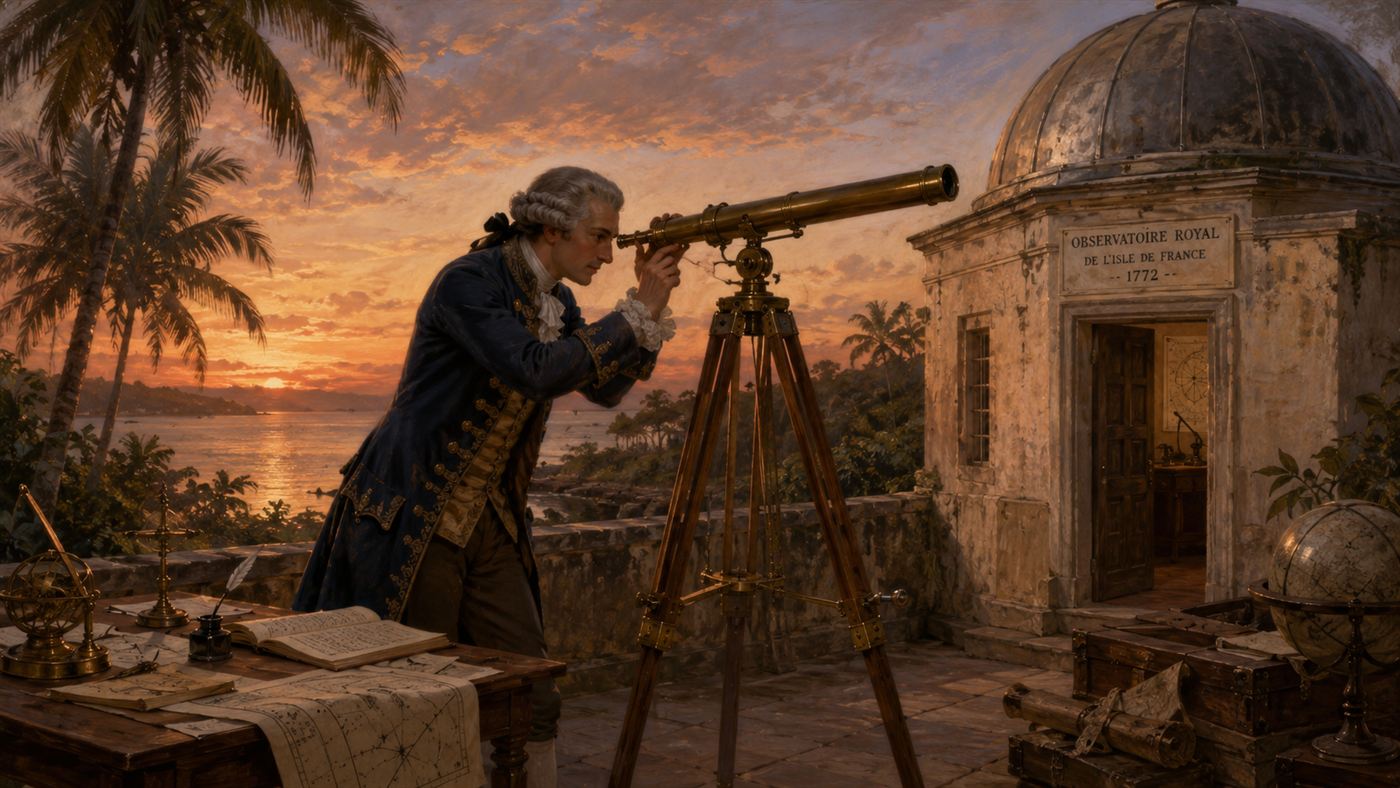
For 18th-century astronomers, a single rare alignment was worth crossing the planet to see. Illustration: Watts & Wild.
If you have ever felt unlucky, spare a thought for Guillaume Le Gentil. His story is the kind of cosmic joke that would seem too cruel for fiction, a tale of patience, devotion and dreadful timing stretched across more than a decade. Le Gentil did everything right, travelled to the far side of the world, waited years for his moment, and was defeated each time by forces entirely beyond his control.
And yet the maddening thing he was chasing was not a whim. It was one of the most important measurements in the history of science.
Why a dot on the sun was worth a fortune
Every so often, Venus passes directly between the Earth and the Sun, showing up as a small black disc creeping across the bright surface. These transits are rare, arriving in pairs eight years apart and then not again for over a century. In the 1700s, astronomers realised these events were a golden key. By timing the transit precisely from widely separated points on Earth, they could work out the true distance from the Earth to the Sun, the master measurement on which the scale of the whole solar system depends.
So when the transits of 1761 and 1769 approached, nations sent astronomers fanning out across the globe, from Siberia to the South Pacific, in one of the first great international scientific campaigns. Le Gentil was France's man for the Indian Ocean, bound for the French outpost of Pondicherry in India.
Why Le Gentil crossed the world for a dot on the sun
Le Gentil sailed from France in 1760, in plenty of time for the June 1761 transit. But the journey turned into a nightmare of bad weather and worse politics. His ship was blown off course and slowed by contrary winds, and when it finally neared India, word came that Britain, at war with France, had seized Pondicherry, forcing the vessel to turn back.
The transit day, 6 June 1761, found him still at sea. The sky was clear and Venus duly crossed the Sun, but a rolling ship is useless for the delicate timings the measurement required, and he could do nothing but watch his chance slip past from the deck. Years of preparation, undone by a war and a wind.
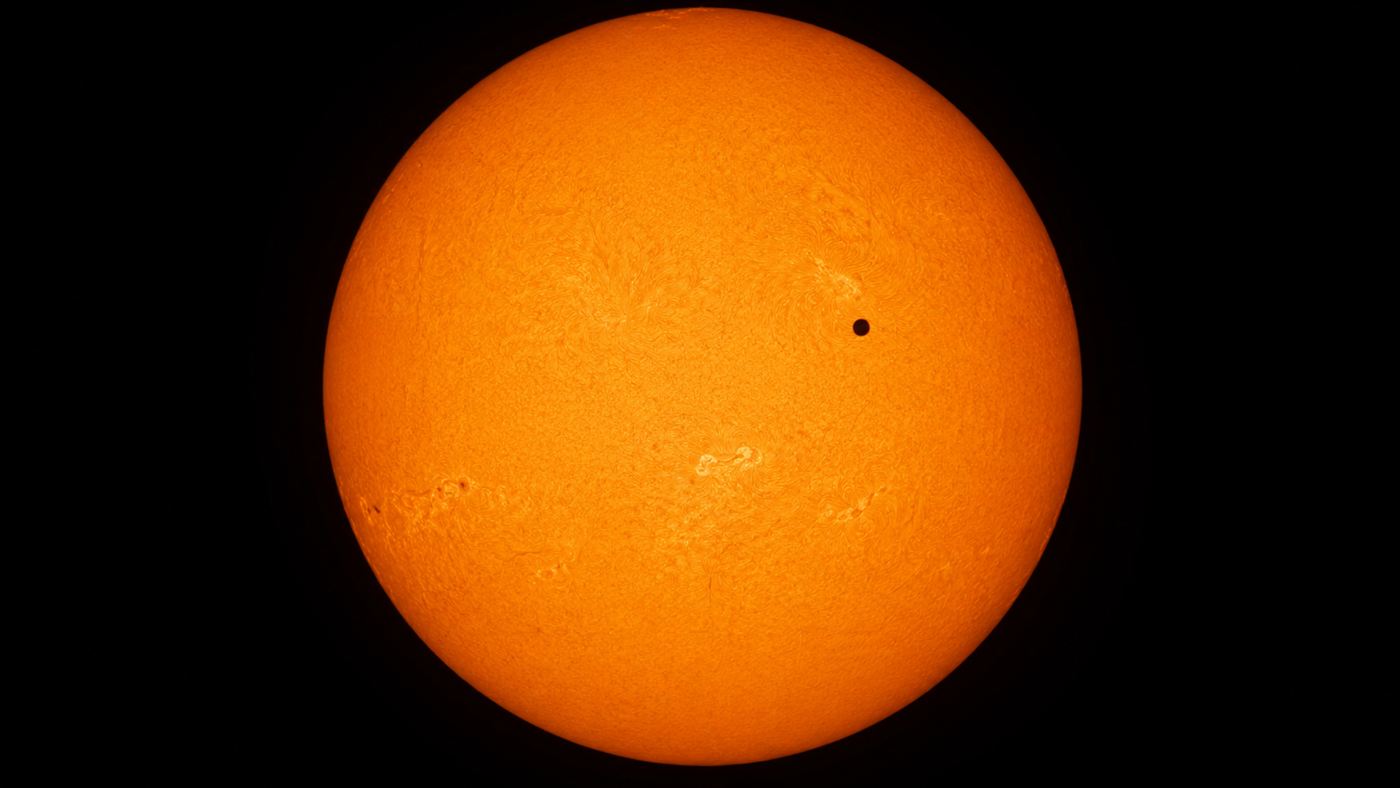
Missed at sea, then a single cloud
Most people would have sailed home. Le Gentil did the opposite. Knowing another transit would come in 1769, he decided that rather than make the long voyage twice, he would simply stay in the region and wait the eight years out. He spent that time usefully, mapping coasts and studying the lands around the Indian Ocean, and built himself a fine observatory at Pondicherry, by then back in French hands.
The month before the 1769 transit was gloriously clear, day after day of perfect sky. Then, on the single morning that mattered, a cloud rolled across the Sun exactly as Venus began its crossing, and lifted again only once the transit was over. After nine years of waiting on the other side of the planet, Le Gentil was denied by a few hours of bad weather. He later wrote that he was so stunned he could barely hold his pen.
Declared dead at home
Broken in spirit and then in health, Le Gentil fell seriously ill and began the long journey back to France, a voyage itself plagued by storms and delays. When he finally reached Paris in 1771, after eleven years away, the cruellest blow was waiting at home. His relatives, hearing nothing for so long, had given him up for dead, divided his estate among themselves, and his seat at the Academy of Sciences had been handed to someone else.
The man had crossed oceans, survived war and disease, and lost his one great scientific goal to a cloud, only to come home and discover he no longer legally existed. It is hard to imagine a more complete run of misfortune for one devoted life.
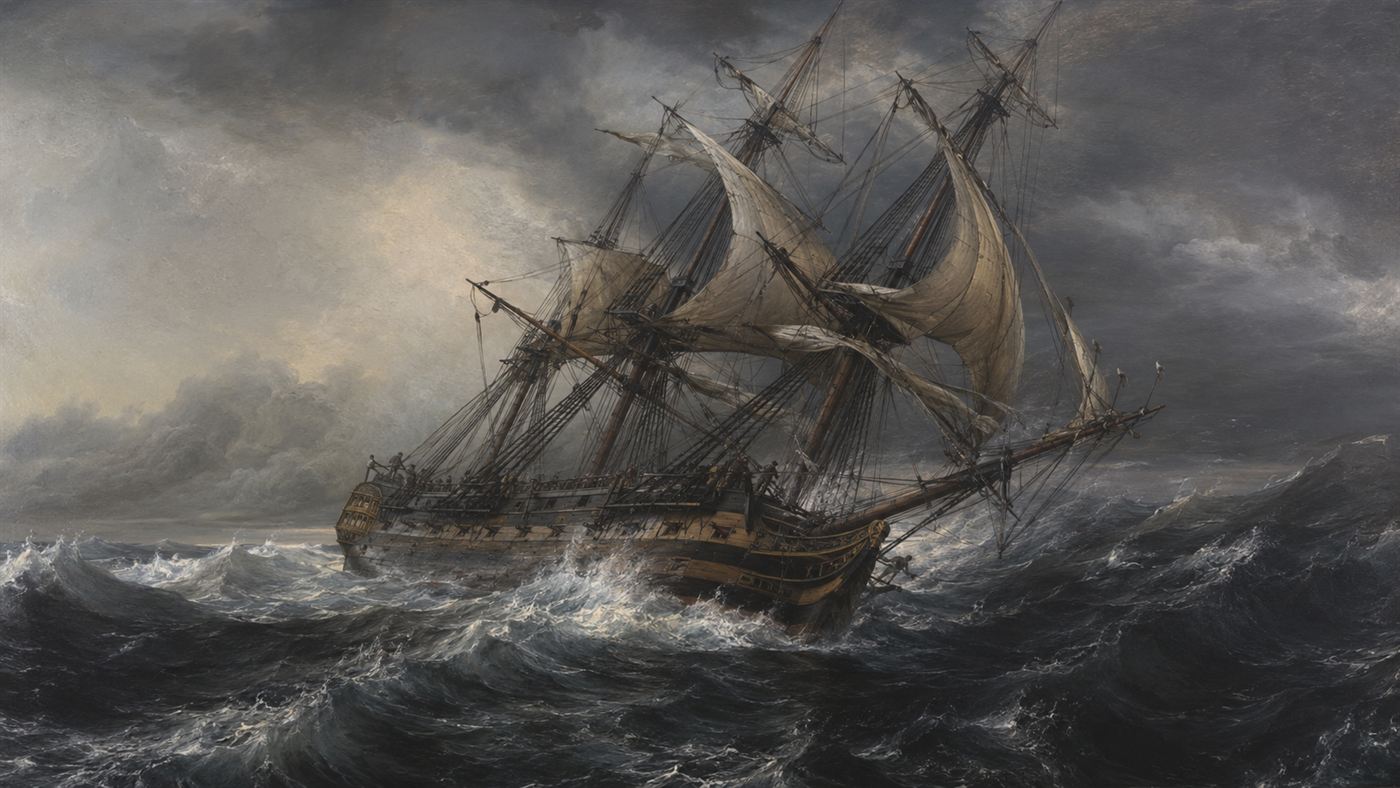
Who was Guillaume Le Gentil?
Here the story finally turns kind. Le Gentil did not give up on his own life any more than he had given up on Venus. He fought through the courts, won back his property, reclaimed his place in the Academy of Sciences, married, raised a daughter, and lived another two decades in contentment. He even published an account of his extraordinary travels before dying peacefully at 67, just as the French Revolution was beginning.
So the unluckiest astronomer in history got a happy ending after all, even if he never did see his transit. His ordeal became one of science's favourite cautionary tales, a reminder of just how much patience, and luck, the pursuit of knowledge can demand.
Why did the transit of Venus matter?
It is worth remembering that all this hardship was in service of something real. The combined observations from 1761 and 1769, gathered by dozens of astronomers despite Le Gentil's losses, gave humanity its first good estimate of the distance to the Sun, and with it the size of the solar system. The very measurement Le Gentil never managed to take was pieced together from the efforts of those who succeeded where he failed.
In a sense, his sacrifice was not wasted. He was one of many who threw themselves at a single fleeting alignment of worlds, and the picture they built together was bigger than any one of them. The next pair of transits, by the way, will not come again until the 2110s, so there is plenty of time to plan a better trip than his.
Eleven years, two oceans, a war, a cloud, and a homecoming as a legally dead man, all for a few hours of sky he never got to see. Would you give a decade of your life to a single measurement, knowing a passing cloud could take it from you? Tell us what you think in the comments.
Related reading: John Harrison, the carpenter who spent a lifetime building a clock to solve longitude and fighting to be paid for it.