The ivory-billed woodpecker was declared gone in the 1940s, then a kayaker's 2005 sighting in an Arkansas swamp thrilled the world, and the US still cannot decide whether the Lord God Bird is truly extinct
It was the biggest woodpecker in North America, so magnificent that people who saw it cried out to God. Then the great Southern forests fell, and the bird fell with them. Or did it? A century later, no one can quite agree whether the ivory-billed woodpecker is gone.
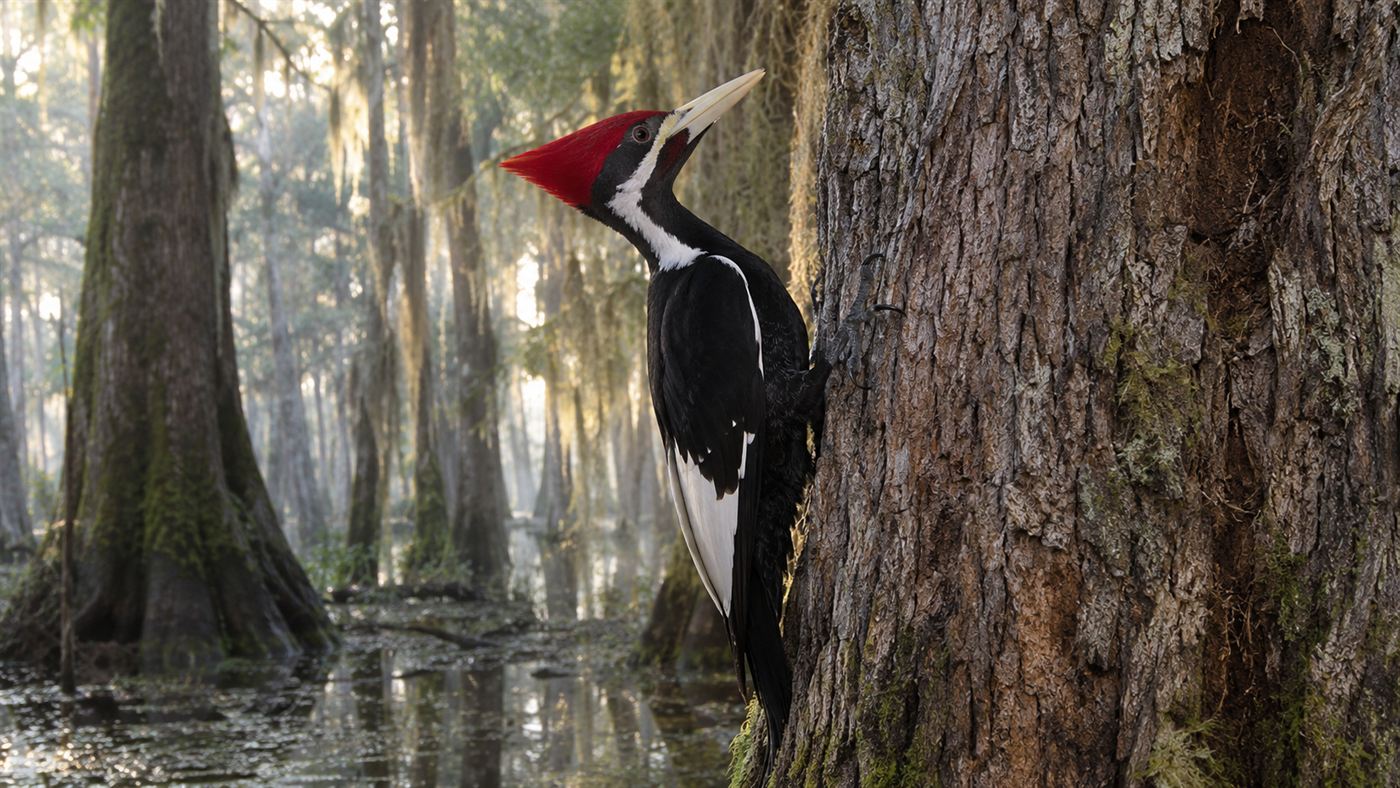
The ivory-billed woodpecker, a bird so striking it earned the name Lord God Bird. Illustration: Watts & Wild.
Few animals carry a name like this one. The ivory-billed woodpecker was so enormous and so startling that people who glimpsed it in the swamps of the American South were said to blurt out, "Lord God, what a bird!" It was the largest woodpecker on the continent, nearly the size of a crow's bigger cousin, jet black and white with a flaming crest and a heavy pale bill, and it needed vast tracts of ancient forest to survive.
That need is what doomed it. As Audubon has chronicled, the logging that stripped the old forests of the South between the 1880s and the 1940s took the bird's whole world with it, and by mid-century the ivory-bill was presumed gone. Except that it never quite stayed gone, which is where this becomes one of the strangest stories in American wildlife.
The short version: the ivory-billed woodpecker, the largest in North America, lost its old-growth forest home to logging and was presumed extinct after 1944. A contested 2005 rediscovery in Arkansas electrified the world, but the evidence never held up. The US government has since proposed declaring it extinct, then repeatedly held off, so its fate is officially unresolved.
Why is it called the Lord God Bird?
The nickname is the best description anyone has managed. At around 20 inches long with a wingspan close to 30 inches, the ivory-bill dwarfed the familiar woodpeckers people knew, and its bold coloring and huge ivory-colored bill made it unforgettable. Seeing one was an event, and the exclamation it drew, "Lord God," became the name that stuck: the Lord God Bird.
It was also a specialist, and that is a dangerous thing to be. The bird lived on beetle larvae buried under the bark of large dying trees, which meant it needed huge stretches of mature, undisturbed old-growth forest to find enough food. A pair could range over many square miles. As long as the great bottomland woods stood, the bird thrived. When they came down, it had nowhere to go.
The fall of a forest, and a bird
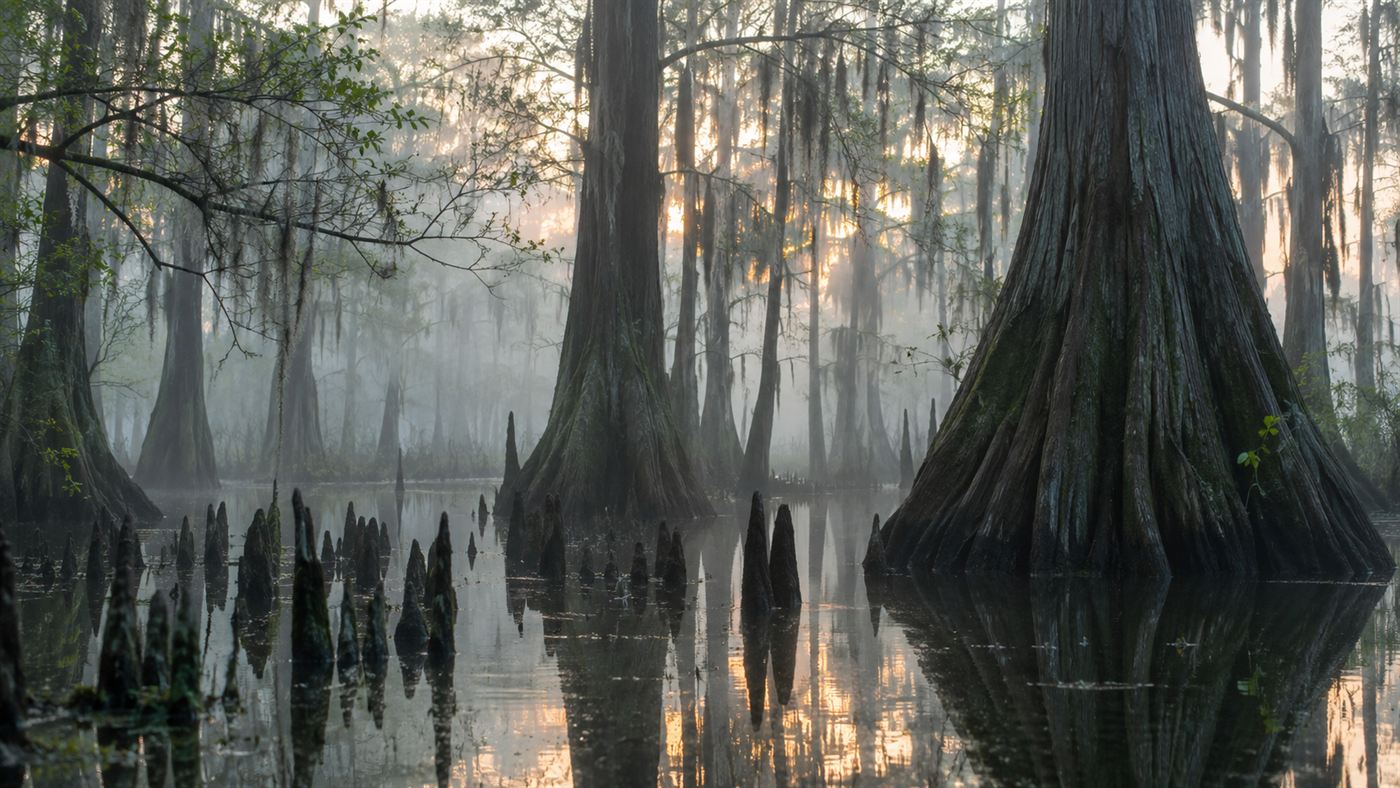
The ivory-bill's decline tracks a wider American story: the clearing of the South's virgin forests. Timber companies cut through millions of acres of old bottomland hardwoods, and as the ancient trees fell, the specialized bird that depended on them ran out of room. Conservationists watched it happen almost helplessly in the 1930s and 1940s.
The last chapter of the sure record played out in the Singer Tract, a large block of old forest in northeastern Louisiana. As the loggers moved in during the 1940s despite pleas to spare it, the artist Don Eckelberry sketched what is generally accepted as the last confirmed ivory-bill, in 1944. After the Singer Tract was cut, the confirmed sightings stopped, and the bird slipped into the gray zone between rare and gone.
The ivory-billed woodpecker rediscovery that split the experts
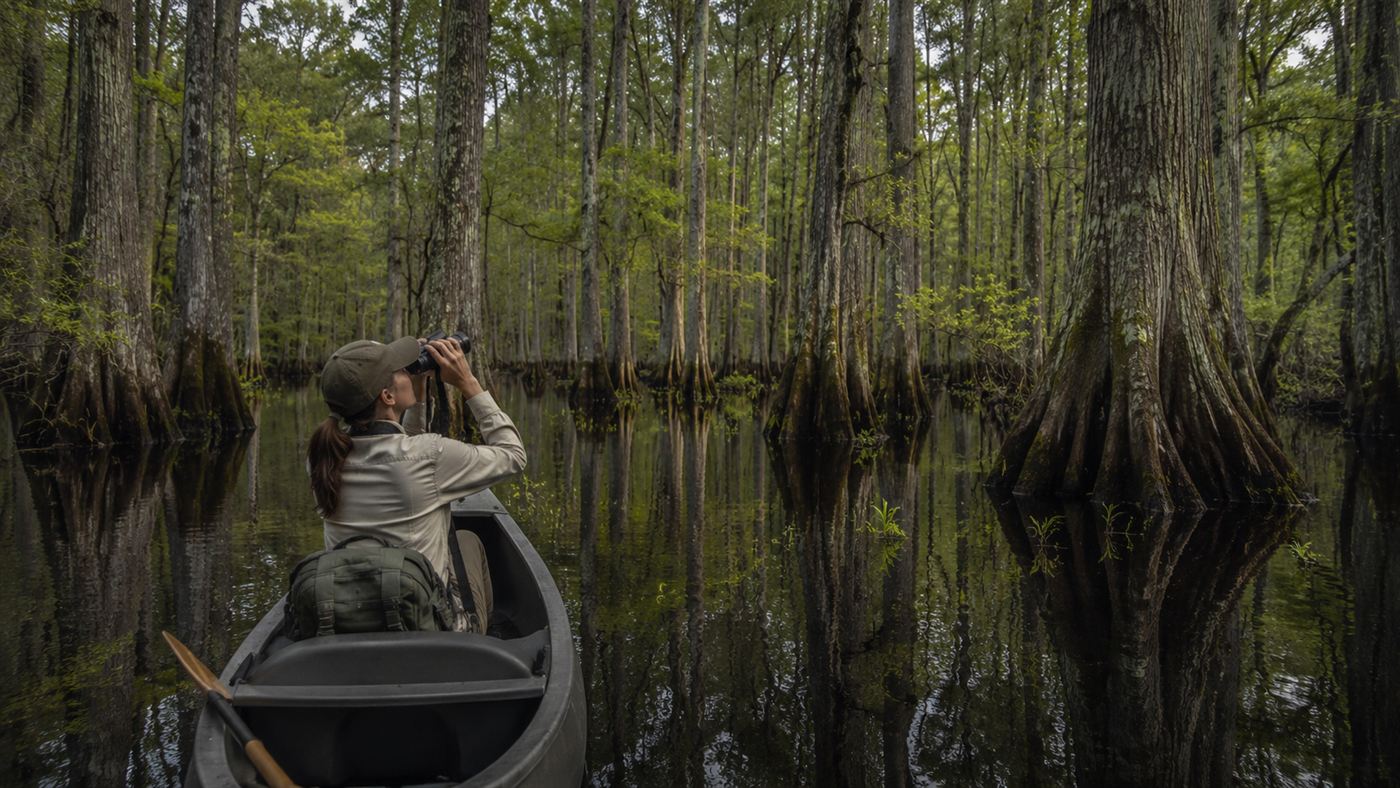
For sixty years the ivory-bill lived mostly in memory and rumor, until a jolt of hope in the 2000s. In 2004 a kayaker named Gene Sparling reported a huge woodpecker in the Big Woods of eastern Arkansas, and a search followed. In April 2005 the Cornell Lab of Ornithology announced in the journal Science that the ivory-billed woodpecker had been rediscovered, backed by sightings and a few seconds of blurry video. The news made headlines around the world.
Then the doubt set in. Skeptical ornithologists, including the field-guide author David Sibley, studied the same footage frame by frame and argued it showed a common pileated woodpecker, not the ivory-bill. No one produced the clear photograph everyone wanted, and years passed with no confirmed follow-up. The Cornell Lab of Ornithology stood by its work, but the wider consensus drifted back toward the grim conclusion that the bird was gone.
Why won't the government call it extinct?
Here is the twist that keeps the story alive. In 2021 the US Fish and Wildlife Service proposed officially declaring the ivory-billed woodpecker extinct, one of nearly two dozen species it wanted to remove from the endangered list because they were beyond saving. For most of the others, the ruling went through. For this bird, it stalled.
After more contested photos and videos surfaced from Louisiana, the agency extended its review, and in 2023 it declared 21 other species extinct while pointedly leaving the ivory-bill off the list. As of 2026 there is still no final decision and no confirmed living bird. The government cannot bring itself to sign the death certificate for a bird no one can prove is alive. That hesitation is the whole story in miniature.
The honest catch
It would be lovely to say the ivory-bill is quietly hanging on, but honesty requires admitting that most experts think it is extinct, and that hope is a powerful distorting lens. People desperately want this bird to exist, and that longing has a way of turning shadows and blurry frames into wishful sightings. The absence of a single clear photo, after decades of searching with better and better cameras, is hard to explain if a population still survives.
There is a real cost to the limbo, too. As long as the bird is not formally extinct, its protections and the hope around them can steer money and forest conservation, which some see as a worthy hedge and others as a distraction from species we can still save. The ivory-billed woodpecker may already be a ghost, and the kindest reading of the delay is not that officials are fooling themselves, but that no one wants to be the person who was wrong to give up.
A bird big enough to make people shout to the heavens may have quietly vanished, and we cannot even agree that it is gone. Should we keep protecting a species on the chance it survives, or accept the loss and put those efforts toward the animals we know we can still save? Tell us what you think in the comments.
Related reading: how the California condor clawed back from just 22 birds, and how the passenger pigeon went from billions to one named Martha. See also the heath hen, whose last bird boomed alone on Martha's Vineyard until 1932, and the rusty bush lark, photographed alive in Chad in 2026 after 94 years unseen.