Norway answered a government challenge with the world's first all-electric ferry, a silent ship that glides across its deepest fjord on a battery the size of a small power plant
In 2015 a small Norwegian ship called Ampere slipped away from a fjord dock without a sound or a puff of smoke. It was the world's first all-electric car ferry, and the local grid was so weak that engineers had to give each shore its own battery just to feed it.
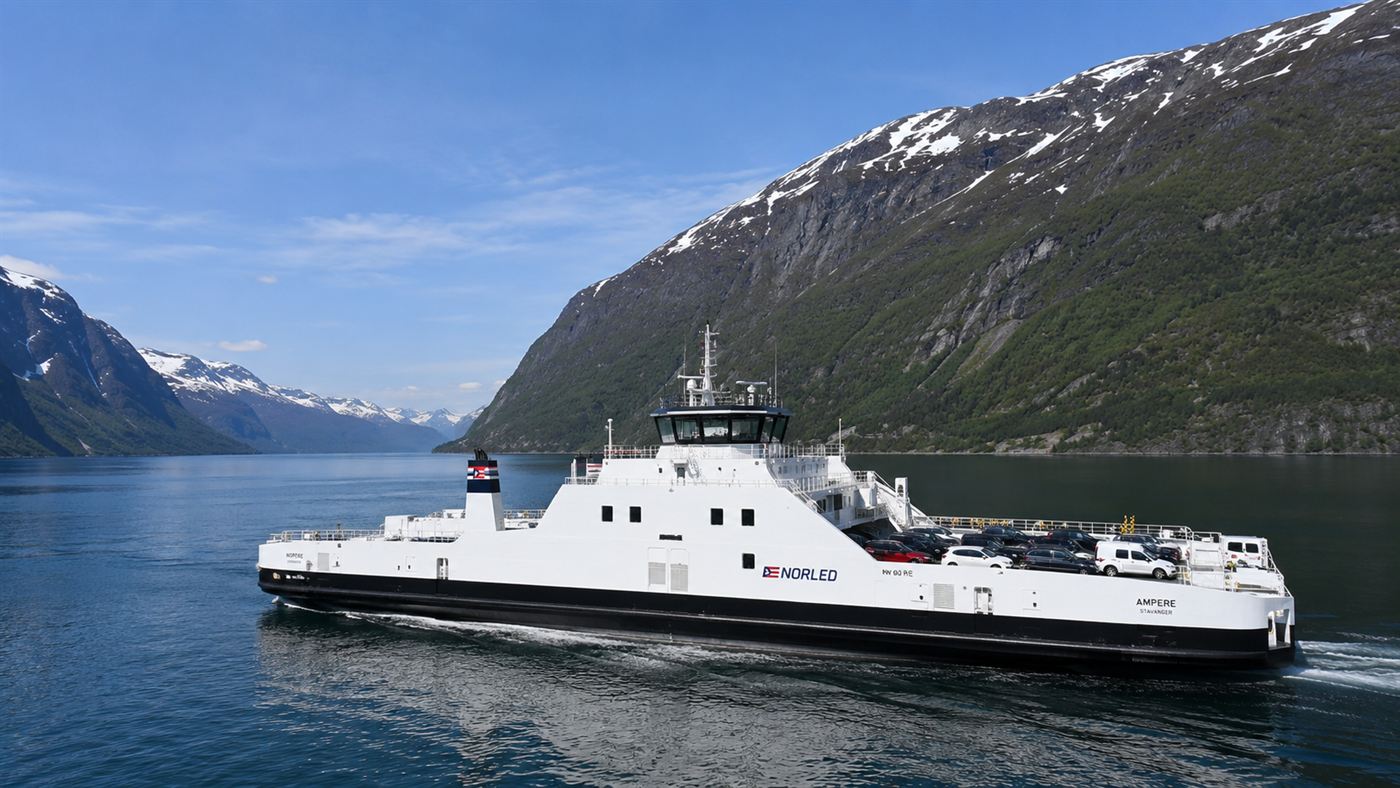
The Ampere, the world's first all-electric car ferry, crossing the Sognefjord. Illustration: Watts & Wild.
The electric ferry Ampere does its job without drama. Several dozen times a day it loads cars at a dock on one side of a Norwegian fjord, pushes off, and slides across to the other side, and the most remarkable thing about the journey is what you do not experience: no diesel rumble through the deck, no smell of exhaust, no churn of a combustion engine. The ship moves across the water almost silently, leaving nothing behind it but a wake.
When it entered service in February 2015, the Ampere became the first all-electric car ferry in the world. It runs between the villages of Lavik and Oppedal across the Sognefjord, the longest and deepest fjord in Norway, and it has been doing so, quietly, ever since. What made it possible was not just a big battery, but a clever answer to a problem that nearly sank the whole idea.
What was the world's first electric ferry? The MF Ampere, launched in Norway in 2015, was the world's first all-electric car ferry. It carries 120 cars across the Sognefjord on a one-megawatt-hour battery, recharging in about ten minutes at each dock, and saves roughly a million litres of diesel a year.
A challenge from the government
The Ampere did not begin as a shipyard's idea. In 2011 the Norwegian transport ministry threw down a challenge: design a greener ferry for the Lavik to Oppedal crossing, and the winner would get the contract to run it. It was an invitation to gamble, and a consortium of Norwegian companies took it, betting that batteries alone, with no diesel backup at all, could handle a real route used by real commuters every day.
That bet became a slender aluminium catamaran. Aluminium, rather than steel, because a lighter hull needs less energy to push, and on a battery ship every kilogram of weight is a kilogram you have to carry on stored electricity. The result was a vessel built from the keel up around the limits and strengths of a battery, rather than a diesel ship with the engine swapped out.
The world's first electric ferry
The ship that emerged is about 80 metres long and carries up to 120 cars and 360 passengers. The crossing is short, roughly six kilometres and about twenty minutes, and the Ampere makes it dozens of times a day. Driving it all is a battery of around one megawatt-hour, comparable to the packs of a dozen or more electric cars combined, sitting low in the hull where a diesel engine and its fuel tanks would once have been.
For the people who ride it, the novelty wears off fast, which is the point. A working electric ferry has to be boring in the best sense: as reliable, as punctual and as unremarkable as the diesel boat it replaced. The Ampere managed that from the start, and the quiet, fume-free crossing simply became the new normal on that stretch of fjord.
Why each shore needed its own battery
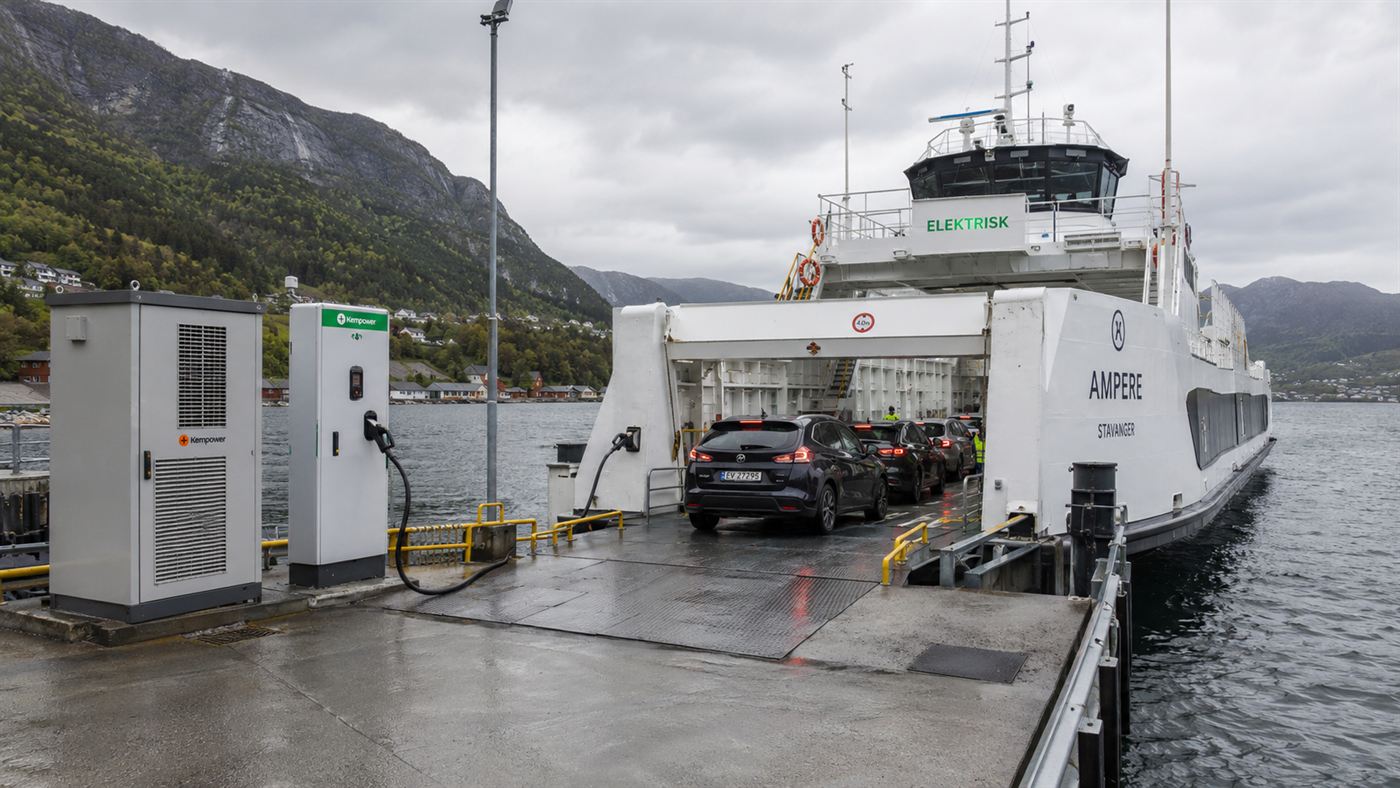
Here was the catch that almost broke the project. To charge a one-megawatt-hour ship in the ten minutes it sits at a dock, you need to push enormous power through the cable very fast, and the two small fjord villages simply did not have an electricity grid strong enough to deliver it. A sudden demand that large would have strained the local lines every time the boat came in.
The solution was elegant. Engineers installed a large battery on each shore, beside the dock. Between sailings, when the ferry is out on the water, that shore battery sips power gently from the weak village grid and fills itself up. Then, when the Ampere arrives, the shore battery empties its stored charge into the ship in a quick, powerful burst. The grid never feels the spike; the battery on land absorbs it for them. The ship, in effect, charges from another battery, not directly from the wires.
Silence on the fjord
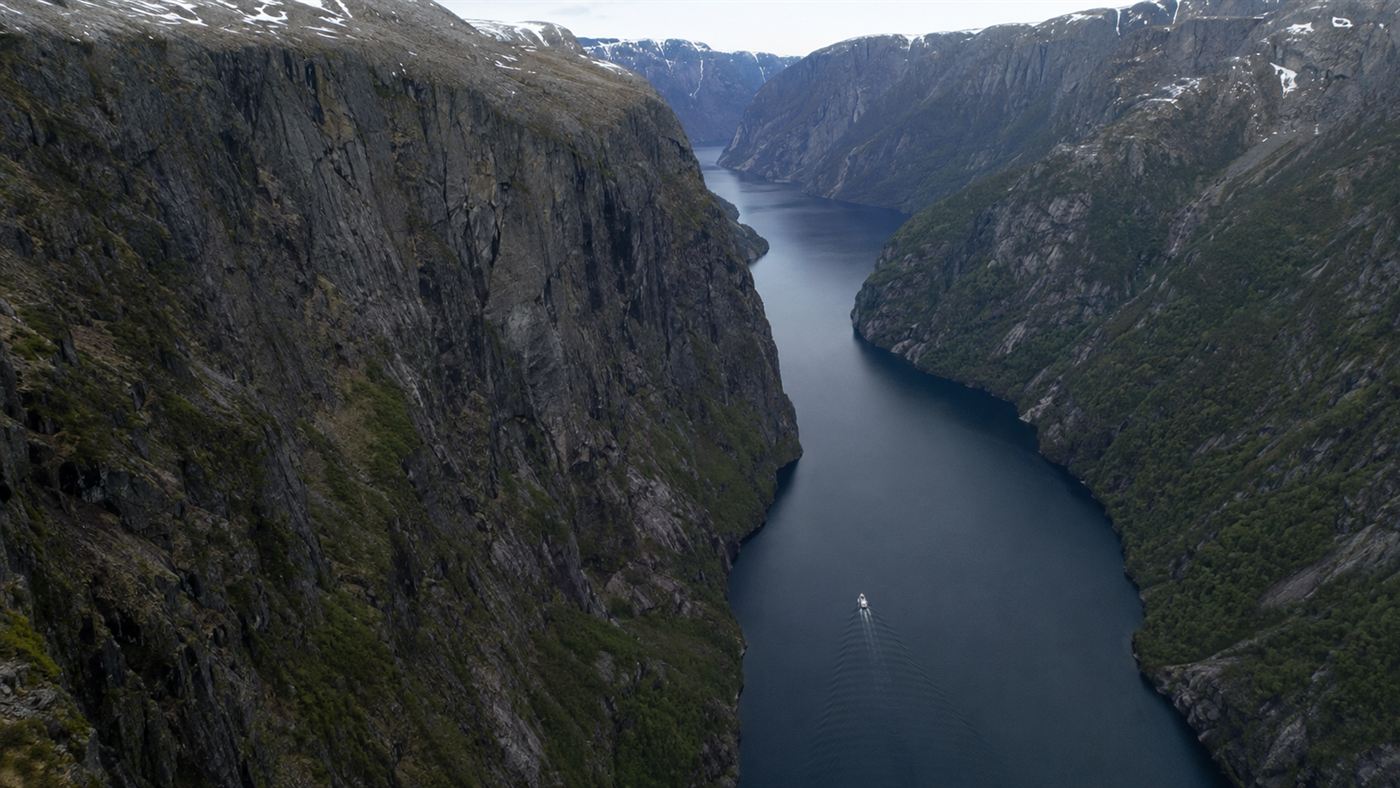
The reward for all this is a kind of crossing that did not exist before. The Sognefjord is one of the great landscapes of Europe, a deep blue cut between steep green and snow-streaked mountains, and for decades the boats that crossed it trailed diesel smoke and engine noise across that quiet. The Ampere does neither. It recharges on Norwegian hydropower, so the electricity itself is close to carbon-free, and it has been calculated to save on the order of a million litres of diesel and thousands of tonnes of carbon dioxide every year.
Stand on the deck and the dominant sound is wind and water, not machinery. For a piece of public transport, a working ferry on a working route, that silence is the whole achievement, and it happens to land in one of the places best suited to appreciate it.
The green revolution it started
The most important thing the Ampere did was prove a point. Once one battery ferry had run a real route, day in and day out, through Norwegian winters without missing its schedule, the argument that it could not be done collapsed. In the decade that followed, Norway ordered electric and hybrid ferries by the dozen, until a large share of the country's fjord crossings were running partly or entirely on batteries. A single boat on a six-kilometre route had quietly rewritten what a ferry was allowed to be.
The honest catch
It is worth being clear about why it worked. Norway had an almost ideal set of conditions: abundant cheap hydroelectricity, short and fixed ferry routes, deep public funding and the political will to demand change. The shore-battery trick solved the weak-grid problem, but it also added cost and hardware that not every operator can afford, and a long ocean crossing, or a country whose electricity still comes from coal, cannot simply copy the Ampere and expect the same clean result.
And "zero emissions" is a phrase to handle carefully. The crossing itself is close to carbon-free thanks to hydropower, but building the ship, and especially its batteries, carries a footprint of its own that a single route's diesel savings take years to outweigh. None of that undoes the achievement. The Ampere really was the first of its kind, it really did work, and it really did trigger a wave of imitators. It is simply a first chapter, not the whole story, of taking the engine noise out of the water.
A government dare became the world's first electric ferry, charged by a battery on each shore so a weak fjord grid would not notice. Would you rather cross a fjord in silence or hear the old diesel engine one more time? Tell us in the comments.
Related reading: The world's largest electric ship, a battery-powered giant that dwarfs the little Ampere.