People called Frederic Tudor insane for wanting to cut ice from frozen Boston ponds and sell it in the tropics, and he built a global ice trade that made him a fortune
In an age before refrigerators, one young man looked at a frozen New England pond and saw money. Everyone else saw a lunatic. The story of how the ice trade went from a joke to a global business, and made its stubborn founder rich, is one of the great tales of the 19th century.
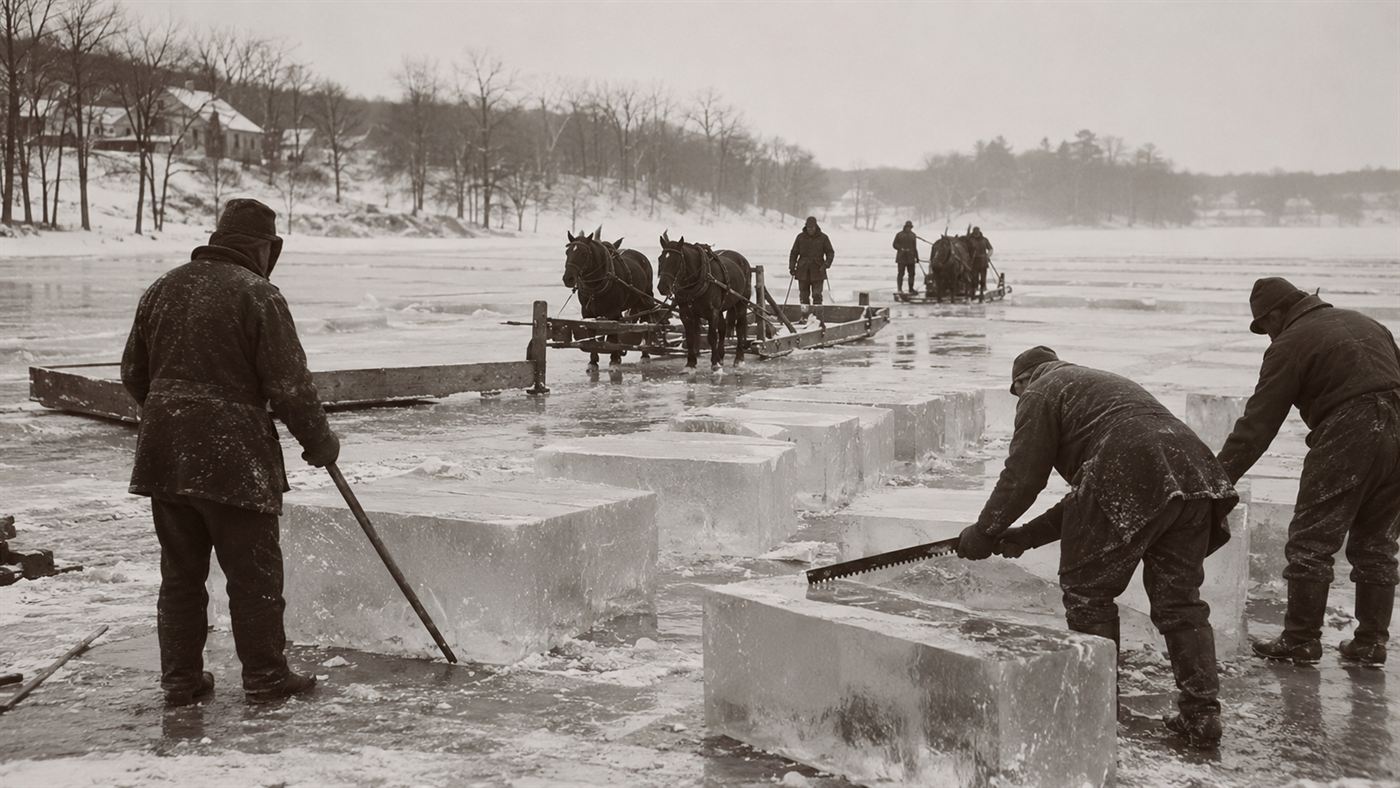
Harvesting ice from a frozen pond, the raw material of a surprising global business. Illustration: Watts & Wild.
The ice trade sounds like something a child would invent. You cut blocks of ice out of a frozen lake in winter, load them onto wooden sailing ships, and carry them across the ocean to places that have never seen frost, selling the cold itself before it can melt away. In 1806, when a young Bostonian named Frederic Tudor announced he would do exactly this, people laughed at him. He would spend the next thirty years proving them wrong.
As the record of his life shows, Frederic Tudor became known as Boston's Ice King, the founder of one of the first American multinational businesses. But the road there ran through ridicule, disaster and debtor's prison. His genius was not really the idea, which many thought was madness, but a refusal to give it up long after any sensible person would have.
The short version: In the early 1800s, Frederic Tudor pioneered the ice trade, cutting ice from frozen New England ponds and shipping it to hot regions. His first attempts were disasters and he was jailed for debt, but with sawdust insulation and a horse-drawn ice cutter he made it work. By 1833 his ships were carrying ice all the way to Calcutta, and the cold economy he built reshaped how the world ate and drank.
A frozen idea nobody wanted
Tudor's plan began as a family joke that he decided to take seriously. Ice was worthless in New England, where every pond froze solid each winter, but in the tropics it was a marvel nobody could get. If he could just move the one to the other before it melted, he reasoned, he would have a product with almost no cost and no competition.
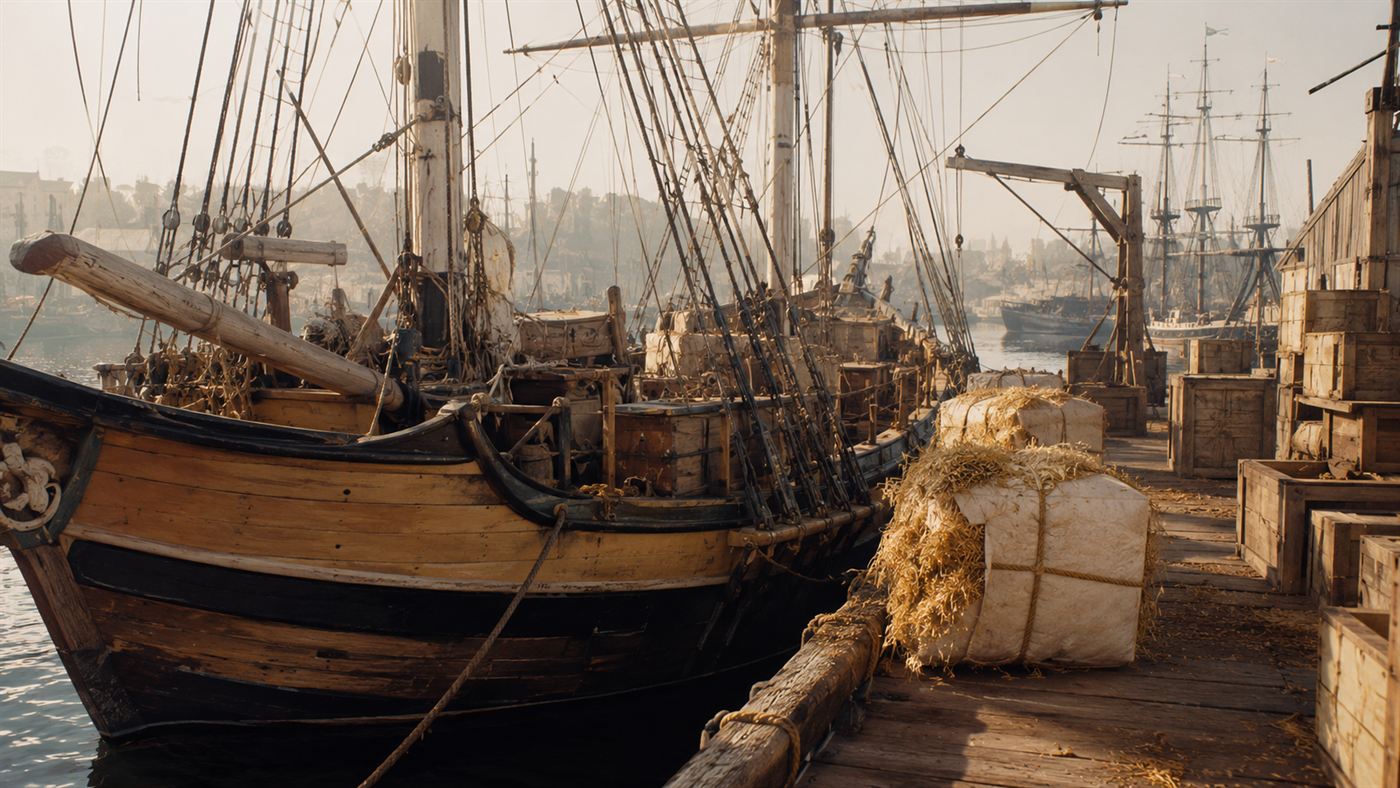
In 1806 he loaded a ship with 130 tons of pond ice and sent it to the Caribbean island of Martinique. The ice survived the voyage in decent shape, which was a small miracle in itself. But then came the problem he had not foreseen: the people of Martinique had no idea what to do with it. There were no iceboxes, no cold drinks, no habit of using ice at all. The cargo largely melted on the docks, and Tudor lost his money.
Bankrupt and behind bars
That first failure set the pattern for years. Tudor kept shipping ice and kept losing money, undone by melting, by embargoes, by markets that did not yet exist. His debts piled up until they overwhelmed him, and he spent time in the early 1810s in debtor's prison, the fate of a man whose big idea simply would not pay.
Almost anyone else would have quit, and most people told him he should. But Tudor was convinced the fault was not in the idea but in the execution, and he became obsessed with fixing every weak link in the chain, from how the ice was cut to how it was stored to whether anyone even wanted it. That obsession, more than the original brainwave, is what eventually turned the tide.
The tricks that made ice a business
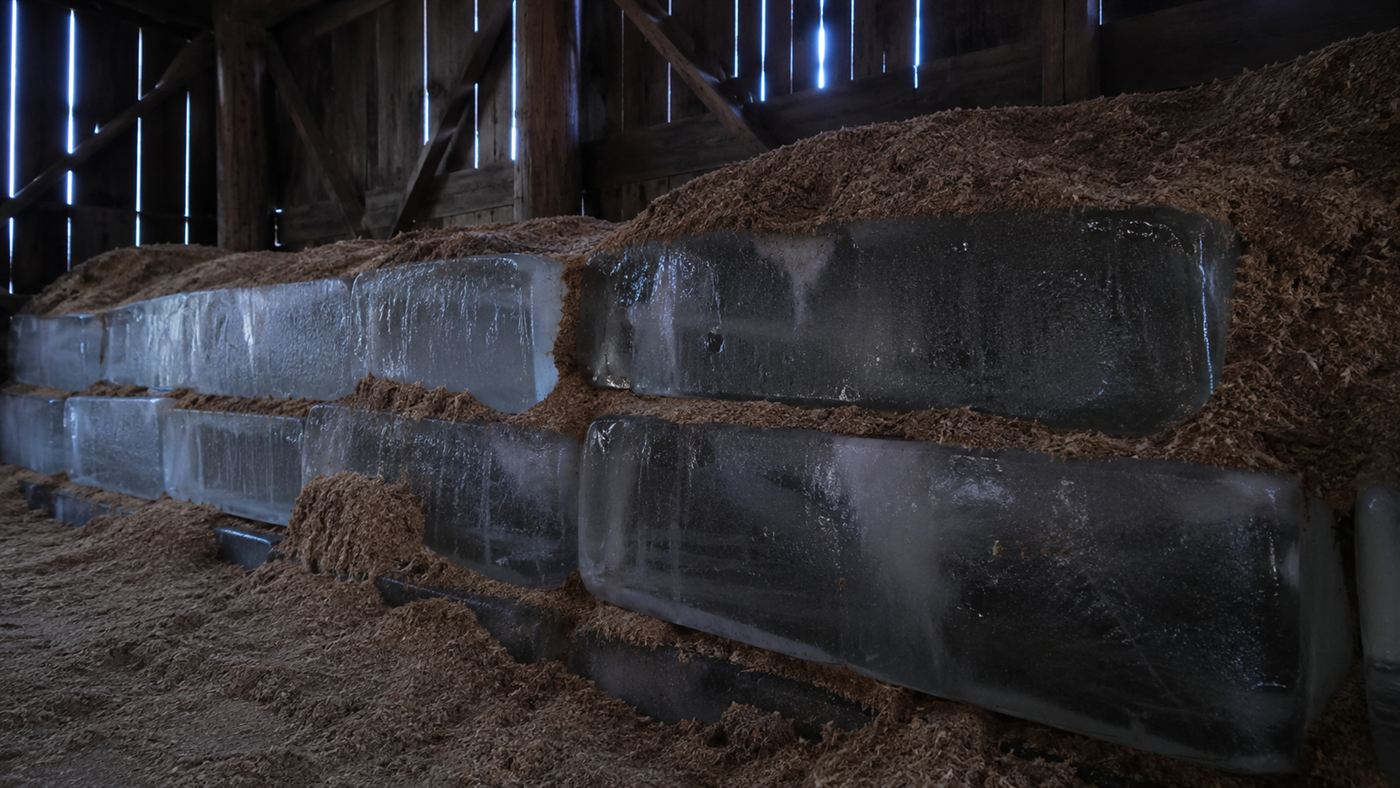
The breakthroughs were unglamorous and decisive. The biggest was insulation. Tudor found that sawdust, a free waste product of the region's sawmills, packed around the ice slowed melting dramatically, so far more of each shipment survived. Suddenly the whole economics changed.
Then came mass production. A supplier named Nathaniel Wyeth devised a horse-drawn cutter, essentially a metal plow that scored the ice into neat, uniform blocks, letting crews harvest a frozen pond far faster than men with saws ever could and more than tripling output. Tudor also solved the demand problem the hard way, giving ice to bartenders and households so people would form the habit of wanting cold drinks, then charging them once they were hooked. Cheap ice, easy cutting, and a public taught to crave it turned a losing scheme into a real refrigeration economy.
How the ice trade reached Calcutta
With the model finally working, Tudor's ambition went from bold to almost absurd. In 1833 he backed a scheme to sell ice not to the nearby Caribbean but to India, on the far side of the planet. As the Foundation for Economic Education recounts, the brig Tuscany sailed roughly 16,000 miles from Boston to Calcutta, a voyage of about four months.
The wonder is that it worked. Despite crossing the equator twice and baking for months in a ship's hold, around 100 of the original 180 tons of ice arrived in Calcutta still solid, protected by all that sawdust. To the British residents sweltering in India, ice from a Massachusetts pond was an almost unbelievable luxury, and they paid handsomely for it. The ice trade had gone global, and Tudor, the man everyone had mocked, was on his way to becoming one of the richest merchants in Boston.
The empire of cold he built and lost
At its height, the ice business Tudor pioneered was enormous. Crews harvested famous ponds around Boston, including Walden, employed thousands of people, and shipped ice to the American South, the Caribbean, South America, Europe and Asia. Tudor had turned a New England winter into an export, and the cold he sold changed daily life, making iced drinks, fresh food and even early forms of chilled medicine possible far from any frost.
That cold economy was the seed of much bigger things, pointing the way toward frozen food, the household refrigerator and air conditioning. But there is a final twist. The very hunger for reliable cold that Tudor had created is what doomed his industry. As the century wore on, engineers perfected machines that could manufacture ice anywhere, on demand, and once you could simply make ice in a hot city, there was no reason to sail it halfway around the world. The natural ice trade, having taught the world to want cold, was killed by a better way of providing it.
The honest catch
It is a great story, so it is worth resisting the temptation to make Tudor a lone, flawless genius. He did not do it alone. The sawdust insulation and Wyeth's ice cutter, the two innovations that really made the business viable, were not his inventions, and he leaned on partners, suppliers and monopoly privileges he lobbied hard to obtain. Part of his eventual fortune even came from risky speculation in coffee, not just ice.
And the empire was temporary, a bridge between a world with no artificial cold and a world that could make its own. Still, none of that erases the core lesson, which is genuinely useful. An idea that sounds insane, that respectable people mock, is not the same as an idea that is wrong. Sometimes the difference between a lunatic and a pioneer is simply who is willing to keep going after the first ship melts on the dock.
A man was jailed as a fool for trying to sell ice to hot countries, then made a fortune doing exactly that. Does the ice trade prove that ridiculed ideas are often just early, or do we only celebrate the stubborn dreamers who happen to get lucky and forget the rest? Tell us what you think in the comments.
Related reading: The horse manure crisis, another 19th-century problem solved by an idea nobody saw coming, or how air conditioning, invented to save printing ink, went on to reshape where people live, or Charles Goodyear, who invented vulcanized rubber and died penniless.
More from Watts & Wild
More in Curiosities →




Bruno writes about energy history, industrial disasters, and the people who shaped the technologies we take for granted. He is based in Brazil.