Charles Goodyear spent his life and his family's fortune obsessed with fixing rubber, and he finally cracked it, only to die deeply in debt while others grew rich
The name is on millions of tires, a byword for one of the biggest companies in the world. But the real Charles Goodyear never made a fortune, never ran a tire company, and died owing more money than he could ever repay. His is a story about the cruel gap between inventing something and profiting from it.

Charles Goodyear spent years at the workbench chasing a way to tame rubber. Illustration: Watts & Wild.
Everyone knows the name Charles Goodyear, or thinks they do, because it is stamped on car tires all over the planet. Almost no one knows the man. He was not a tycoon or an industrialist. He was a broke, self-taught obsessive who pursued a single stubborn idea for decades through poverty, ridicule and prison, and whose reward for changing the world was to die penniless while the rubber empire he made possible enriched other people entirely.
As Britannica records, Goodyear developed the vulcanization process that turned rubber into a practical material, yet spent much of his life in financial trouble and died in debt. It is one of the starkest examples in the history of invention that being the person who has the breakthrough and being the person who gets rich from it are two completely different things.
The short version: Charles Goodyear was obsessed with making natural rubber usable, spending years in poverty and debtor's prison. Around 1839 he discovered vulcanization, treating rubber with heat and sulfur to make it stable. It became one of the most important materials on Earth, but poor business sense and stolen patents meant he died in 1860 deeply in debt. The tire company that bears his name was founded decades later and simply borrowed it.
The miracle material that melted
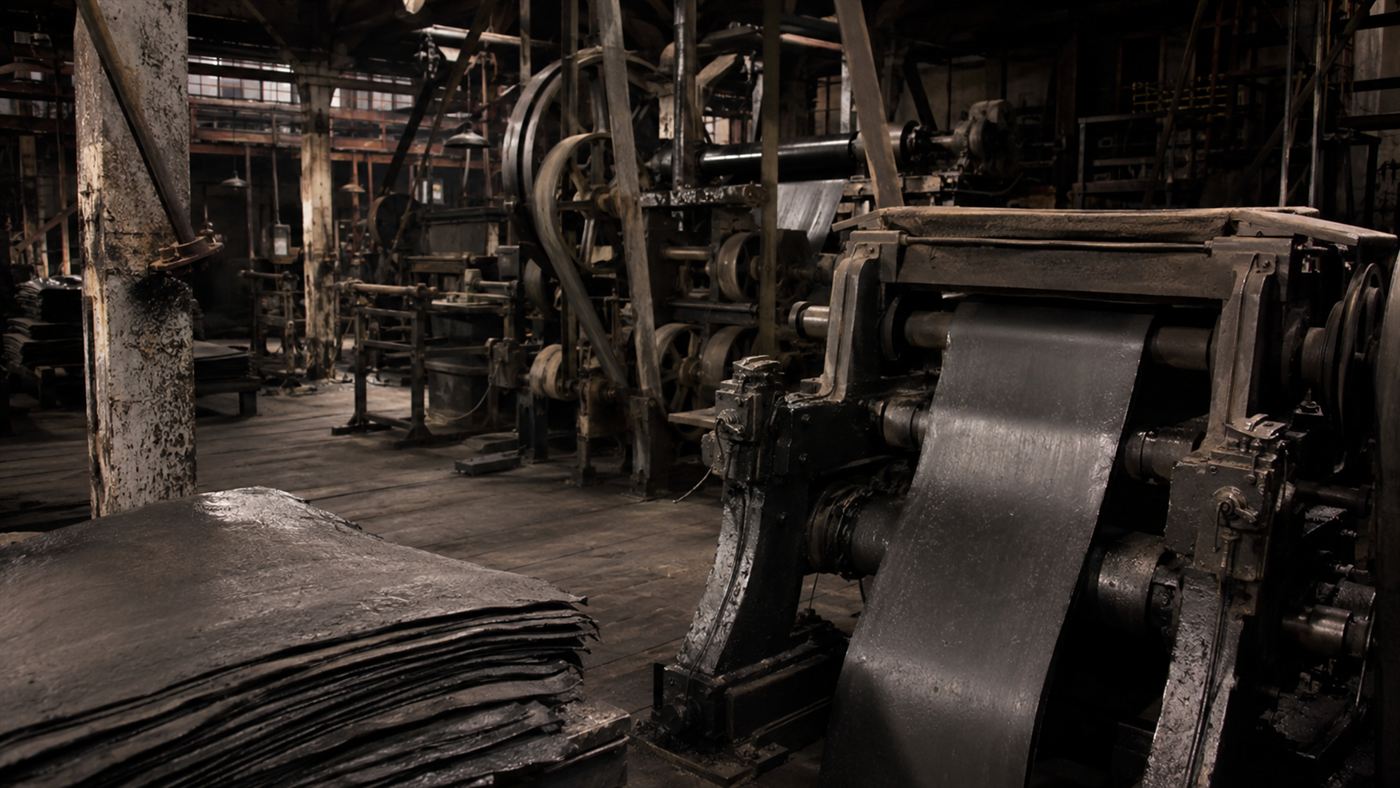
To understand his obsession, you have to understand how badly early rubber failed. In the 1830s, natural rubber tapped from tropical trees set off a craze. It was waterproof, stretchy and seemed full of promise, and companies rushed to make boots, coats and other goods from it. Then summer came, and the products turned into stinking, sticky messes, while winter left them frozen hard and cracking.
The rubber bubble collapsed almost as fast as it had grown, and investors lost fortunes. The material was a tease, wonderful in theory and useless in practice, because no one could stop it from melting in heat and stiffening in cold. Most sensible people wrote rubber off as a dead end. Goodyear looked at the same failure and became convinced that it could be fixed, and that he was the man to do it.
An obsession that ruined a family
What followed was years of single-minded, ruinous experimentation. Goodyear had no scientific training and little money, and he simply mixed rubber with anything he could get, magnesia, lime, acid, whatever might tame it, testing endlessly in borrowed kitchens and workshops. As his savings vanished, he borrowed and borrowed again, and his family slid into deep poverty.
The cost was not only financial. His wife and children lived in hardship for years, and several of his children died young, in an era when poverty and disease went hand in hand. Goodyear himself was repeatedly thrown into debtor's prison, so often that he reportedly grew grimly used to it. He kept experimenting even there. It is a portrait of genius and recklessness that are almost impossible to separate.

The accident on the stove
The breakthrough came, as the legend has it, by accident. Around 1839, Goodyear was handling a mixture of rubber and sulfur when some of it fell onto a hot stove. Instead of melting into goo as raw rubber always did, it charred at the edges but stayed firm and springy. In that ruined scrap he saw the answer: heat plus sulfur did not destroy rubber, it transformed it into something stable.
That process became known as vulcanization, after Vulcan, the Roman god of fire. The heated, sulfur-treated rubber held its shape in summer and stayed flexible in winter, finally delivering everything the material had promised. Goodyear had solved the problem that had beaten everyone else. Turning that scrap of insight into a reliable, repeatable process still took years more of grinding work, but the essential secret was his.
Why Charles Goodyear never got rich
Here the story turns cruel. Having made one of the great material discoveries of the age, Charles Goodyear proved hopeless at profiting from it. He patented vulcanization in the United States in 1844, but he was a poor businessman who sold rights cheaply, and his patents were copied and infringed on all sides. He poured what little money he had into endless lawsuits to defend them.
Abroad it was worse. In England, an inventor named Thomas Hancock got hold of samples of Goodyear's rubber, worked out roughly how it was made, and patented the process there first, cutting Goodyear out of the enormous British market. By the time he died in 1860, Charles Goodyear was said to owe around 200,000 dollars, a staggering sum. The man whose invention would underpin whole industries left this world not with a fortune but with a mountain of debt.
The company that borrowed his name
The final irony is the most famous part, though few realize it. The Goodyear Tire and Rubber Company, one of the largest tire makers in the world, was founded in 1898, nearly forty years after Charles Goodyear died. Its founder simply admired the inventor and named the company in his honour. Goodyear and his descendants had nothing to do with it and never saw a cent of its success.
Meanwhile his actual invention quietly took over modern life. Vulcanized rubber went into tires, hoses, belts, seals, gaskets, shoe soles, insulation and medical devices, becoming one of those materials so fundamental that the whole industrial world depends on it. Goodyear got the immortality of having his name on millions of vehicles, and none of the reward. It is fame and failure fused into one strange legacy.
The honest catch
The romance of the tale deserves a few corrections. The famous image of a lucky scrap landing on a stove is too neat. Goodyear had been experimenting with sulfur and heat for a long time before that moment, so the accident was really a clue he was primed to notice, not magic from nowhere, and turning it into a working process took years of dogged, systematic effort.
It is also too easy to cast him purely as a noble genius robbed by villains. His ruin owed a great deal to his own poor judgement, reckless borrowing and weak business sense, and his obsession inflicted real, lasting suffering on the family he dragged through poverty. The honest lesson is not simply that the world is unfair to inventors, true as that often is. It is that a single-minded drive to create can be both a magnificent gift and a wrecking ball, and that the person who changes the world is very often not the person who profits from it.
A man gave the world one of its most essential materials and died buried in debt, his name later borrowed by a fortune he never touched. Is Charles Goodyear a hero cheated by history, or a warning about the cost of an obsession that consumes everything around it? Tell us what you think in the comments.
Related reading: Frederic Tudor, another stubborn dreamer jailed for debt before his strange idea paid off, or the microwave oven, discovered by accident when radar melted a snack, or Bakelite, the first fully synthetic plastic that launched the plastic age.
More from Watts & Wild
More in Science & Tech →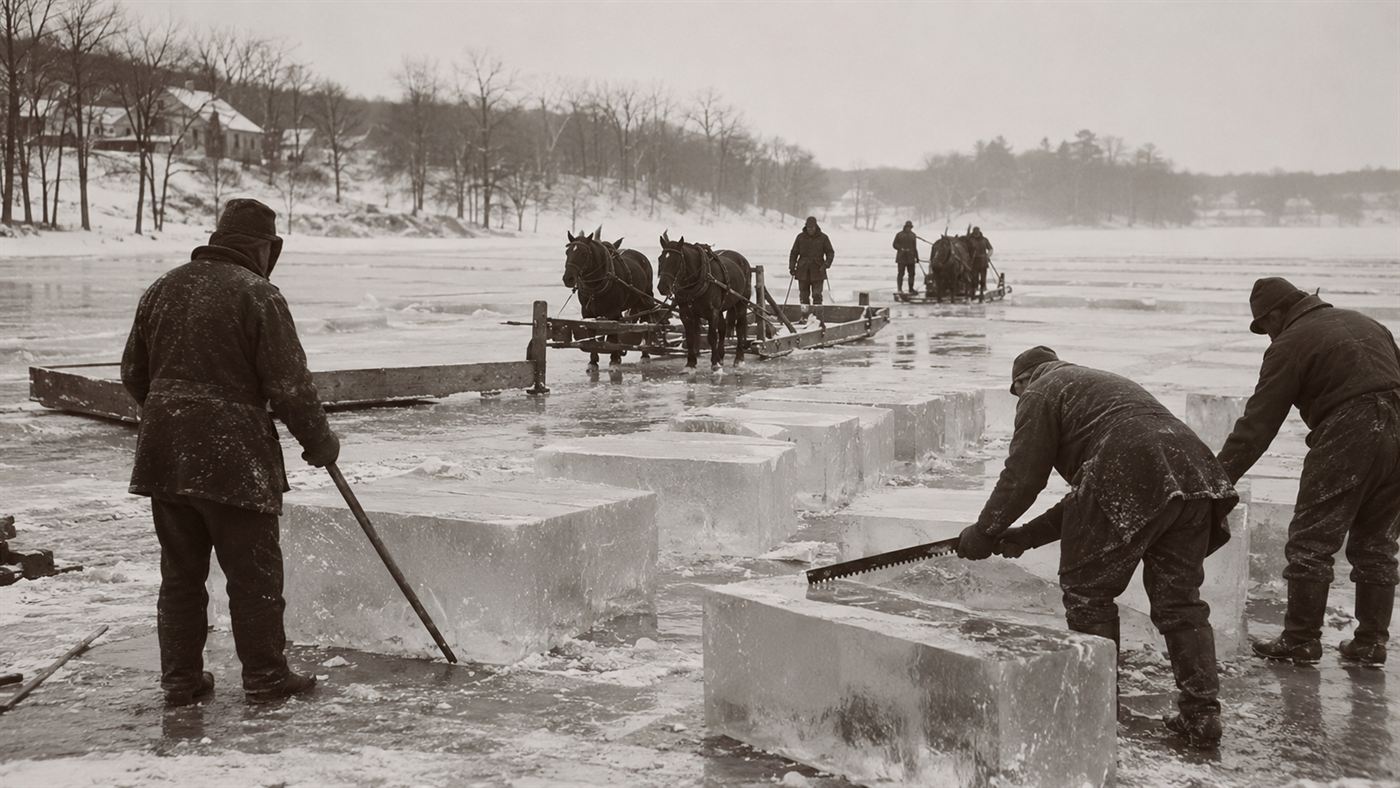




Bruno writes about energy history, industrial disasters, and the people who shaped the technologies we take for granted. He is based in Brazil.