Victorian cities were so buried in horse dung that experts feared a horse manure crisis would drown the streets, and then the automobile made the whole problem vanish
Before engines, the city ran on muscle, and muscle meant horses, hundreds of thousands of them. With the horses came a rising tide of manure that seemed to have no end and no answer. The horse manure crisis was the climate-style panic of its day, and its ending is stranger than the panic.
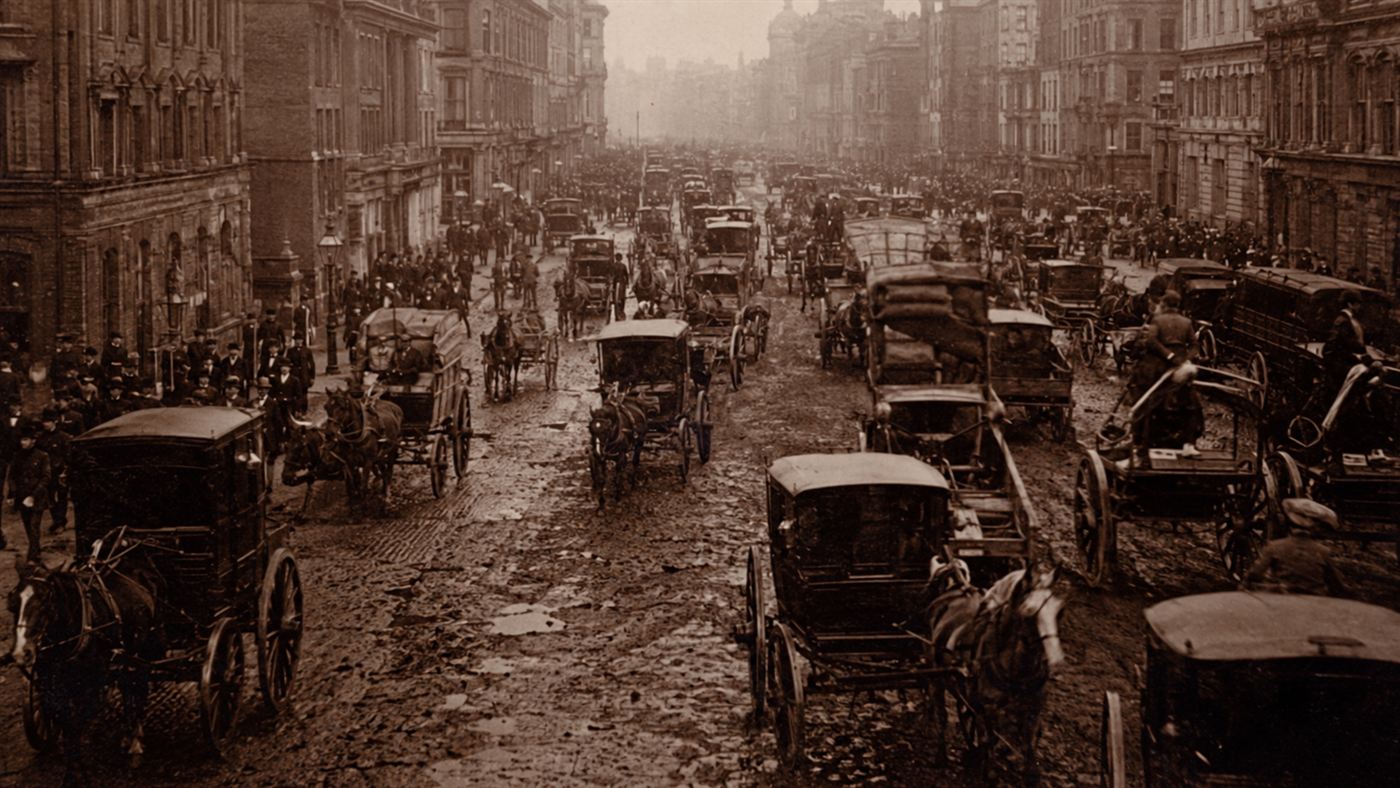
A late-19th-century city street ran entirely on horsepower, with all the mess that came with it. Illustration: Watts & Wild.
It is a favorite story of economists and futurists, and it goes like this. At the end of the 19th century, the great cities of the West were choking on horse manure, and the smartest people of the age could see no way out. The horse manure crisis was going to bury civilization under its own filth. Then, almost by accident, it disappeared. The truth is a little messier than the fable, in more ways than one.
As Historic UK describes, cities at the turn of the 20th century genuinely did run on horses, and the manure they produced was a serious and growing problem. Whether it was ever quite the apocalypse the story claims is another question, but the mountains of dung, and the way they vanished, still have a lot to teach us.
The short version: By 1900, cities like London and New York depended on tens of thousands of horses, which produced millions of pounds of manure a day. Experts feared the filth would eventually swamp the streets. Instead, cars, motor buses and electric trams replaced horses within a couple of decades, and the horse manure crisis solved itself, though the neat version of the tale is partly a myth.
A city that ran on horses
It is hard to picture now just how thoroughly horses powered the Victorian city. Every cab, every bus, every delivery of coal, bread, beer and building materials moved by horse. London around 1900 had some 11,000 horse-drawn cabs and thousands of buses, each bus needing about a dozen horses a day to keep running, adding up to more than fifty thousand horses working the streets of the world's largest city.
New York was in the same state. Estimates put the city's horse population near a hundred thousand, and a single horse produces roughly 15 to 35 pounds of manure a day. Do the arithmetic and the numbers turn your stomach: something like 2.5 million pounds of manure hitting the streets of New York every single day, alongside rivers of urine and the carcasses of horses that dropped dead in harness. This was the daily reality of Victorian London and every big city like it.
Drowning in dung
All that waste had to go somewhere, and mostly it did not go anywhere fast enough. Manure piled up along curbs and in vacant lots, dried into choking dust in summer and turned to reeking sludge in the rain. It bred vast clouds of flies and helped spread diseases like typhoid, and the stench of a hot city street was legendary.
Cities hired armies of sweepers and carters to haul the muck away, but the horse population kept growing along with the cities themselves, and the cleanup never quite caught up. To the people living through it, this did not feel like a quaint inconvenience. It felt like a slow-motion emergency with no obvious brake, a problem that got a little worse with every new horse the booming economy demanded.

The prophecy of nine feet of manure
The most famous piece of the legend is a grim forecast. According to the popular telling, a writer in a London newspaper around 1894 calculated that if things carried on, within fifty years every street in the city would be buried under nine feet of manure. City fathers, the story goes, stared at the future and despaired.
There is even a dramatic set piece: an international urban planning conference, supposedly held in 1898, that took up the world's traffic and sanitation problems and broke up early in defeat, unable to imagine any solution to the manure. It is a perfect image of expert helplessness, humanity's best minds surrendering to horse droppings. As we will see, it is also an image that should be handled with care.
How the horse manure crisis solved itself
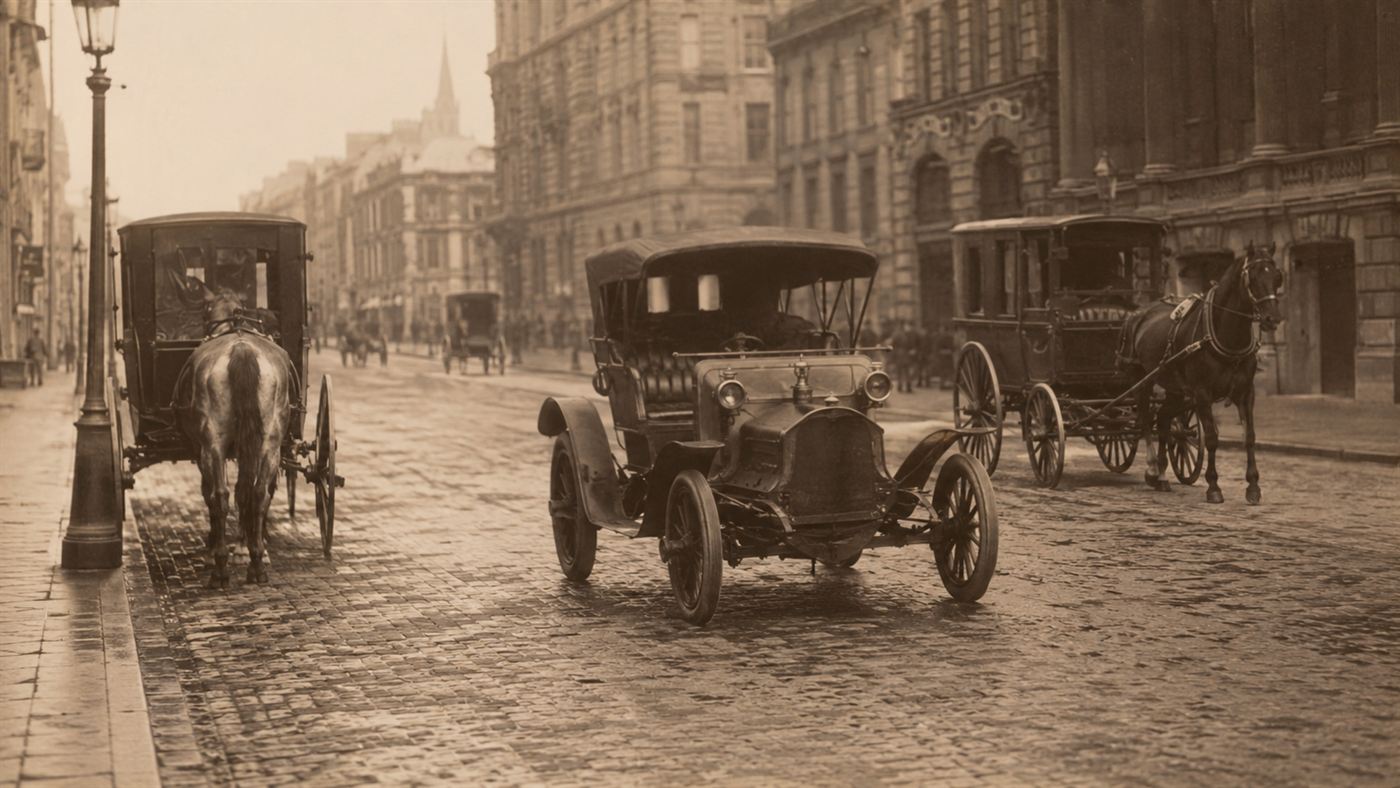
What actually happened is that the ground shifted under the whole problem. In the space of roughly two decades, an entirely new technology arrived and swept the horse aside. The automobile, the motor bus and the electric tram were faster, cheaper to run at scale and did not need feeding when they stood still, and cities adopted them with astonishing speed.
As documented in the history of the episode, the supposed crisis was resolved by the spread of cars, buses and electrified trams that replaced horses. As the horses left the streets, their manure left with them. Nobody had drawn up a master plan to clear the dung. A problem that looked unstoppable was quietly dissolved by an invention almost none of the worriers had seen coming. The horse manure crisis did not get solved so much as it evaporated.
The crisis that was half a myth
Here is where honesty has to intrude on a good story. The neat, quotable version of the crisis is, to a large degree, a modern invention. The famous nine-feet-of-manure prediction was popularized by a 2004 essay, and no one has ever found the original 1894 newspaper article it supposedly came from. The Times of London itself, credited as the source, publicly rejected the attribution in 2018.
The dramatic 1898 conference that broke up in despair is just as shaky, with no solid record of it happening the way the legend says. What is true is the underlying mess: the horses, the tonnage of manure, the health problems and the real relief when engines arrived. The apocalypse and the neat prophecy are largely embellishment layered onto a genuine but more ordinary struggle. The automobile really did clear the streets, but the tidy fable around it was assembled long afterward.
The honest catch
People love this story because it seems to carry a comforting moral: do not panic, human ingenuity will always bail us out. That lesson is worth resisting. For one thing, much of the crisis as usually told did not happen, so it is a wobbly foundation for any grand claim. For another, the cure came with a bill we are still paying.
The engines that saved the city from manure filled it instead with exhaust, and the descendants of those first cars now kill more than a million people a year on the roads and pump out the carbon dioxide that is heating the planet. We did not make the externality of transport disappear, we traded a visible, smelly, local problem for an invisible, global one that is far harder to solve. The real lesson of the horse and its dung is humbler than the fable: straight-line predictions of doom are usually wrong, but so is assuming that something will simply turn up to save us, free of any cost.
A crisis that looked unsolvable simply vanished, but the cure quietly created a bigger one. Is the horse manure crisis proof that we should trust innovation to rescue us from problems like climate change, or a warning that every fix carries a hidden bill? Tell us what you think in the comments.
Related reading: The Great Smog of 1952, when London's coal air killed thousands in five days, or the Ice King who was mocked and jailed before shipping New England ice to India.
More from Watts & Wild
More in Curiosities →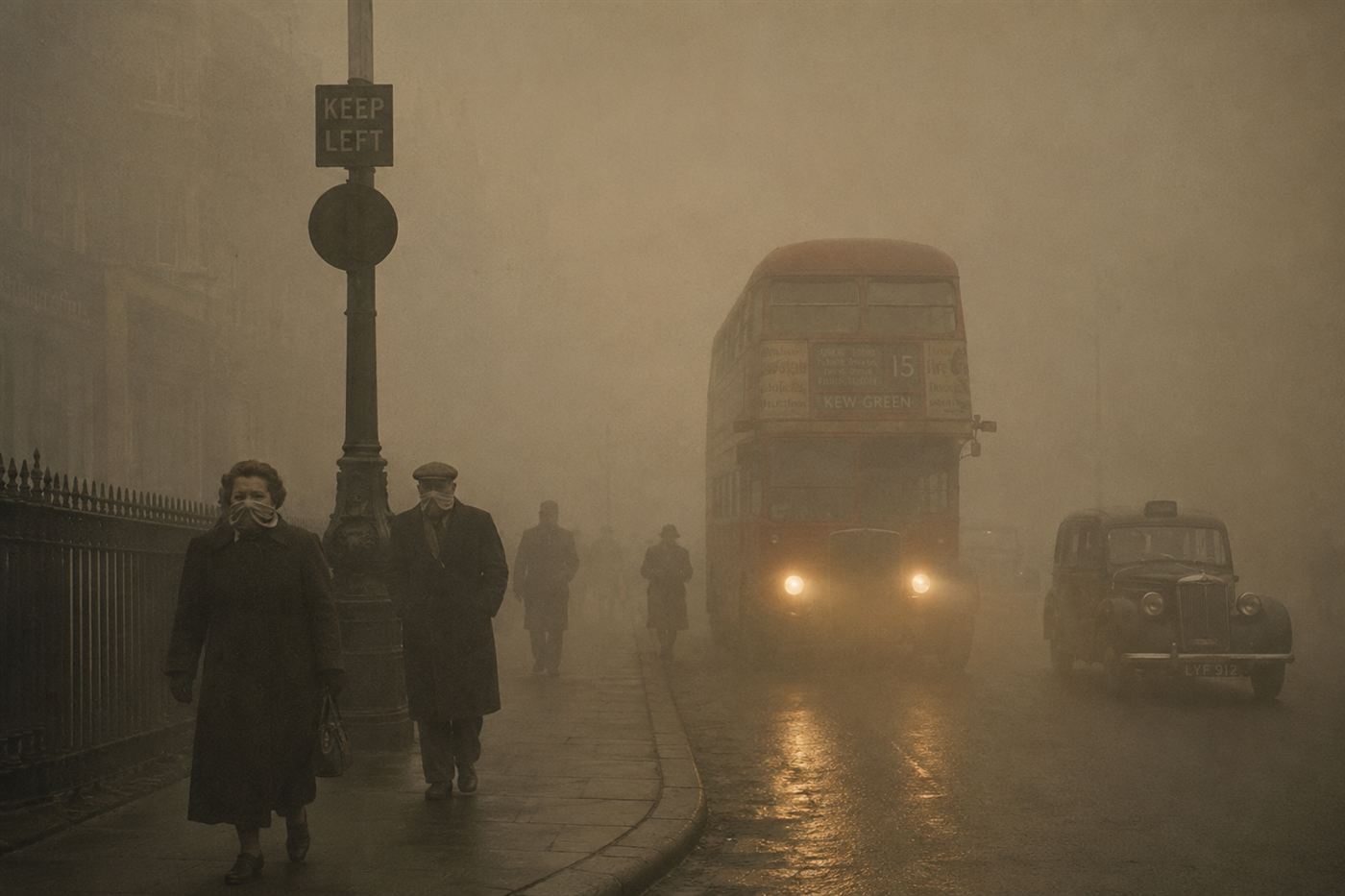


Bruno writes about energy history, industrial disasters, and the people who shaped the technologies we take for granted. He is based in Brazil.