A pod of critically endangered Iberian orcas has spent five years ramming the rudders off sailboats in the Strait of Gibraltar, and the likeliest reason is that they find it fun
Since 2020, a small group of Iberian orcas has been shoving and biting the rudders of sailboats off Spain, Portugal and Morocco, sinking several. The animals are not angry, the scientists who study them insist, and they are also among the rarest killer whales on Earth.
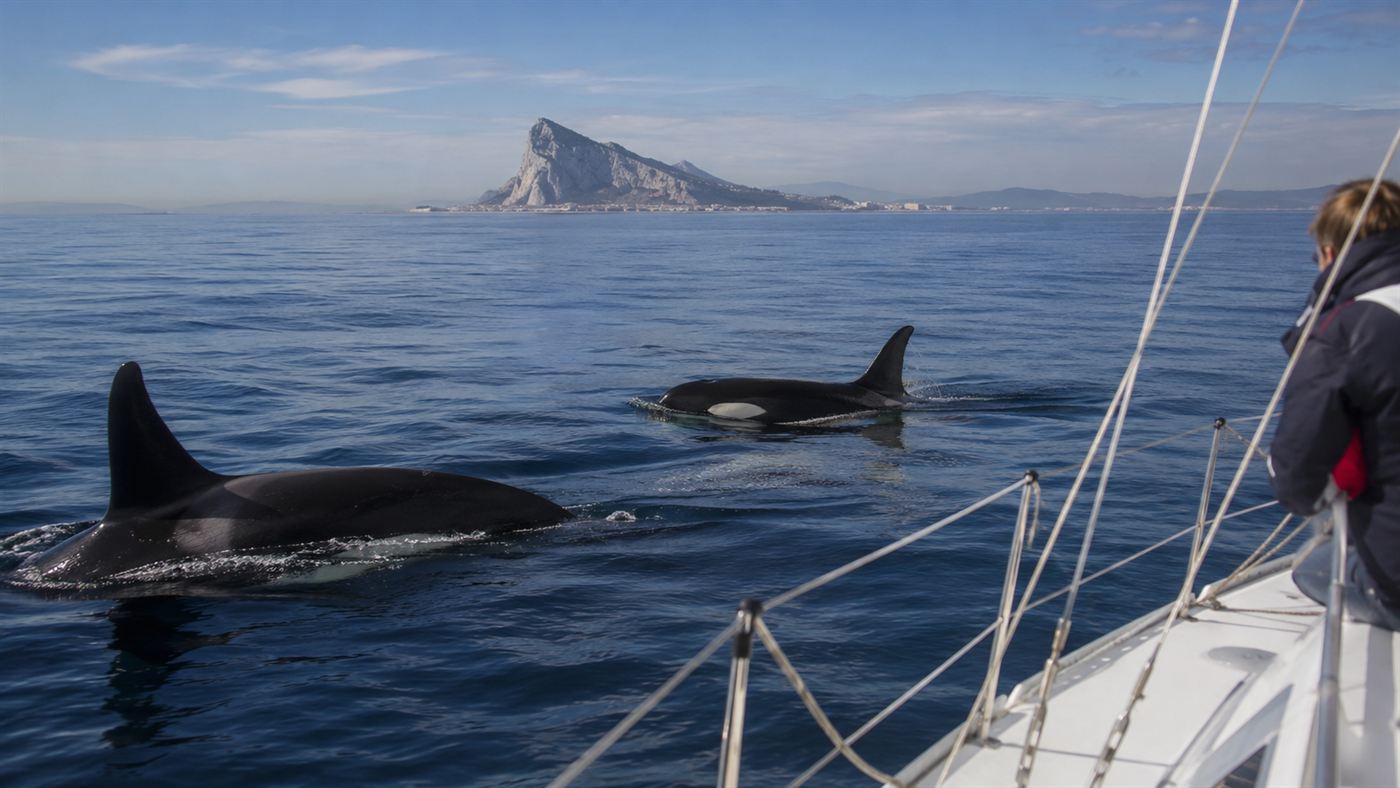
A pod of Iberian orcas closes on a sailboat in the strait, drawn to the one part that moves: the rudder. Illustration: Watts & Wild.
The Iberian orcas have sunk boats, and that part is not a rumor. Since 2020, sailors crossing the Strait of Gibraltar have described the same unnerving scene: a pod of orcas appears alongside the hull, and one after another they ram and bite the rudder until the steering snaps, sometimes until the boat itself goes down. By the summer of 2024 the running count had passed 500 of these encounters.
The headlines call them attacks, and after a British yacht and later a Portuguese tourist boat were sent to the bottom, it is easy to see why. But the scientists who study this exact group of killer whales push back hard on that word. As Scientific American has reported, researchers see almost none of the signs of real aggression in the behavior, and suspect that these orcas, a tiny and critically endangered population, have simply invented a dangerous new game.
Why are Iberian orcas attacking boats? Scientists believe the orcas are not attacking out of aggression but playing. Since 2020 a small group off the Iberian coast has made a habit of ramming sailboat rudders, a behavior that spread through the pod like a fad, possibly started by one orca after a bad encounter with a boat.
What the Iberian orcas actually do
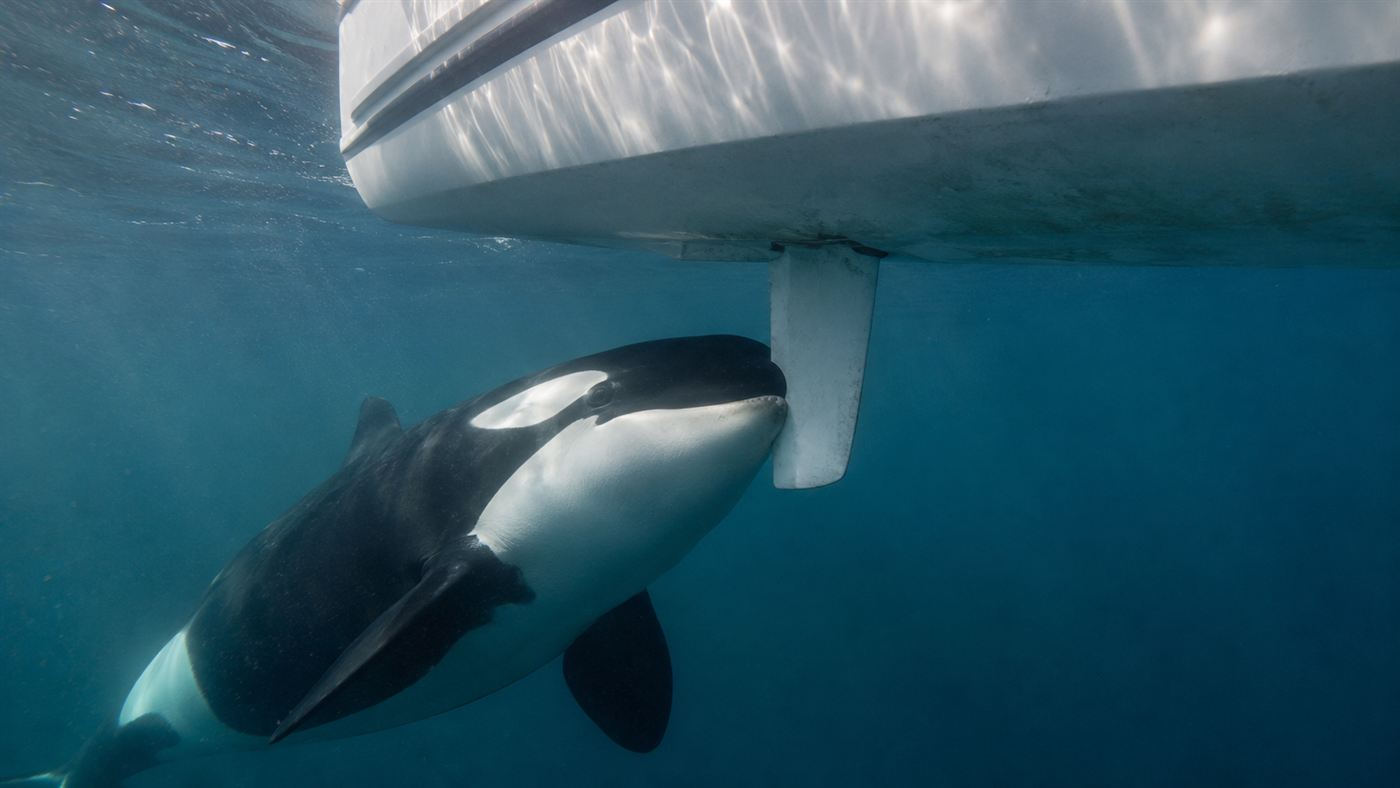
The pattern is remarkably consistent. The Iberian orcas single out slow, medium-sized sailboats, ignore the rest of the hull, and go straight for the rudder, the flat blade that hangs under the stern and steers the vessel. They push it, lean on it, and bite it, clearly interested in the way it resists and swings, and they often lose interest the moment the boat stops moving. The damage, though, can be severe enough to leave a crew adrift and taking on water.
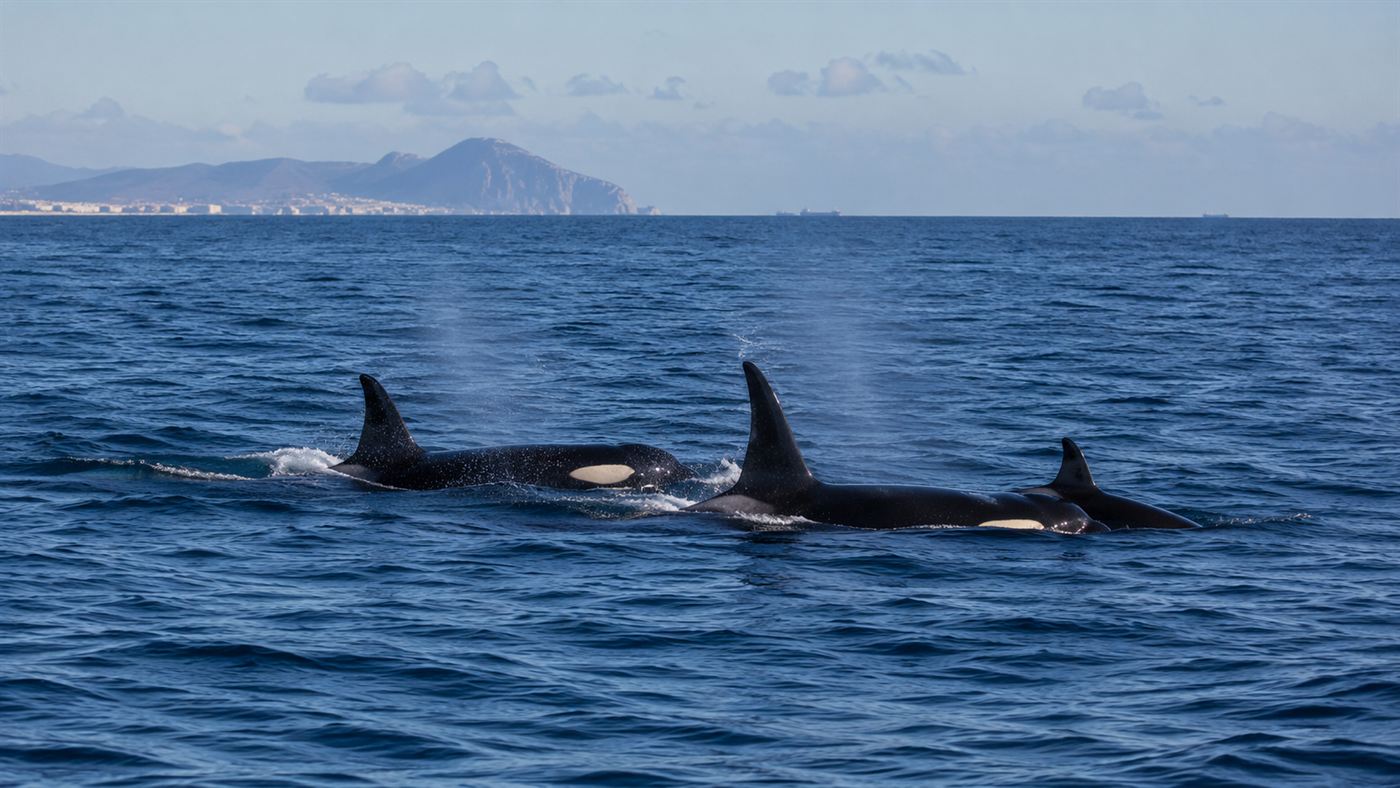
This is not a whole species gone rogue. Researchers have tied the behavior to roughly 15 individual orcas, many of them young, out of a population that barely numbers a few dozen. The interactions climbed to around 180 in a single year by 2022 before easing somewhat, and a handful ended in sinkings: two sailboats in 2022, the British yacht Bonhomie William in July 2024, and a Portuguese tourist boat in 2025, whose five passengers were all rescued after a distress call. Orcas have not always been at odds with boats, though: off Australia, a pod led by Old Tom once hunted alongside human whalers for generations.
Why do scientists say it is not an attack?
The word attack implies intent to harm, and that is exactly what the specialists say is missing. There are no recorded cases of these killer whales trying to hurt the people on board, no biting of hulls where the crew stand, no feeding behavior, none of the body language orcas show when they hunt. What they show instead looks like curiosity and play, the same animals that elsewhere toss kelp around for fun or invent passing crazes that sweep through a pod and then vanish.
One researcher who works in the Strait of Gibraltar put it bluntly: it is a game. Orca culture is famous for these fads. In the 1980s a group in the Pacific Northwest briefly took to swimming around with dead salmon balanced on their heads, for no reason anyone could find, until the habit faded as suddenly as it began. The rudder game may be the Iberian version, a craze among bored, intelligent juveniles that happens to be played with objects that sink.
Who is White Gladis?
The most repeated origin story centers on a female the researchers call White Gladis. The hypothesis is that she suffered a traumatic moment with a boat, a collision or a tangle in fishing gear, and afterward began interfering with rudders, and that younger orcas learned the trick by watching her. It is a tidy, almost cinematic explanation: one wounded animal, a grudge, a lesson passed down.
It is also still just a hypothesis. Scientists are careful to say they cannot prove the trauma story, and many think the behavior may simply have started as play and spread because it was interesting, no revenge required. What is not in doubt is that orcas are smart and intensely social enough to pick up a new habit from one another fast, which is how a quirk in one animal becomes a pattern across the Strait of Gibraltar in a few years. That same social learning has a gentler face in Brazil, where wild dolphins have taught each other to hunt alongside human fishermen for over a century.
The orcas are the ones in real danger
Lost in the scary headlines is who actually has the most to lose. The Iberian killer whales are listed as critically endangered, with fewer than 40 animals left, and they depend on the bluefin tuna they chase through the strait, a food source under heavy pressure. A frightened public and a few wrecked boats raise an ugly risk: that someone will try to drive the orcas off with noise, weapons or worse, harming a population that could not survive losing even a handful of breeding adults.
That is why the official advice to sailors is not to fight back. The guidance from Spanish and Portuguese authorities is to do the opposite of instinct: stop the boat, take your hands off the wheel, lower the sails, stay quiet, and let the orcas lose interest, which they usually do once the rudder stops being fun. Reporting each encounter helps researchers track the Iberian orcas and warn other crews away from the hotspots.
The honest catch
It is only fair to say that the play theory, comforting as it is, remains the best guess rather than a proven fact. Nobody can interview an orca, and the trauma story around White Gladis is a plausible narrative built on thin evidence. The danger to sailors, on the other hand, is concrete: a disabled rudder far from shore is a genuine emergency, and people have had to be rescued at sea.
Both things can be true at once. These are not monsters hunting humans, and the breathless framing of an orca war does real harm to a vanishing species. But they are also enormous, powerful animals that have learned to break the one part of a boat a crew most needs, and respecting that means neither demonizing them nor pretending the risk is imaginary. The honest position is the uncomfortable one: we are fairly sure it is a game, and we are not entirely sure why.
A few dozen of the rarest killer whales on Earth have taught each other to snap the rudders off passing yachts, and the leading theory is that they are doing it for fun. Is this a clever animal at play, or a warning we should take more seriously? Tell us what you think in the comments.
Related reading: The rope from lobster traps is strangling the rarest great whale in the Atlantic, and one fisherman is pulling it out of the water.