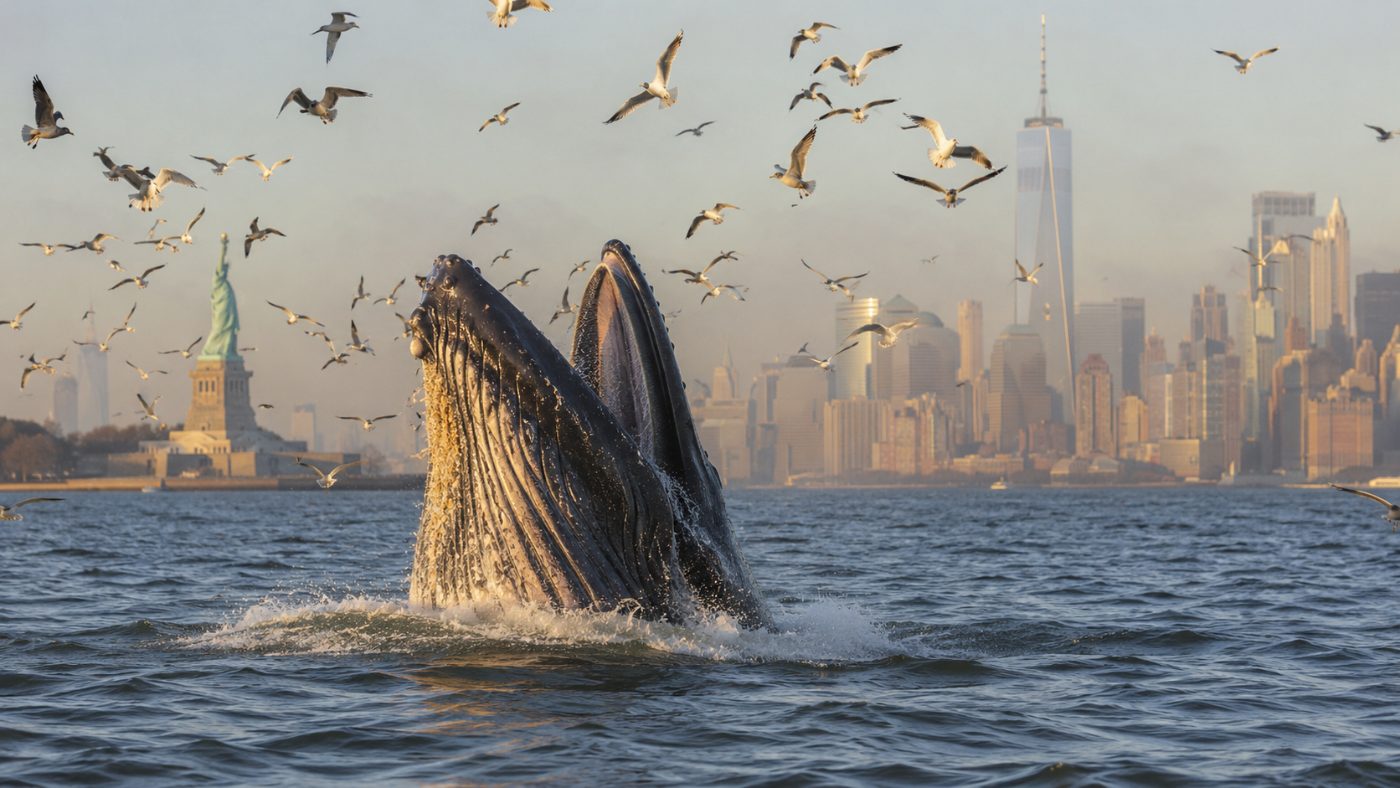
Whaling stripped the oceans of millions of great whales, and scientists now realise we also tore out one of the planet's most powerful natural machines for pulling carbon from the sky
A living whale does far more than swim. Through what scientists call the whale pump, great whales fertilise the sea, feed the tiny plants that make our oxygen, and lock away so much carbon that the whale pump has made each one worth millions.
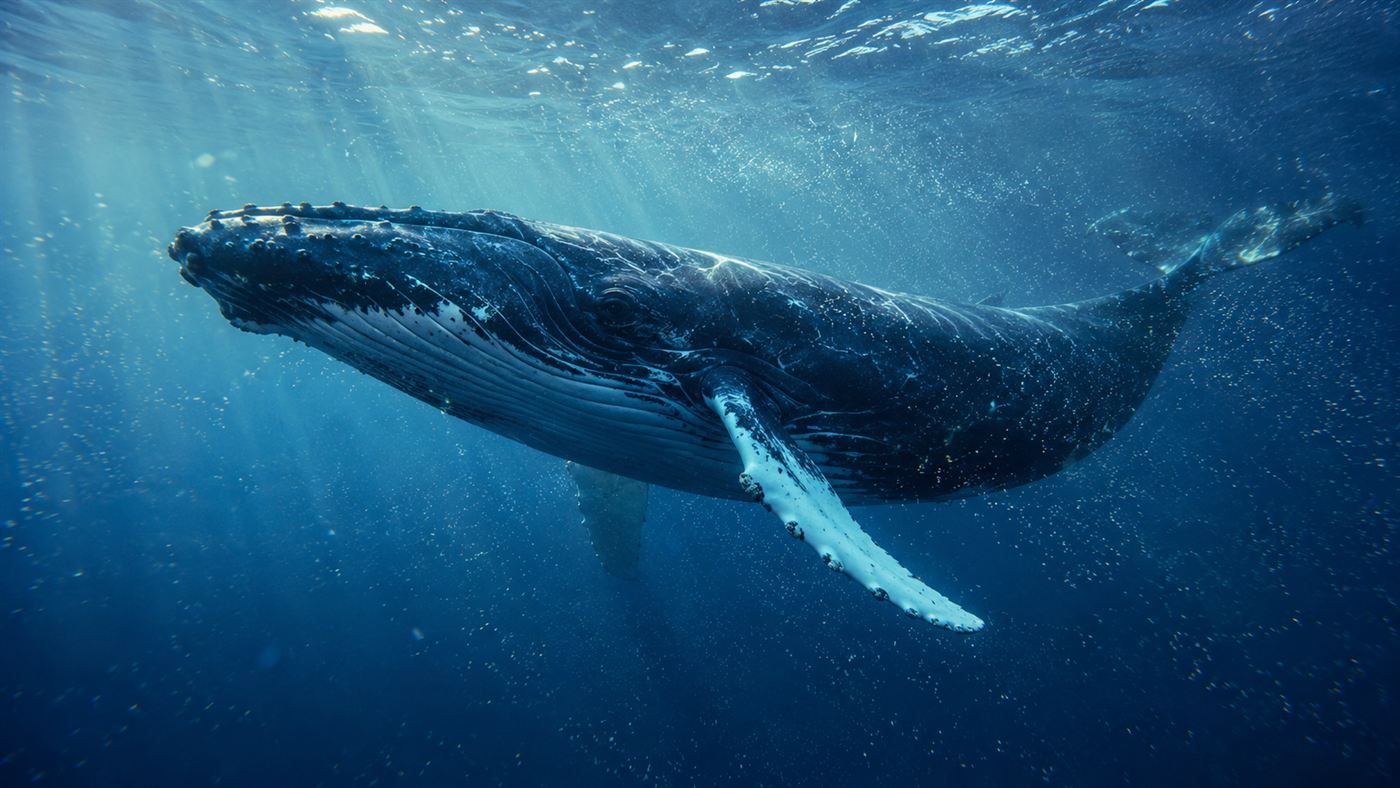
Great whales move nutrients and carbon through the ocean as they feed, dive and die. Illustration: Watts & Wild.
We tend to think of whales as gentle giants we should save for their own sake, and that is reason enough.
But over the past two decades, scientists have realised that great whales are also quietly running one of the largest natural climate systems on the planet, and that hunting them nearly switched it off.
What is the whale pump? The whale pump is the way great whales fertilise the ocean. They feed in the deep and release nutrient-rich waste near the surface, feeding the phytoplankton that produce much of our oxygen and pull carbon dioxide out of the air.
How a whale fertilises the sea
Whales feed at depth, on krill and fish, and then return to the surface to breathe and to release huge plumes of waste.
That waste is rich in iron and nitrogen, exactly the nutrients that the ocean's surface is often starved of.
This movement of nutrients upward is the heart of the whale pump, spreading fertiliser across the sunlit surface where it is needed most.
Where whales feed and move, they leave behind blooms of life, and the whale pump is now recognised as an important way whales boost ocean productivity.
A great whale, it turns out, is a roaming gardener of the sea.
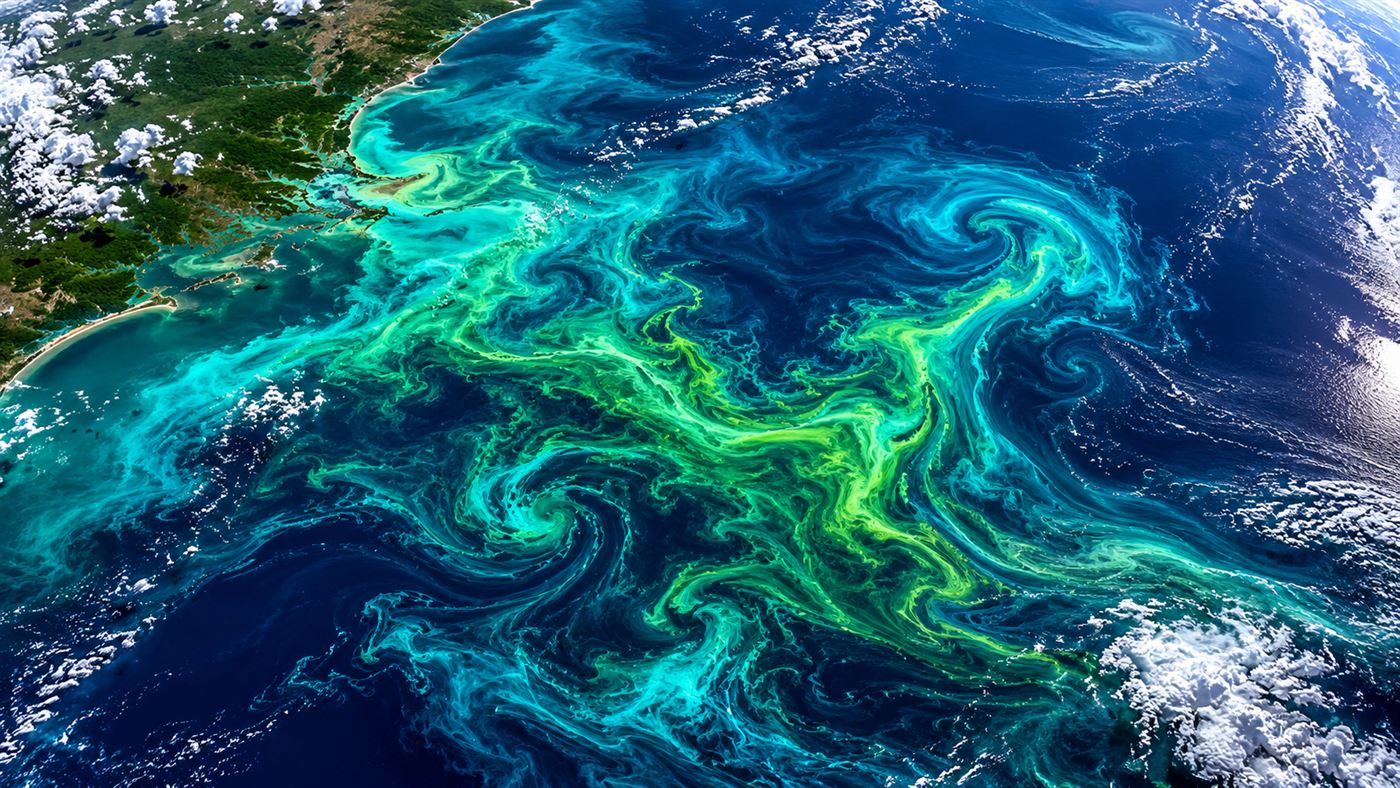
Phytoplankton, the planet's lungs
Those blooms matter far beyond the whales themselves.
Phytoplankton are microscopic plants that drift in the sunlit ocean, and together they produce something like half of all the oxygen on Earth.
As they grow, phytoplankton also pull enormous amounts of carbon dioxide out of the atmosphere, the same job a forest does on land.
By feeding the phytoplankton, the whale pump turns whales into indirect but powerful capturers of carbon.
More whales can mean more phytoplankton, and more phytoplankton can mean more carbon drawn down from the sky.
Even in death, the whale pump locks carbon away
The story does not end when a whale dies.
A great whale stores a large amount of carbon in its own enormous body over a long life.
When it finally dies, the carcass usually sinks to the seafloor in what scientists call a whale fall, and a whale fall can lock that carbon away in the deep sea for centuries while feeding a whole community of deep-ocean life.
By some estimates a single great whale takes tens of tonnes of carbon down with it, the equivalent of many trees.
A dead whale on the seabed is, in effect, a slow-release carbon vault.
What whaling took away
Now imagine doing that in reverse, millions of times over.
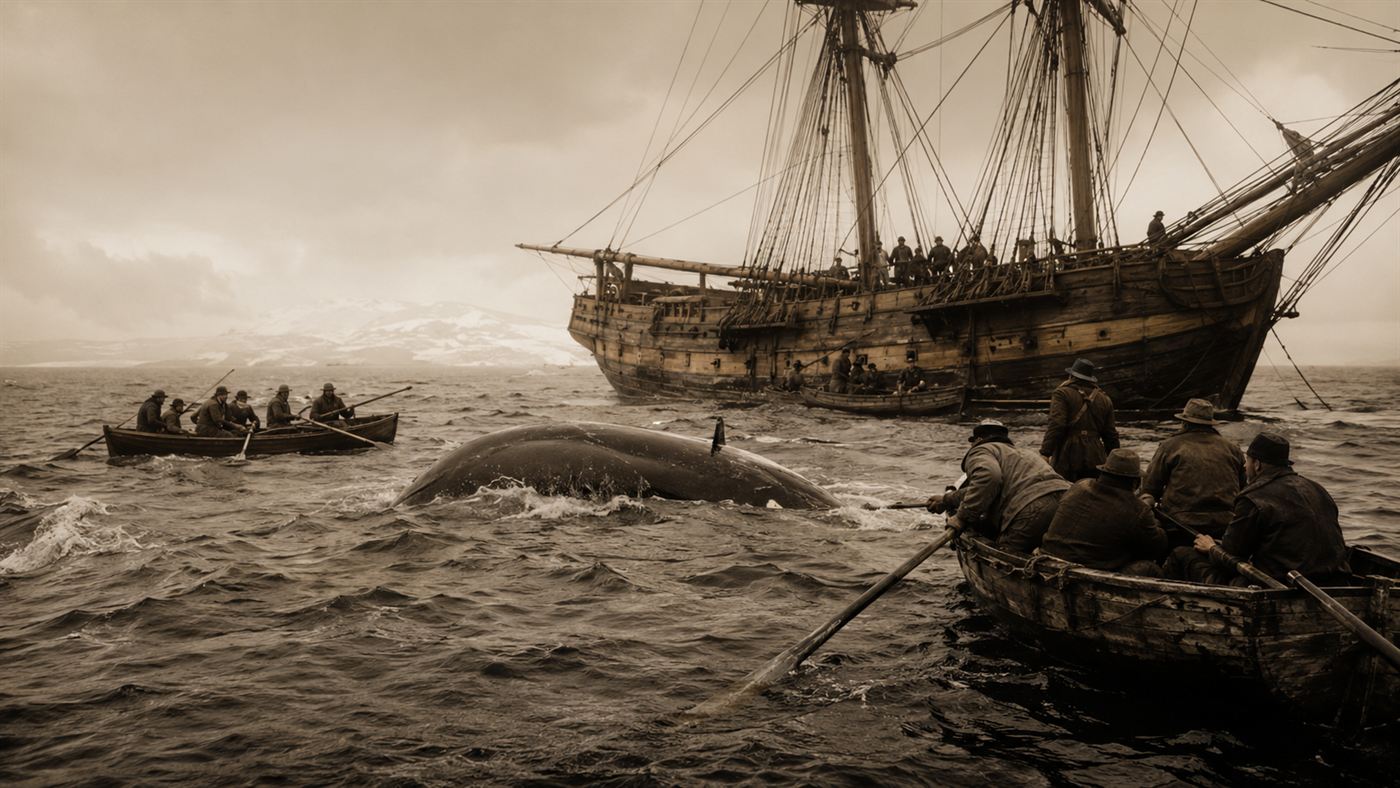
Industrial whaling in the 19th and 20th centuries killed an estimated two to three million whales, the most extreme removal of large animals in human history.
That whaling did not just empty the seas of great whales, it quietly dismantled the whale pump and the carbon service that came with it.
Fewer whales meant less fertiliser for phytoplankton and fewer bodies sinking carbon into the deep.
In hunting whales for oil and meat, we unknowingly switched off a climate machine we did not even know was running.
A whale is worth millions
This new understanding has led to a startling way of valuing a whale.
Economists at the International Monetary Fund, led by Ralph Chami, tried to put a price on all the services a great whale provides, above all its role in capturing carbon.
Their analysis valued a single great whale at well over two million dollars, and the world's whales collectively in the trillions.
Seen that way, protecting whales becomes one of the cheapest and most natural forms of climate action available.
Letting the great whales recover would slowly rebuild the whale pump we spent a century tearing down.
The honest catch
As lovely as this story is, it deserves a careful, honest reading.
The amount of carbon the whale pump handles, while real, is modest next to the vast quantities humans pour out by burning fossil fuels, so whales are no substitute for cutting emissions.
The exact figures are also still debated, and scientists are careful to call the numbers estimates rather than certainties.
Whale populations recover slowly too, so any climate benefit from rebuilding the whale pump will unfold over many decades, not years.
Still, the whale pump is one of the clearest reminders that a healthy animal is also a working part of the planet's machinery, not just a passenger on it.
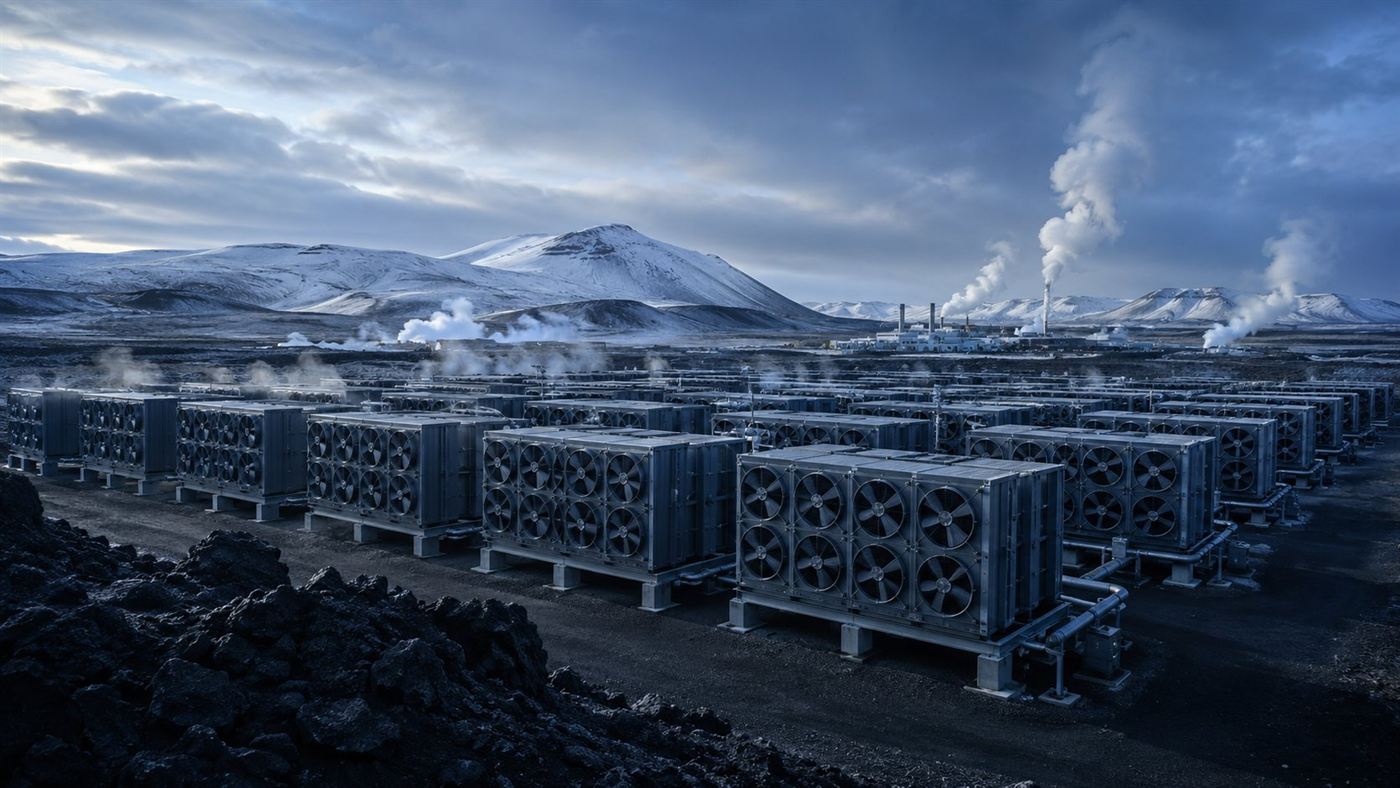
It is the ocean's version of the way sea otters guard carbon-storing kelp forests, and a natural counterpart to the machines we are building to suck carbon straight out of the air, even as whales themselves return to once-empty seas.
If a single whale is worth millions to the climate, should we treat protecting them as serious climate policy, or is that just a charming way to dodge the harder work of cutting emissions? Tell us in the comments.