For decades a wild killer whale named Old Tom herded whales into an Australian bay for human hunters, who repaid him under a strange pact called the Law of the Tongue, until one broken promise ended it
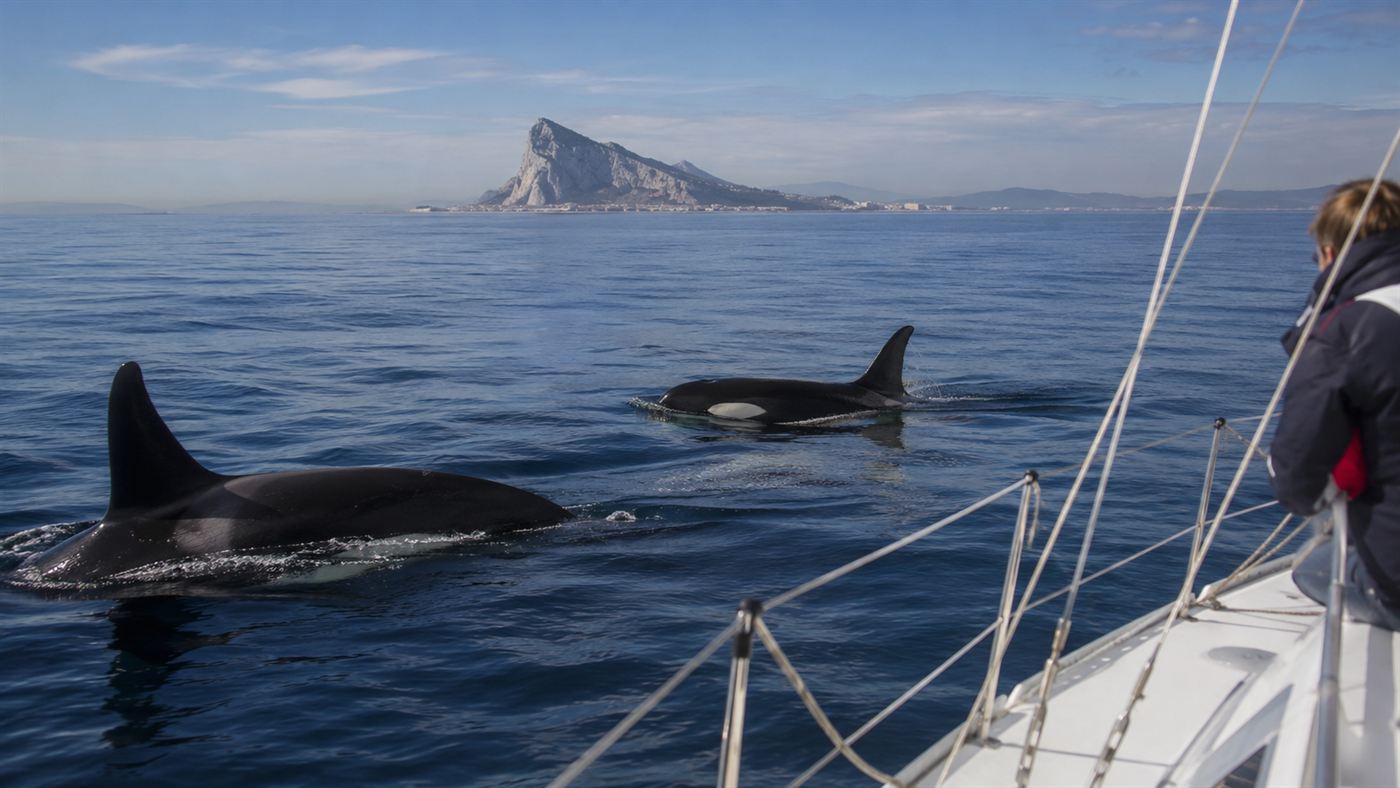
For most of a century, the whalers of Eden in southern Australia did not hunt alone. A pod of wild orcas hunted with them, driving giant whales into the bay and calling the men to the kill. Their leader was a battle-scarred male the whalers called Old Tom.
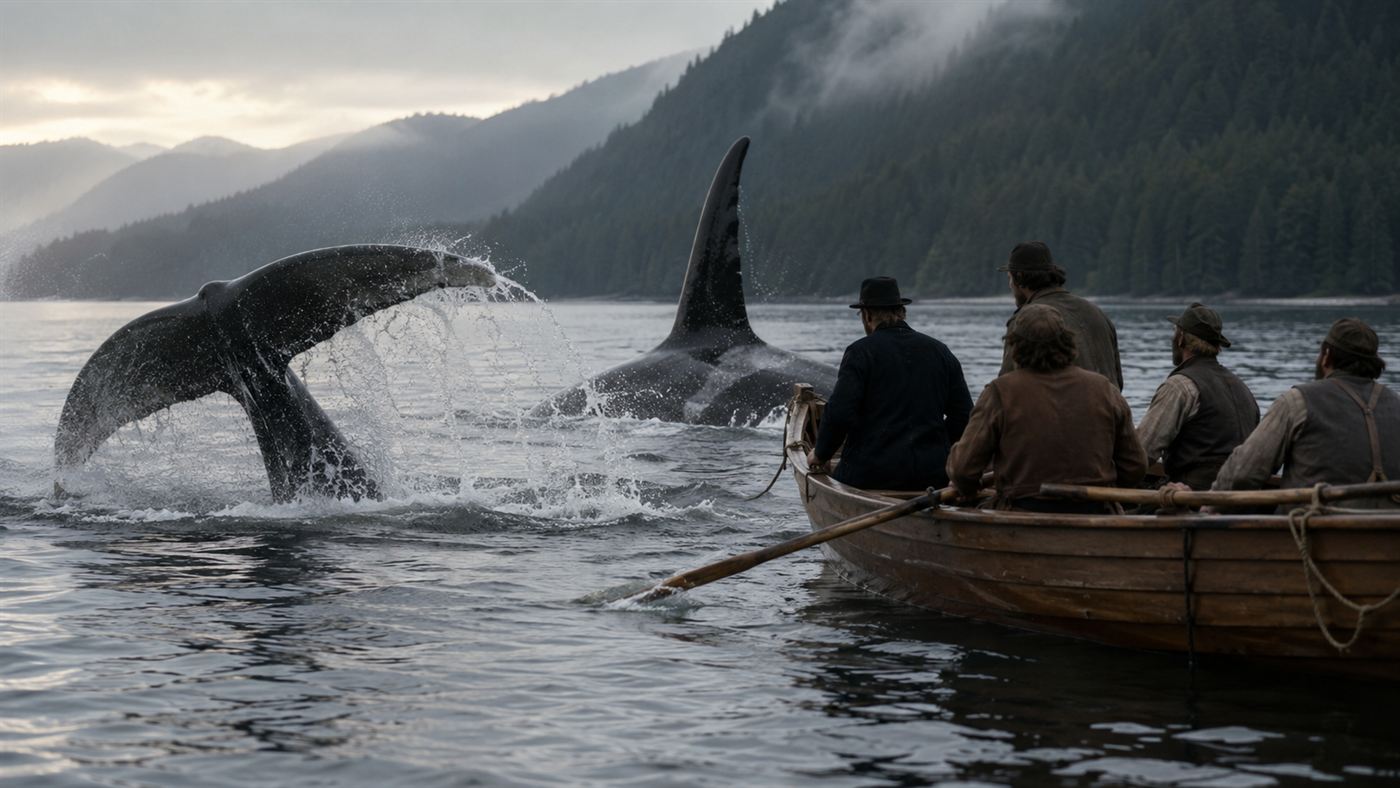
Old Tom would slap his tail by the whaleboats to call the men out to a hunt, a wild animal summoning its human partners. Illustration: Watts & Wild.
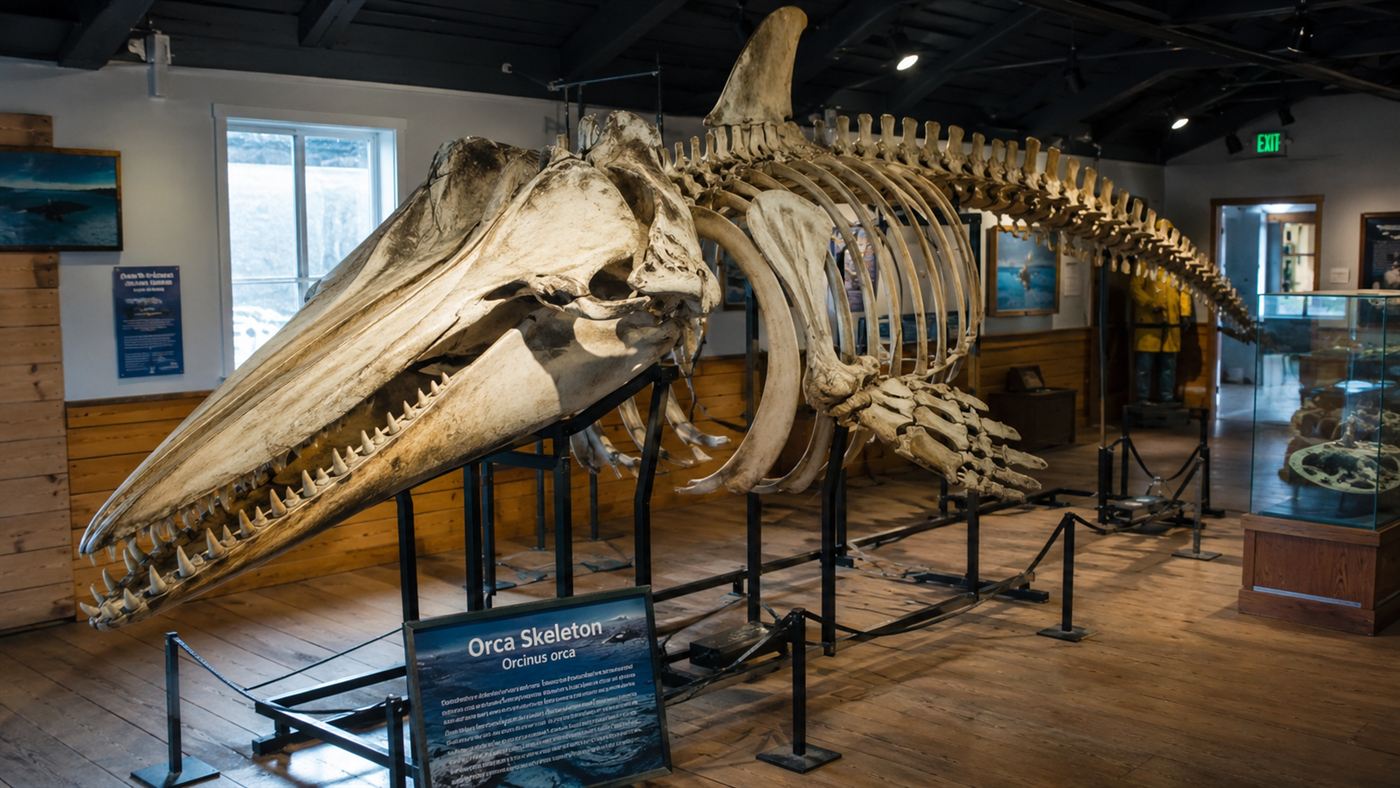
It sounds like a tall tale, but it is one of the best-documented stories in the history of human and animal cooperation. In the waters off Eden, New South Wales, a pod of killer whale hunters and a family of shore-based whalers ran what amounted to a joint hunting operation for the better part of a century, and the most famous orca among them, Old Tom, became a legend on that coast. His skeleton still hangs in the Eden Killer Whale Museum, and the wear on his teeth quietly backs up the story.
The arrangement was real, repeated over generations, and built on trust between two top predators who had every reason to compete. It is the kind of alliance biologists once thought impossible between wild animals and people, and it played out year after year in the cold green water of Twofold Bay. Animals have come through for us in deadlier moments too, like the sled dogs who raced serum across Alaska to save Nome.
Old Tom was a wild male killer whale that, with his pod, helped human whalers in Eden, Australia, hunt baleen whales from the 1840s until 1930. He herded whales into Twofold Bay and alerted the whalers, and in return the whalers let the orcas eat the tongues and lips of the kill, a deal called the Law of the Tongue.
How Old Tom and his pod ran the hunt
Each winter, baleen whales migrated past Eden, and the orcas turned that migration into a system. When the pod found a humpback or a southern right whale, some orcas would herd and harry it toward shore while others swam to the whaling station and threw themselves about, breaching and slapping the water with their tails to raise the alarm. The whalers learned to read it instantly: Old Tom was at the door, and the hunt was on.
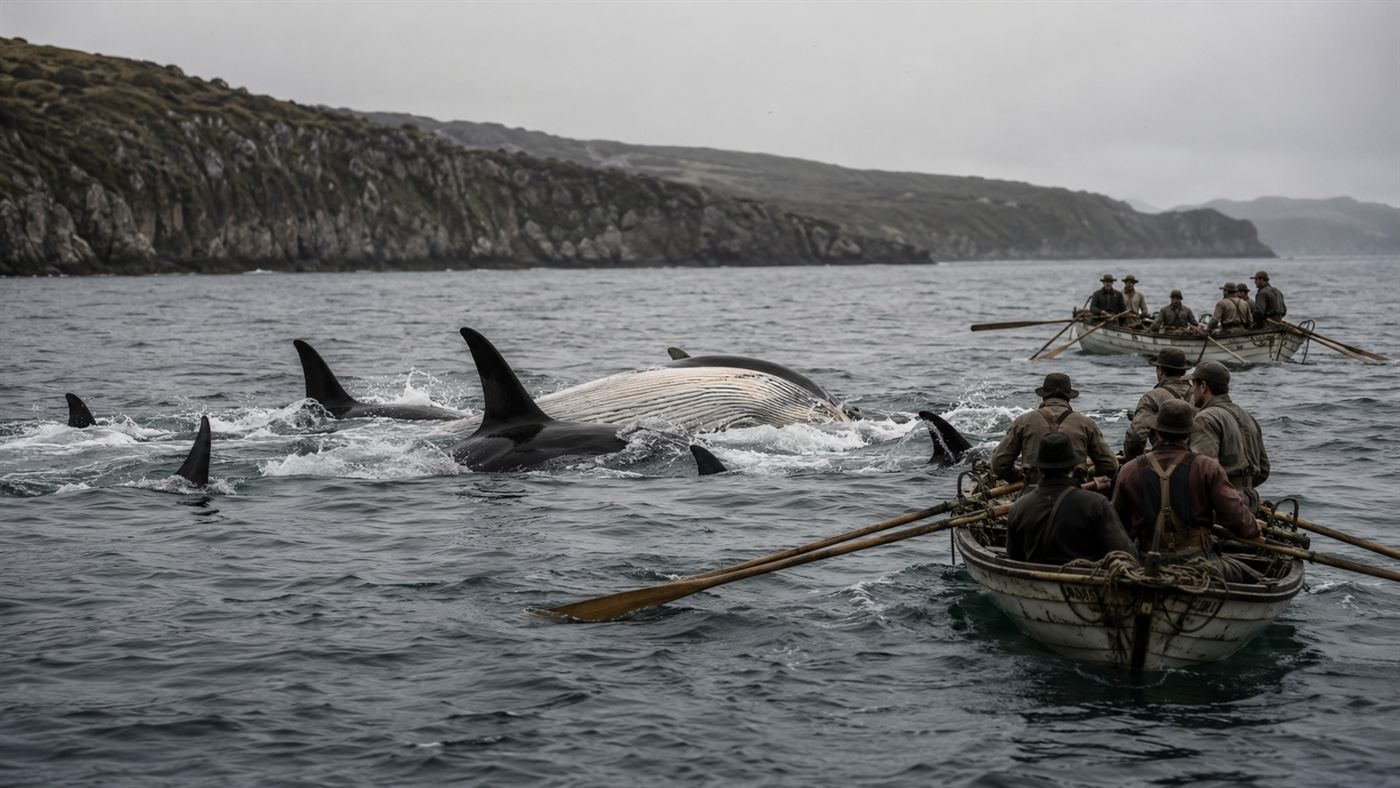
The men would launch their rowboats and follow the orcas out to the trapped whale. While the whalers harpooned it, the killer whale pod kept the much larger animal from diving or escaping, even draping themselves over its blowhole to tire it. It was a genuine division of labour: the orcas had the speed and teeth to corner the whale, the humans had the harpoons to finish it, and neither could have done the job nearly so well alone.
The Law of the Tongue
What held the partnership together was payment, and the terms were oddly precise. Once a whale was killed, the whalers did not immediately haul it in. They anchored the carcass and left it overnight, sometimes for a day or two, so the orcas could take their share first. This was the famous Law of the Tongue, and it was honoured on both sides for decades.
What the orcas wanted was specific: the tongue and the lips, the soft, rich parts of a baleen whale. They would feed on those and leave the rest of the enormous body, bloated and floating, for the whalers to tow back to the try works and render into oil. Under the Law of the Tongue everyone got what they valued most, and a dead whale fed two species instead of one. It is one of the strangest contracts ever struck without a single word being spoken.
The people who made it possible
The whalers most associated with Old Tom were the Davidson family, who worked the Eden coast across three generations and kept the alliance alive longer than anyone. But the deeper roots of the partnership belong to the Twofold Bay region's first people, the Yuin, who had regarded the killer whales as kin long before any European arrived with a harpoon.
In Yuin belief, the orcas were the returning spirits of ancestors, the beowas, and were never to be harmed. Aboriginal men crewed many of the Eden whaleboats, and their refusal to let the orcas be harmed was almost certainly what allowed the trust to form and survive. For a long time their role was written out of the romantic version, but the cooperation that made Old Tom famous grew from an Indigenous relationship with these animals that was already ancient.
How the partnership ended
Like a lot of legends, the ending turns on a betrayal. The story handed down in Eden is that a whaler named John Logan, fighting rough seas, tried to winch a fresh carcass away before the orcas had taken their share, and that Old Tom grabbed the rope to hold the boat back. In the tug of war that followed, as recounted in Scientific American, some of the old orca's teeth were torn out, and the people of Eden believed the Law of the Tongue had been broken and the bond with it.
On 17 September 1930, Old Tom's body was found floating in Twofold Bay, and with him the whole whaling era ended; the pod scattered and never worked with people again. His remains were cleaned and his skeleton mounted, and it stands today in the Eden Killer Whale Museum, where the grooves worn into his teeth are pointed out as the marks of a lifetime spent gripping ropes and the timbers of whaling boats.
The honest catch
The bones are real and the cooperation is well attested, but parts of the legend deserve a raised eyebrow. The claim that Old Tom was over ninety years old is almost certainly folklore, since wild orcas rarely reach that age, and the worn, grooved teeth that the story explains so neatly are also exactly what you would expect from an old animal regardless of any tug of war. The dramatic tale of a single broken promise ending everything is tidy, and probably tidier than the messy truth.
It is also worth remembering what the partnership was for. This was an alliance built to kill whales for oil, a whaling industry that pushed several species to the brink, so it is not a simple feel-good fable. And the long habit of crediting the Davidsons while quietly dropping the Yuin people flattered the colonists at the expense of the truth. Even so, the core of it survives every challenge: for the better part of a century, a pod of wild killer whale hunters and a whaling town trusted each other enough to hunt as partners, and that really happened in Twofold Bay.
A wild predator and a town of hunters trusted each other enough to share the same kill for generations. Does Old Tom's story change how you think about what wild animals can understand about us? Tell us in the comments.
Related reading: A pod of orcas off Spain and Portugal has been ramming and sinking sailboats, and scientists are still arguing about why.