The Laguna dolphins of southern Brazil have hunted alongside human fishermen for more than a century, herding fish to the nets and reading a partnership taught on both sides
The Laguna dolphins of southern Brazil do something almost no wild animal does: they hunt with people on purpose. For more than a century they have driven shoals of mullet toward fishermen and signalled the exact moment to cast the net, and both sides come away fed.
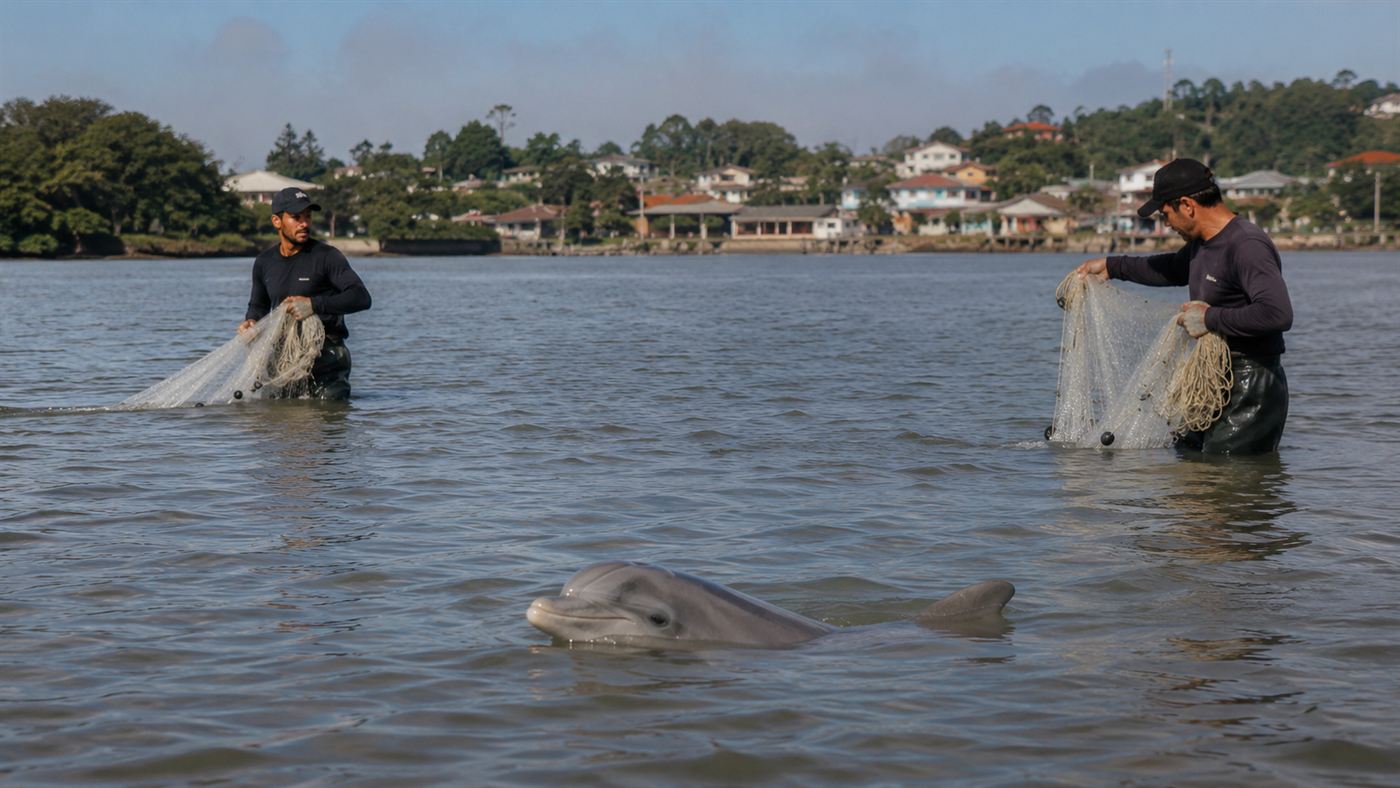
A Laguna dolphin works the shallows alongside the fishermen it has hunted with for generations. Illustration: Watts & Wild.
The Laguna dolphins have a job. In the murky lagoon that runs through the city of Laguna, in the Brazilian state of Santa Catarina, wild bottlenose dolphins herd shoals of migrating mullet in from the sea toward a line of fishermen standing waist-deep in the water. The fishermen cannot see the fish in the cloudy water at all. They are simply waiting for the dolphins to tell them when to throw.
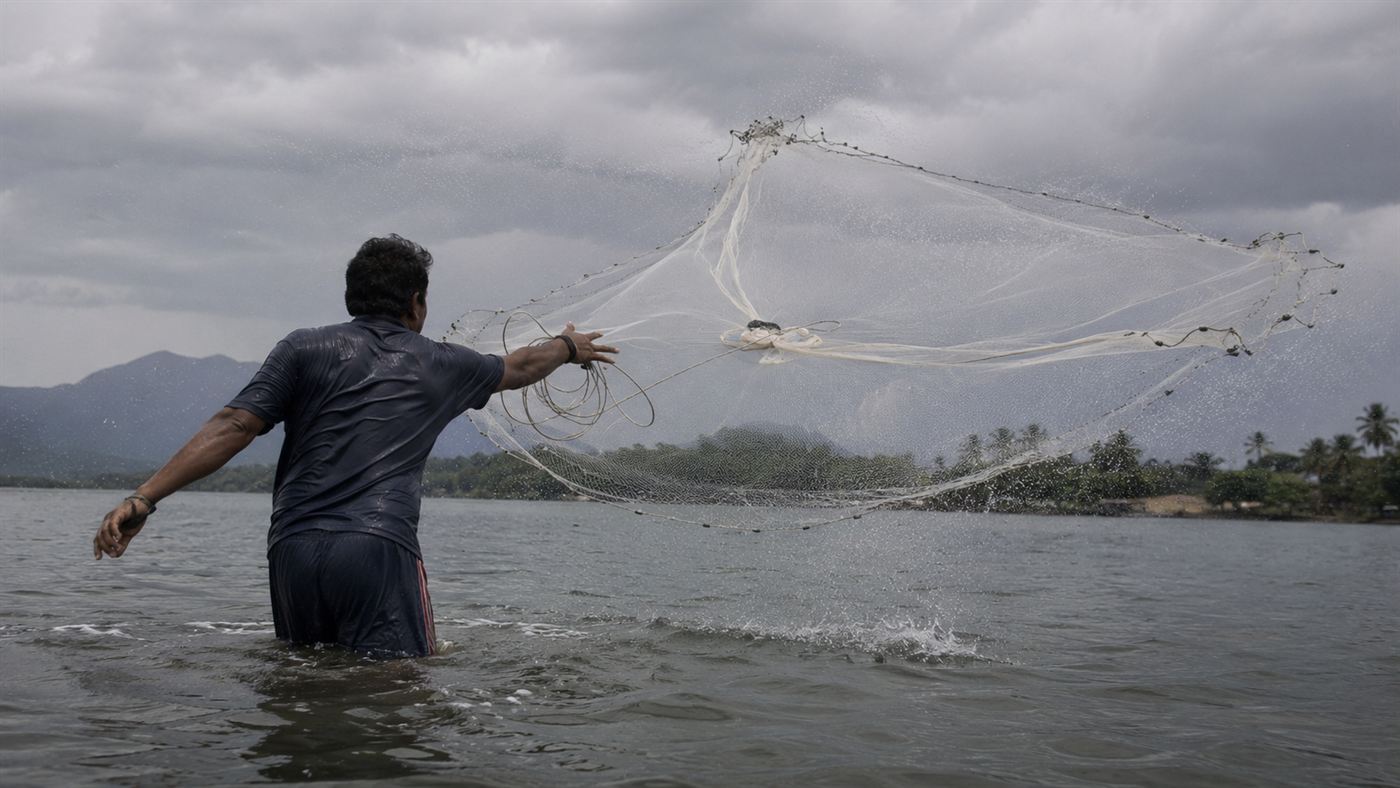
The signal is unmistakable once you know it. As Science reported on the research into this partnership, a dolphin rolls, dives or slaps its head or tail hard against the surface, and at that instant the fishermen hurl their circular cast nets exactly where the dolphin pointed. The net crashes onto the mullet and scatters the shoal, and in the confusion the dolphins snatch the fish that break away. Both the people and the animals eat better for it, and they have been doing this together for around 140 years.
How do the Laguna dolphins fish with humans? Wild dolphins herd shoals of mullet toward fishermen standing in shallow water, then signal with a sudden roll or tail slap when the fish are in range. The fishermen cast their nets at that cue, which scatters the shoal and lets the dolphins catch the fleeing fish. Both sides benefit.
How the Laguna dolphins run the hunt
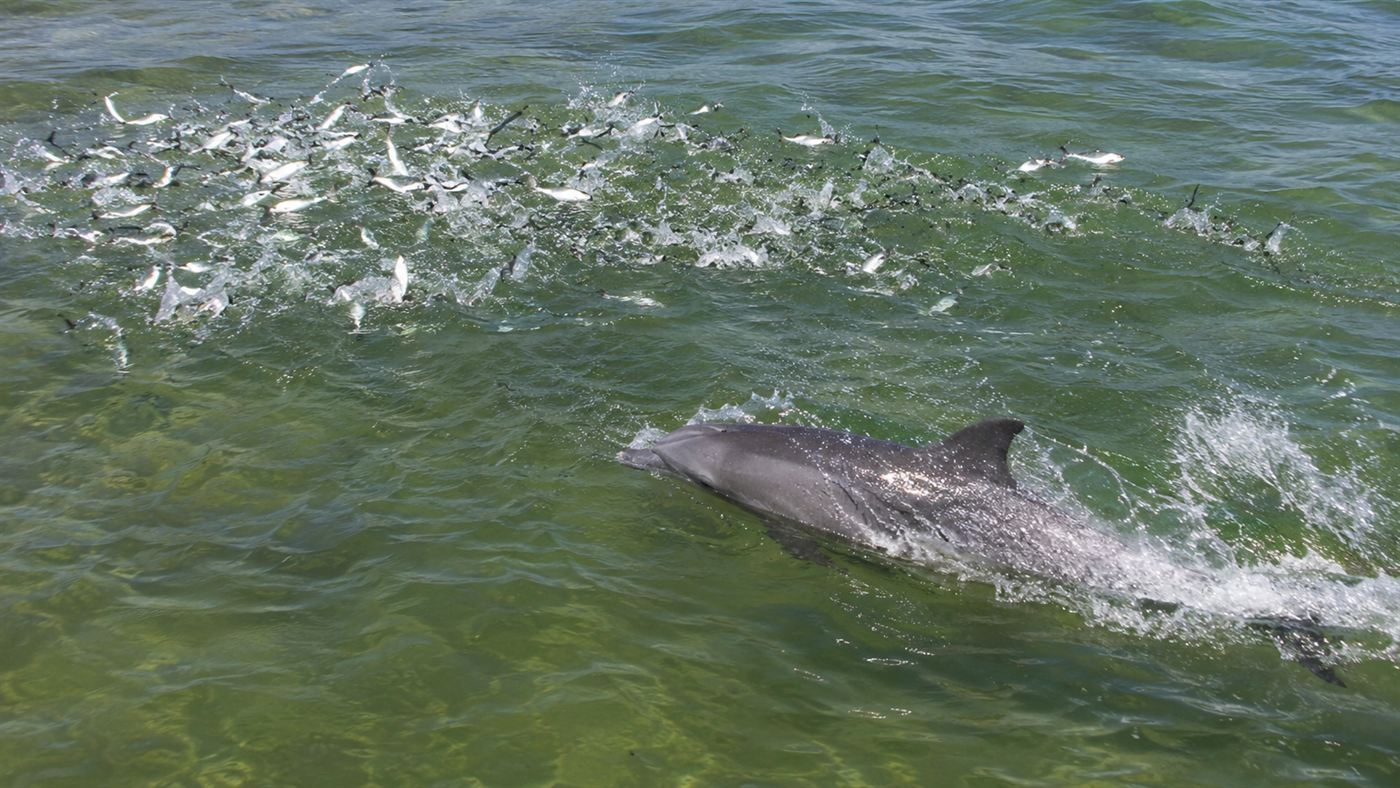
What makes the Laguna dolphins remarkable is that neither side can do the job alone. The water is too turbid for the fishermen to spot the mullet, and a cast net thrown blind almost always comes up empty. The dolphins, hunting by echolocation, can find and corral the shoals easily, but a tight, fast school of mullet is hard for them to break into. Each species has exactly what the other lacks.
So they trade. The dolphins drive the fish inshore and hold them against the wall of waiting fishermen, then give the cue. The cast nets land on the packed shoal, the school explodes in every direction, and the dolphins pick off the stragglers that scatter out of the chaos. It is a hunt choreographed entirely through body language between two animals that cannot speak a word to each other, and it works because both have learned, precisely, what the other's movements mean.
A partnership older than anyone alive
This is not a recent trick. The cooperation in Laguna shows up in newspaper records going back to the 19th century, which means the Laguna dolphins and the town's fishermen have been working the same stretch of water together for something like 140 to 150 years. No one alive remembers it beginning; every fisherman and every dolphin in the lagoon today inherited it.
And it is inherited, on both sides, which is the strangest part. Young fishermen learn the craft by watching their fathers and uncles read the dolphins, while dolphin calves appear to pick up the behaviour from their mothers. Only some of the local dolphins take part at all, a distinct social set that associates mainly with one another, and the fishers know these individuals so well they give them names. Two separate cultures, human and dolphin, have grown up around the same shared hunt.
What the science found
For a long time the partnership was treated as charming local colour, but in 2023 a team led by the behavioural ecologist Mauricio Cantor, working with researchers including Fábio Daura-Jorge, put hard numbers on it. Using drones, underwater microphones and GPS, they tracked exactly when dolphins and fishers acted and showed the timing was no accident: the two were synchronising, each responding to the other within moments.
The payoff was real for both. The study found that around 86 percent of the fishers' catch came from these synchronised interactions, and, crucially, that the bottlenose dolphins which cooperated tended to survive better than those that did not. This is not a case of clever animals being exploited by people, nor of people throwing scraps to tame wildlife. It is genuine mutual benefit, with each partner measurably better off for paying attention to the other.
Why it might not last
For all its endurance, the partnership is fragile, and the same 2023 research carried a warning. The mullet that the whole arrangement depends on are being overfished, so there is less for either side to catch. Dolphins are dying in fishing gear elsewhere in the system, including in illegal nets, which thins the small group that knows how to cooperate. And on the human side, fewer young people are taking up artisanal fishing at all, so the knowledge has fewer hands to pass into.
Lose any one of those threads, the fish, the cooperating dolphins, or the fishers who carry the tradition, and a 140-year-old behaviour could unravel within a generation. The Laguna dolphins are a reminder that some of the most extraordinary relationships in nature are not ancient and unbreakable but quietly contingent, depending on a chain of teaching that has to be renewed every single year.
The honest catch
It is worth resisting the urge to make this too sweet. The dolphins are not helping the fishermen out of kindness; they cooperate because it gets them more fish, and they would abandon the people in an instant if it stopped paying. This is mutualism, a hard-headed exchange of advantages, not friendship, and reading it as a heart-warming interspecies bond says more about us than about them.
That said, the hard-headed version is arguably more impressive than the sentimental one. Two wild species, with no shared language and no shared interest beyond fish, worked out a coordinated hunt and then kept it alive by teaching it to their young for a century and a half. The Laguna dolphins did not befriend humanity. They did something rarer: they found a way to do business with it, and made it stick.
Wild dolphins and human fishermen in one Brazilian town have run the same coordinated hunt, by trust and signals alone, for a hundred and forty years, and now it is quietly slipping away. Should saving a partnership like this be a conservation priority, or is it simply nature taking its course? Tell us what you think in the comments.
Related reading: Off Gibraltar, a different kind of dolphin culture has orcas sinking sailboats, apparently for fun.