A wild African bird and a honey hunter call back and forth to each other, then team up to raid a beehive, a partnership no one taught either of them
In parts of Africa, a person who wants wild honey does not go looking alone. They call out, and a small wild bird called the honeyguide answers, then flies ahead from tree to tree, leading the way to a hidden bees' nest. It is one of the only known partnerships in which a wild animal and a human deliberately talk to each other.
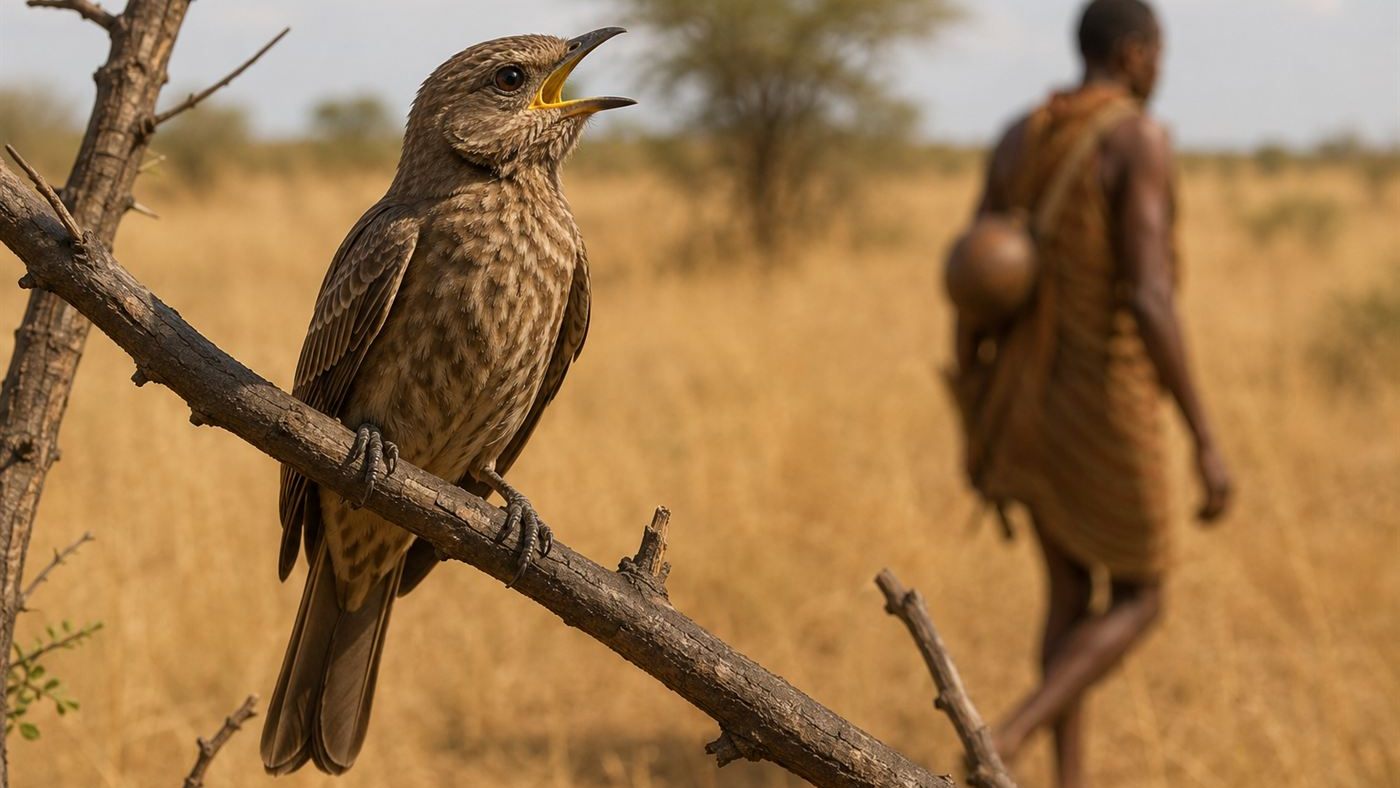
A honeyguide calls to lead a honey hunter to a nest. Illustration: Watts & Wild.
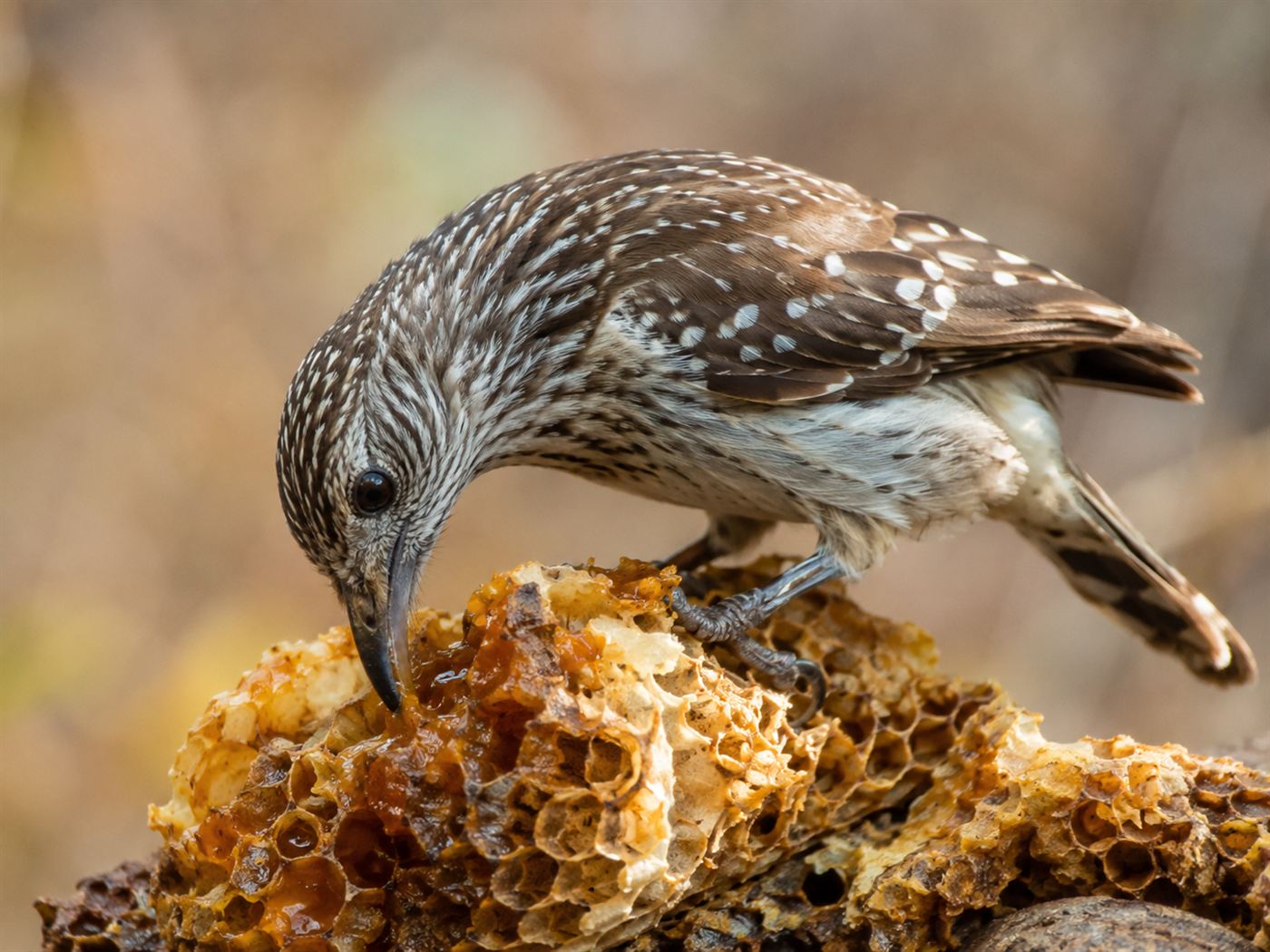
The bird is the greater honeyguide, a fairly plain, sparrow-sized species found across much of sub-Saharan Africa. On its own it has a problem. It loves to eat beeswax, one of very few animals that can actually digest the stuff, but it cannot break into a heavily defended wild bees' nest to get at it. The bird has the appetite and the knowledge of where the nests are. What it lacks is the muscle.
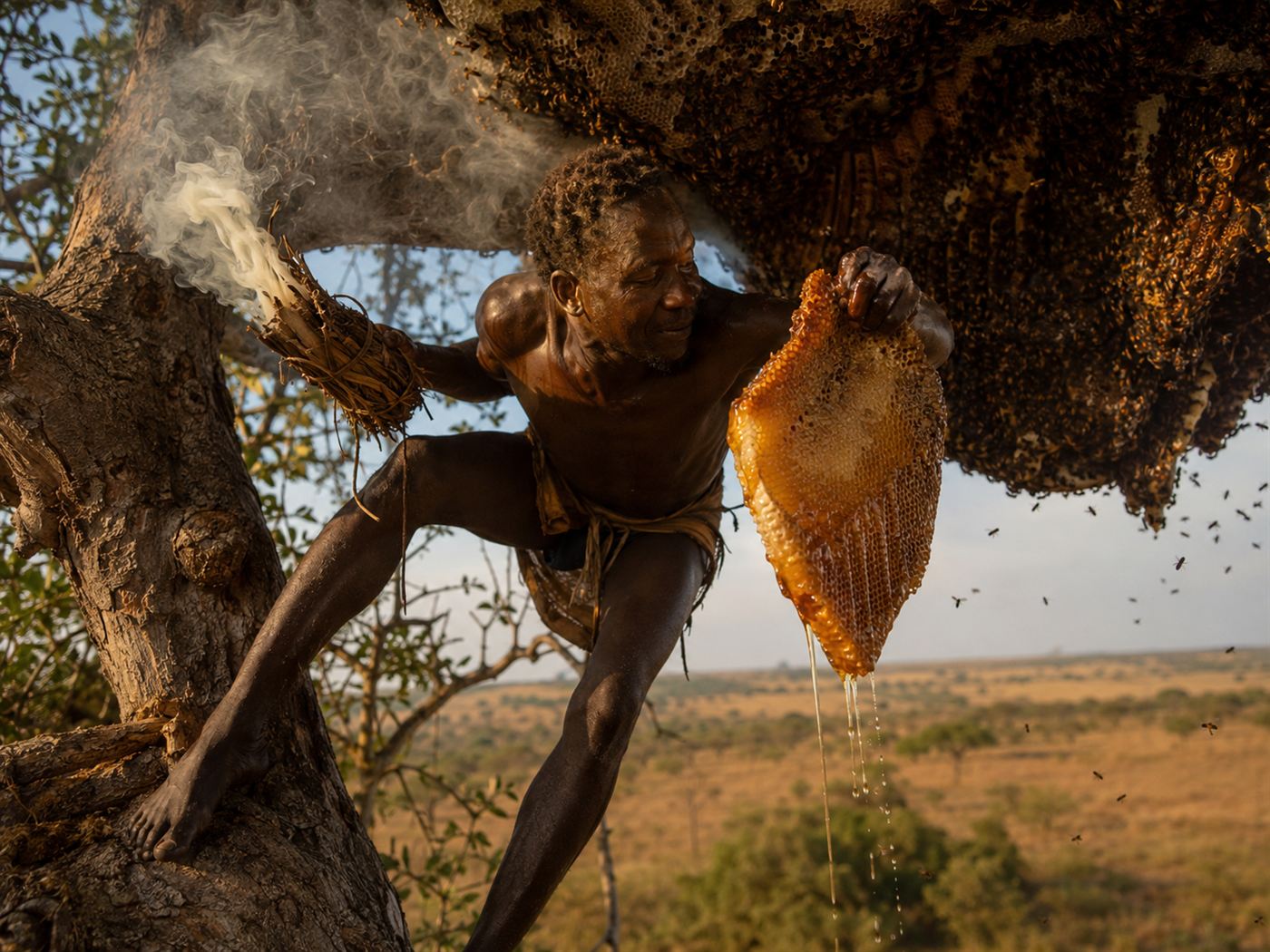
Humans have the opposite problem. A honey hunter has the tools, the smoke and the strength to open a nest, but finding one hidden in a vast bush is slow, frustrating work. So the two strike a deal that solves both halves at once: the bird finds the nest and leads, the human opens it, and each takes the part they want.
How the honeyguide and a hunter strike a deal
The remarkable thing is that this is a real conversation, not a one-way trick. Among the Yao people of Mozambique, a hunter announces that they are ready to follow by making a very particular sound, a trill followed by a grunt that comes out as "brrr-hm". As NPR reports, that call is passed down the generations from father to son, a signal that means, in effect, "I am a honey hunter, let us work together."
When a honeyguide hears it and is willing, it chatters back and starts flying ahead, waiting on perches, then moving on, drawing the hunter through the bush toward a nest. As Audubon describes, following the birds, the Yao find bees' nests roughly three quarters of the time, far more often than they could alone. Once the nest is opened and the honey taken, the bird drops down to feast on the abandoned wax.
A bird that speaks human dialects
It gets stranger and more wonderful. The specific call is not universal, and the birds seem to learn the local version. The research biologist Claire Spottiswoode and her colleagues tested this by playing different human signals to honeyguides in different places. As the AAAS reported of the work published in Science, honeyguides in Mozambique were about three times more likely to cooperate when they heard the Yao "brrr-hm" than a whistle used by Hadza hunters in Tanzania, and the birds in Tanzania showed exactly the reverse preference.
In other words, the birds learn the call of whichever people they live among, like picking up a local accent. No one trains them, and no one can. A wild creature is reading a cultural human signal and matching its behaviour to the community it shares the landscape with, which is an astonishing thing for a small bird to do.
What does the honeyguide get out of it?
The honesty of the exchange is what makes it tick. The bird is not being charitable and the human is not being kind; each is simply taking the part of the prize it can use. The human wants honey and has no interest in wax. The honeyguide wants wax and cannot get the honey open. Their tastes line up so neatly that cooperating beats cheating for both of them, which is probably why the partnership has lasted.
And it may have lasted a very long time. This kind of cooperation could be older than farming, perhaps even older than our own species in its current form, a relationship between people and a wild bird that has been handed down, on both sides, across an almost unimaginable stretch of time.
The honest catch
It is a lovely story, so it is worth resisting the urge to over-tell it. The partnership is real and well documented, but some of the folklore around honeyguides is shakier. The old claim that the birds also guide honey badgers to nests, for instance, has little solid evidence behind it, and tales of the bird "punishing" humans who fail to leave wax are debated rather than settled.
The bigger worry is that the whole thing is quietly fading. As shop sugar becomes easier to buy, as people move and habitats shrink, fewer communities still practise traditional honey hunting, and the special calls are passed on less often. The partnership depends on humans keeping up their end, and in many places that human knowledge is slipping away faster than the bird's.
Why a bird and a call still matter
Most of our relationships with wild animals are one-sided: we tame them, hunt them, watch them or fence them out. The honeyguide is something rarer, a genuinely wild creature that chooses to work with us, on its own terms, in a language built up between two species over generations. It is a glimpse of a different way of living alongside nature, one based on a deal rather than control.
If that conversation goes silent, we will not just lose a clever trick for finding honey, we will lose one of the last living examples of people and wildlife truly cooperating. Does knowing a wild bird can learn your call change how you think about the animals around you? Tell us in the comments.
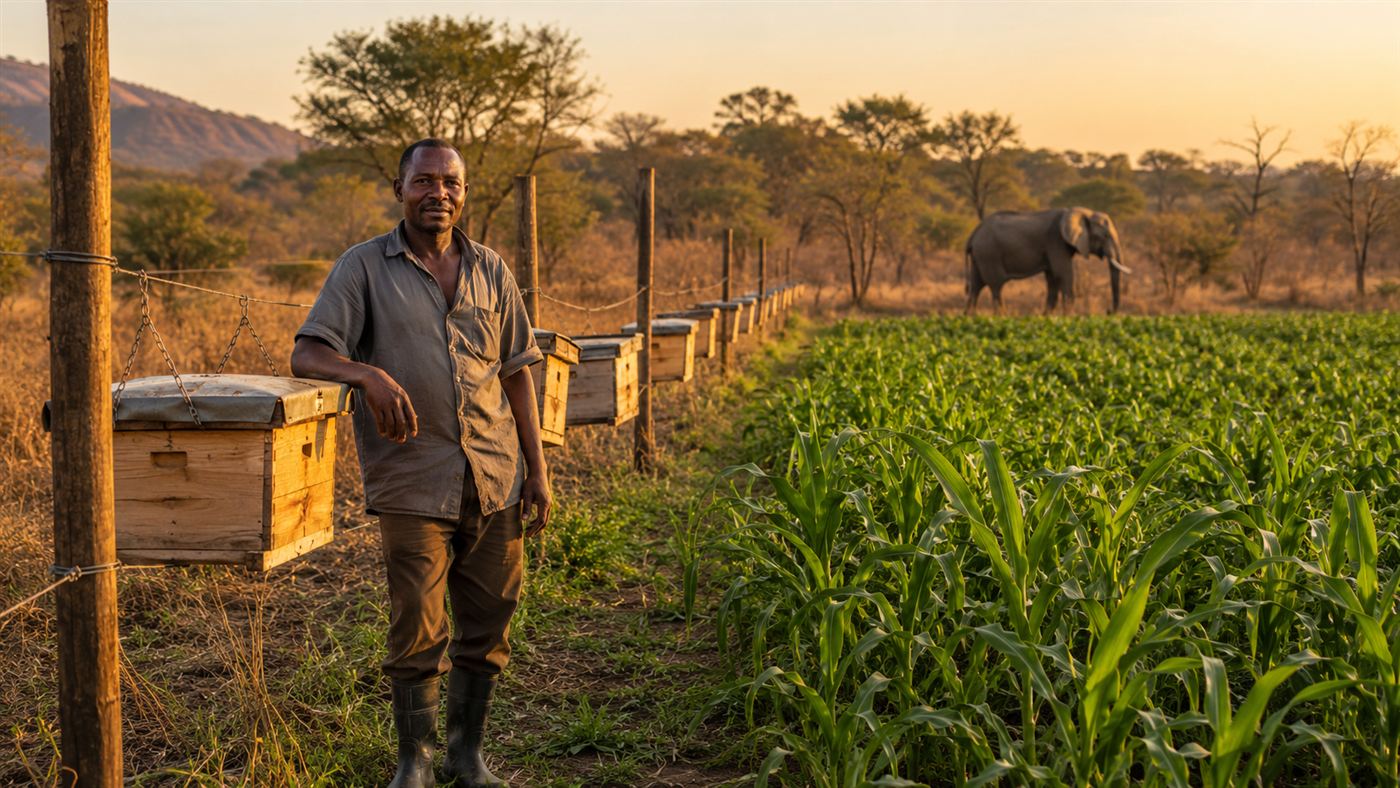
Related reading: Kenyan farmers keep elephants out of their fields with fences of buzzing beehives that the giants are terrified of.