The Great Smog of 1952 killed twelve thousand Londoners in five days, the government blamed influenza, and the future prime minister delayed clean air legislation by three years
The Great Smog of 1952 descended on London on the evening of December 5. By the time it lifted four days later, around twelve thousand people were dead from air pollution. The official cause, for several months, was influenza. The real cause was coal smoke, and the minister responsible for clean air knew it.
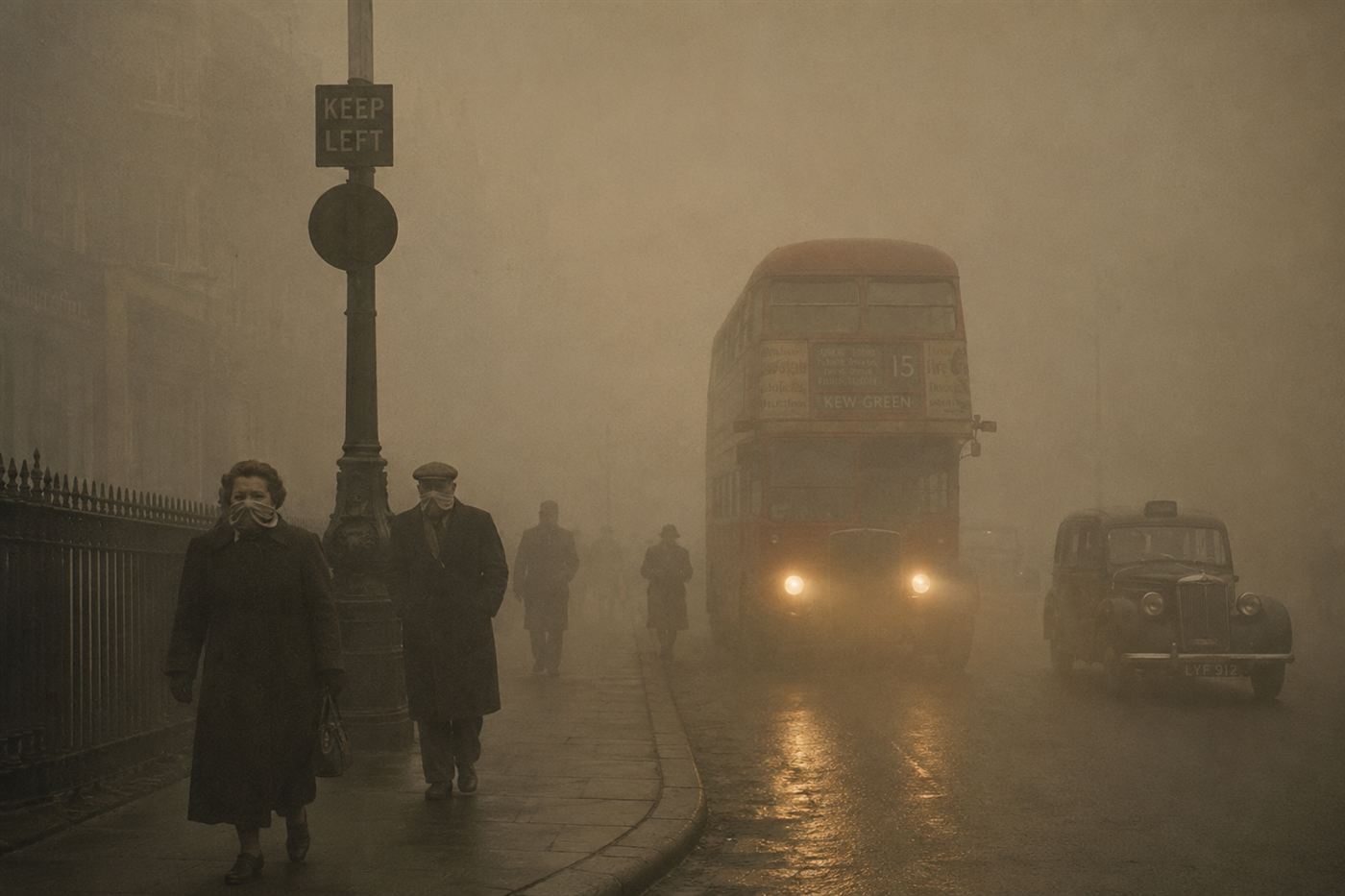
The Great Smog of 1952 made London's streets almost impassable for five days. Bus conductors walked ahead of their vehicles holding torches to find the road. Illustration: Watts & Wild.
The Great Smog of 1952 came without a warning. December evenings in London were almost always cold and damp, and the city had been used to fog for as long as anyone could remember. But on the night of December 5, something different settled over the streets. The air turned yellow, then brown, then almost solid. People walking home covered their faces with handkerchiefs. Buses stopped. Ambulances stopped. Visibility on London's streets dropped to a few feet, and the city effectively ceased to function.
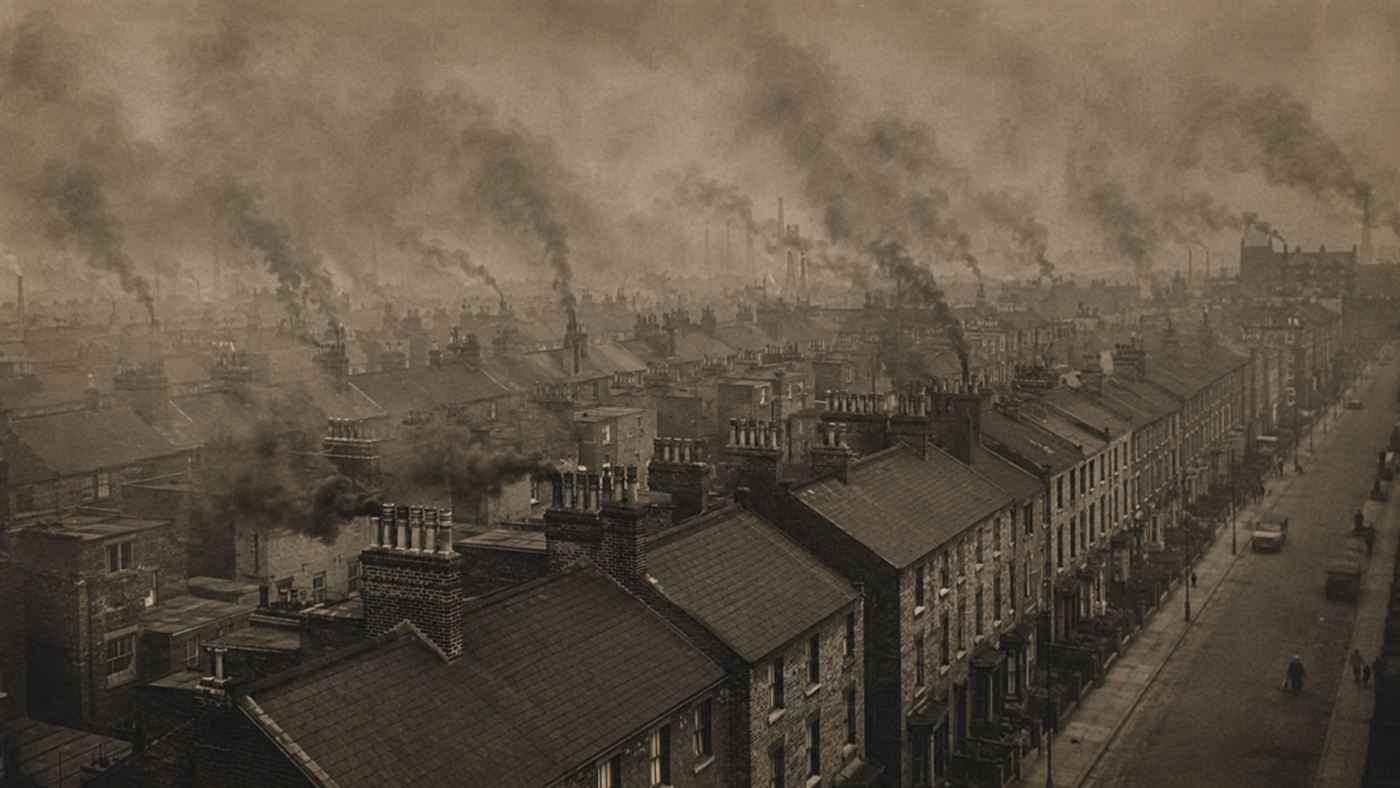
Between December 5 and December 9, 1952, a combination of coal smoke, temperature inversion, and damp winter air turned central London into the worst environmental disaster in British history. About four million tons of coal burned in the city's homes and factories each month that winter. Air pollution from those fires could not rise through the trapped cold air above, so it concentrated at street level, reaching concentrations high enough to be lethal. The deaths began almost immediately and continued for weeks after the London fog had cleared.
The Great Smog of 1952 killed approximately 12,000 Londoners in five days in December. A temperature inversion trapped coal smoke and sulfur dioxide from millions of home fires and factory boilers at street level, forming sulfuric acid mist. The air pollution damaged the lungs of anyone who breathed it. The Clean Air Act followed in 1956, but only after three years of deliberate delay.
How did five days of fog kill twelve thousand people?
The Great Smog of 1952 began with a weather system, not a catastrophe.
A high-pressure system stalled over southern England in early December, trapping a layer of cold, still air close to the ground.
London's air pollution could not circulate.
Under normal conditions, coal smoke from the city's millions of domestic hearths and factory boilers rose into the atmosphere and dispersed.
In that first week of December, it could not rise at all.
The cold air below sat under warmer air above, a phenomenon called a temperature inversion, and the smoke had nowhere to go but sideways, thickening with every chimney that burned through the night.
By the evening of December 5, the concentration of coal smoke, sulfur dioxide, and particulate matter in the London fog had reached levels that made it dangerous to be outside.
By December 7, it had reached levels that made it dangerous to be inside, because Londoners were burning more coal in their fireplaces trying to stay warm in the cold that the inversion was trapping.
The city's emergency mortuaries ran out of coffins.
Flower markets ran out of flowers for funerals.
The Smithfield Show, an annual agricultural competition at Earl's Court, lost some of its prize cattle to asphyxiation.
Their owners fitted gas masks to the animals that survived.
Ambulances operated only for the most critical cases.
Bus drivers relied on conductors who walked ahead of their vehicles holding electric torches to find the road through the London fog.
Performances at Sadler's Wells opera house were canceled because the audience could not see the stage through the smog that had seeped inside the building.
Some people could not see their own feet.
What was actually in the Great Smog of 1952?
The coal being burned in December 1952 in London was poor-quality, high-sulfur coal.
Better coal was being exported for foreign currency to help Britain pay its war debts.
What remained for domestic use was cheaper, dirtier, and it burned with more sulfur dioxide than most of what had gone into the city's fireplaces before.
The sulfur dioxide combined with the moisture and particulate soot in the still air to form droplets of sulfuric acid.
The air pollution was not just smoke.
It was smoke combined with acid, and it attacked the tissues of the respiratory system from the first breath.
The people who died were predominantly the elderly and those with existing lung conditions: chronic bronchitis, heart disease, emphysema.
But some who died were young and otherwise healthy.
The London fog had been a literary fixture for a century, a pea-soup atmosphere associated with Sherlock Holmes and the Victorian city of Charles Dickens.
What changed in 1952 was not that the air was dirty.
London's air pollution had been severe for decades, and the Victorian response to an earlier kind of urban filth, the sewage crisis that produced the sewer network Joseph Bazalgette built under London after the Great Stink of 1858, had taken roughly the same arc from catastrophe to legislation.
What changed in December 1952 was the concentration, the stillness, and the duration.
Five days of trapped coal smoke did what a season of ordinary London fog never had.
Why did the government say it was just flu?
The initial government estimate, published weeks after the smog cleared, was that 4,000 people had died.
The real number was later established by epidemiologists at around 12,000, with additional deaths from the air pollution's effects continuing into the following months.
The official explanation offered by the Ministry of Health in January 1953 was an influenza epidemic coinciding with the Great Smog of 1952.
This was not accurate.
There had been no significant influenza outbreak in London that winter.
The death rate in the days of the smog had been roughly four times the normal December rate.
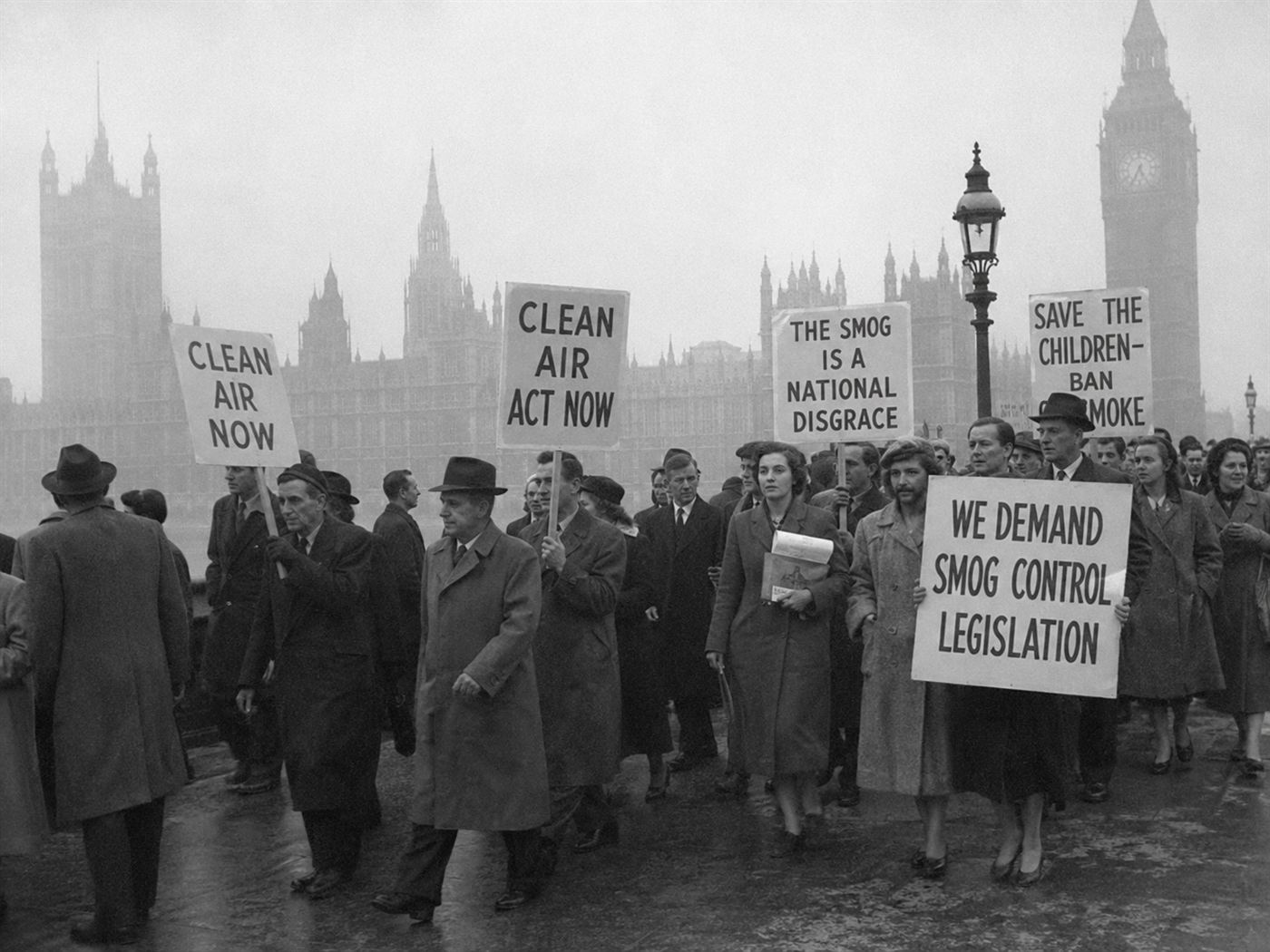
Norman Dodds, the Labour MP for Erith and Crayford, raised the issue in Parliament repeatedly and was met with official reassurances.
Harold Macmillan, the Conservative minister responsible for housing and local government who controlled air pollution policy, was aware of the problem.
In a letter to the Secretary of State, Macmillan noted that the issue was politically difficult because a Clean Air Act would cost money and affect coal interests.
The coal industry in 1952 employed hundreds of thousands of people in Britain and was central to the country's postwar economic recovery.
Macmillan was not prepared to challenge it.
He delayed the Clean Air Act by three years.
The Great Smog of 1952 was not the last bad smog London experienced.
There were additional severe smog events in 1953 and 1956.
Each one killed people.
The pattern of an authority knowing about industrial harm and choosing delay for economic reasons is not unique to Britain: the Chisso Corporation in Japan suppressed its own internal evidence of mercury poisoning in Minamata Bay for nine years, while thousands of fishing families went on eating contaminated fish.
How did the Great Smog of 1952 change British law?
The Clean Air Act 1956 was passed four years after the smog.
It was the first law in Britain to designate smoke control areas in which only smokeless fuel could be burned.
It prohibited the emission of dark smoke from chimneys in those zones.
It required local authorities to create and enforce smoke control areas in their districts.
Crucially, the Clean Air Act 1956 applied not just to factories but to domestic fires, the hearths in people's homes that had been burning coal for centuries.
The shift away from coal in British homes was not immediate.
The Act created a transition period and financial incentives for households to switch to smokeless fuel.
But by the mid-1960s, London's coal smoke had fallen significantly.
The great pea-soup London fog of Victorian literary tradition was effectively over.
A 2004 study in Environmental Health Perspectives estimated that the Great Smog of 1952 had killed between 10,000 and 12,000 people in London, with additional deaths from worsened respiratory and cardiac conditions in the months that followed.
The Clean Air Act became a model for air pollution legislation worldwide.
The United States passed its own Clean Air Act in 1963 and strengthened it substantially in 1970.
The World Health Organization began publishing air quality guidelines that drew directly on the London experience.
What cities learned from the Great Smog of 1952
The Great Smog of 1952 was not the first event of its kind.
The Meuse Valley disaster in Belgium in 1930 had killed 60 people in a similar atmospheric trap, when industrial emissions combined with fog in a river valley.
In October 1948, the town of Donora, Pennsylvania, lost 20 residents and saw thousands ill when a zinc smelter and steel mill combined with fog and a temperature inversion to produce a toxic event lasting four days.
These earlier disasters had not produced meaningful legislation.
London's scale and its international profile meant the Great Smog of 1952 could not be attributed to a single industrial source or contained as a local event.
The city's millions of domestic coal smoke sources made it a population-level air pollution problem, not a factory-level one.
That distinction changed everything about how governments could respond.
No single plant was responsible.
The fuel that kept the whole city warm was responsible.
Addressing that meant changing what ordinary people burned in their homes, and that meant policy in a form no government had attempted before at scale.
The air pollution standards created after 1952 began the process of measuring what was in the air, setting thresholds, and holding governments accountable for whether those thresholds were met.
That framework is now the foundation of every modern environmental regulation governing the air over cities, from Beijing's coal restrictions to California's vehicle emissions standards.
The World Health Organization estimates that outdoor air pollution causes approximately 4.2 million premature deaths globally each year, most of them from particulate matter from fossil fuel combustion.
The coal that drove the Great Smog of 1952 is still being burned: the Bagger 288, the largest land vehicle ever built, still digs lignite from open-cut mines in Germany, and the debates over transition timelines echo the same economic arguments Macmillan made in 1953.
For more on how energy choices shape the places people live, see our Energy section.
The honest catch
The death toll from the Great Smog of 1952 has never been precisely established.
The government's initial count of 4,000 was accepted for years before epidemiologists revised it upward to around 12,000.
Some researchers believe the total including downstream deaths from worsened respiratory and cardiac conditions over the following months could be higher than 12,000.
Harold Macmillan's delay of the Clean Air Act has to be weighed against the economic reality he was navigating.
Postwar Britain was coal-dependent in a way that was genuinely difficult to unwind quickly.
The coal industry provided jobs, heating, and electricity across the country.
This does not excuse three years of delay while thousands died from air pollution.
But it explains why the delay happened, and it is the same explanation that has been offered for every comparable failure to act on industrial harm since.
The Clean Air Act 1956 significantly improved London's coal smoke problem, but it did not end air pollution.
The city still has areas where nitrogen dioxide and particulate matter from diesel vehicles exceed safe limits.
The source changed.
The harm did not go away.
When a government knows that a fuel is killing thousands of people and delays legislation for three years to protect the industry supplying it, what responsibility does it carry for the deaths that happen during that delay?
Tell us in the comments.
More from Watts & Wild
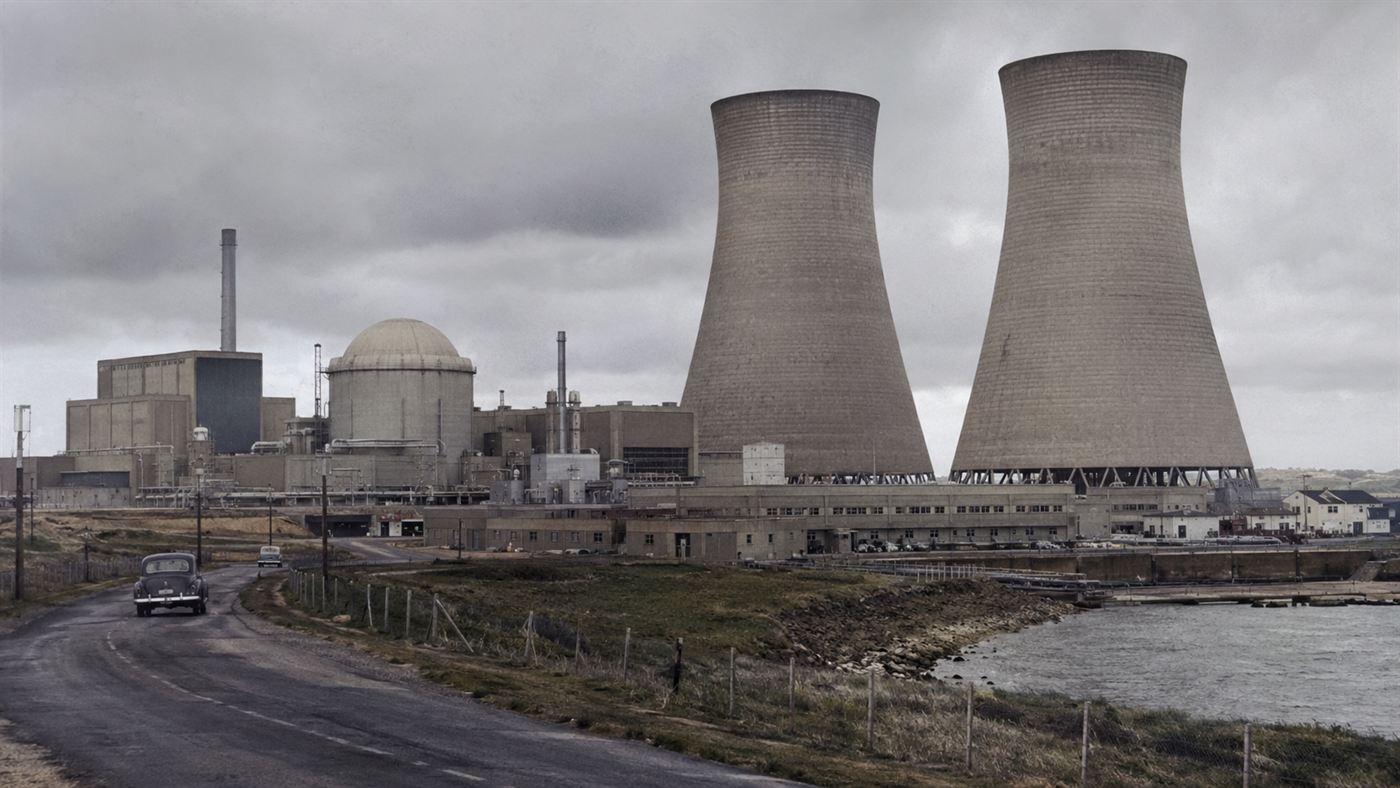 In 1957 Harold Macmillan suppressed the inquiry into Britain's worst nuclear accident, five years after delaying the Clean Air Act for the same reason: protecting an industry
 In the same week the Great Smog was choking London, a young US Navy lieutenant named Jimmy Carter crawled into a melted nuclear reactor in Canada
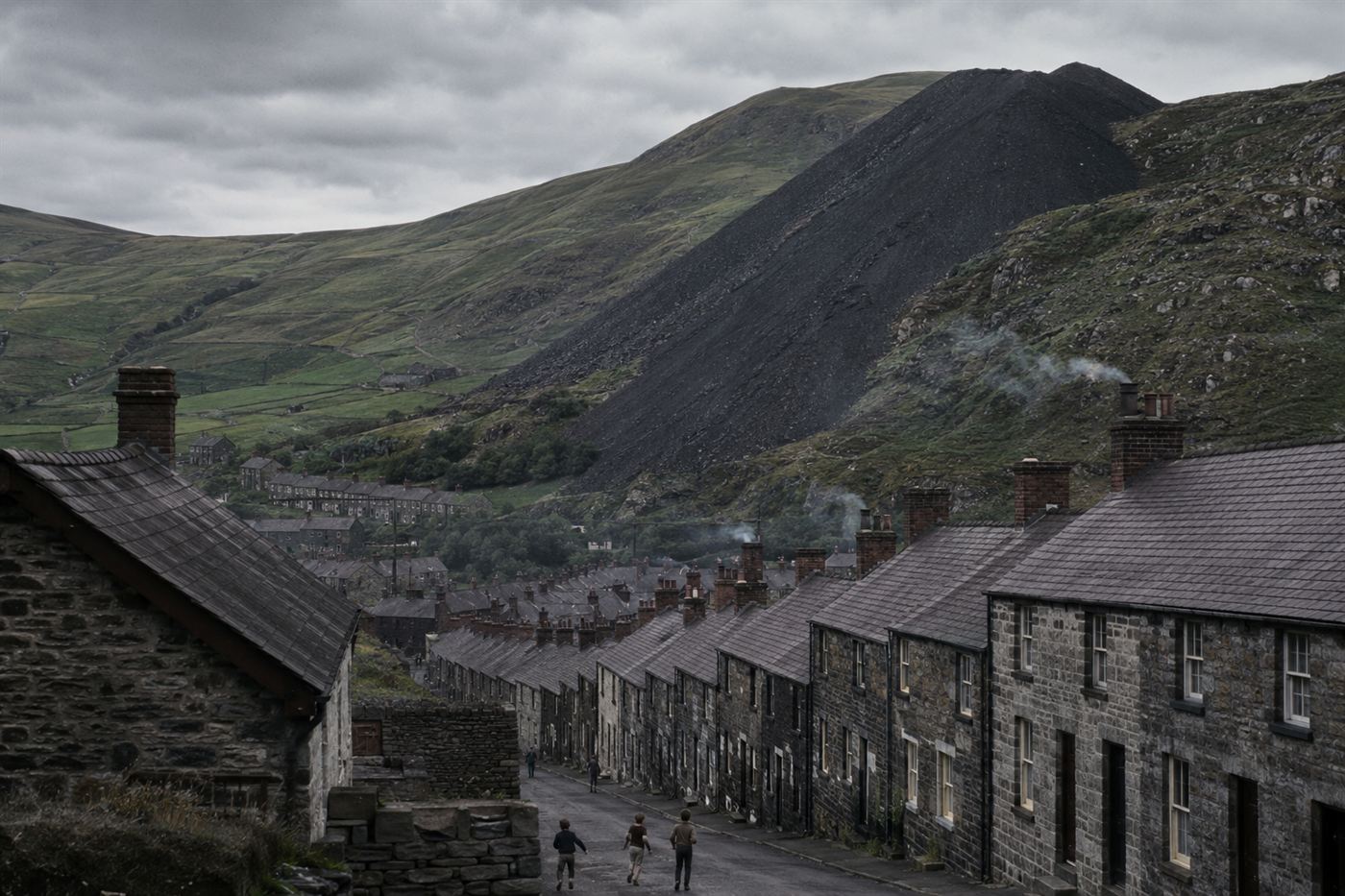 In 1966 a coal waste tip buried an Aberfan school and killed 116 children. The National Coal Board had been warned for years. Nobody was prosecuted.
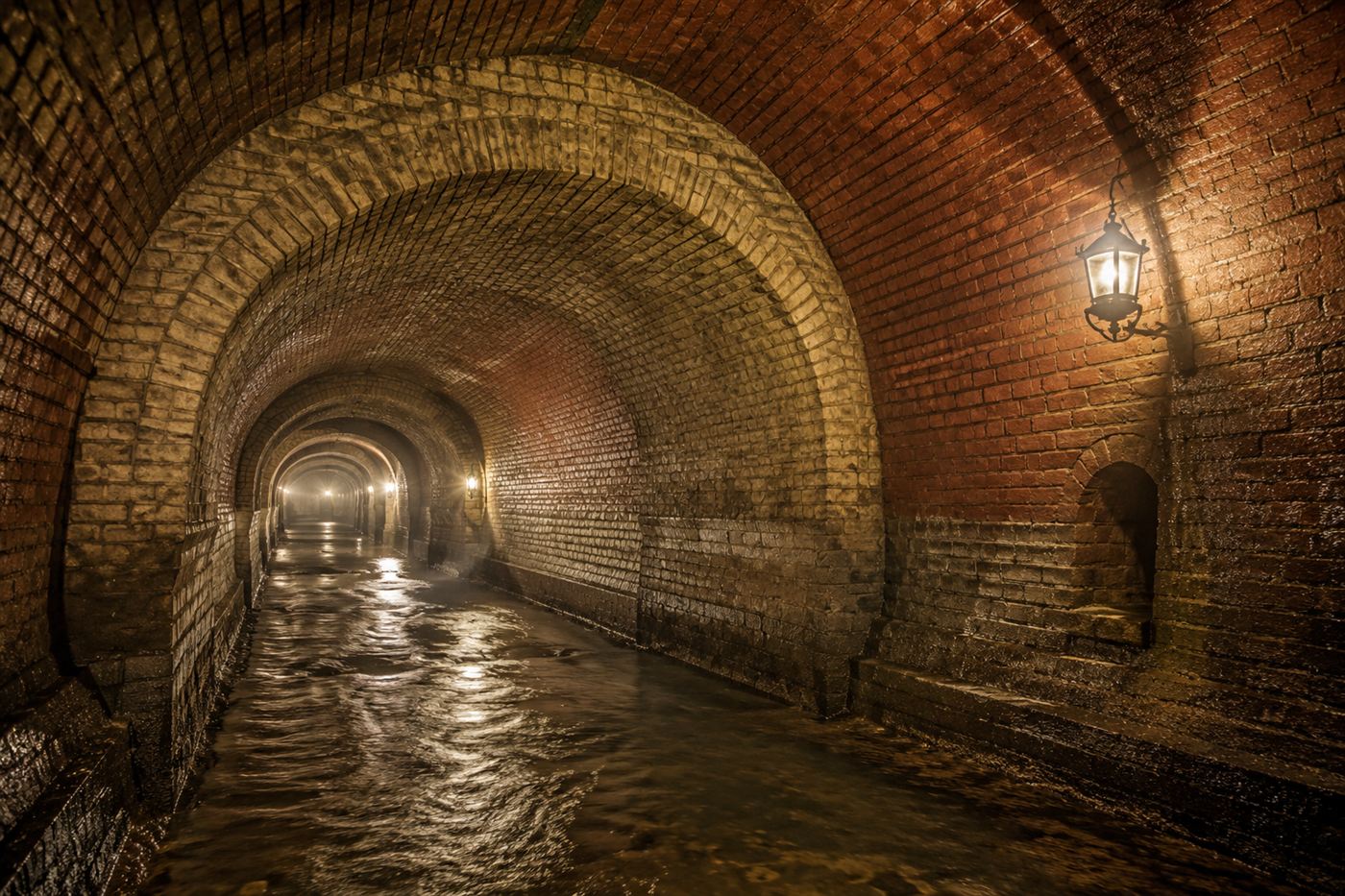 Joseph Bazalgette built London's Victorian sewer network after the Great Stink of 1858 forced Parliament to act
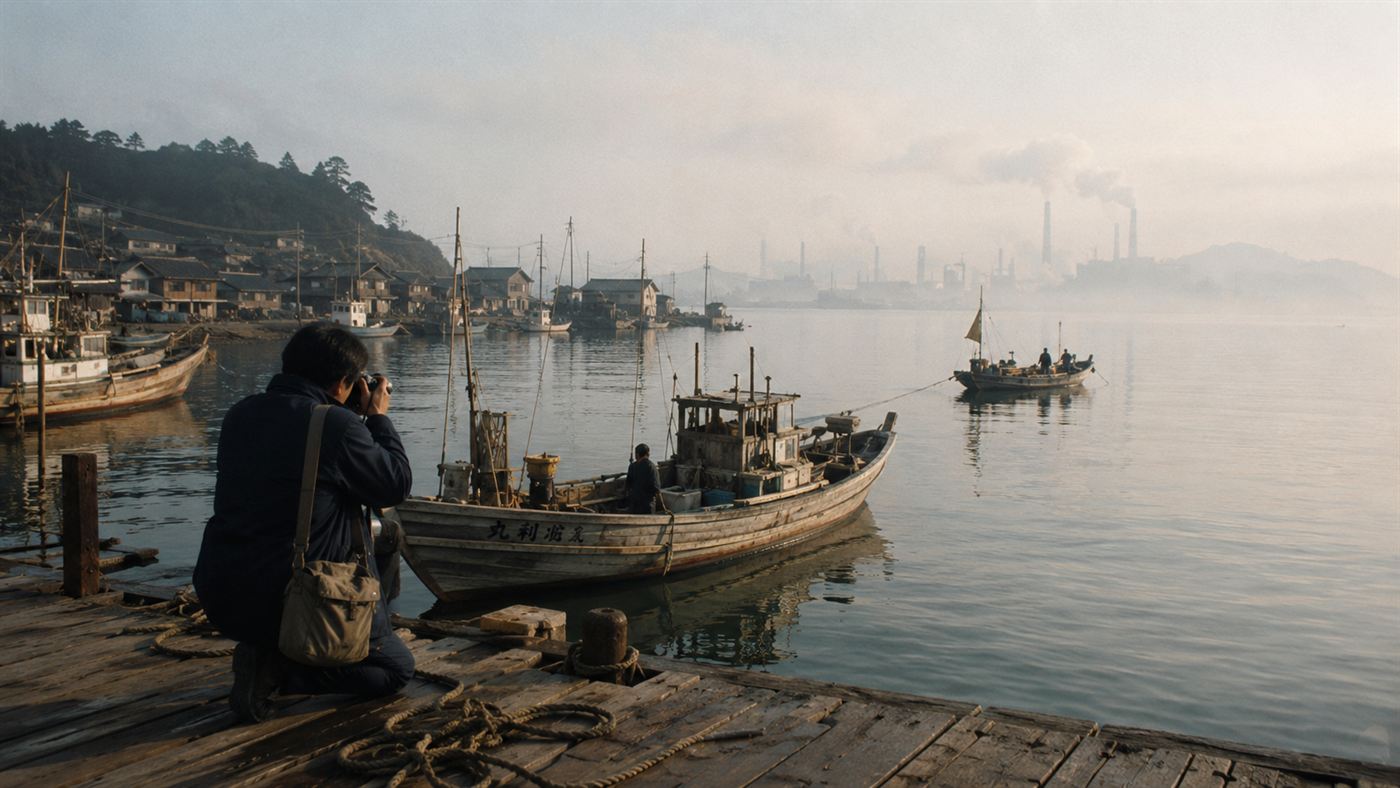 How Chisso Corporation suppressed evidence of mercury poisoning in Minamata Bay for nine years