Scientists were told nothing could grow on Colombia's barren eastern plains, so they built a village that runs on sunlight and accidentally grew a rainforest of 8 million trees
In the 1970s a Colombian visionary named Paolo Lugari led a team of engineers into one of the most hostile landscapes in the country, an acidic savanna where the experts swore nothing useful would ever grow. Fifty years on, Las Gaviotas, Colombia powers itself from the sun and sits inside a forest it brought back to life.
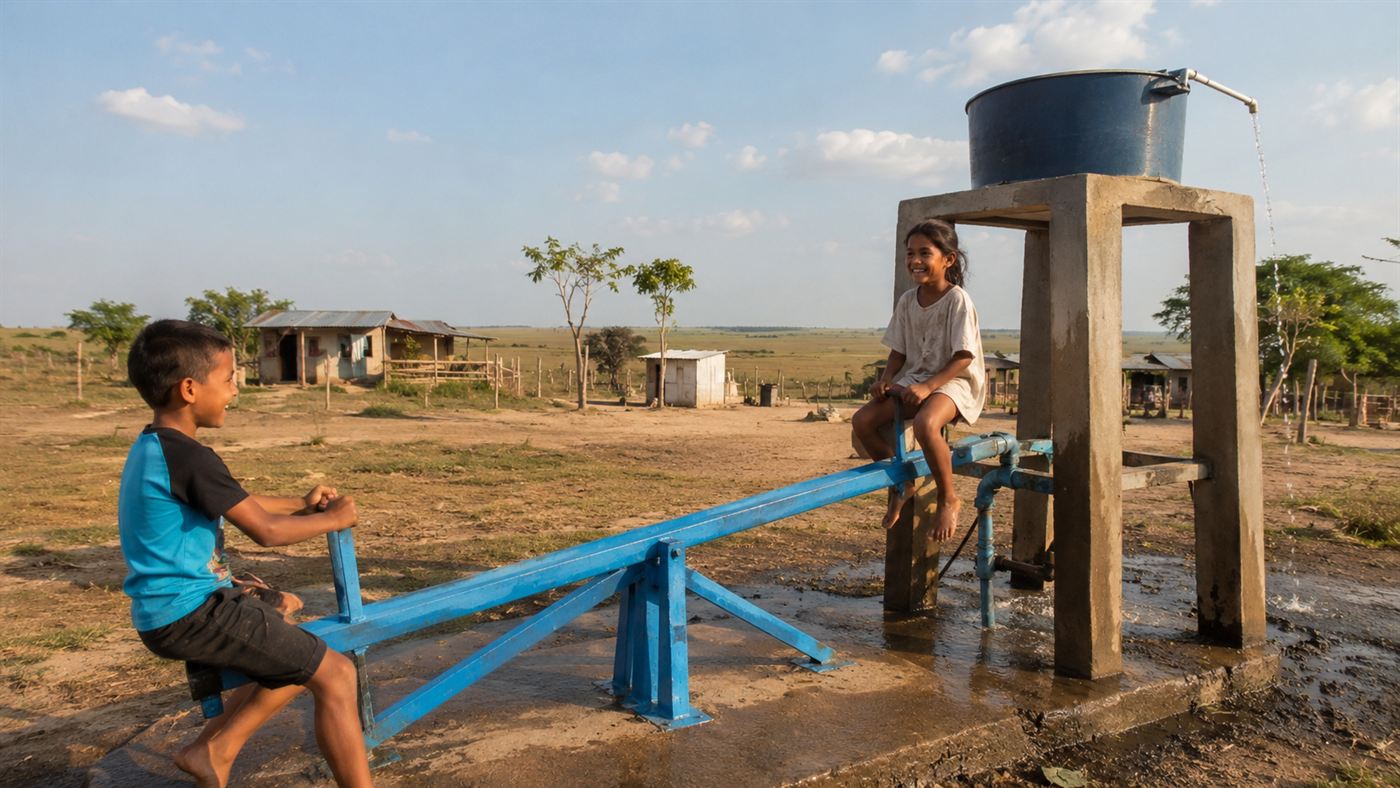
At Las Gaviotas, a children's seesaw was redesigned to pump water from the well as the kids play. Illustration: Watts & Wild.
The Llanos of eastern Colombia are not where you would choose to build a utopia. The soil is acidic and laced with aluminium, the rains arrive in a rush and then disappear, and for generations these flat grasslands were written off as good for almost nothing. In 1971 a man named Paolo Lugari looked at that same emptiness and saw the opposite of a dead end: if you could make life thrive here, he reasoned, you could make it thrive anywhere.
So Lugari gathered engineers and scientists and founded Las Gaviotas, a settlement built on one stubborn idea, that they would solve their own problems with cheap, patent-free technology and let the tropics do the teaching. As the Zermatt Summit recounts, the result was improbable enough that the novelist Gabriel García Márquez called Lugari "the inventor of the world", and the journalist Alan Weisman wrote an entire book about the place.
A land nobody wanted
The Llanos are a sea of grass, baked to brick in the dry season and drowned in the wet one.
The earth is so acidic and rich in aluminium that most crops simply refuse it, which is precisely why land out here was cheap and empty.
Lugari's wager was that the tropics hold more sun, rain and raw growth than anywhere on Earth, and that the only thing missing was the right, locally built technology to capture them.
Where everyone else saw a wasteland, he saw an unsolved engineering problem.
Invented on the spot, free for anyone
Gaviotas became a workshop for what its founders called appropriate technology, and almost none of it was ever patented.
As documented in the record of the project, its engineers built a water pump so light that children could drive it, turning an ordinary village seesaw into a well pump that lifted water as the kids played on it.
They made solar kettles that sterilised drinking water, solar panels efficient enough to heat water under Colombia's cloudy skies, and worked through dozens of windmill designs before one finally spun reliably in the gentle Llanos breeze.
One of their water pumps won Colombia's National Science Prize back in 1978.
Lugari's iron rule was that every device had to be cheap and open, so that a poor community anywhere in the world could copy it for nothing.
The forest nobody planted
The most famous thing about Gaviotas, though, was an accident.
To earn an income and throw some shade, the community planted millions of Caribbean pine, one of the few trees tough enough to take the poisoned soil.
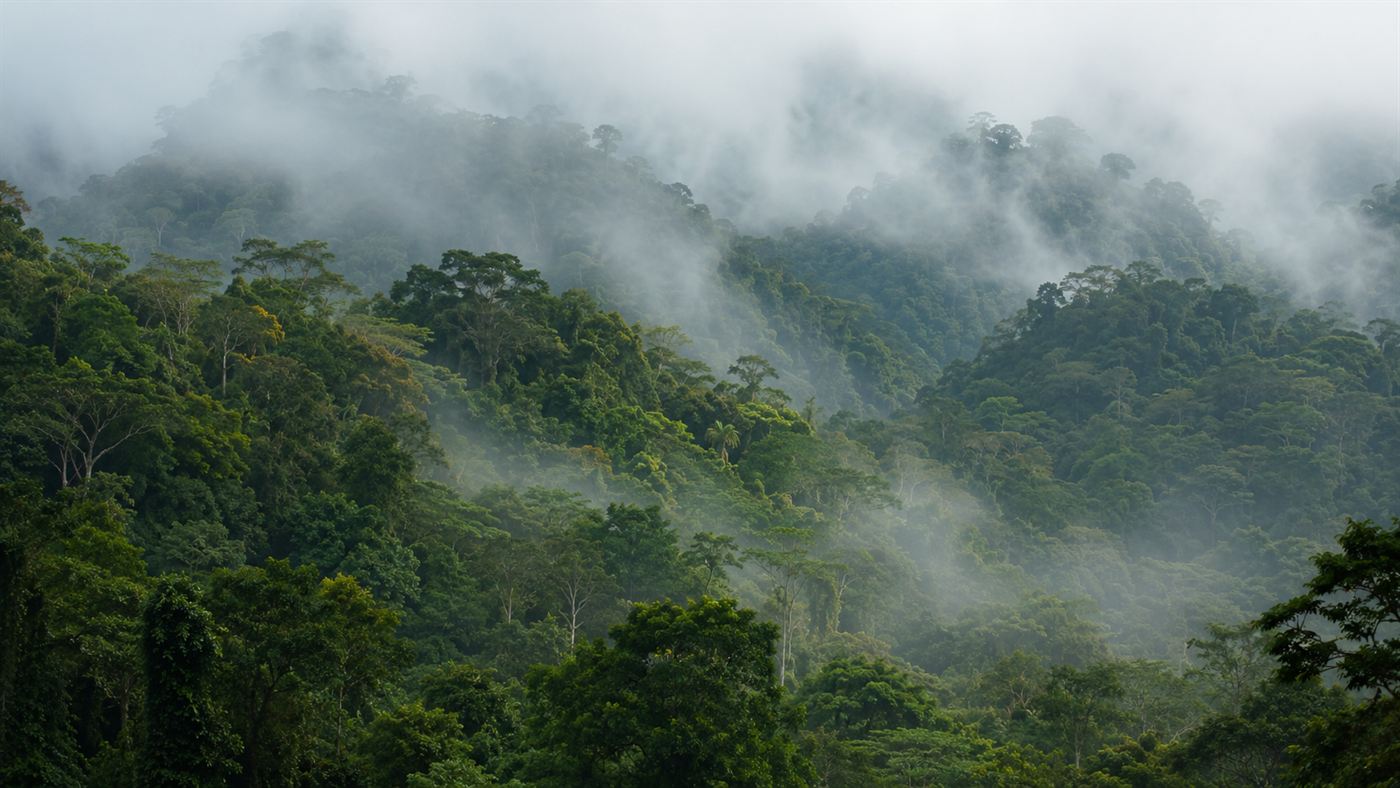
The pines cast shade and trapped moisture, and beneath them something extraordinary began: dormant and bird-carried seeds of the region's original rainforest started to sprout in the cool, damp understory.
As the 100% Renewable Energy Atlas records, after planting some 8 million trees across about 8,000 hectares the village now sits amid a reborn rainforest of roughly 250 species, more than survive in many stretches of the Amazon itself.
Deer, anteaters and eagles that had not been seen in the area for generations drifted back in, and researchers measured the living biomass multiplying many times over within just a few years.
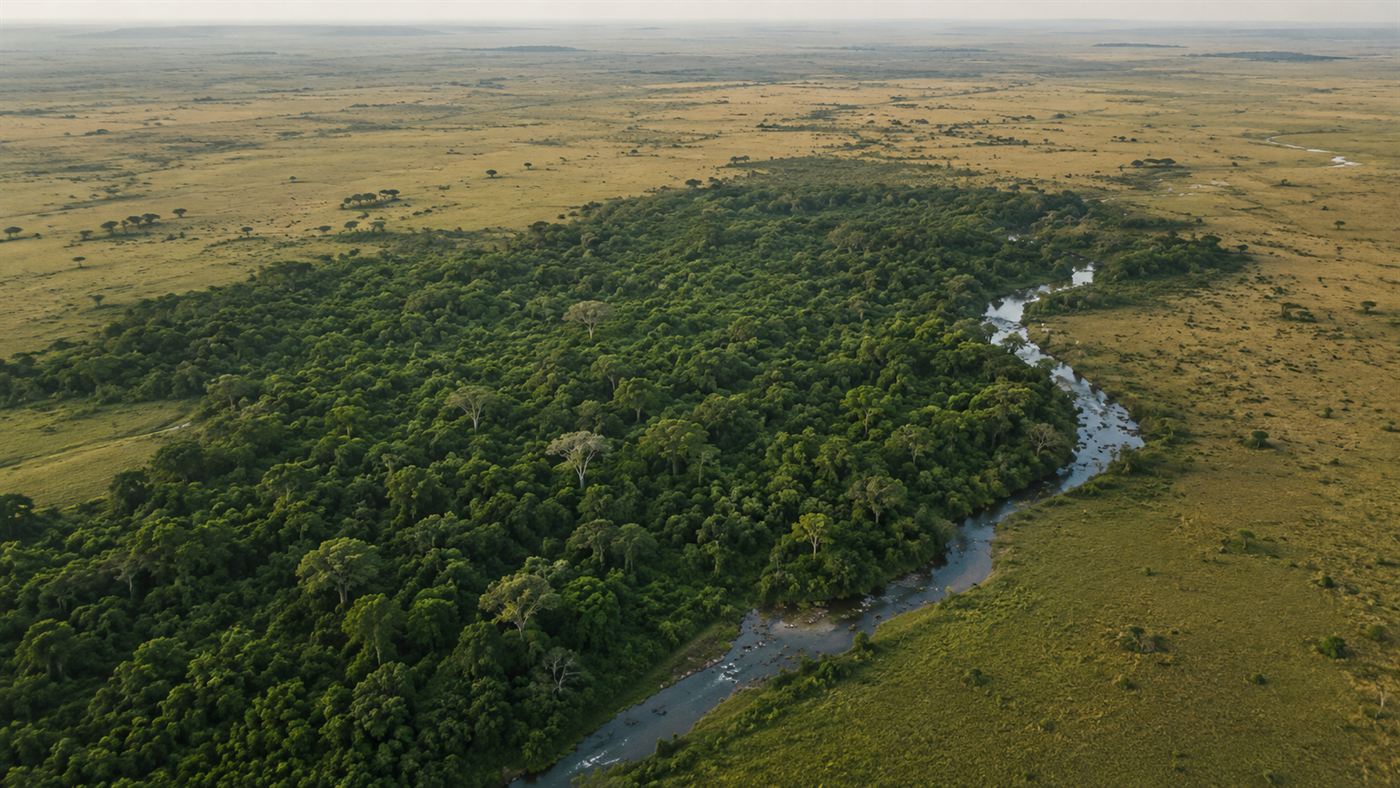
Las Gaviotas, Colombia: a village that runs on the sun
For an energy story, Gaviotas reads almost like a fantasy of self-reliance.
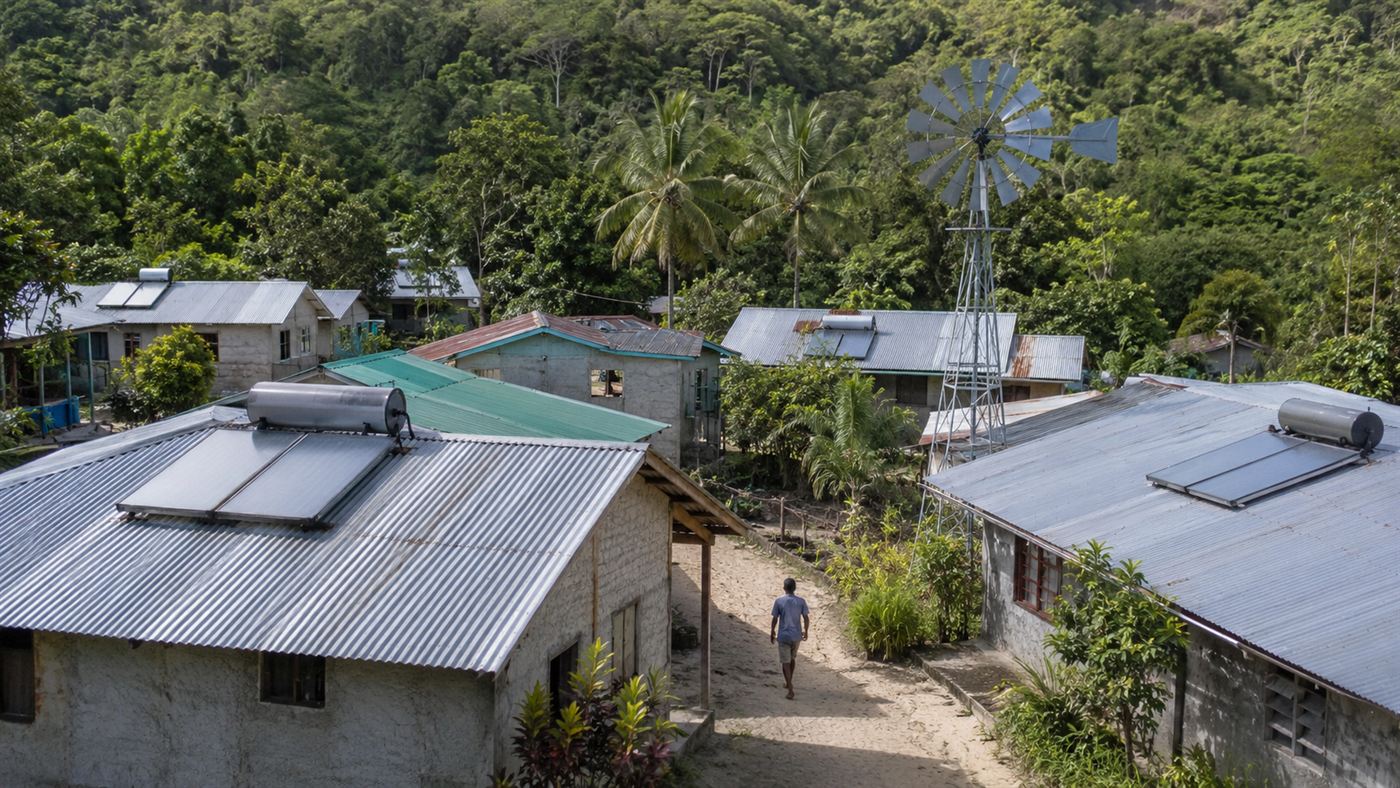
Its buildings are warmed and its water heated by homemade solar collectors, its wells are worked by wind and muscle, and its hospital was designed to lean on sunlight and breeze rather than a power bill.
The pines gave the village a cash crop as well, tapped for resin that was sold to market and also distilled into biofuel for its own tractors and motorbikes.
More recently Gaviotas has bottled and sold the clean water that its restored forest draws out of the sky, quietly turning the rainforest itself into a renewable business. It is the mirror image of Henry Ford's Fordlandia, which tried to force a plantation onto the Amazon and failed.
The honest catch
It would be easy to turn Gaviotas into a fairy tale, so the caveats matter.
The tree that started the whole forest, the Caribbean pine, is not native to Colombia, and some ecologists are uneasy about calling a plantation-grown woodland a restored rainforest, even with natives now thriving underneath it.
The village itself has never really grown, hovering around 200 residents, partly because Colombia's long armed conflict left this region dangerous and cut off for decades.
The money has been fragile too, since international funding dried up in the late 1980s, the resin trade was later undercut by cheaper Chinese supply, and the project has lurched through more than one financial crisis.
Not every clever invention caught on either, and a few were quietly rejected by the very people they were built to help.
Even with every caveat, Gaviotas did something almost nobody believed was possible.
It took the worst land in the country and coaxed power, water and a whole forest out of it, using tools simple enough to give away for free.
If a handful of engineers could grow a rainforest on poisoned ground fifty years ago, what is our excuse for the land we are still writing off today? Tell us what you think in the comments.
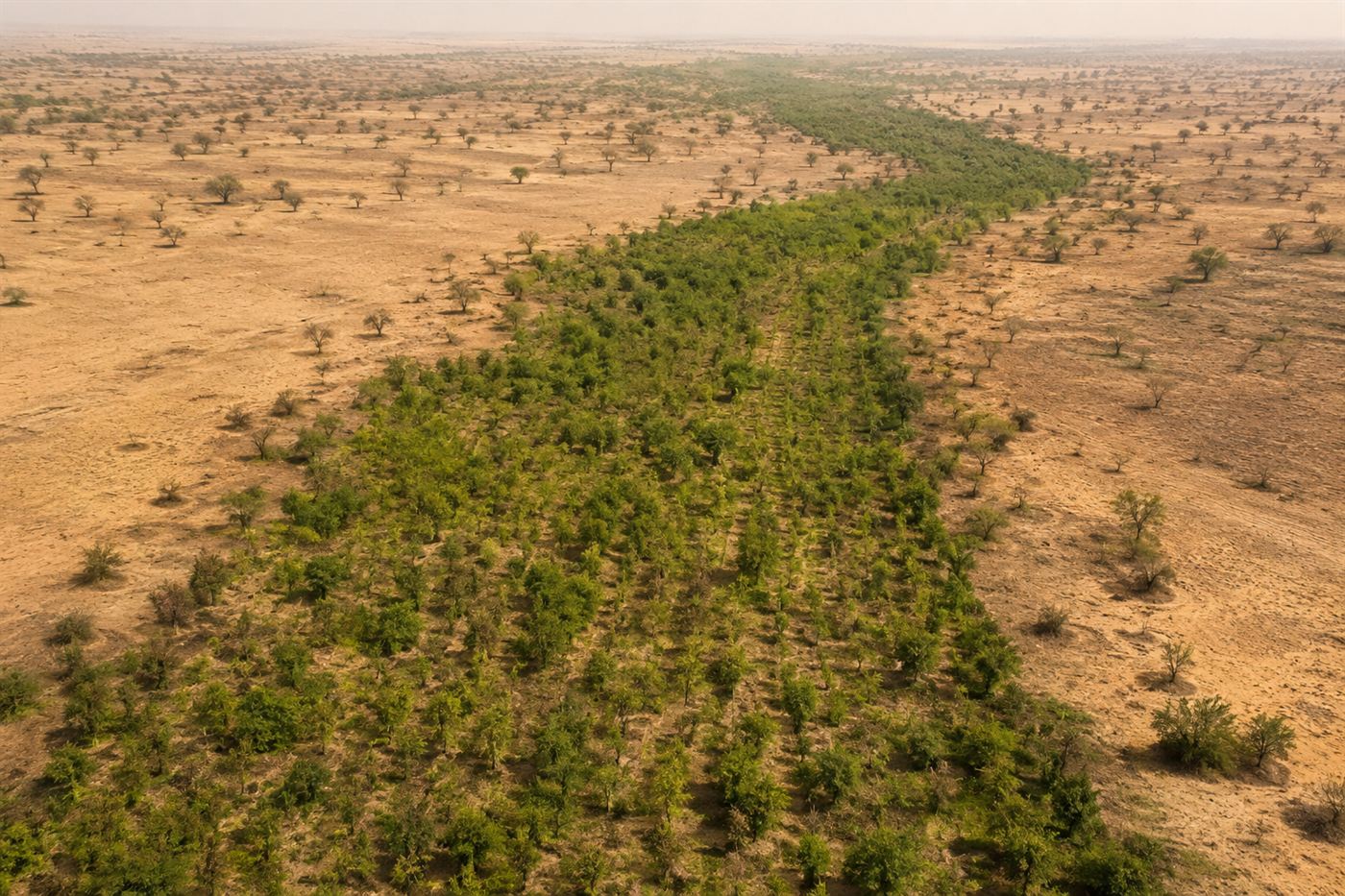
Related reading: To hold back the Sahara, Africa is growing a living wall of trees 8,000 kilometres long across 11 countries.

Maria Heloisa Barbosa Borges covers energy, heavy industry and the natural world for Watts & Wild, with an eye for the people caught where engineering meets the wild.