The Tree of Tenere stood alone in the Sahara for 300 years, the only tree for 400 kilometres and a lifeline for caravans, until a truck driver somehow managed to hit it
The Tree of Tenere was the most isolated tree on Earth, a lone acacia in the Sahara with no neighbour for 400 kilometres in any direction. For centuries it guided salt caravans across the desert. In 1973 it was destroyed, not by drought or storm, but by a truck.
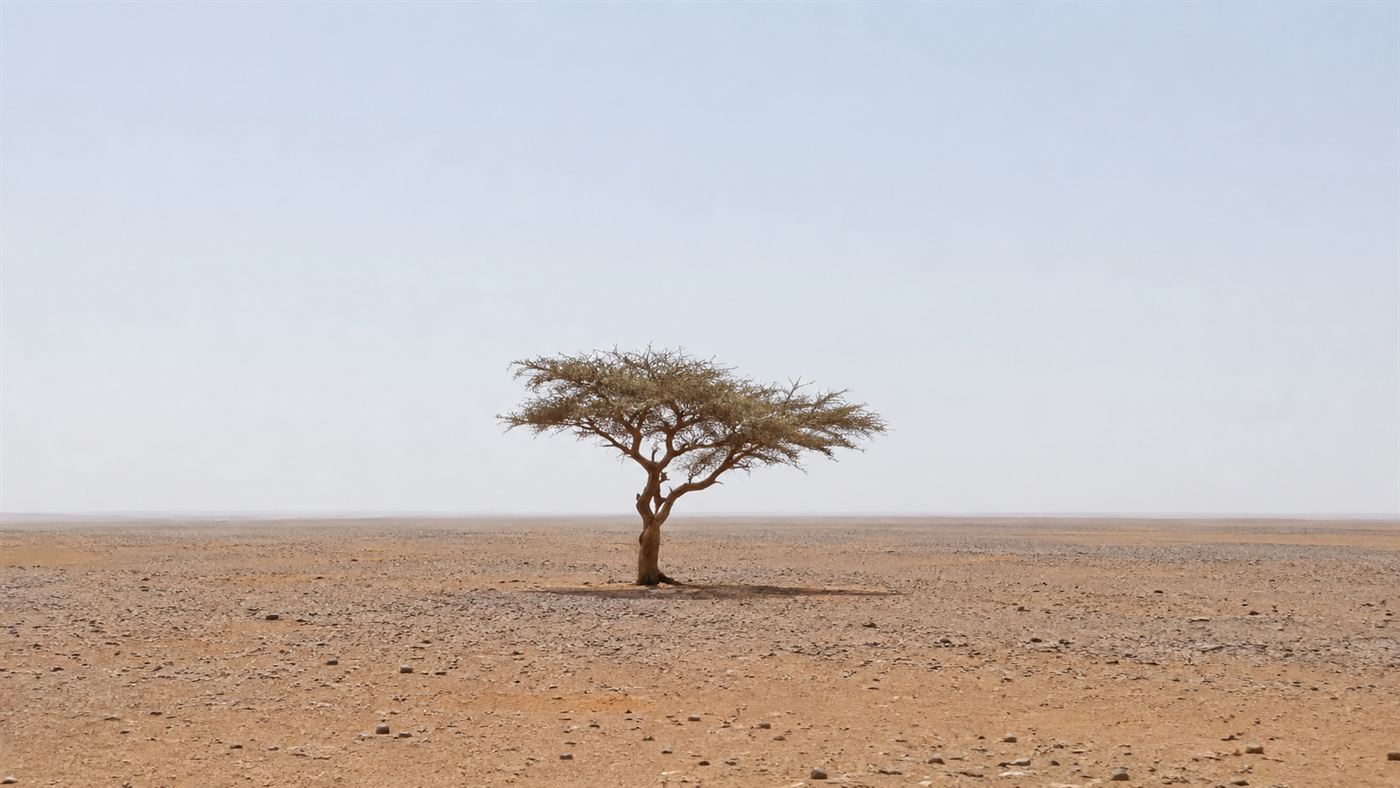
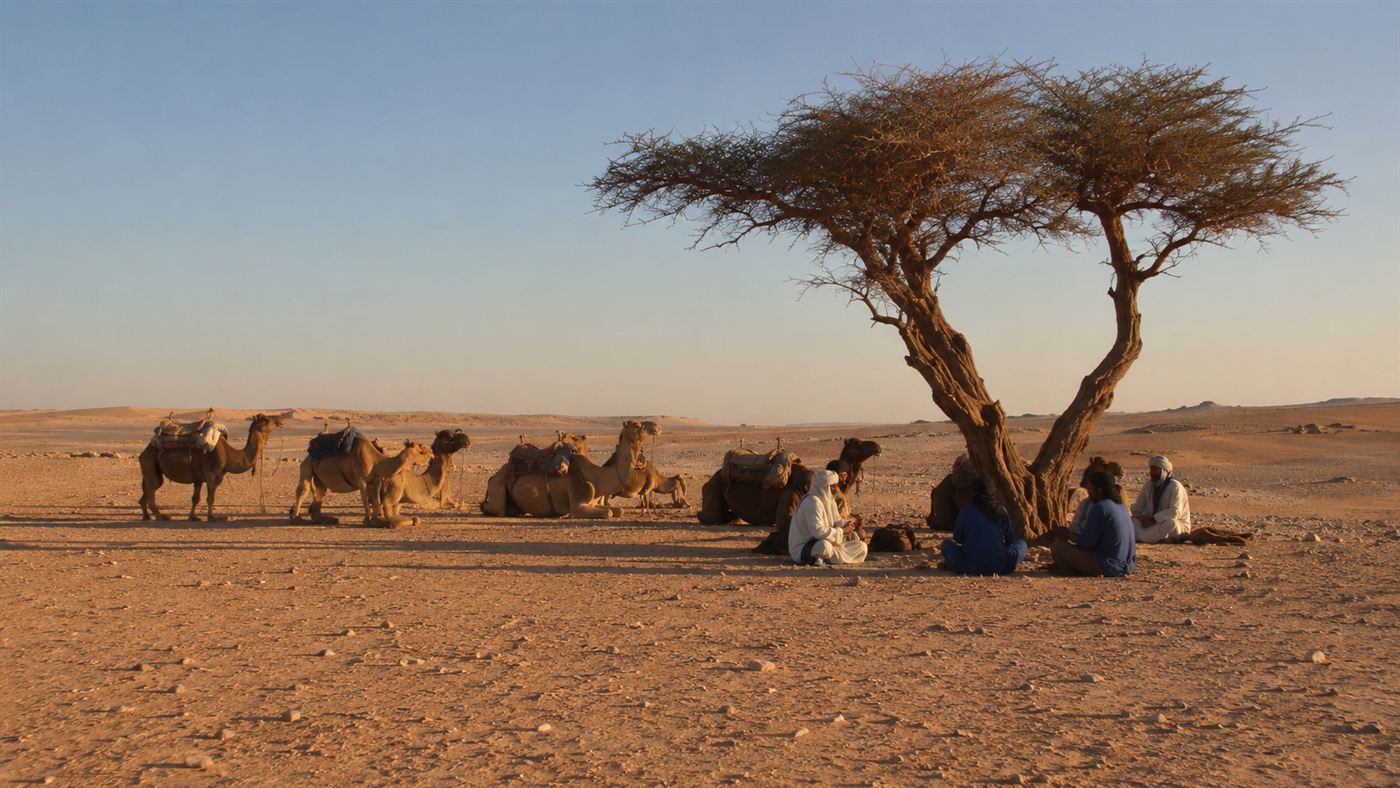
The Tree of Tenere, the only tree for 400 kilometres in any direction. Illustration: Watts & Wild.
The Tree of Tenere stood in one of the emptiest places on the planet. In the heart of the Tenere, a vast sand sea in the Sahara Desert of northeast Niger, there was, for as far as anyone could travel, exactly one tree. A solitary acacia, gnarled and stubborn, it was so alone that the nearest other tree was roughly 400 kilometres away, and it was the only tree marked on maps drawn at a scale of one to four million.
It was no ordinary survivor. The acacia was the last of a woodland that had grown there in wetter times, and as the Sahara dried and swallowed everything around it, this single tree held on. As Smithsonian magazine has recounted, a well dug nearby in the late 1930s found the tree's roots had reached down some 36 metres to the buried water table, drinking from a memory of the green land the desert had erased.
What was the Tree of Tenere? The Tree of Tenere was a solitary acacia in the Sahara Desert of Niger, considered the most isolated tree on Earth, with no other tree for about 400 kilometres. It served as a landmark for salt caravans for centuries until a truck knocked it down in 1973.
The loneliest tree on Earth
It is hard to overstate how alone the Tree of Tenere was. Most maps of that part of the Sahara show nothing for hundreds of kilometres, a blank tan void of dunes and gravel. Yet at this scale, where whole towns vanish into a dot, cartographers still drew in the lone acacia, because to leave it off would be to remove the single useful feature in a deadly expanse. Only it and another solitary tree far to the north, the Arbre Perdu or Lost Tree, earned that honour.
Its survival was a quiet feat of engineering by the tree itself. With no nearby plants and almost no rain, it lived entirely off that deep groundwater, sending roots more than ten storeys down to reach moisture no surface sign betrayed. Around it, the Sahara Desert stretched flat and merciless, and the acacia became proof that life could hang on in a place that looked, in every direction, completely lifeless.
A living lighthouse for the caravans
For the people who crossed the Tenere, the tree was far more than a curiosity; it was a matter of survival. The route between Agadez and the salt pans of Bilma is one of the harshest caravan crossings in the Sahara, and the acacia stood as the first or last landmark on the journey. The azalai, the great salt caravans of camels, would gather around it to rest and gather themselves before committing to the open desert beyond.
What is striking is how the caravans treated it. In a place where any scrap of wood is precious, generations of travellers passed the only tree for hundreds of kilometres and never cut it for firewood. They understood that a dead tree would be just another stick, while a living one was a signpost, a meeting point and a small green miracle worth protecting. For centuries, human restraint kept the Tree of Tenere standing.
How do you hit the only tree for 400 kilometres?
And then, in 1973, came one of history's most absurd accidents. In a desert with no other obstacle for hundreds of kilometres, where a driver could steer in almost any direction for a day and hit nothing, a truck ran straight into the one tree. The driver, by most accounts a Libyan and reportedly drunk, somehow found and snapped the single solid object in a sea of sand.
The grim comedy of it is part of why the story endures. The Tree of Tenere had outlasted the forest it was born in, survived the slow advance of the Sahara, and been spared for generations by people who depended on it. It took a motor vehicle, the newest thing in that ancient landscape, only an instant to undo all of that. The tree that nature and the caravans had kept alive for centuries was killed by carelessness.
What happened to the Tree of Tenere
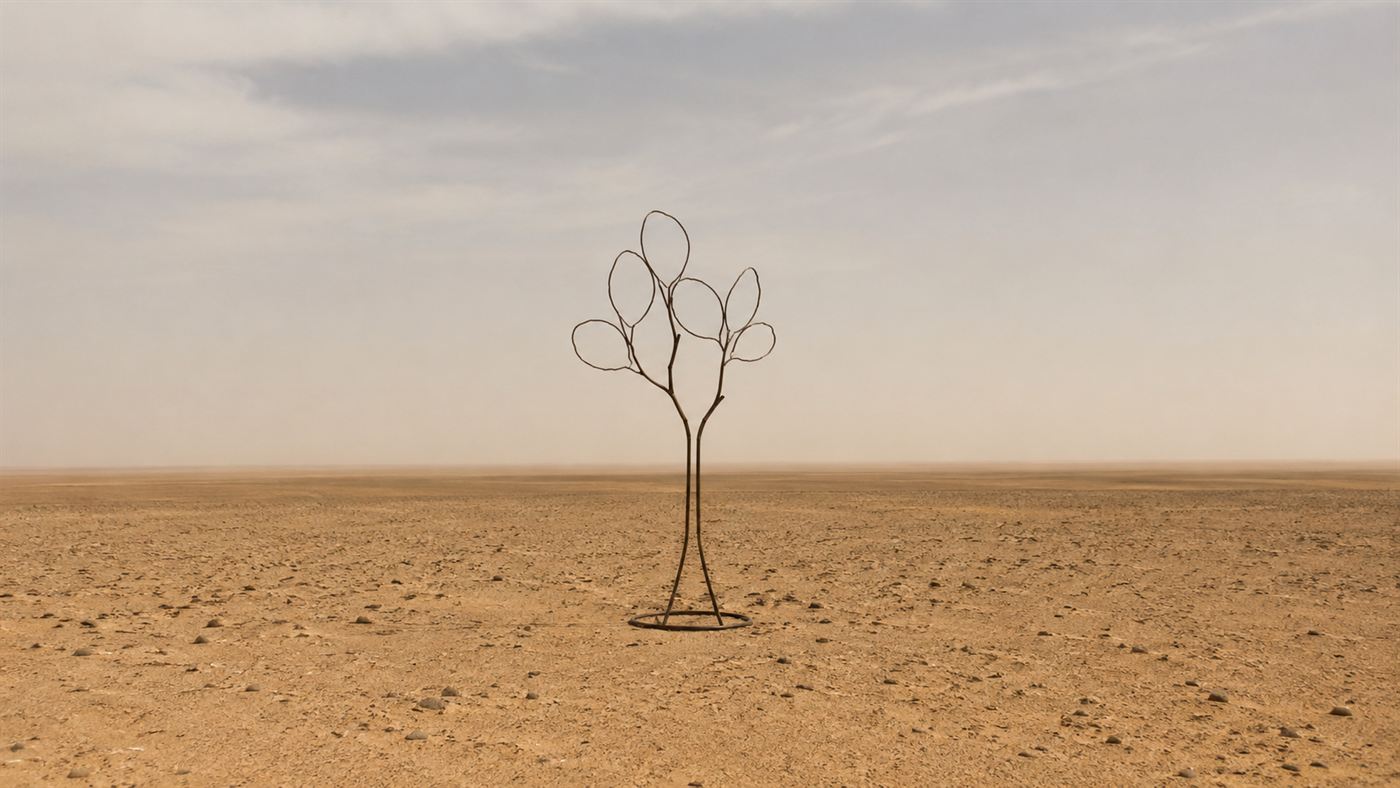
The remains were not left to be buried by the sand. On November 8, 1973, the dead acacia was carried to the capital and installed in a shrine on the grounds of the Niger National Museum in Niamey, where it still rests, a relic of a tree behind glass. Out in the desert, at the spot where it had stood for so long, a simple metal sculpture was raised to mark the place, a thin steel echo of the acacia for any traveller who still passes that way.
The legend kept growing after the tree was gone. In 2017 a group of artists built a four-storey-tall illuminated sculpture called the Tree of Tenere for the Burning Man festival in the Nevada desert, a glowing tribute on another continent to a tree most of the crowd had never heard of. A lone acacia in Niger had become a quiet symbol of endurance, recognised far from the sands that made it famous.
Why one tree mattered so much
It is worth asking why a single acacia, in an age before the tree could even be photographed easily, became so beloved. Part of it is pure navigation: before satellites and GPS, a fixed, unmistakable landmark in a featureless desert could mean the difference between reaching water and dying of thirst. The Tree of Tenere was, in the truest sense, a living lighthouse.
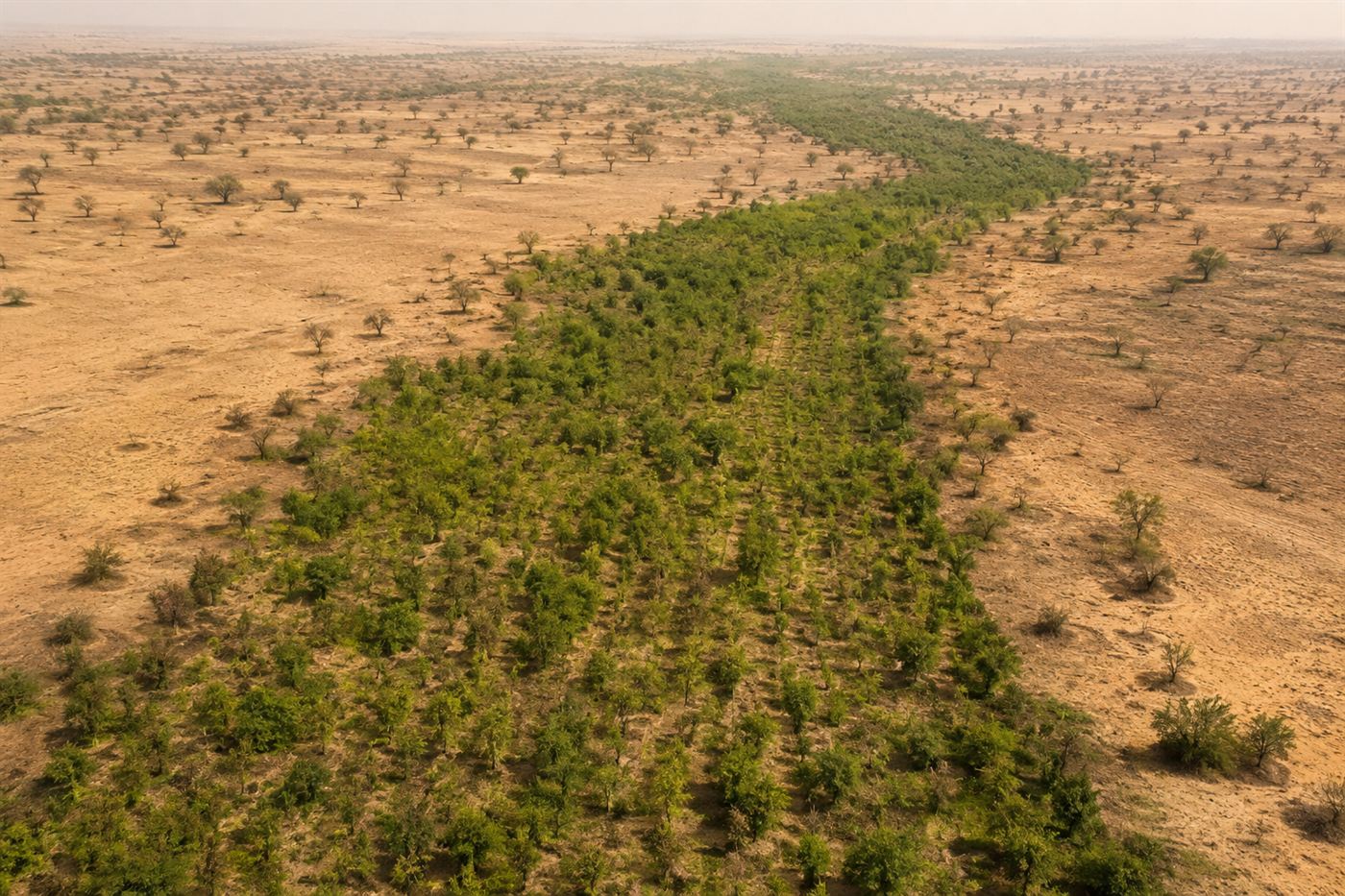
The rest is what the tree represented. It stood for the stubbornness of life against an expanding desert, the same struggle that today drives projects to hold back the Sahara, like the great belt of new trees being planted across the Sahel. The lone acacia was a single, fragile data point proving that green could persist where everything said it should not, which is exactly why its loss landed as something closer to grief than news.
The honest catch
A story this perfect deserves a little scepticism. Several of its most-repeated details are uncertain: the driver being drunk is an allegation that has hardened into fact through retelling, the tree's age is an estimate rather than a measurement, and claims about the single most isolated tree on Earth are hard to verify precisely. The Tenere acacia is a legend as much as a fact, and legends round off their own edges.
None of that changes the core, which is solid and strange enough on its own. There really was one tree alone in a 400-kilometre emptiness, it really did guide caravans for generations, and it really was destroyed by a vehicle in a place with nothing else to hit. The Tree of Tenere is a small parable about how long nature can endure, and how quickly human carelessness can end what it protected.
One tree stood alone in 400 kilometres of Sahara for three centuries, kept alive by deep water and the respect of every caravan that passed, and was killed in a moment by a truck. Does the Tree of Tenere read to you as a sad accident, or a warning about how we treat the natural world? Tell us what you think in the comments.
Related reading: The continent-long wall of trees being planted to hold back the Sahara.