A church picnic put 1,300 mothers and children on the General Slocum in 1904, until a fire and life preservers stuffed with iron made the East River New York's deadliest day before 9/11
On June 15, 1904, a paddle steamer carried a German American congregation up the East River for a summer picnic. Within minutes it was ablaze, and the safety gear meant to save them would help pull more than a thousand people under, most of them women and children.
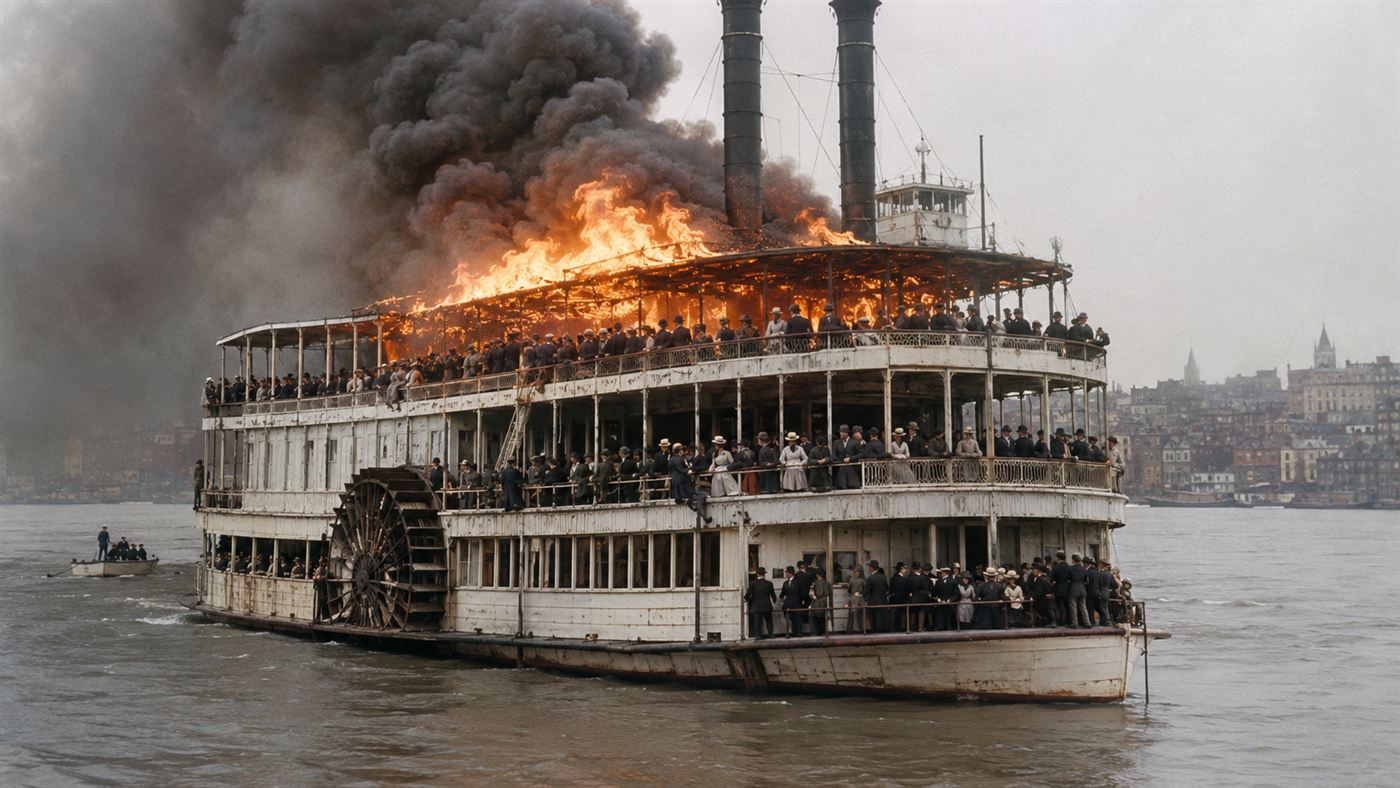
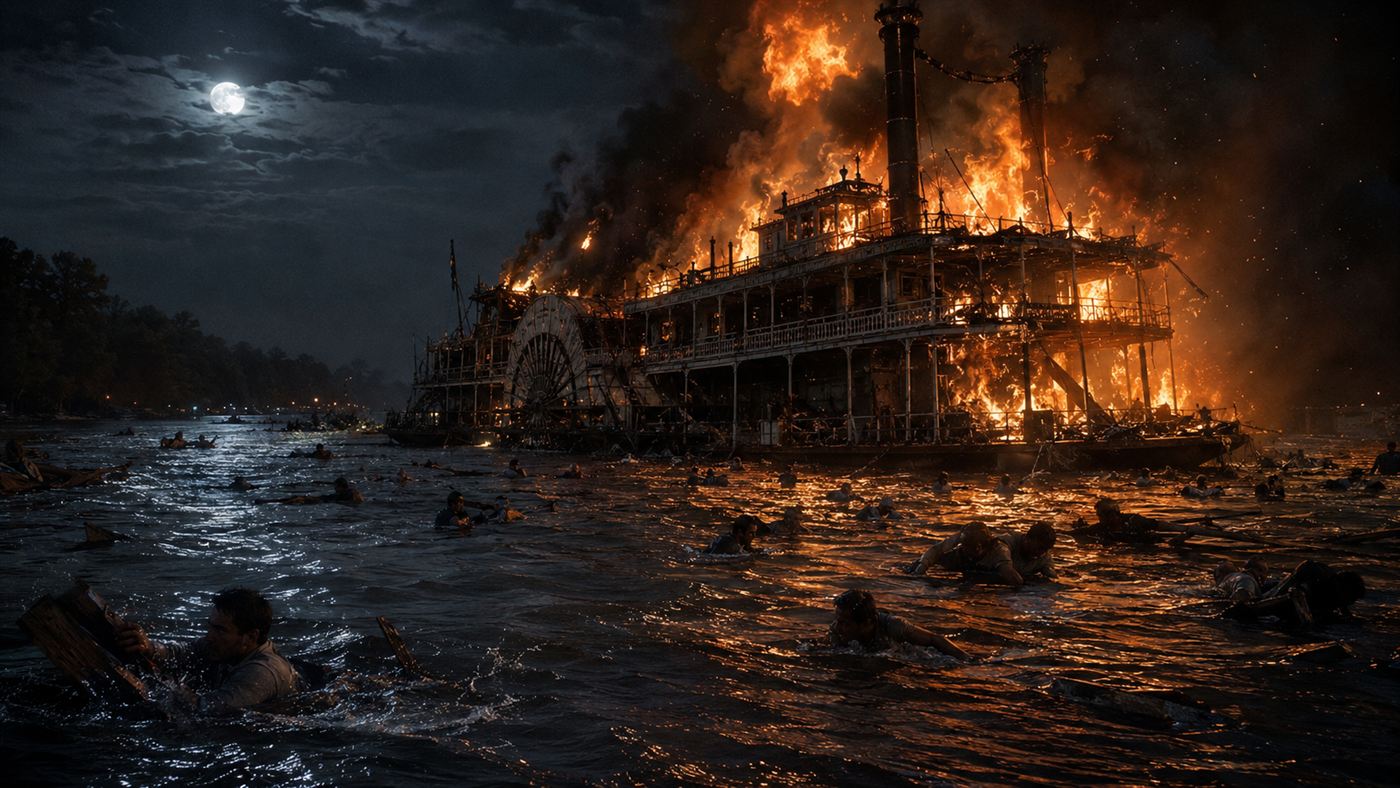
The excursion steamer caught fire minutes into a church outing on the East River. Illustration: Watts & Wild.
The General Slocum had been chartered for a day of pure joy. It was a Wednesday, and roughly 1,300 members of St. Mark's Evangelical Lutheran Church were aboard for the congregation's 17th annual picnic, bound for a grove on Long Island. They came from Little Germany, the crowded, close-knit German immigrant quarter on Manhattan's Lower East Side, and most of them were mothers and children, since the fathers were at work. There was a band on deck. Children ran between the rails.
About fifteen minutes into the trip, fire broke out in a forward storage room. As the New York Public Library has documented, a boy is said to have spotted the flames and warned a crewman who waved him off. By the time anyone acted, the blaze was racing through the wooden vessel, and the passengers were about to discover that nearly every safeguard on the General Slocum was a lie.
The General Slocum was a paddle steamer that caught fire on New York's East River on June 15, 1904, during a church picnic excursion. More than 1,000 people died, most of them women and children from Little Germany, making it the city's deadliest disaster until the September 11 attacks nearly a century later.
What was the General Slocum disaster?
Of the roughly 1,331 people aboard, only about 407 survived. The death toll of around 1,021 made it the worst loss of life in New York City history until 2001, and the worst maritime disaster the city has ever seen. This steamboat fire happened not on the open ocean but a short swim from shore, on a busy river, in broad daylight, which is part of what makes it so haunting.
The ship had been sailing up the East River toward the Long Island Sound when the fire took hold. Rather than run the burning steamboat straight onto the nearest bank, the crew kept going, and the disaster played out in full view of a horrified city that could do almost nothing to stop it. Bodies washed up along the shoreline for days.
A picnic that emptied Little Germany
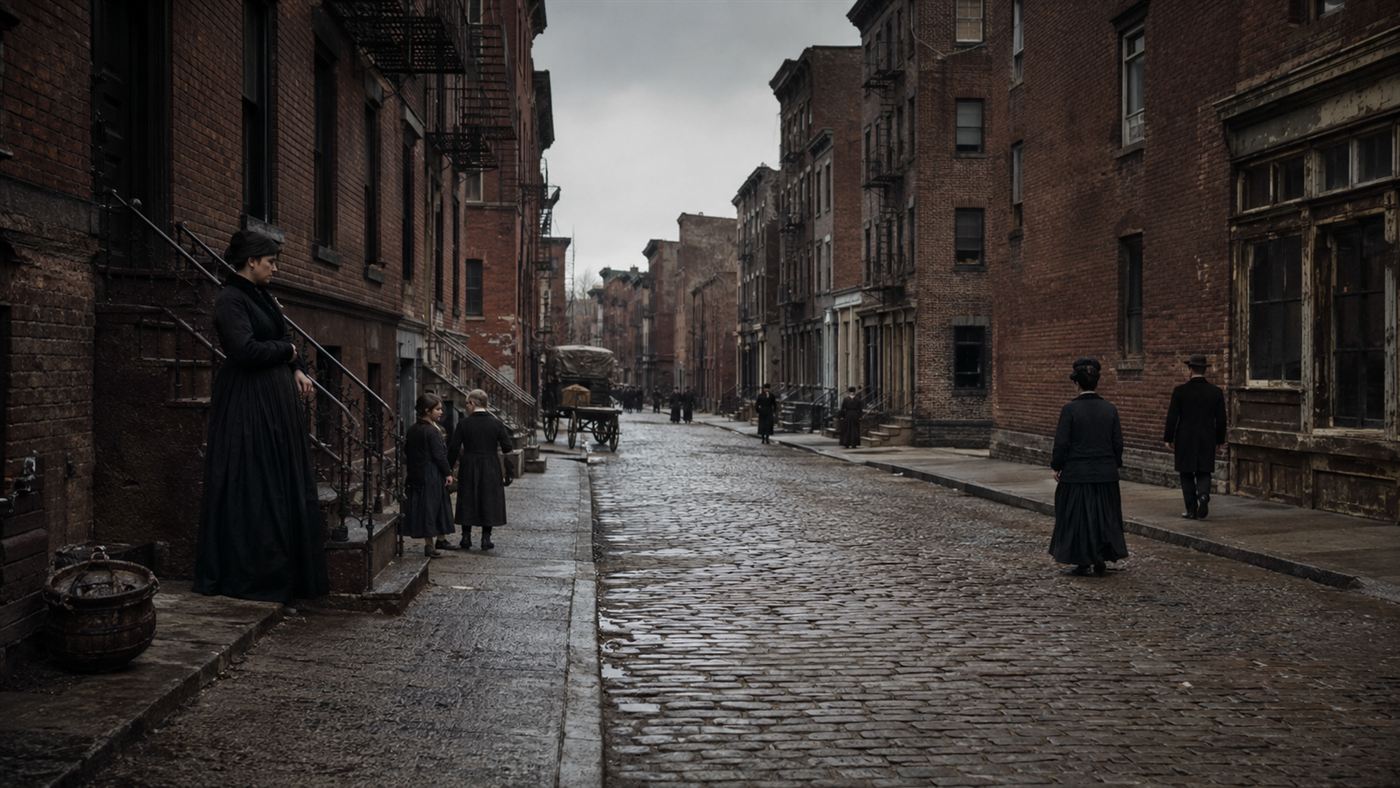
The human weight of the loss fell almost entirely on one neighborhood. As Smithsonian magazine has recounted, more than 600 families lost someone that day, and the tight community of Little Germany never recovered from it. Whole family lines were wiped out in an afternoon. Funerals ran for weeks.
Within months, the survivors began to scatter. Many could not bear to live among the memories, and a large share of the affected families left the Lower East Side, some moving north to Yorkville, others sailing back to Germany. The vibrant Kleindeutschland that had thronged these streets faded away, and the General Slocum is remembered as much for killing a neighborhood as for killing its people. It is a grief that sits alongside New York's other great worker tragedy, the Triangle Shirtwaist factory fire of 1911.
Why the life preservers made it worse
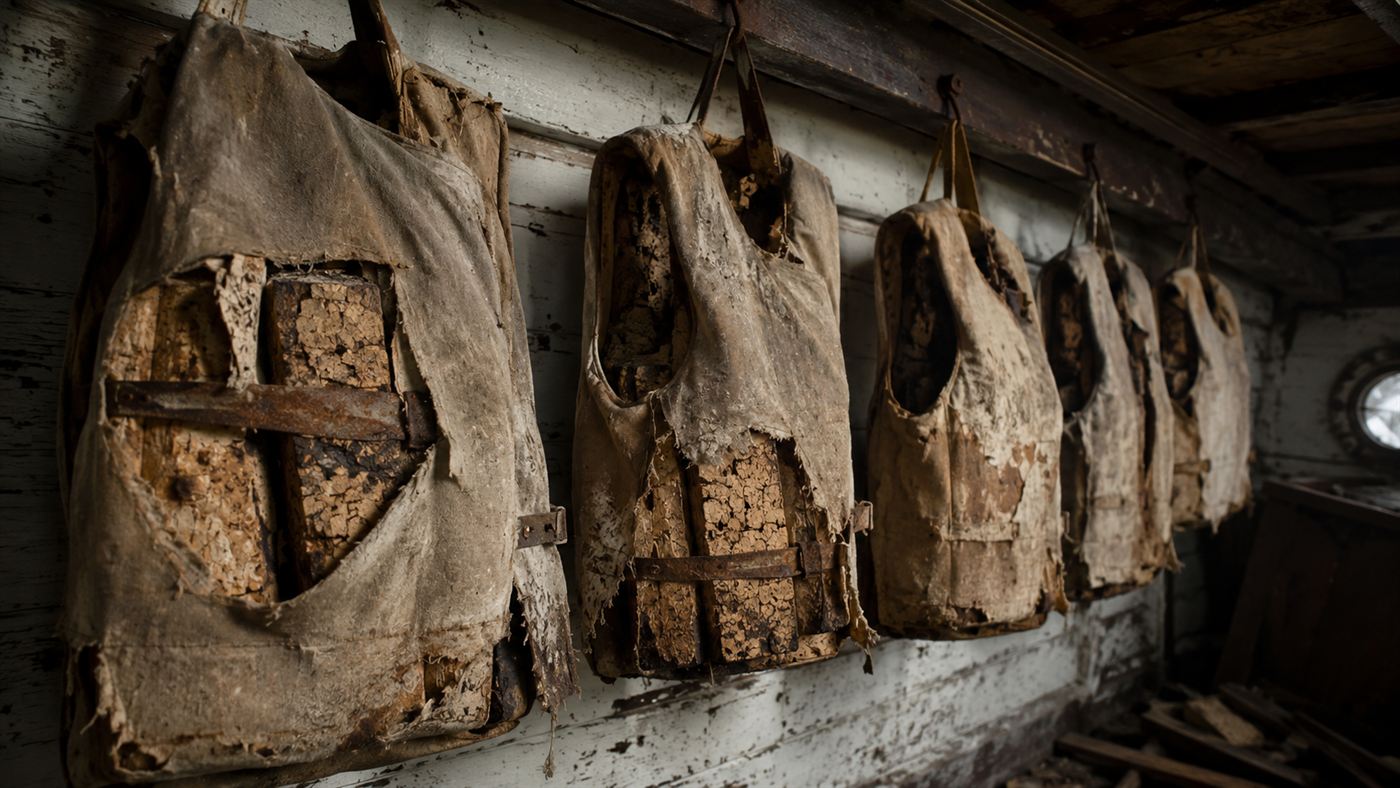
Here is the detail that turns this steamboat fire from a tragedy into an outrage. The life preservers on board had been made in 1891 and left hanging in the weather for thirteen years, until the cork inside had rotted to powder. Worse, investigators found that some of the life preservers had been packed with iron bars, added by the manufacturer so the cheap, decayed vests would still hit the legal minimum weight during inspection.
The result was monstrous. Mothers strapped these life preservers onto their children and threw them into the East River, trusting them to float, and watched the iron and sodden cork drag the little bodies straight down. Passengers who could not swim, weighed down by heavy Edwardian clothing, had almost no chance. The fire hoses, also rotten, burst when the crew turned them on, and the lifeboats had been wired and painted so firmly in place that no one could pry them loose.
Why did so many people die on the General Slocum?
Put simply, almost nothing that should have saved a life worked, and one decision made everything worse. Most passengers could not swim, and their wool suits and long dresses turned to lead in the water. The life preservers sank them, the hoses failed, and the boats would not launch. Every layer of safety had rotted at once, which is why this steamboat fire killed on a scale no one on the water could believe.
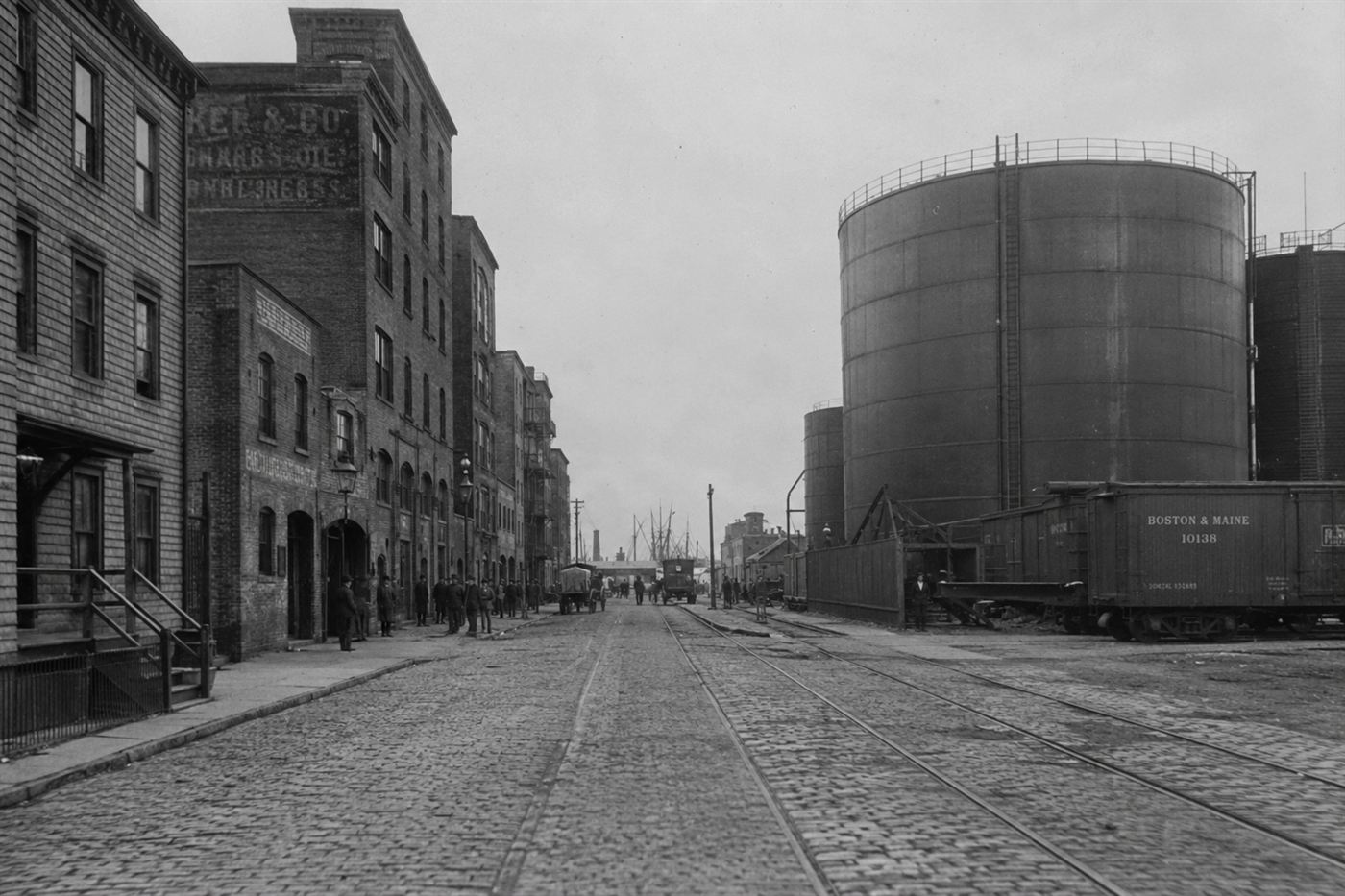
Then there was the course. As the New York Historical has described, Captain William Van Schaick chose not to beach the ship at once, reportedly fearing the flames would spread to riverside oil tanks and lumber yards, and steered on toward North Brother Island. Driving the burning steamboat forward into the wind only fanned the fire down its length. By the time it grounded off the island, most of those aboard were already gone.
The captain, the fire, and who paid
The public wanted someone punished, and the man they got was the captain. Van Schaick was convicted of criminal negligence for failing to hold the fire drills the law required and for the ship's rotten equipment, and he was sentenced to ten years. He served roughly three and a half before President William Howard Taft pardoned him on Christmas Day in 1911, after Theodore Roosevelt had twice refused.
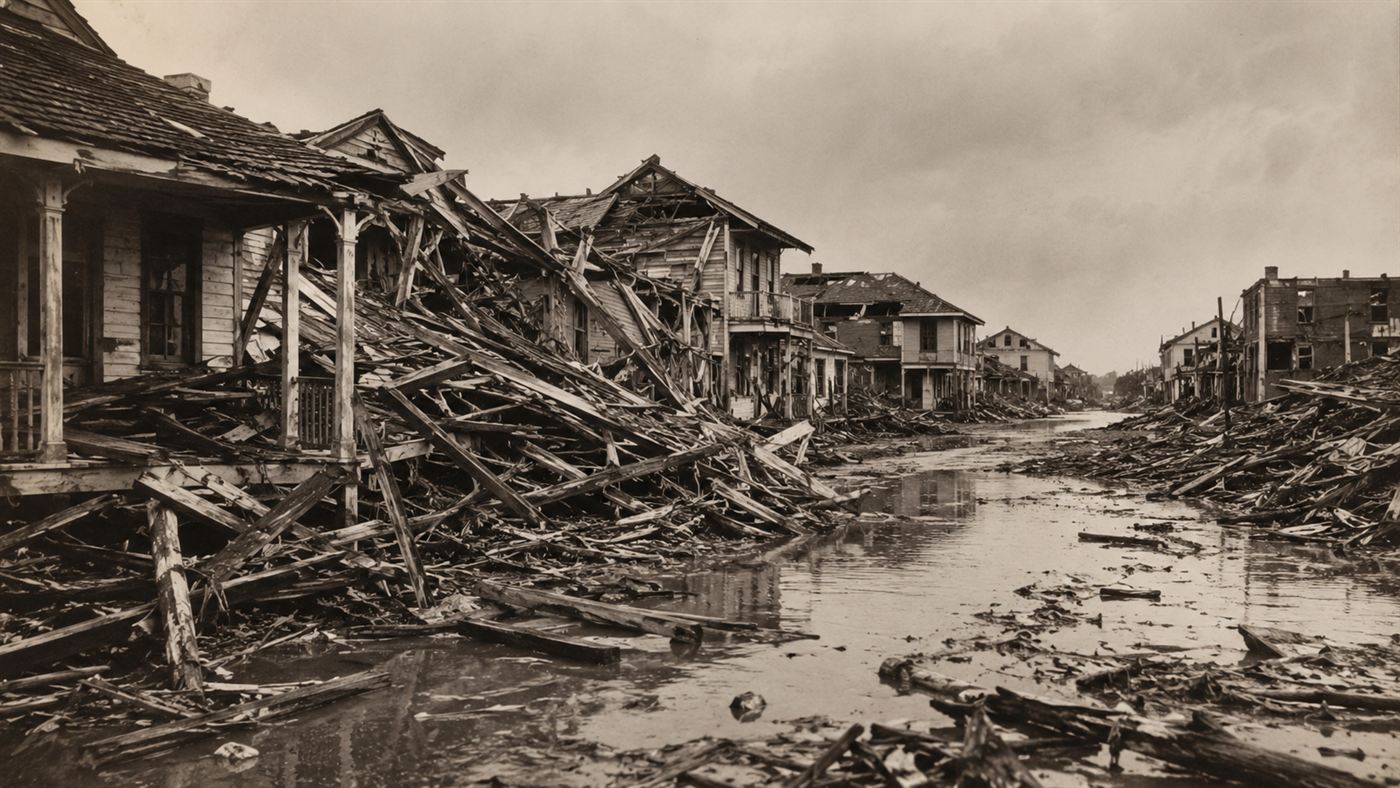
The deeper rot was official. Roosevelt fired the inspectors who had certified the General Slocum as seaworthy weeks before the steamboat fire, its useless equipment passed without a real look. As Wikipedia's summary of the aftermath records, the disaster forced a reform of the federal Steamboat Inspection Service, and in 1905 Congress tightened the rules on fire prevention and lifesaving gear. The change was real, but it was, in the grim phrase of maritime history, written in blood. It followed the same bitter pattern as the reforms after the New London school gas explosion and the Galveston hurricane: the law only moved once the bodies were counted.
The honest catch
It is tempting to make Van Schaick the whole villain, and he was no hero, but the honest reading is that he was a convenient one. The captain became the single face of a failure that ran through the ship's owners, the equipment makers who packed iron into life vests, and the inspectors who signed off on all of it, most of whom faced no real consequences. Pinning it on one old man let a rotten system off the hook.
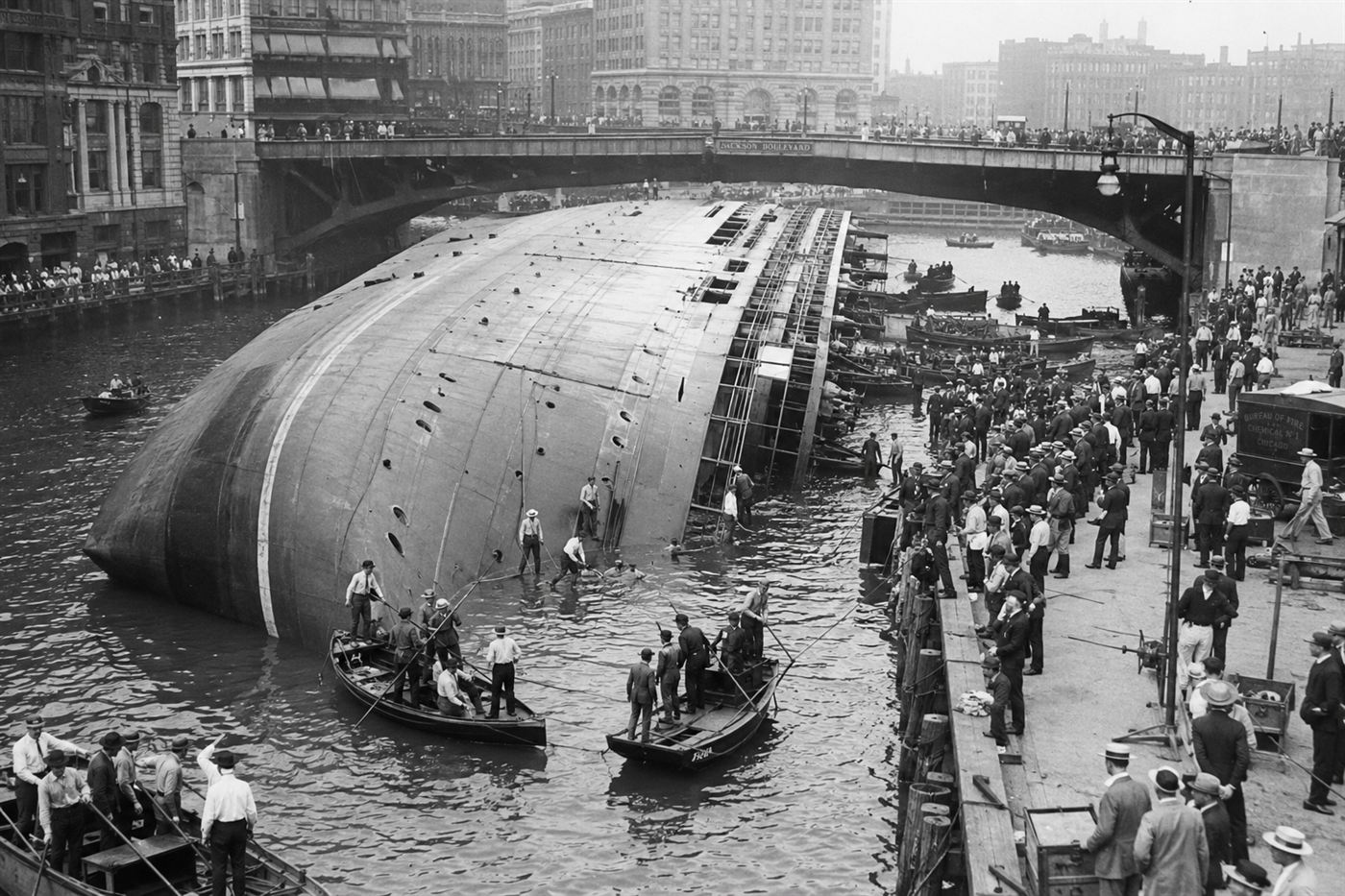
A few specifics also stay uncertain more than a century later. The exact spark that started the steamboat fire was never proven, blamed variously on a dropped match, a cigarette, or oily rags near the lamp room, and the precise death toll has always been an estimate, since whole families vanished with no one left to report them missing. What is not in doubt is the shape of it: an avoidable horror on a calm river, a lesson the country should not have needed. It belongs on the same shelf as the Sultana steamboat explosion and the Eastland capsizing in Chicago, American river disasters that history has quietly filed away.
More than a thousand people died within sight of shore because the things meant to protect them had been allowed to rot. Would the reforms that followed have come any sooner if the victims had not been immigrants the city was quick to forget? Tell us what you think in the comments.
Related reading: explore more from our Curiosities desk, where history's strangest and most sobering stories live.