The 1900 Galveston hurricane killed thousands and nearly erased a Texas city from the map, so its survivors did something astonishing, they lifted the entire city into the air and walled out the sea
On a single September night, the sea rose up and swallowed the richest city in Texas, killing thousands in hours. What its people did next is one of the boldest engineering answers to a disaster ever attempted. Faced with the ruin of the Galveston hurricane, they decided to raise the ground itself.
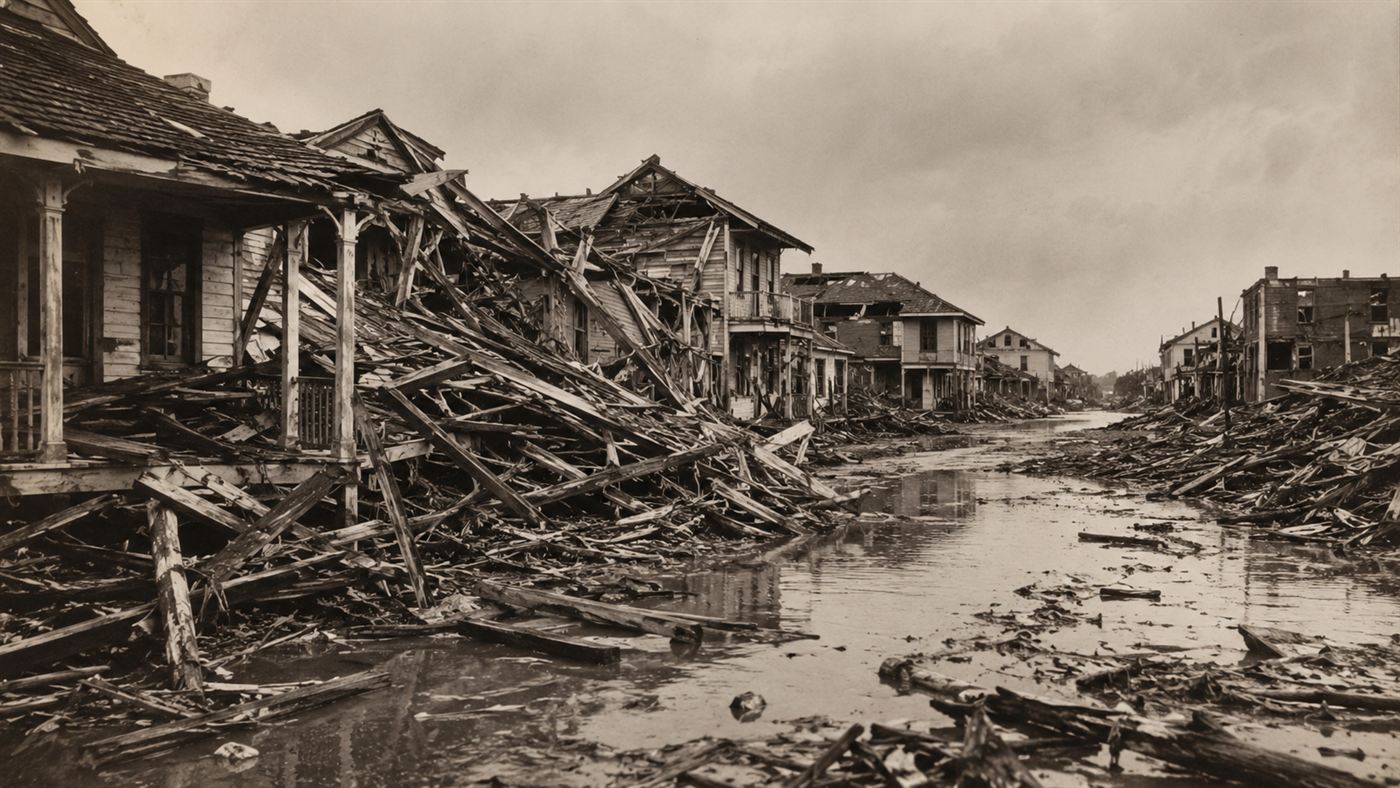
The storm reduced much of Galveston to a field of splintered debris. Illustration: Watts & Wild.
We are used to the idea that when nature destroys a place, people either rebuild what was there or move away. Galveston did something stranger and far more ambitious. After the worst natural disaster in the history of the United States, its citizens looked at their low, exposed island and concluded that the only real defense was to change the shape of the land beneath their feet.
The Galveston hurricane of 1900 is not just a story of catastrophe. It is a story of what a wounded community can decide to do with its grief and its stubbornness. To understand the vast engineering that followed, you first have to understand how a thriving American city was nearly wiped off the map in an afternoon.
The short version: On September 8, 1900, a Category 4 hurricane and its storm surge washed over Galveston, Texas, killing up to 12,000 people, the deadliest natural disaster in US history. Rather than abandon the island, the city built a massive seawall and then raised its entire grade by up to 17 feet, jacking up thousands of buildings and pumping sand beneath them.
The island that thought it was safe
In 1900 Galveston was booming. Built on a low, sandy barrier island off the Texas coast, it was the state's largest city and one of its wealthiest, a glittering port that handled a huge share of the nation's cotton. Grand mansions lined its avenues and it fancied itself the New York of the Gulf. But the whole island stood barely above the water, its highest natural point less than nine feet above sea level.
The danger should have been obvious, yet the prevailing wisdom said otherwise. Isaac Cline, the local Weather Bureau official, had years earlier publicly dismissed the idea that a hurricane could ever seriously harm Galveston, arguing such fears were overblown. There were no seawalls and no real defenses. The city trusted its luck and its gentle shelving beach, and it went about its business as a great storm churned unseen across the Gulf.
September 8, 1900
The hurricane came ashore on the evening of September 8 as a Category 4 storm, with winds around 130 miles per hour and a storm surge that rose eight to fifteen feet. On an island only a few feet high, that surge did not just flood the streets. It rolled completely over Galveston, lifting houses off their foundations and grinding them into a moving wall of debris that crushed everything in its path.
As Britannica records, the storm killed somewhere between 6,000 and 12,000 people, with roughly 8,000 the most cited figure, and destroyed thousands of buildings. It remains, to this day, the deadliest natural disaster in American history. Isaac Cline survived but lost his own pregnant wife to the water. By the next morning, a city of tens of thousands had become a wasteland of corpses and wreckage, and its stunned survivors faced a brutal question, whether to leave forever or to stay and fight the sea.
Walling out the Gulf
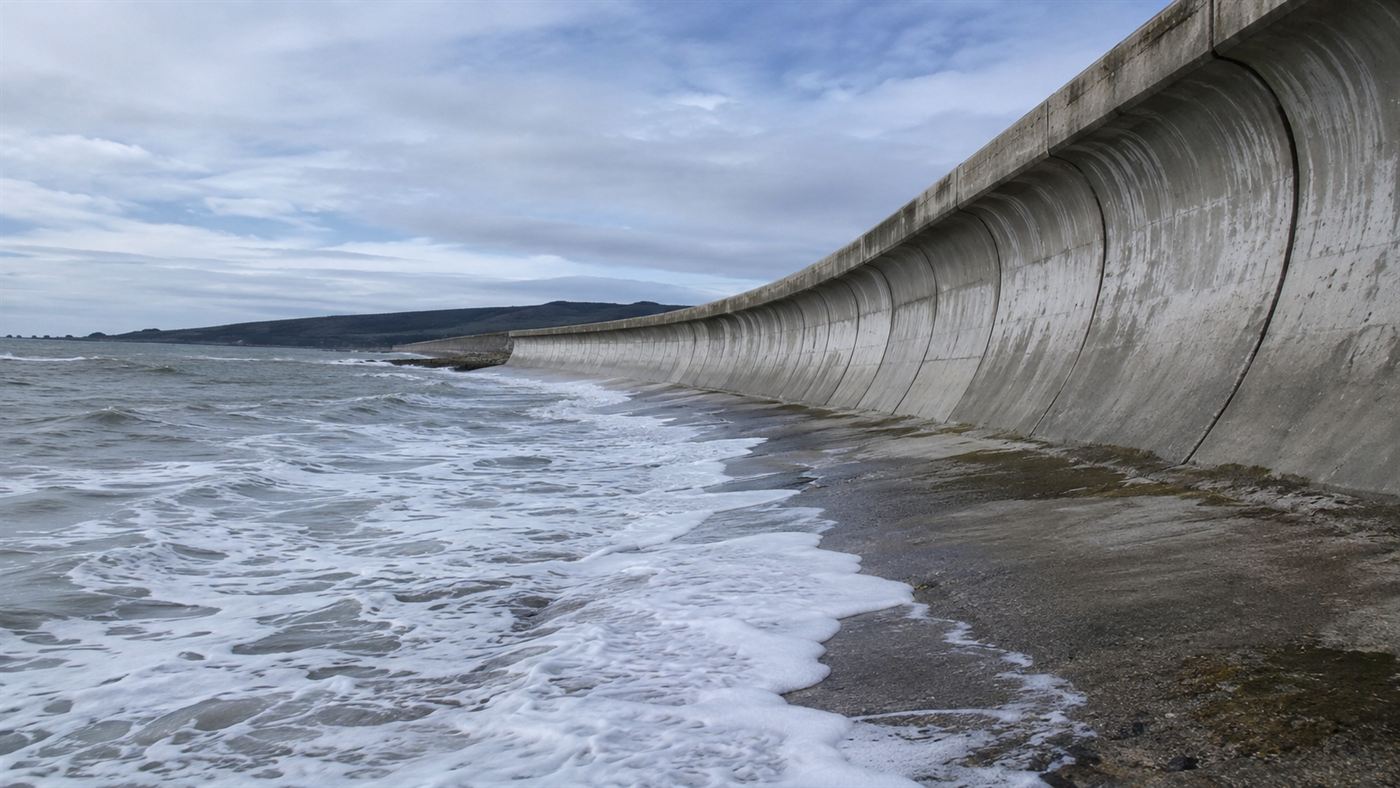
They chose to fight. The first and most visible answer was a great seawall. Beginning in 1902, engineers built an initial three-mile barrier of solid concrete, seventeen feet high and curved at the base to throw crashing waves back on themselves. The first segment was finished in 1904, and over the following decades the wall was extended again and again until it ran for about ten miles along the exposed Gulf side of the island.
The seawall was a formidable shield, but on its own it was not enough. Behind it, the land still sloped down into the low heart of the city, where floodwater could pool and pour in from the bay side. To be truly safe, Galveston could not just wall off the sea. It had to climb above it, and that meant lifting the city itself.
How the city lifted itself
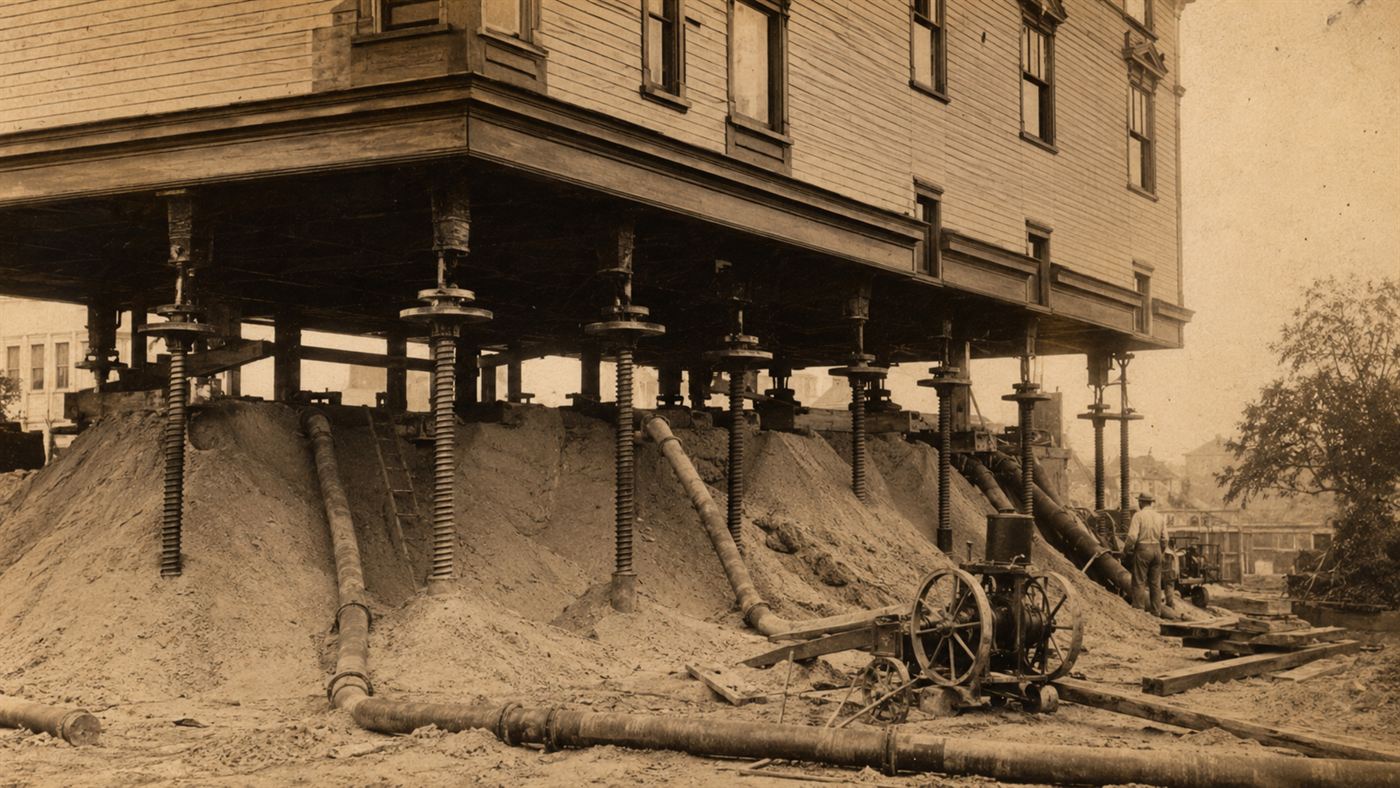
What followed is one of the most extraordinary feats of civil engineering ever carried out on an inhabited place. Behind the shelter of the new wall, workers began raising the grade of the entire city. Sand was dredged up from the harbor floor and pumped through pipes as slurry, flowing under buildings and settling to lift the ground by as much as seventeen feet near the wall, tapering down across the island.
As the National Park Service describes, the project required jacking up more than 2,000 buildings in advance, along with streetcar tracks, water pipes and fire hydrants, so the fill could be pumped beneath them. Homeowners raised their houses on thousands of hand-turned screwjacks and lived in them while the sand rose underneath. The largest structure lifted was a church weighing some 3,000 tons, boosted five feet into the air on jacks while its congregation kept holding services on schedule. Street by street, the city rose out of reach of the Gulf.
What the Galveston hurricane changed
The great test came in 1915, when a hurricane of comparable strength struck the same coast. This time, the seawall held and the raised city stood above the surge. Around 53 people died on the island, a terrible number, but a fraction of the thousands lost in 1900. The engineering had worked. Galveston had, quite literally, lifted itself out of the reach of the disaster that had nearly ended it.
The Galveston hurricane reshaped more than the island's dirt. In its aftermath the city invented a new commission form of government to manage the recovery, an idea that spread to hundreds of other American cities. It also drove a permanent shift of trade toward the safer inland port of Houston, which dredged its ship channel and grew into the giant that Galveston might have become. One night of water quietly redirected the future of a whole region.
The honest catch
It is tempting to end on pure triumph, and the seawall and grade raising truly were triumphs of nerve and engineering. But they did not make Galveston invincible, and it would be dishonest to pretend they did. In 2008, Hurricane Ike battered the island and flooded huge areas, much of the damage coming from the bay side and the unprotected west end that the wall never reached. A rising sea and stronger storms make the old defenses less certain with every passing decade.
There is a human catch too. The grade raising was slow, costly and disruptive, and its burdens did not fall evenly, with poorer residents often bearing the worst of the upheaval and the wait. And for all its heroics, the city never regained the wealth and importance it had before the storm. What Galveston earned was not permanent safety but a hard, honest kind of resilience, proof that people can answer even the deadliest disaster by remaking the ground they stand on, while knowing the sea is patient and will come again.
A city that was nearly erased by the sea answered by raising itself above it, jack by jack. Is Galveston's story a model of how we should defend our coasts, or a warning that even our boldest engineering only buys time against a rising ocean? Tell us what you think in the comments.
Related reading: the New London School disaster, another Texas tragedy that forced a lasting change. See also the Tri-State Tornado, the deadliest twister in American history, which struck with no warning at all.
More from Watts & Wild
More in Industry & Mega-Builds →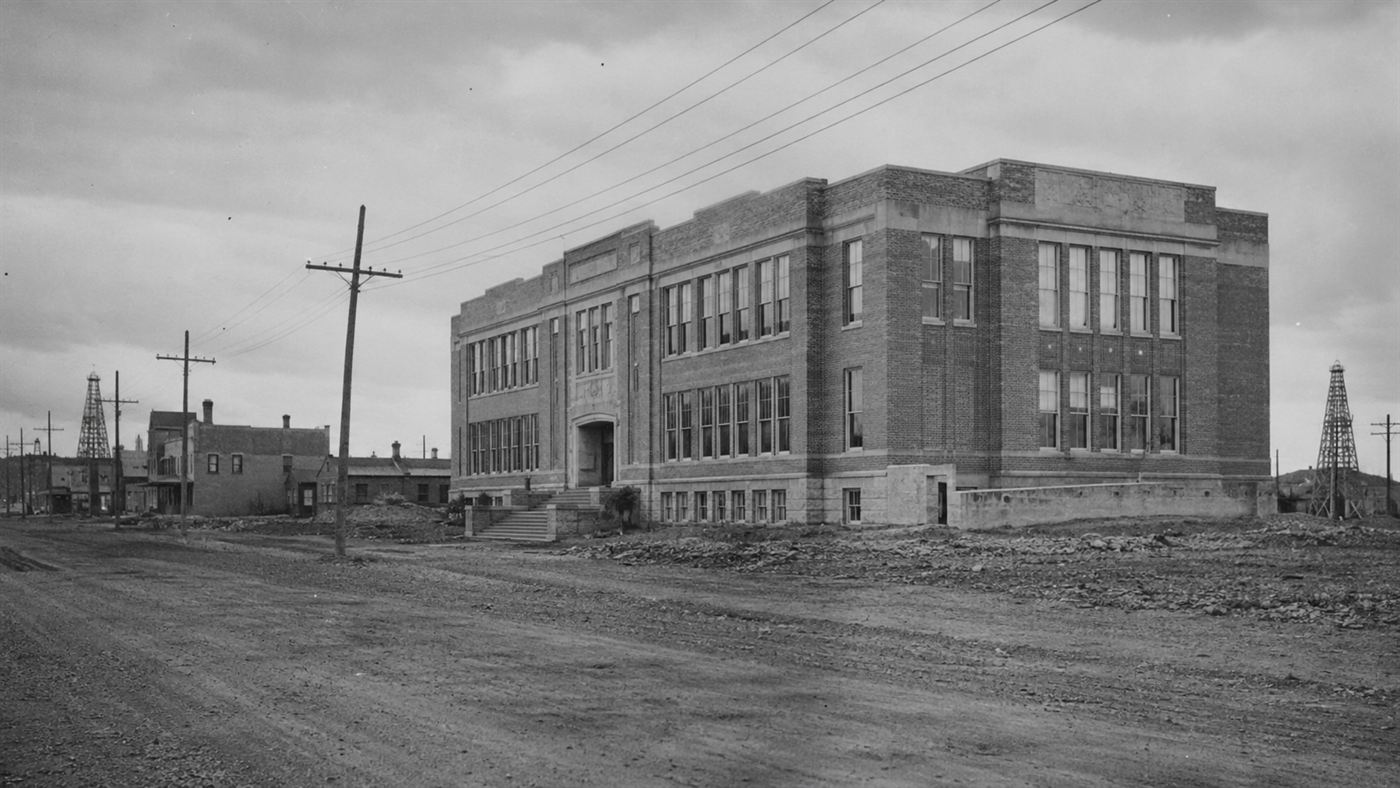

Bruno writes about energy, industry and the big machines that run the modern world, with an eye for the human story behind the engineering.