The wheel built to out-Eiffel the Eiffel Tower, and the man it ruined
America had been humiliated. Paris had its soaring iron tower, and when Chicago won the right to host the great fair of 1893, the country needed something to answer it, something nobody had ever seen. A young engineer stepped forward with an idea so strange that people said he had wheels turning in his head. He was about to be proved gloriously, and then tragically, right. The Ferris Wheel was born to beat the Eiffel Tower.
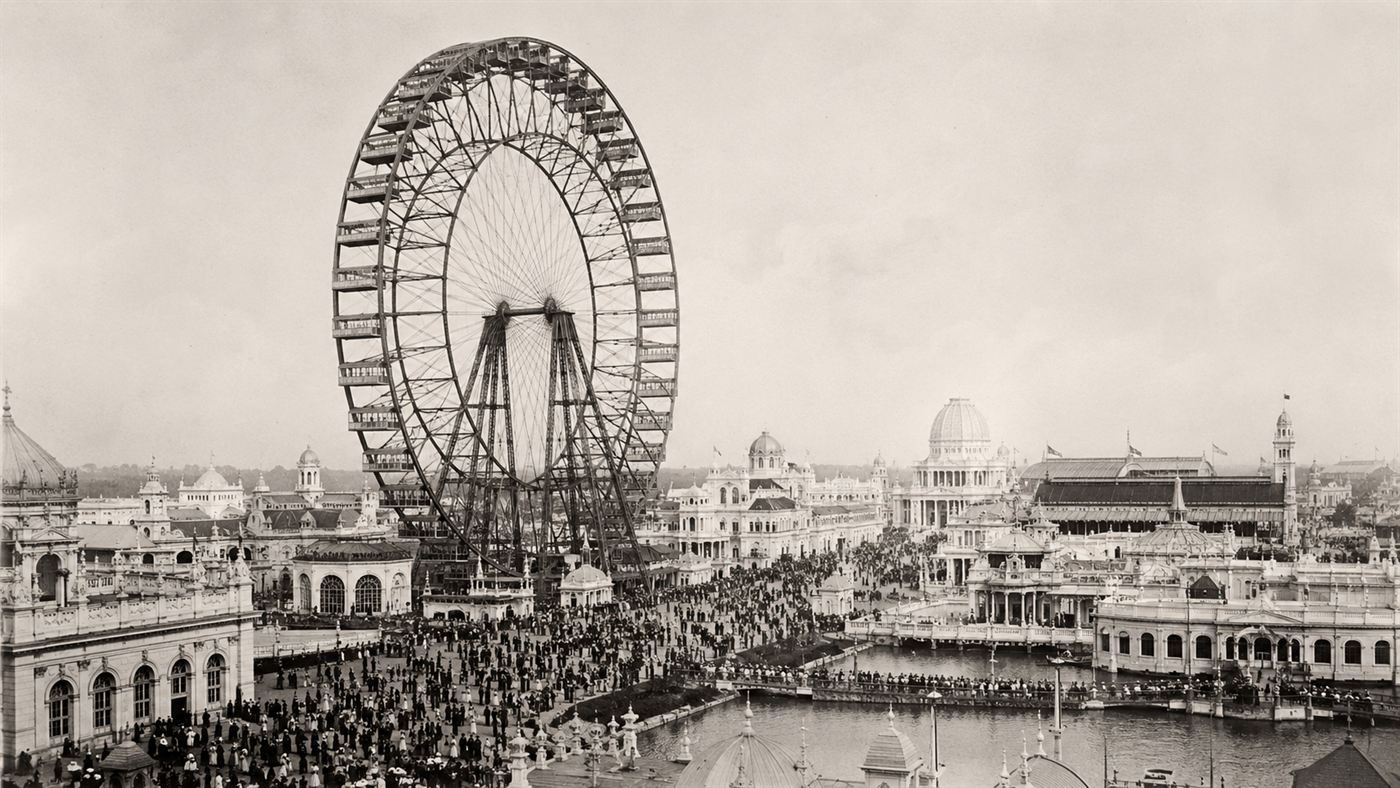
The centrepiece of the 1893 fair, and a gamble its maker never recovered from. Illustration: Watts & Wild.
We take the Ferris wheel for granted now, a gentle fixture of every fairground and seafront. But the first one was an act of engineering bravado, a machine meant to make a nation proud and to silence the doubters who thought it would collapse. The man who built it bet his name, his money and his reputation on a wheel that had never existed, and won the bet while losing almost everything else.
His name was George Washington Gale Ferris Jr, and the story of his wheel is a perfect, painful lesson in how the world remembers an invention but forgets the inventor.
A challenge to out-Eiffel Eiffel
When Paris held its world's fair in 1889, it unveiled the Eiffel Tower, and the iron giant became the symbol of the age. So when Chicago prepared its own World's Columbian Exposition for 1893, the organisers were desperate for a centrepiece to match it. The fair's chief planner challenged American engineers to dream up something that would, in spirit, out-Eiffel Eiffel.
Most of the proposals were simply taller towers, pale imitations of what Paris had already done. Ferris, a bridge-builder who spent his career testing structural steel, had a wilder idea. Rather than reach higher into the sky with another spike of metal, he would lift people up and turn them through it, on a revolving wheel taller than almost anything in the city.
How the Ferris Wheel was almost laughed off
The reaction was not kind. Engineers and fair officials doubted that a giant wheel could be built safely at all, and some joked that Ferris had wheels in his head.
To prove them wrong, Ferris poured in his own money and that of investors he had to persuade one nervous meeting at a time. The danger was real. A wheel that size had to carry thousands of people far above the ground while it turned, balanced on a single axle, with nothing like it ever attempted before. If it failed, it would not just bankrupt him, it could kill. He pressed on anyway, convinced the mathematics were sound even when almost no one else believed him.
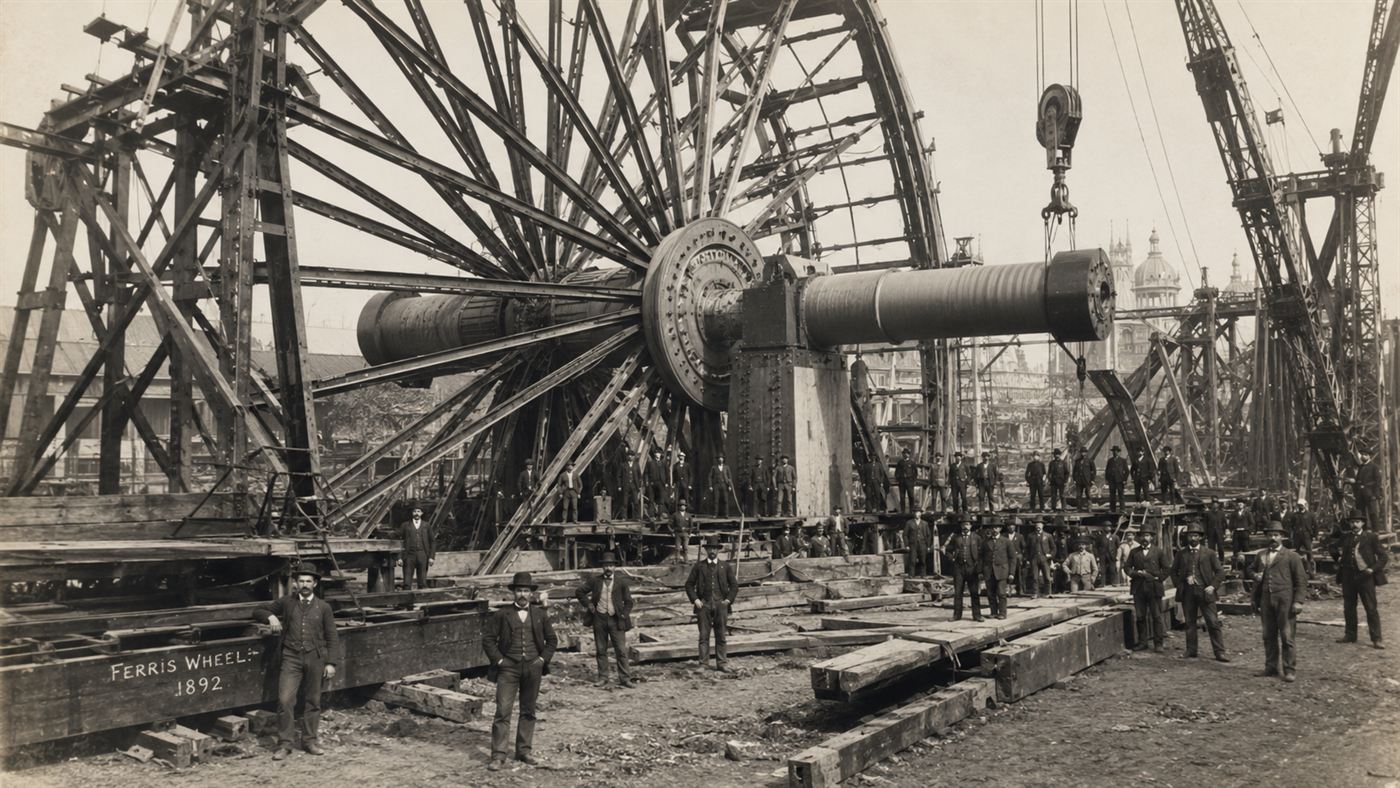
Two thousand people in the sky
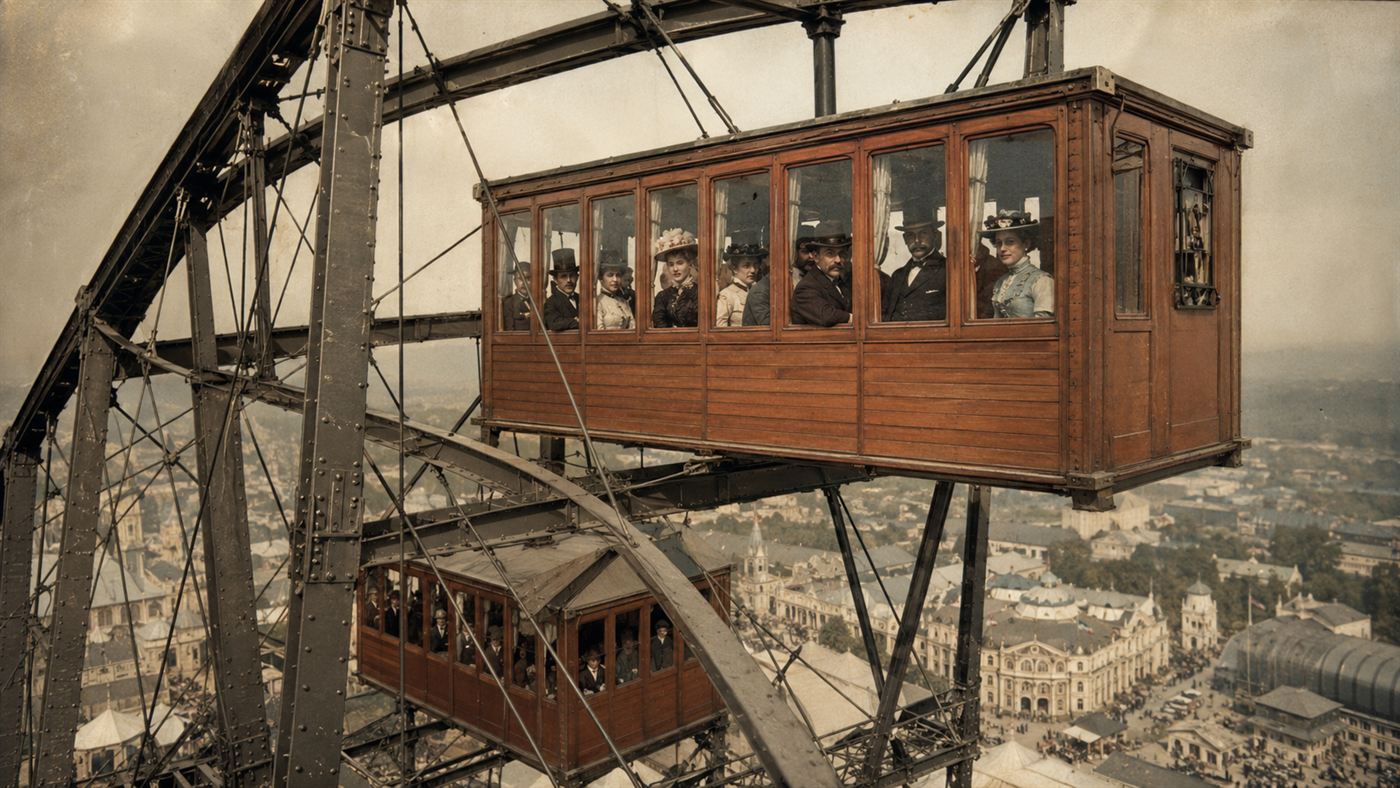
When it finally rose over the fairground, the wheel was astonishing. It stood about 264 feet tall and carried 36 enclosed cars, each able to hold up to 60 passengers, so more than 2,000 people could ride it at once.
Two steam engines turned it, and its central axle was among the largest pieces of forged steel made up to that time. Far from collapsing, it ran flawlessly. Around 1.5 million people paid to ride it before the fair closed, gazing out over Chicago and Lake Michigan from a height most had never experienced. Ferris had done exactly what he promised. He had given America its own wonder, a machine as bold in its way as the tower in Paris.
The triumph that ruined its maker
And then it all came apart. Despite the millions of tickets sold, Ferris became tangled in lawsuits and debts over who was owed what, and the fortune the wheel seemed to promise never reached him.
After the fair the wheel was taken down, rebuilt elsewhere in Chicago, and never drew the same crowds again. George Ferris, his marriage broken and his finances in ruins, died of tuberculosis in 1896. He was just 37. His great wheel limped on, was hauled to the St. Louis fair of 1904, and was finally blown apart with dynamite in 1906. It is worth being honest that the exact depth of his poverty is debated, but the broad shape is not: the man whose name is on every fairground wheel on Earth died young, bitter and broke, his invention outliving him by barely a decade.
Who invented the Ferris Wheel?
An American bridge engineer with a stubborn idea. George Washington Gale Ferris Jr designed and built the first Ferris Wheel for the 1893 Chicago fair, drawing on his expertise in structural steel to make a giant revolving wheel stand and spin safely.
His genius was not just imagining the wheel but proving it could be trusted with human lives, in an era when such a thing seemed reckless. That is the quiet irony of his name being on millions of cheerful rides today. Behind the fun is a serious feat of engineering that its own creator had to fight tooth and nail to be allowed to build.
What happened to the original Ferris Wheel?
It was moved, struggled, and finally destroyed. The original Ferris Wheel was relocated after the Chicago fair, shipped to the 1904 St. Louis exposition, and then demolished with dynamite in 1906, only thirteen years after it first amazed the world.
By then its inventor was long dead, and the wheel had become a financial burden rather than a marvel. Yet the idea proved unkillable. Every observation wheel that has turned since, from seaside piers to the giant ones on modern skylines, is a descendant of that first improbable gamble in Chicago, and every one of them still carries the name of the man it left behind.
A young engineer gave the world one of its most joyful inventions and got heartbreak in return. How many everyday wonders are named after people who never lived to see how loved they would become? Tell us what you think in the comments.
Related reading: the Crystal Palace, the glass cathedral a gardener built for another world's fair in record time, and Bertha Benz, the woman who stole the first car and drove it into history. See also the White City that framed this wheel, a marble dream made of plaster.