Two mathematicians built a dome so daring it seemed to hang from heaven, and it has stood 1,500 years
When it was finished, visitors said its great roof looked as though it were suspended from the sky on a golden chain. It was the largest enclosed space in the world, raised in just six years by two scholars who had never built anything so vast. The dome of Hagia Sophia is one of the boldest gambles in the history of engineering.
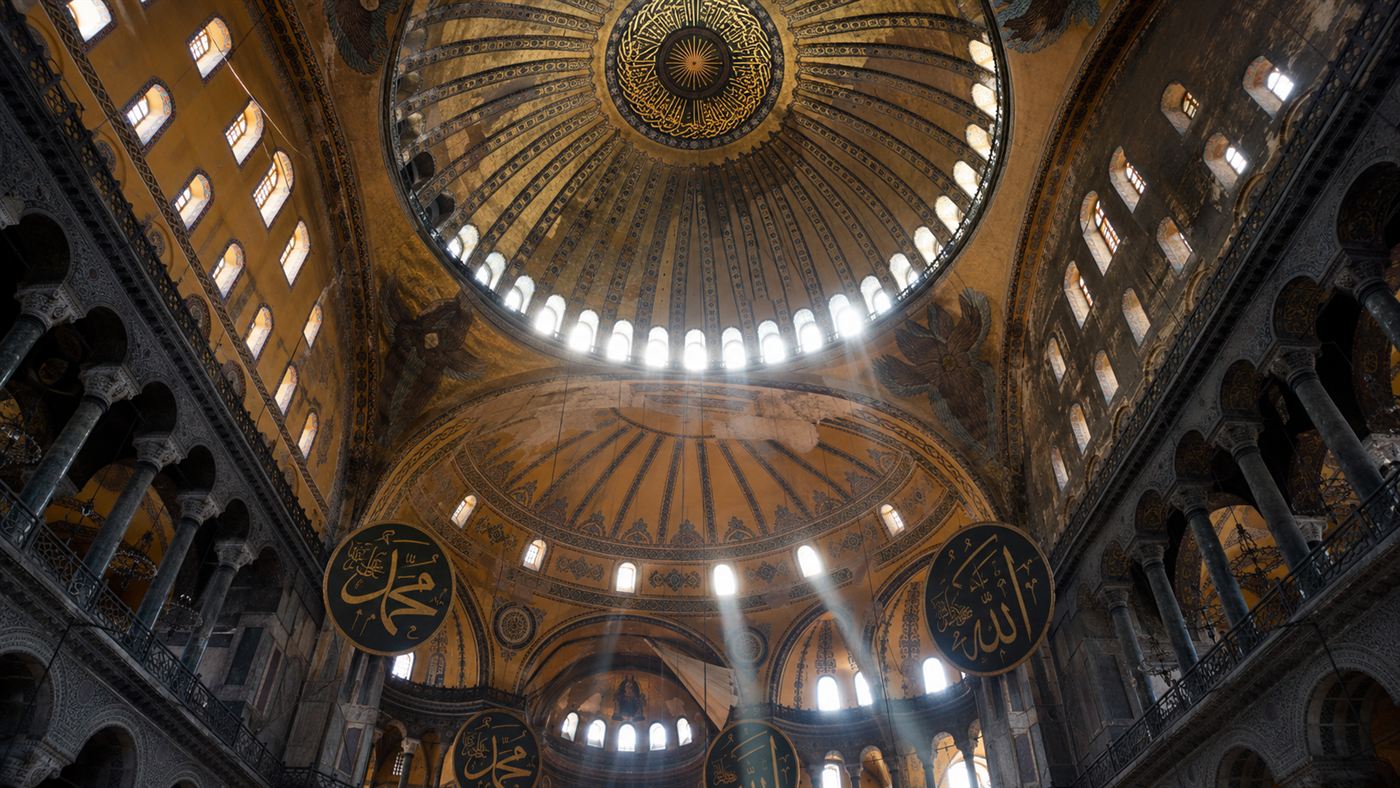
A ring of windows at its base makes the enormous dome appear to float on light. Illustration: Watts & Wild.
Domes are among the hardest things to build, because they constantly try to push their own supports apart and fall in. Hagia Sophia answered that problem on a scale no one had attempted before, and did it so beautifully that it has been copied ever since.
Its story is not one of flawless triumph, though. It includes a spectacular failure, and an even bolder recovery.
How Hagia Sophia holds up its dome
The central puzzle was geometric: how do you set a round dome on top of a square room? Hagia Sophia solved it with pendentives, four curved triangular sections of masonry that gather the weight of the circular dome and funnel it down onto four massive piers at the corners.
This was the breakthrough. By channelling the load into a few hidden strongpoints, the builders could leave the vast interior open and airy, with no forest of columns blocking the space. A ring of windows was then opened all around the base of the dome, which not only floods the inside with light but makes the heavy stone roof seem to hover weightlessly above the worshippers. It was engineering disguised as a miracle.
Two scientists, six years
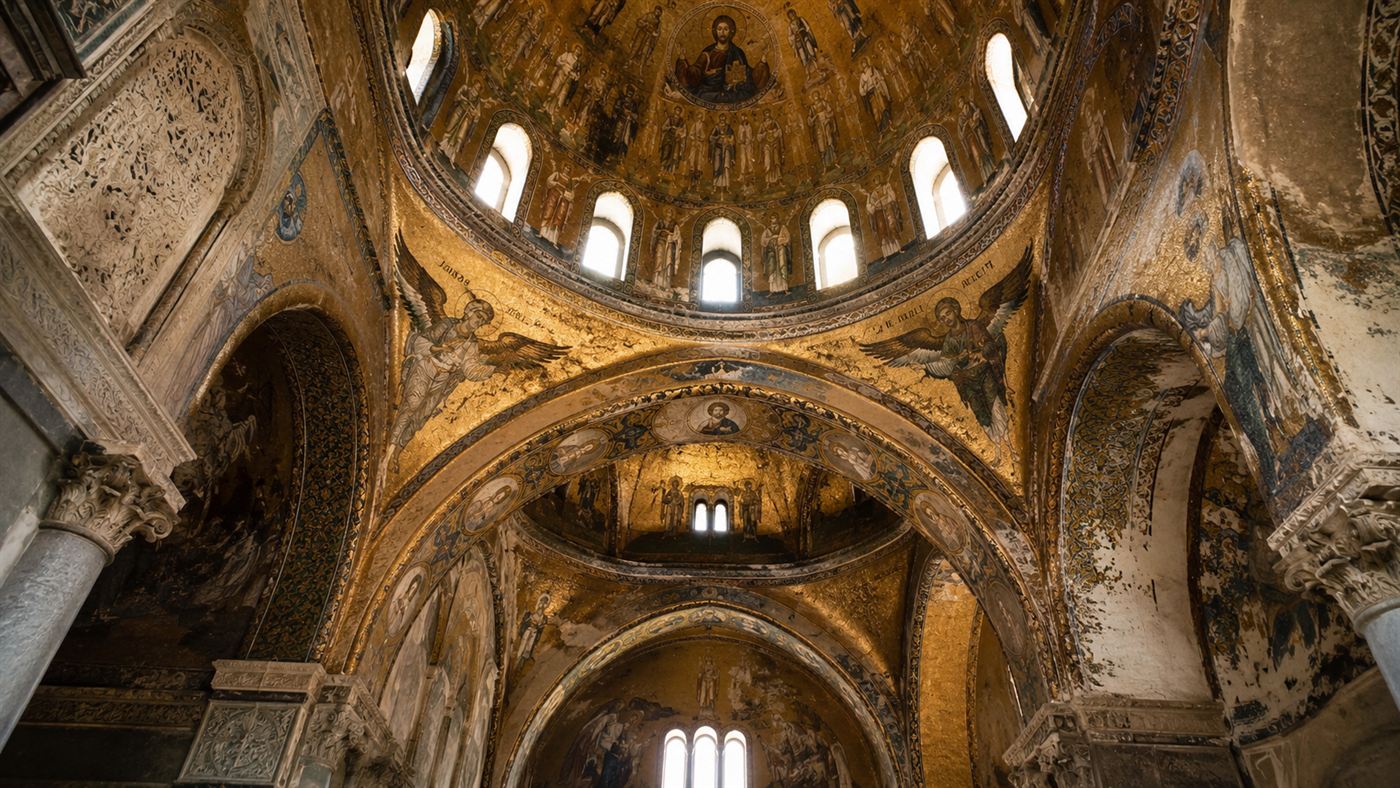
What makes the achievement stranger still is who built it. The Byzantine emperor Justinian did not hire master masons but two scholars. Hagia Sophia was designed by Anthemius of Tralles, a mathematician and physicist, and Isidore of Miletus, a professor of geometry, who treated the building as a vast problem in applied science.
Working with thousands of labourers, they completed the entire enormous church in roughly six years, an astonishing pace for a structure of such size and daring. When Justinian first walked into the finished building, legend says he declared that he had outdone even the temple of Solomon. For a thousand years afterwards, no one built a larger enclosed space anywhere on Earth.
The dome that fell, and rose again
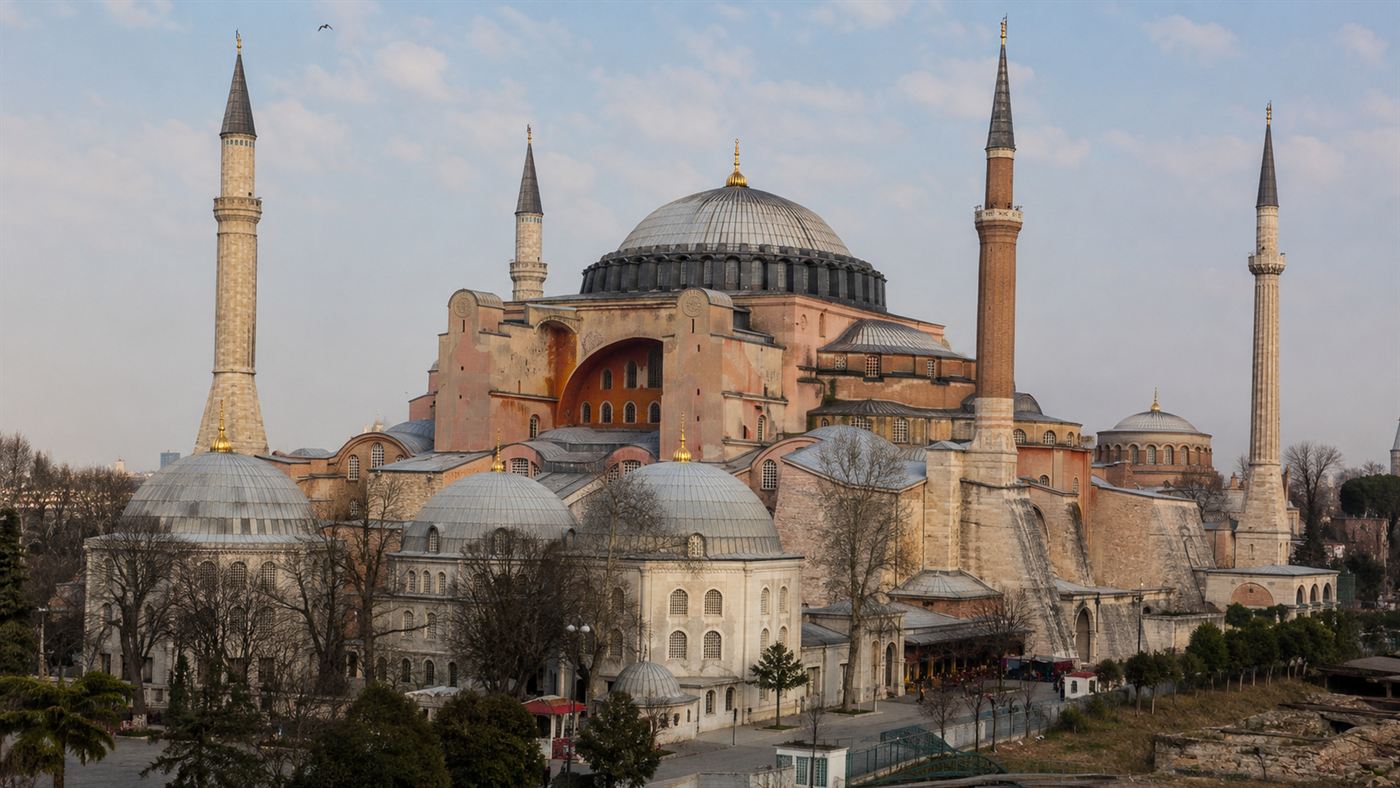
The first design pushed its luck too far. The original dome was remarkably shallow, almost flat, which made it elegant but also made it shove outward against its supports with tremendous force. About twenty years after it was built, following a series of earthquakes, part of Hagia Sophia's first dome collapsed.
It could have been the end of the building's reputation. Instead, a nephew of one of the original architects designed a replacement that was taller, more steeply curved and strengthened with ribs, so that its weight pressed down more safely rather than thrusting outward. That second, wiser dome is essentially the one we still see, and apart from later repairs after further earthquakes, it has held for around fifteen centuries. The failure, in the end, made the building stronger.
Why is Hagia Sophia's dome famous?
Because it combined daring, beauty and structural cleverness in a way nothing before it had. Hagia Sophia proved that a huge dome could sit on a square hall and seem to float, and that single idea shaped grand architecture, from mosques to cathedrals, for more than a thousand years.
Stand beneath it and the engineering vanishes into pure effect: a great golden bowl of light apparently hanging in mid-air. That illusion, achieved with stone and arithmetic, is exactly what its builders were reaching for, and it is why the building still stops people in their tracks today.
Did Hagia Sophia's dome ever collapse?
It did, which is part of what makes the story so human. The bold first dome fell within a generation, and the version that has lasted is the careful second attempt, raised higher and braced more strongly after the lesson of the collapse.
One honest point keeps the marvel grounded. Hagia Sophia has not survived purely on the genius of its design; over the centuries it has needed repairs and external buttresses to help it ride out the earthquakes that regularly shake the region. Its endurance is a story of constant care as much as original brilliance, a building that was saved, again and again, by people who refused to let it fall.
A dome that fell once and was rebuilt bolder has outlasted the empire that raised it by a thousand years. Is great engineering about getting it right the first time, or about how well we recover when we get it wrong? Tell us what you think in the comments.
Related reading: Roman concrete, the ancient recipe that helped buildings of this era survive for two thousand years, and the Beach Pneumatic Transit, the secret subway one man dug under Broadway in the dark.