America fell in love with a gleaming white city of the future in 1893, and almost none of it was real or meant to last
For one summer, a perfect metropolis rose on the shore of Lake Michigan: white palaces, grand basins, electric light by night. Millions walked through it and wept at its beauty, never quite realising they were strolling through a life-size stage set that was already scheduled to be knocked down.
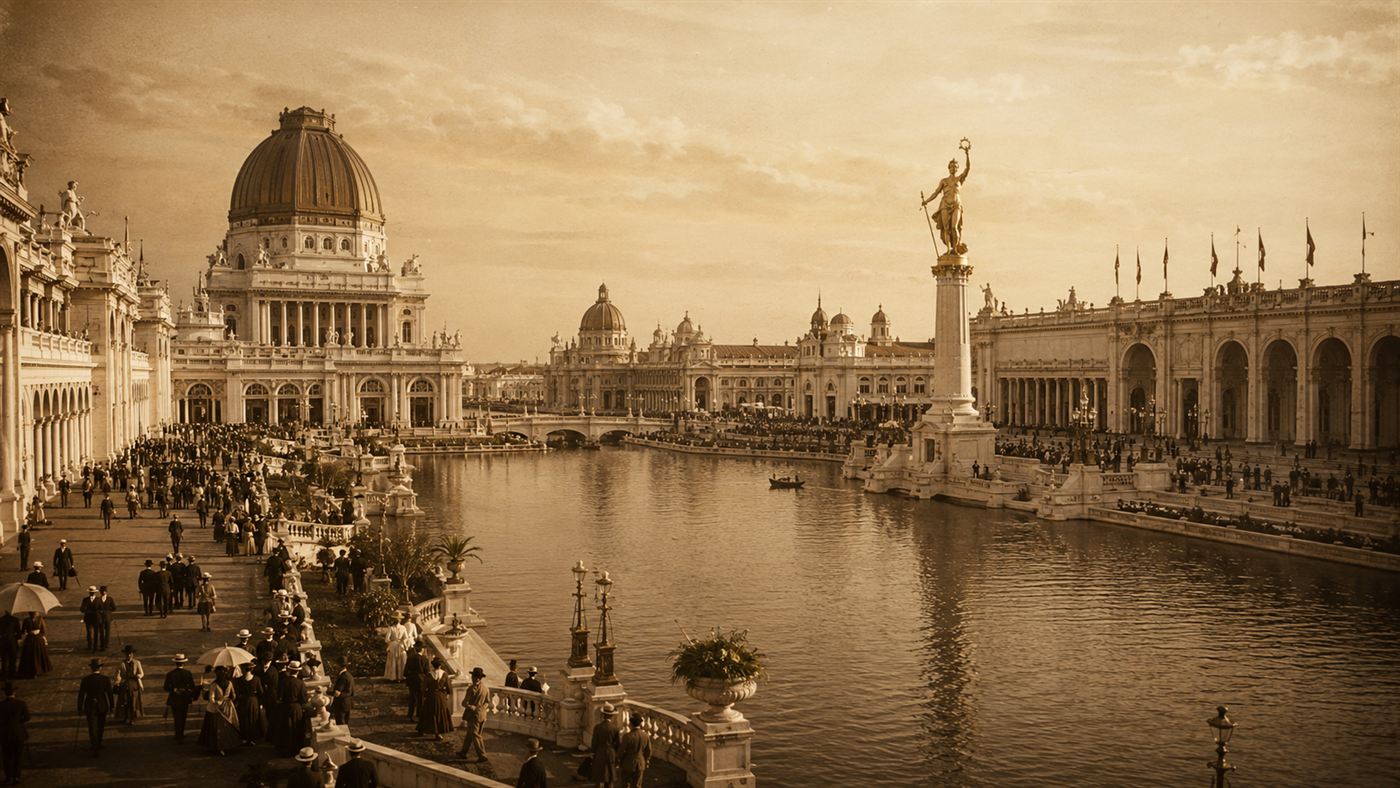
The Court of Honor of the 1893 World's Fair, the heart of the White City. Illustration: Watts & Wild.
In 1893, Chicago threw open the World's Columbian Exposition, a giant fair marking four centuries since Columbus reached the Americas. At its centre stood a cluster of enormous buildings, gleaming a uniform white around formal lagoons, so grand and harmonious that visitors simply called it the White City.
It was designed to overwhelm, and it did. Some twenty-seven million people came through the gates in a country of only sixty-odd million, and at night the whole scene blazed with electric light, still a novelty then, mirrored in the still water. To Americans used to muddy, smoky, chaotic cities, it looked like a glimpse of heaven made of stone.
The short version is that the heaven was a beautiful trick. Almost nothing in it was built to survive the year, and knowing what it really was, and what became of it, changes the whole story.
What the White City was really made of
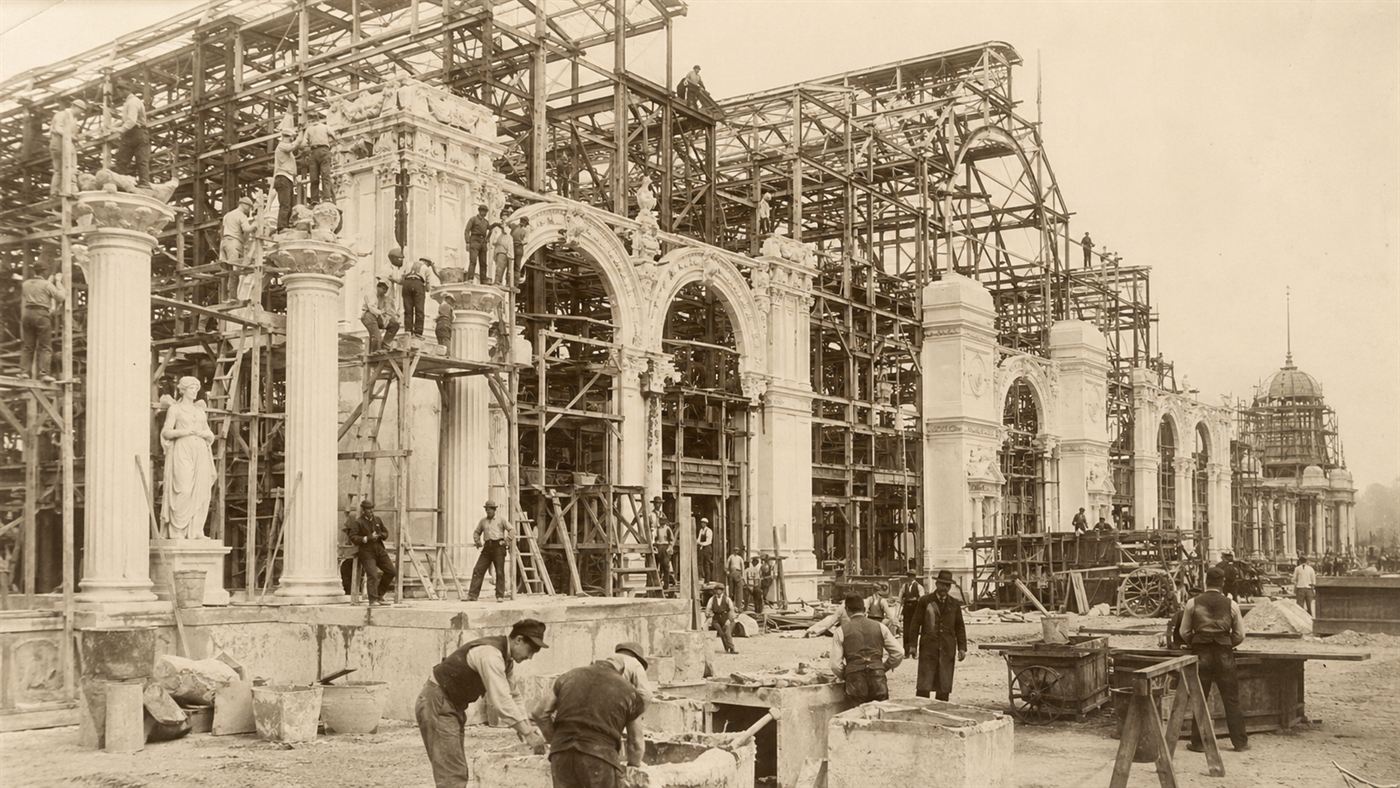
Those marble palaces were not marble at all. The great buildings were built quickly and cheaply out of a material called staff, a mix of plaster, cement and fibre that could be moulded into columns and statues and then painted a brilliant white. Underneath the gleam were ordinary frameworks of wood and steel.
This was no secret failure; it was the plan. A world's fair was a temporary event, and the organisers never intended these palaces to last. The plaster shells were a stage set on an enormous scale, made to dazzle for a single season and then come down, and that is exactly why they could be so lavish so fast.
The man who staged a city
The figure at the centre of it was Daniel Burnham, the architect who served as director of works and drove the whole enormous project to completion on a brutal schedule. He gathered the country's leading architects, pushed them toward one grand classical style, and marshalled an army of workers to raise a city in a matter of months.
Burnham understood that the effect mattered more than the substance. What the crowds needed was the overwhelming feeling of order and grandeur, and staff delivered that feeling at a fraction of the cost and time of real stone. It was showmanship on a civic scale, and Daniel Burnham was its master.
The city just beyond the fence
What made the illusion sharper was the real Chicago pressing against it. The country was sliding into a savage economic depression in 1893, and the actual city outside the fair was crowded, sooty and unequal, its workers soon to erupt in bitter strikes. The dream of order was a short train ride from tenements and hardship.
So the White City was not just fake in its materials; it was a fantasy in its very premise, a spotless utopia with no poverty, no smoke and no slums, standing next door to a city drowning in all three. It offered visitors a vision of what might be, while carefully leaving out the messy present just beyond the fence.
How does a perfect city end?
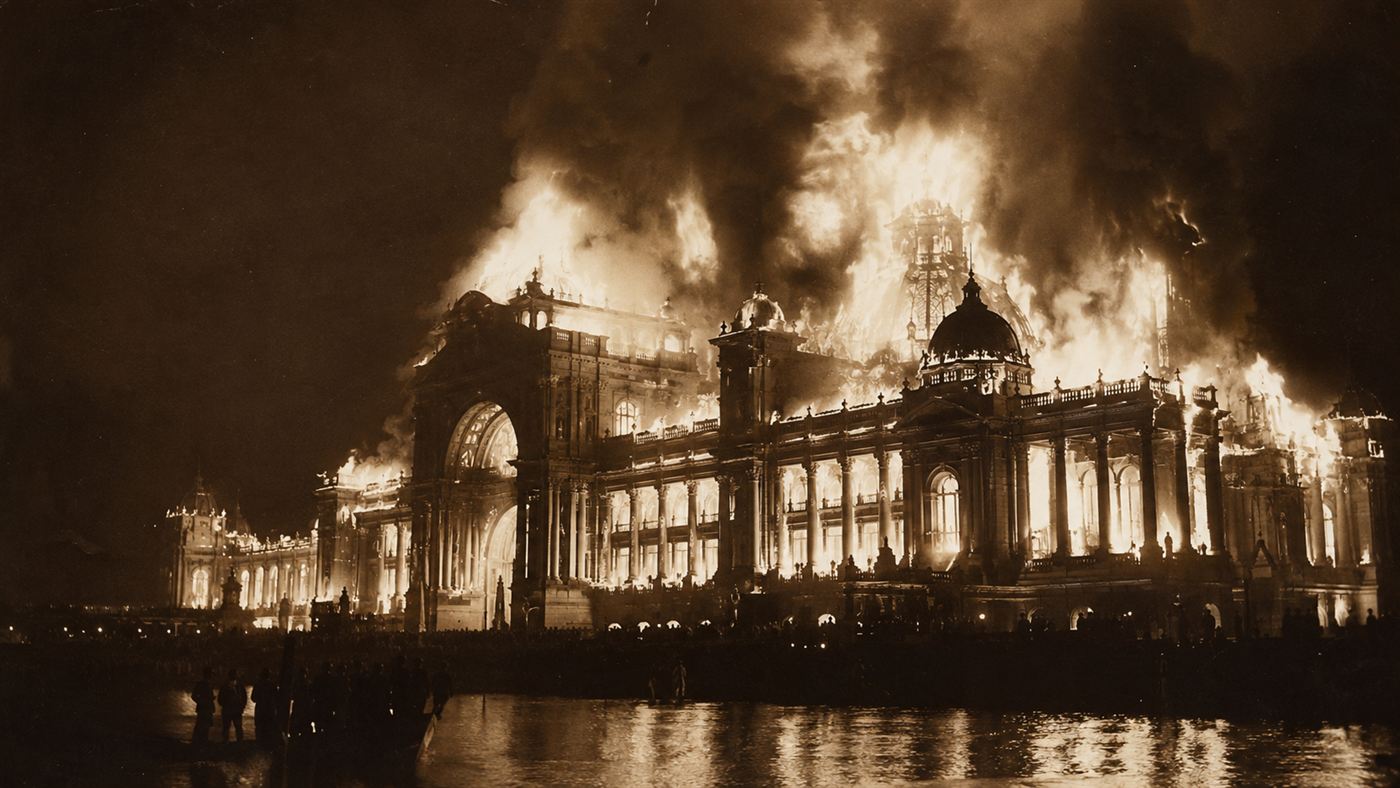
Badly, as it turned out. Once the fair closed in late 1893, the plaster city was left to the weather, and it quickly began to sag and crack and look shabby. Then, in the summer of 1894, as the Pullman railway strike convulsed Chicago, fire tore through the abandoned grounds and burned much of the great fair to the ground.
There was something fitting in it. A city of painted plaster, raised to be temporary, went out not in a slow fade but in flames during a season of real social fury. Only a few structures came through, including the building that survives today, heavily rebuilt, as the Museum of Science and Industry.
The honest catch
It would be easy to end there, on a neat little moral about hollow illusions, but that would sell the White City short. Temporary and fake as it was, it left a very real mark. It launched what became the City Beautiful movement, inspiring the grand museums, boulevards and civic centres that still define the heart of many American cities, and it shaped the plan of Washington's great mall.
And yet the catch is real too. Critics have long argued that the City Beautiful ideal it spawned prized the beautiful shell over the messy business of housing and serving actual people, exactly the trade the White City itself embodied. A country was moved for generations by a place made of plaster and paint, dazzling on the outside and empty within, which is either a wonderful thing about the power of a vision, or a quiet warning about it, depending on how closely you look.
A whole country was inspired for generations by a city that was mostly paint and plaster, built to be torn down. Does it matter that the most beautiful city America ever saw was never actually real? Tell us what you think in the comments.
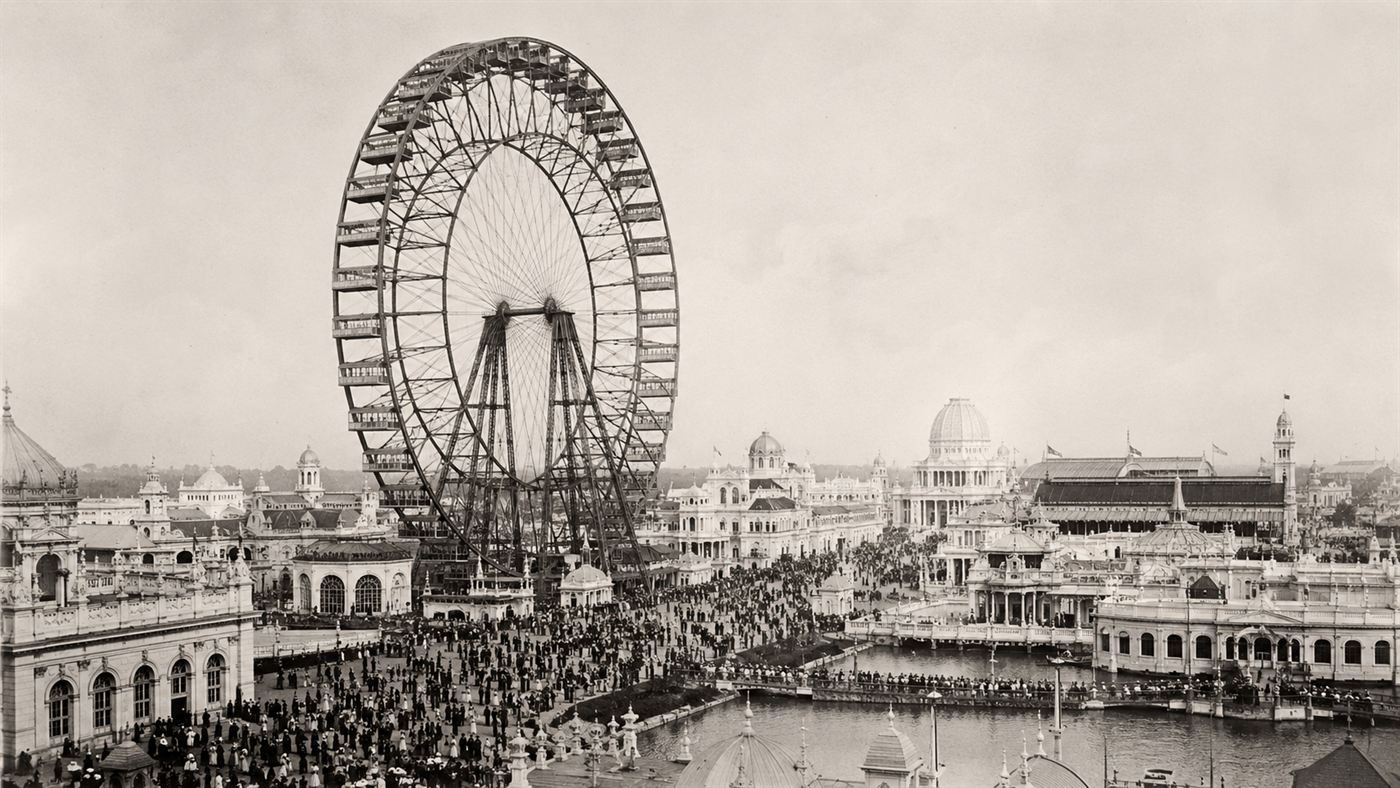
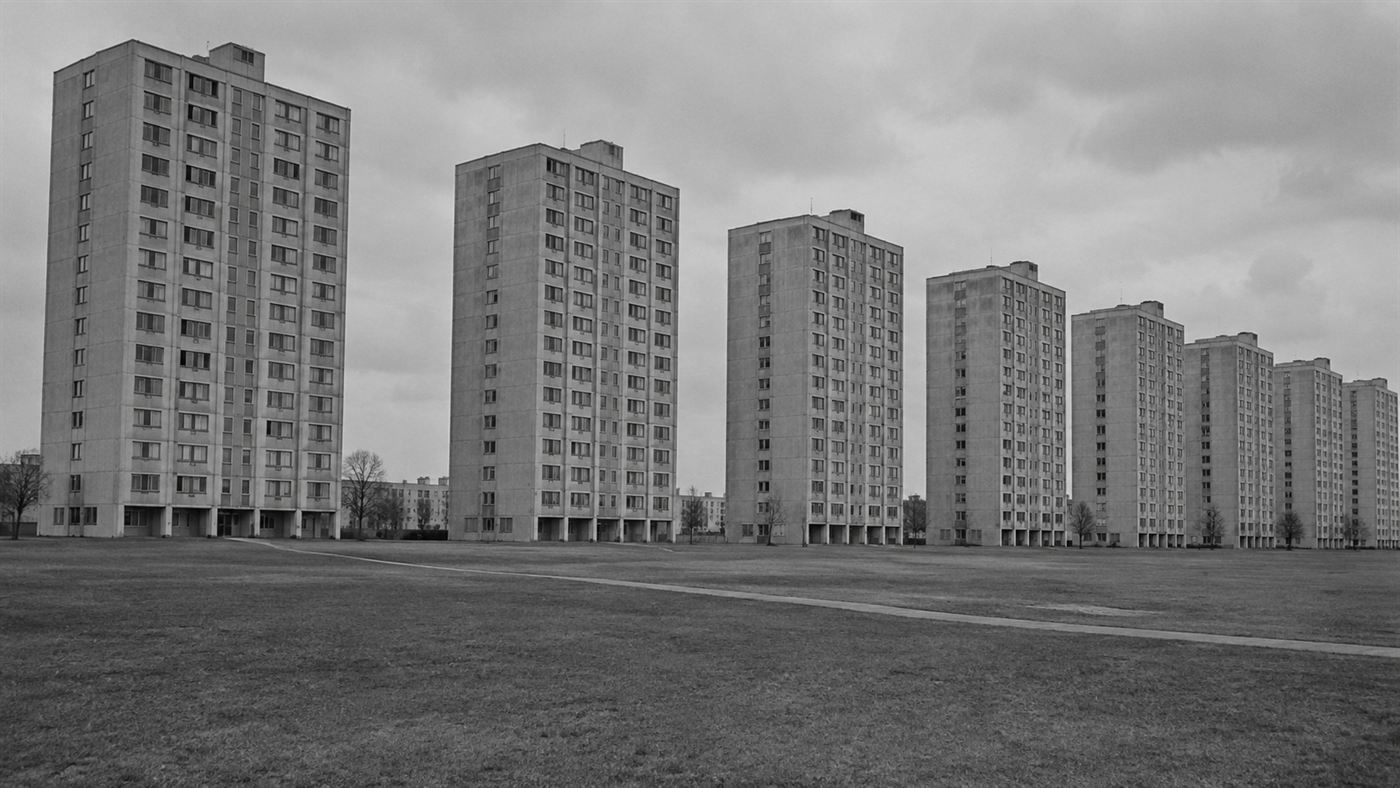
Related reading: the first Ferris Wheel, built to out-dazzle the Eiffel Tower at this very fair. See also Pruitt-Igoe, a later dream of perfect architecture that also had to be destroyed, and the current war whose winner lit this fair at night.