Eleven workers died when Deepwater Horizon exploded in the Gulf of Mexico in April 2010, and BP's emergency response plan for the spill listed walruses as local wildlife to protect
On April 20, 2010, the Deepwater Horizon drilling rig exploded 40 miles off the Louisiana coast, killing 11 men and burning for 36 hours before sinking. The Macondo blowout that followed poured oil into the Gulf for 87 days, and when investigators pulled BP's emergency response plan, they found it was a copy-paste from an Arctic document that listed walruses as local species to protect.
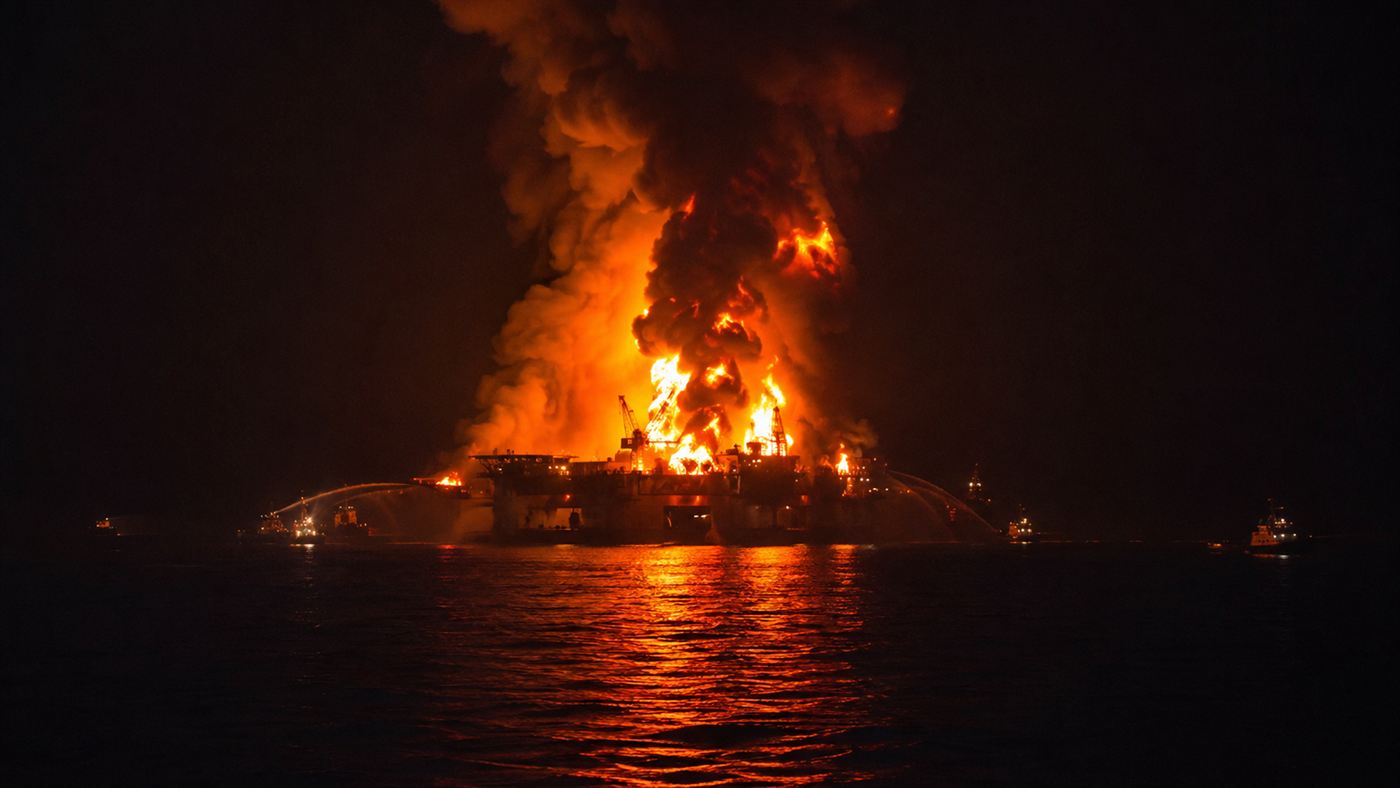
The Deepwater Horizon rig burned for 36 hours after the explosion on April 20, 2010, before sinking on April 22. The blowout that followed it down went uncontrolled for 87 days. Illustration: Watts & Wild.
The Deepwater Horizon was a floating drilling rig the size of two football fields, owned by Transocean and leased to BP to drill the Macondo prospect in the Mississippi Canyon block, 5,000 feet of water below and then another 13,000 feet of rock below that.
On the evening of April 20, 2010, methane gas from the Macondo well traveled up the drill pipe, expanded as pressure dropped, reached the rig floor, and ignited twice within seconds. According to the US Environmental Protection Agency, the explosions killed 11 workers and injured 17 others. The rig burned through the night and sank on April 22, leaving the Macondo well open at the seafloor with nothing above it to slow what came next.
The argument on Deepwater Horizon the morning it exploded
By the time the methane reached the drill floor, the day had already been defined by a disagreement.
Jimmy Harrell, Transocean's offshore installation manager and the senior person responsible for rig safety, had raised concerns about the procedure BP's company men wanted to follow.
The disputed step was replacing the heavy drilling mud in the well with lighter seawater before setting the final cement plugs.
Heavy drilling mud is what holds back formation pressure.
Removing it before the well is fully plugged reduces that margin.
Harrell's position was that standard practice called for a more cautious sequence.
The BP company men pushed to move faster, and the faster procedure was what happened.
Later testimony and the presidential commission report on the Deepwater Horizon disaster would document that the negative-pressure test conducted that afternoon, which was meant to confirm the well was stable before removing the mud, was misread by multiple people on the rig who should have recognized it as a warning.
The test showed the well was not stable.
The crew interpreted the readings as normal.
At 9:49 PM CDT, the first explosion shook the rig.
The 11 men who died were Jason Anderson, Aaron Dale Burkeen, Donald Clark, Stephen Ray Curtis, Gordon Jones, Roy Wyatt Kemp, Karl Dale Kleppinger Jr., Keith Blair Manuel, Dewey A. Revette, Shane Michael Roshto, and Adam Weise.
Their average age was 36.
Eighty-seven days that wouldn't stop
When the Deepwater Horizon sank, the drill pipe collapsed and the blowout preventer on the seafloor was left with a buckled pipe through it and no functioning seal.
BP initially told regulators the well was releasing about 1,000 barrels of oil per day.
The actual flow rate was closer to 62,000 barrels per day in the first weeks.
By the time the well was capped on July 15, 2010, and permanently killed with a relief well on September 19, 4.9 million barrels of oil had entered the Gulf of Mexico.
That is 19 times more oil than the Exxon Valdez spilled in Alaska in 1989, which had previously been the largest marine oil spill in US history.
BP's first major containment attempt, the "Top Kill," involved pumping heavy drilling mud into the blowout at high pressure to push it back down.
It failed on May 29 after three days.
The "Junk Shot" attempt involved pumping golf balls, knotted rope, and shredded rubber into the blowout preventer to try to clog it.
It also failed.
A large steel dome called the cofferdam was lowered over the leak but clogged with gas hydrate crystals and had to be abandoned.
A smaller "Top Hat" containment cap collected some oil and gas and transferred it to a surface vessel, but did not stop the flow.
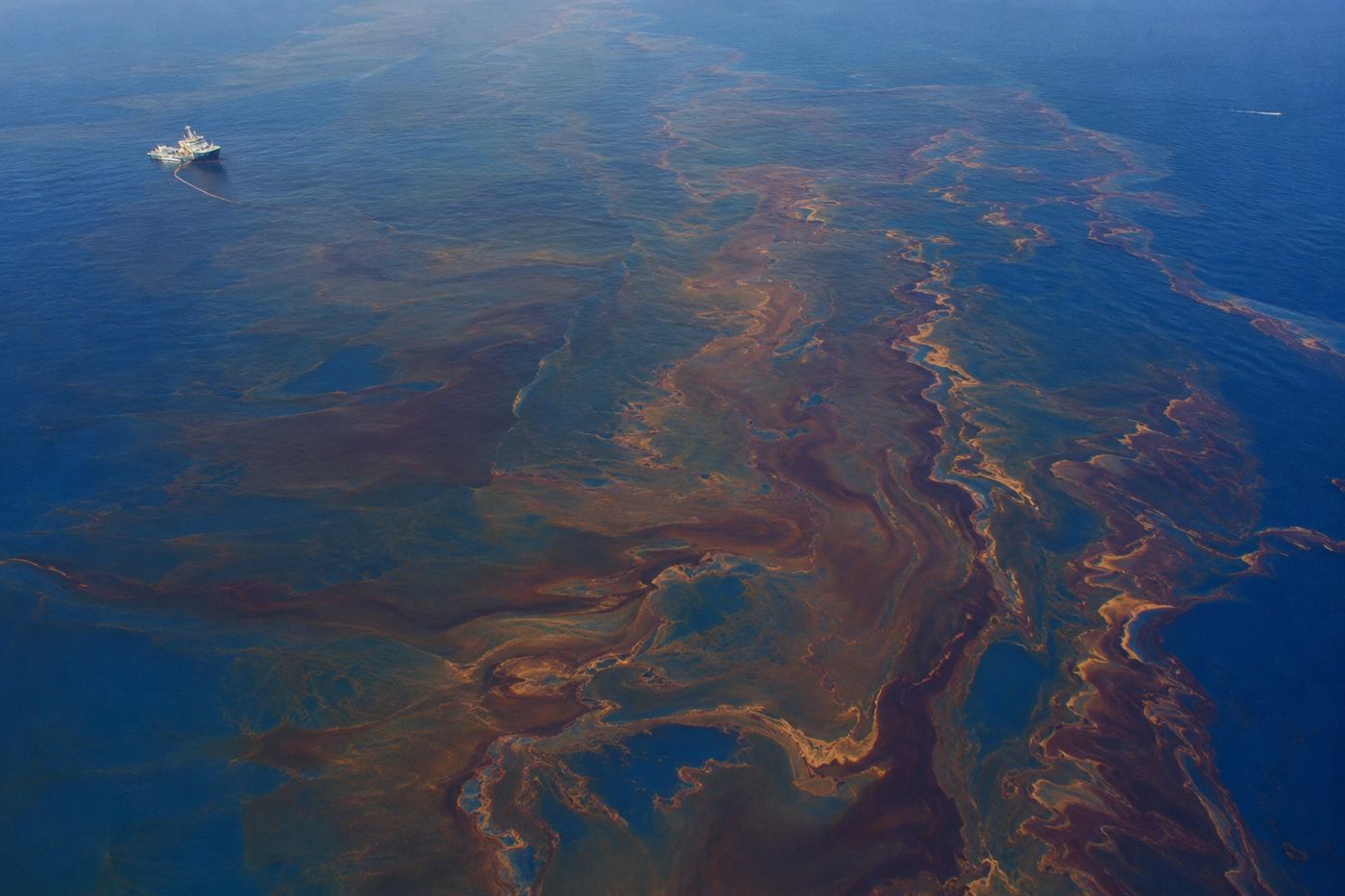
The Gulf of Mexico oil spill spread in a plume that NASA satellites tracked across hundreds of miles of ocean surface and into the Loop Current that flows toward Florida.
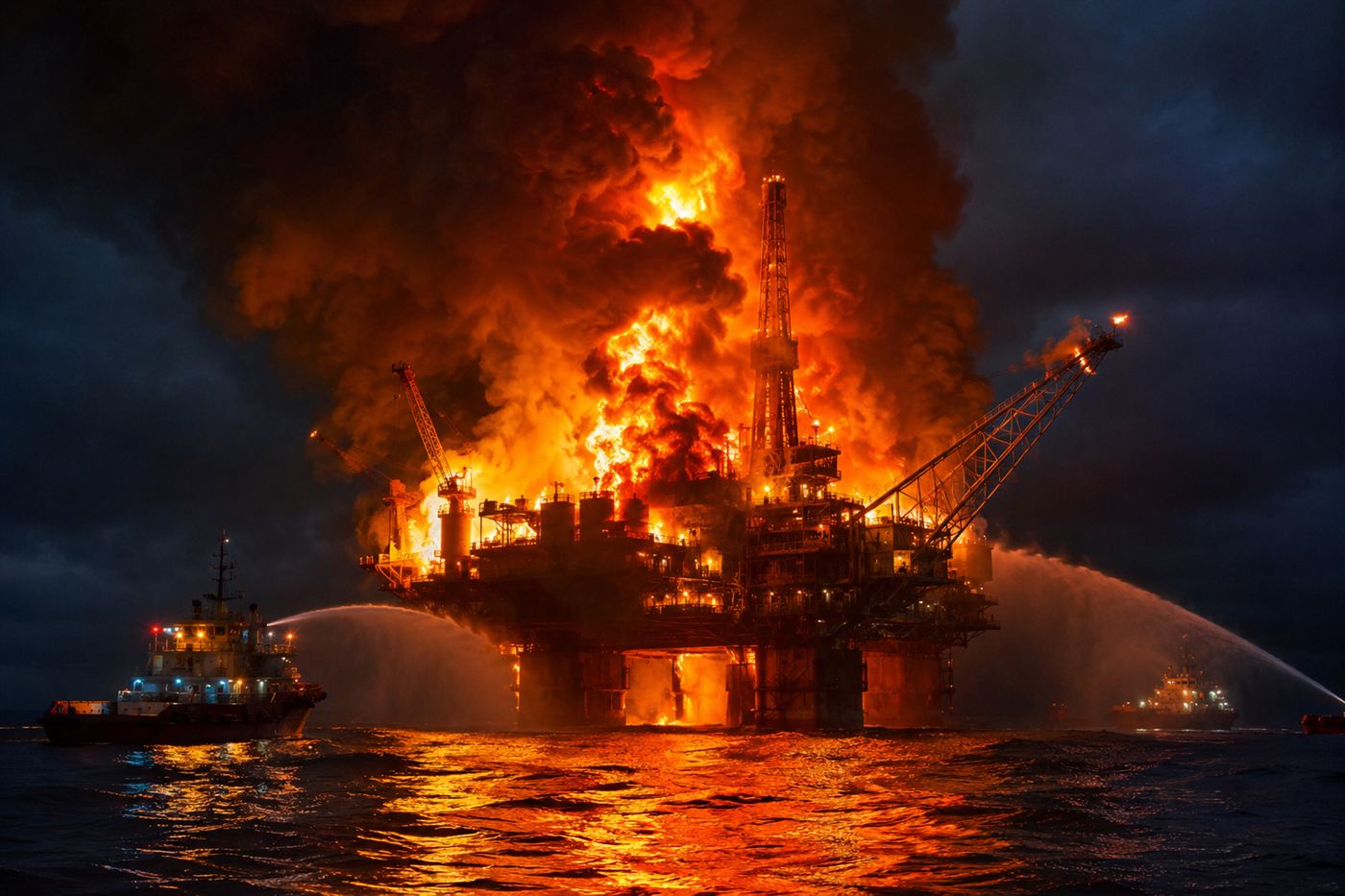
The Piper Alpha disaster in the North Sea in 1988 killed 167 workers on a platform fire that burned for hours before rescue boats could reach it, and like Deepwater Horizon it showed that offshore energy infrastructure at industrial scale creates failure modes that are very difficult to manage once initiated.
Why the blowout preventer couldn't stop the Macondo blowout
The blowout preventer is the last line of defense on any deepwater well.
It is a stack of heavy valves and rams sitting on the seafloor, designed to clamp shut around the drill pipe or cut through it entirely if a blowout begins.
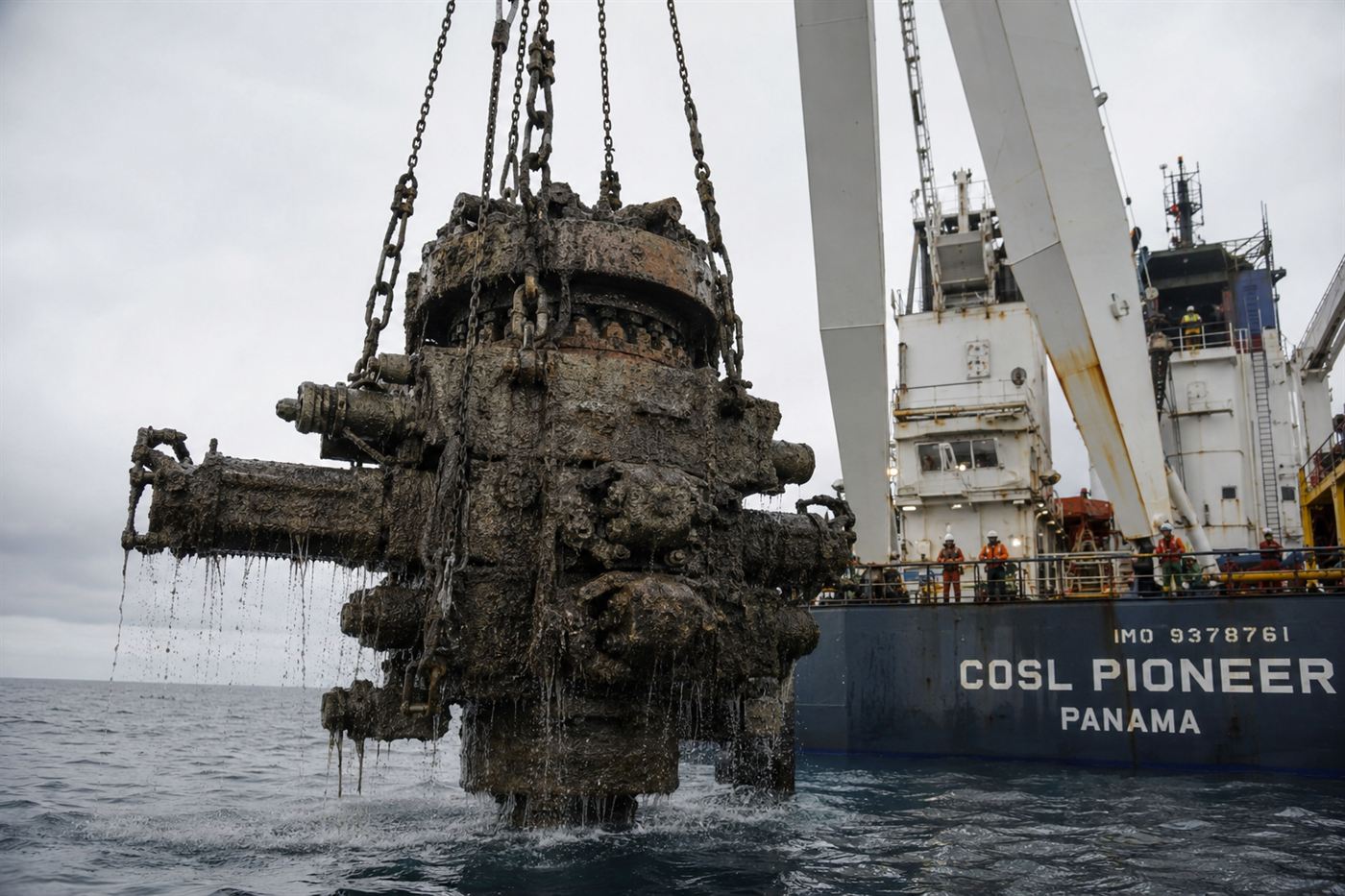
The Deepwater Horizon's blowout preventer was a Cameron International unit, five stories tall and weighing 325 tons, rated for exactly the conditions at the Macondo well.
When the explosion happened, the blind shear rams in the device were supposed to close automatically and cut the drill pipe, sealing the well.
They did not.
The drill pipe was buckled by the force of the explosion and had moved off-center inside the preventer.
The hydraulic system that powered the rams had lost pressure.
A backup battery in one of the control pods was dead, something investigators discovered only after the unit was recovered from the seafloor 11 months after the explosion.
Cameron International subsequently redesigned its blowout preventer specifications, and new offshore regulations introduced in 2016 required third-party inspections and tighter testing standards for deep-water units.
BP's Gulf of Mexico emergency plan listed walruses
While the Macondo blowout was running, reporters and congressional investigators began examining the emergency response plan BP had filed with federal regulators for its Gulf of Mexico operations.
The plan identified local wildlife that would need to be protected in the event of a major Gulf of Mexico oil spill.
Among the listed species: walruses, sea otters, and Pacific sea lions.
None of these animals live in the Gulf of Mexico.
They are found in Alaska and the North Pacific.
BP's Gulf emergency plan had been copied, with minimal editing, from a similar plan BP had filed for its Arctic operations.
The contact listed for a rapid-response wildlife cleanup organization was a man who had died several years before the plan was submitted.
The website listed as a resource was a dead link.
The Minerals Management Service, the federal agency responsible for reviewing and approving offshore drilling plans, had approved BP's Gulf plan without flagging any of these details.
The congressional testimony on this point was damaging in a specific way: the plan was not just wrong, it had not been read carefully by the people whose job was to evaluate it.
After the disaster, MMS was reorganized and split into three separate agencies: the Bureau of Ocean Energy Management, the Bureau of Safety and Environmental Enforcement, and the Office of Natural Resources Revenue.
Who paid and what the Macondo blowout cost
In 2016, BP reached a settlement with the US federal government and five Gulf Coast states for $20.8 billion, the largest environmental settlement in US history.
BP's total costs, including cleanup operations, individual and business claims, and legal settlements, eventually exceeded $65 billion.
BP CEO Tony Hayward became one of the most criticized executives of the decade after publicly saying, during the 87 days the well was flowing, "I'd like my life back."
The families of the 11 men who died on the Deepwater Horizon heard that statement.
Hayward was replaced in October 2010.
Transocean paid $1.4 billion in federal criminal and civil settlements.
Halliburton, which had cemented the well in the hours before the blowout, paid $1.1 billion to settle claims that its cement job was inadequate.
The BP oil spill also prompted the Obama administration to impose a six-month moratorium on deepwater drilling in the Gulf, which was later lifted after industry pressure and court challenges.
New well control regulations finalized in 2016 required improved blowout preventer standards, better well design requirements, and more rigorous third-party audits.
In 2017, the Trump administration began rolling back portions of those regulations, citing industry compliance costs.
The honest catch
The Gulf of Mexico has recovered faster than many scientists predicted.
Studies published in the years after the spill found that naturally occurring oil-eating bacteria, including species like Alcanivorax and Marinobacter, multiplied rapidly in the oil plume and degraded significant portions of the spilled hydrocarbons.
Deep-sea coral communities near the wellhead were damaged, and some fish populations in the spill zone showed stress responses in the years immediately after.
But the catastrophic, permanent sterility of the Gulf that some early projections described has not materialized.
The Gulf was already an oil-rich environment, naturally seeping crude from the seafloor in thousands of places.
That bacterial baseline existed before the Deepwater Horizon and expanded when suddenly given 4.9 million barrels of substrate.
What is harder to recover is the trust.
The emergency plan with the walruses was not an isolated mistake.
It reflected a regulatory culture in which offshore operators submitted plans that regulators were not resourced, or perhaps not inclined, to scrutinize carefully.
BP continues to operate in the Gulf of Mexico and remains one of its largest producers.
The Macondo prospect itself was permanently plugged and abandoned.
The seafloor where the Deepwater Horizon sank is 5,000 feet down, and the rig sits there still.
Eleven men went to work on the Deepwater Horizon on April 20, 2010, and did not come back.
The well they were drilling flowed for 87 days after the rig sank.
The emergency plan their employer had filed with federal regulators listed walruses as animals in need of protection in the Gulf of Mexico.
The blowout preventer designed to stop exactly this from happening had a dead battery and had never been fully tested at depth.
These were not individually catastrophic failures.
They were routine ones.
The Macondo blowout is now 15 years old. Are the offshore regulations that followed it still strong enough, or has the industry cycled back to the culture of approved-but-unread paperwork that allowed Deepwater Horizon to happen? Tell us in the comments.
More from Watts & Wild
 Piper Alpha killed 167 workers and rewrote offshore safety law
 Ivanpah solar plant burned birds alive in the Mojave
 Britain's worst nuclear accident was covered up for decades
 Itaipu Dam drowned the world's most powerful waterfall
 The Tenerife disaster killed 583 and the pilot was his airline's safety chief