Brazil flooded the largest waterfall on earth to fill the Itaipu dam's reservoir in 1982, and a pedestrian bridge collapsed killing around 80 people who had come to say goodbye to Guaira Falls
When Brazil and Paraguay closed the gates of the Itaipu dam and began filling the reservoir in October 1982, the rising water swallowed what had been the world's mightiest waterfall by volume. Hundreds of thousands of people arrived at Guaira Falls to watch before it was gone. A viewing bridge gave way.
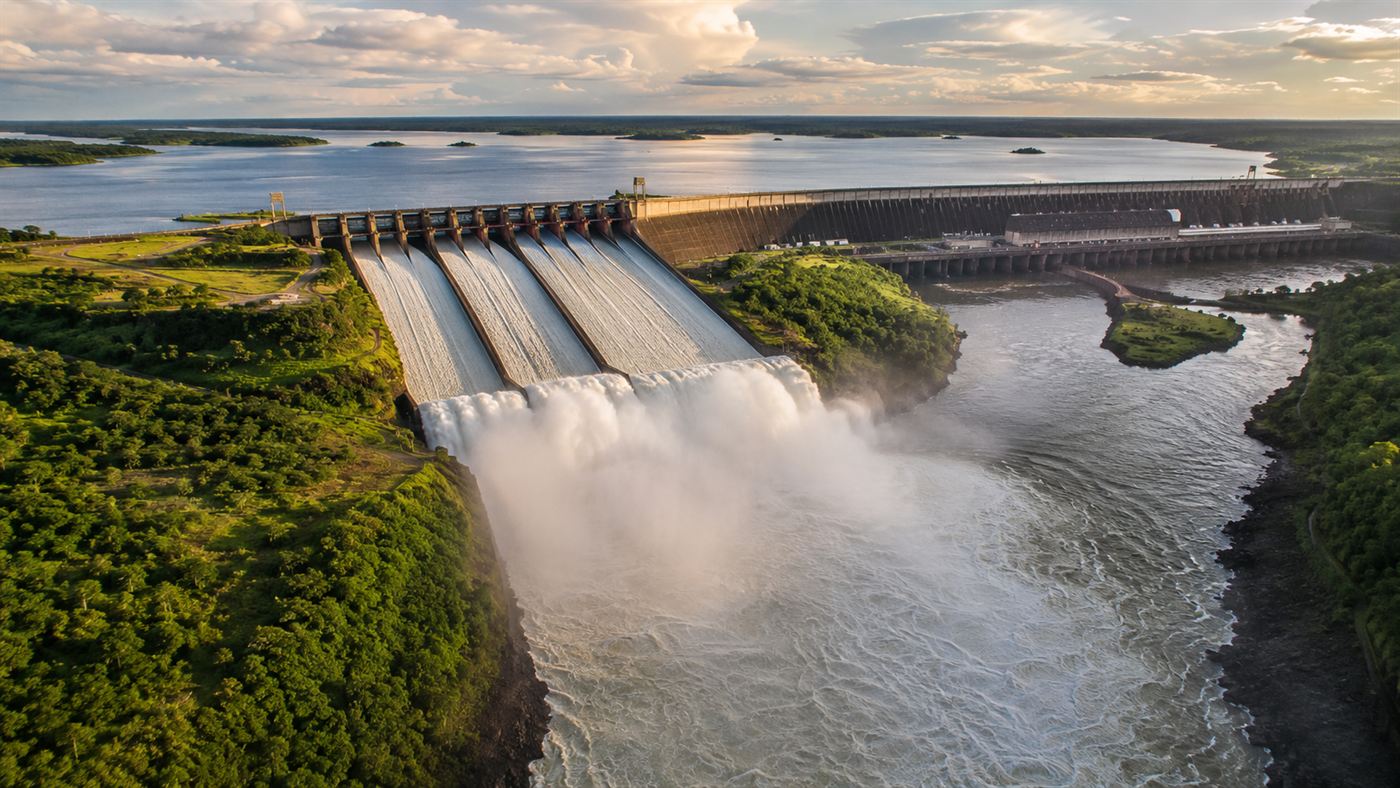
The Itaipu dam on the Paraná River, spanning the border between Brazil and Paraguay. It was the world's largest hydroelectric dam by installed capacity for two decades. The waterfall it drowned was larger than Niagara by several orders of magnitude. Illustration: Watts & Wild.
The Itaipu dam is one of the largest structures humans have ever built. It sits on the Paraná River between Brazil and Paraguay, and its 14,000 megawatts of installed capacity made it the most powerful hydroelectric dam on earth from the time its last turbine came online in 1991 until China's Three Gorges project overtook it in 2012. Itaipu Binacional, the joint entity that runs it, still generates enough Paraguay electricity to cover 92 percent of that country's national demand, and meets roughly 15 percent of Brazil's. By that measure, it is an engineering success.
What the Itaipu dam required in exchange was the permanent submersion of Guaira Falls, a series of eighteen cataracts on the Paraná River known in Brazil as Sete Quedas, Seven Falls. Before the reservoir covered them in 1982, the falls carried an average of 13,300 cubic meters of water per second, peaking above 50,000 during floods. Niagara Falls, for reference, carries around 2,400 cubic meters per second on average. Guaira Falls was not the tallest waterfall on earth, but it moved more water than any other. It had been doing so for at least ten thousand years. It is now under roughly 30 meters of reservoir water, and it is not coming back.
What Guaira Falls was
The falls formed where the Paraná River narrows suddenly from a width of nearly five kilometers down to roughly 60 meters, squeezing through a volcanic rock gorge before cascading over a series of drops that together spanned about 40 meters in height.
The roar was audible from kilometers away.
Indigenous peoples of the region had lived around the falls for centuries.
Spanish and Portuguese explorers documented them from the 16th century onward.
By the mid-20th century, Guaira Falls was a significant tourist destination, with a national park on the Brazilian side and regular visitors from across South America.
Geographers and engineers who studied the site in the 1960s calculated that the falls held the greatest hydraulic potential of any point on earth: more energy could theoretically be extracted from Guaira Falls than anywhere else, simply because of the volume of water moving through that narrow gorge.
That calculation was what sealed their fate.
Two dictatorships sign a treaty
The Itaipu dam was conceived and authorized by governments that were not chosen by the people they represented.
Brazil was under military rule from 1964.
Paraguay had been under Alfredo Stroessner since 1954, one of the longest dictatorships in Latin American history.
In 1973, the two governments signed the Treaty of Itaipu, creating Itaipu Binacional and establishing the terms under which the dam would be built and operated.
Under those terms, each country would own half the dam and half the power it generated.
Any power that Paraguay did not use for its own domestic needs would be sold to Brazil, at a price set by the treaty rather than by the market.
The price set in 1973 was low.
It stayed low for decades after the dictatorships ended and democratic governments replaced them, because the treaty said it would.
Paraguay electricity exports to Brazil earned the country a fraction of what the same electricity would have fetched on the open market for most of the 20th century.
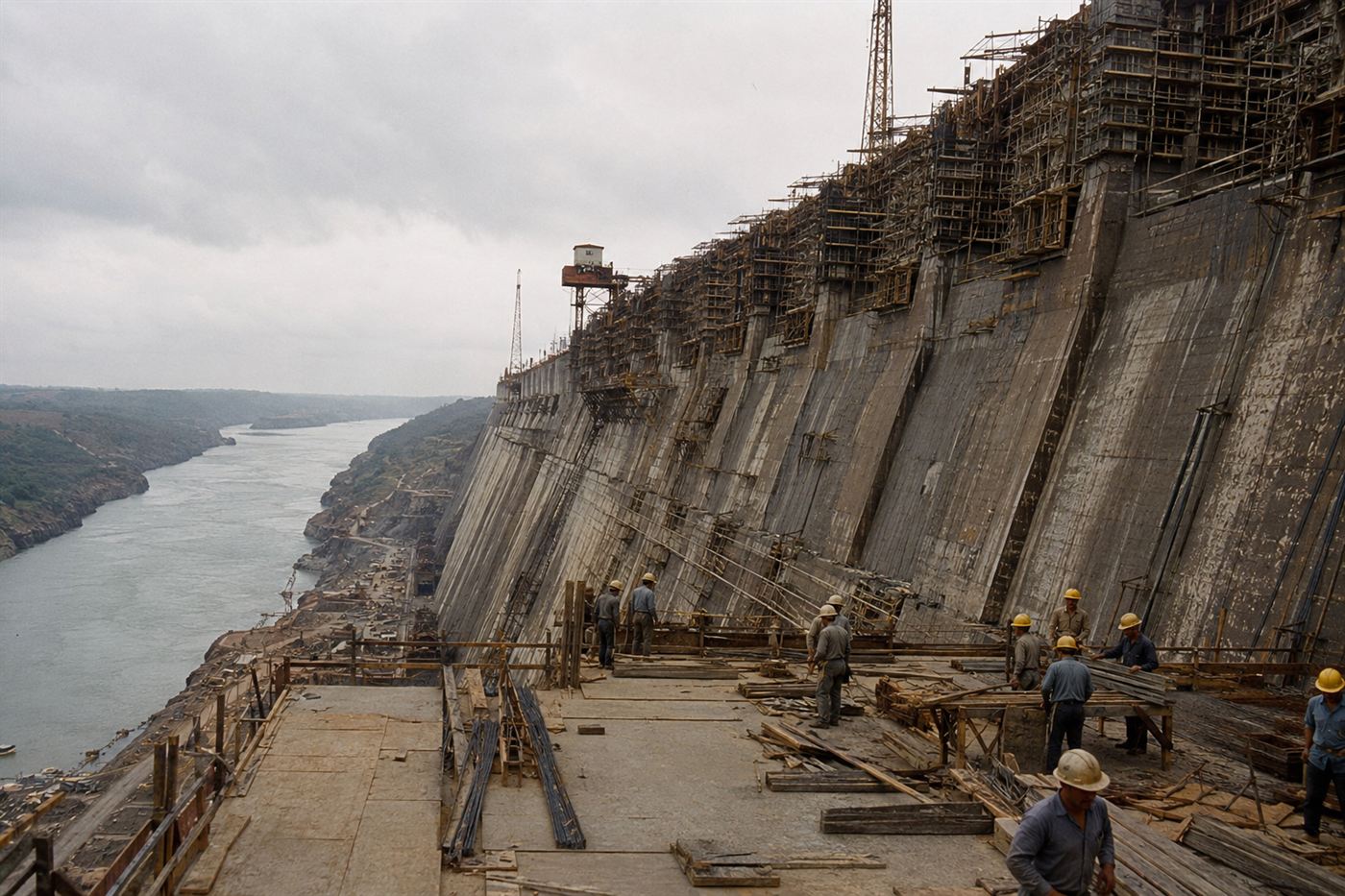
Construction on the Itaipu dam began in 1975.
About 40,000 workers were employed at peak, many of them Brazilians brought in from other regions.
Around 80,000 families were displaced to make way for the reservoir.
Approximately 8,000 Avá-Guaraní people, whose communities had occupied the land for generations, received no compensation at all in the initial displacement and were not meaningfully consulted about the project that was ending their way of life.
The farewell crowds and the bridge
As it became clear in the early 1980s that the reservoir would rise and cover Guaira Falls, people began traveling to see them before they were gone.
The Brazilian government kept the national park open, and visitation grew to levels the infrastructure had never been designed to handle.
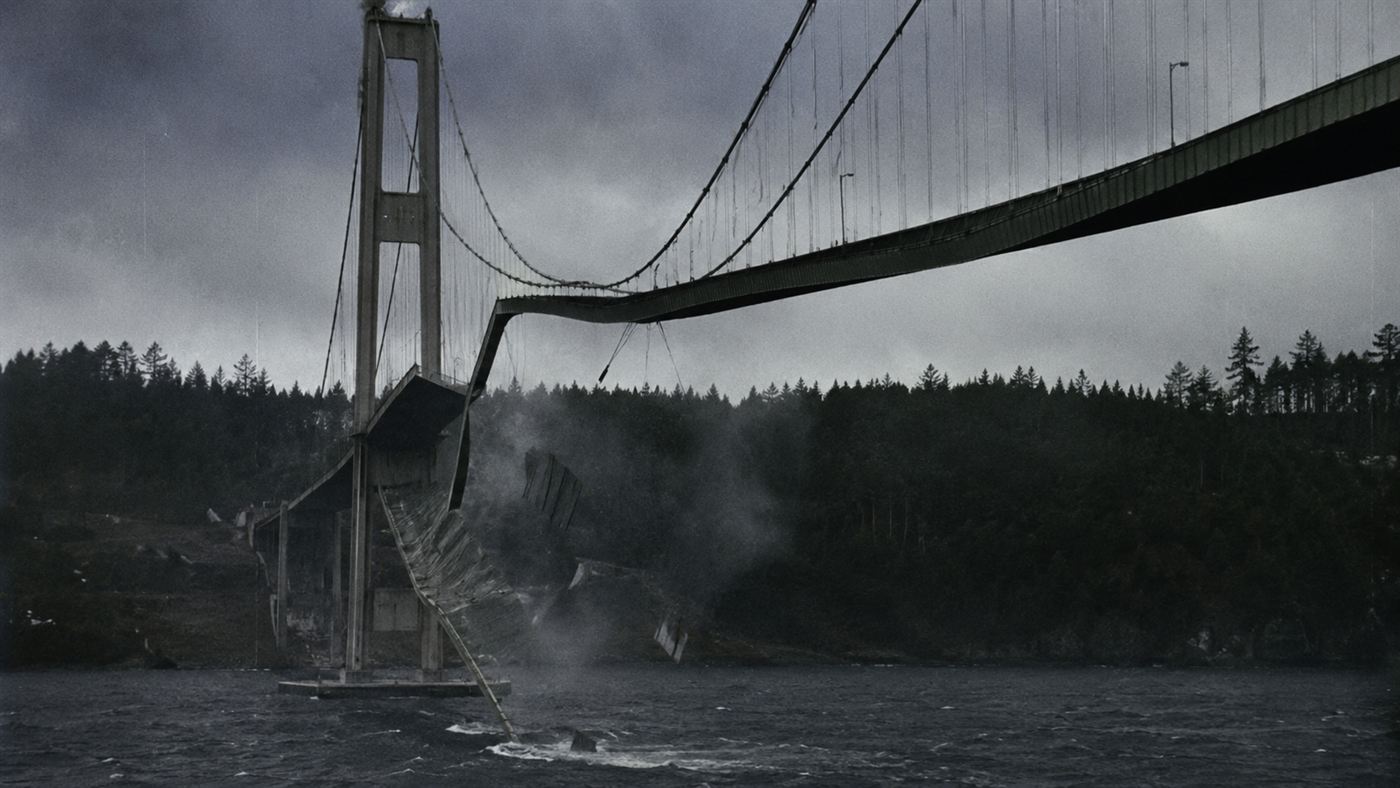
On January 17, 1982, a pedestrian viewing bridge above the falls collapsed under the weight of the crowd.
The exact death toll was never officially confirmed.
The Brazilian military government suppressed detailed reporting on the incident.
Witnesses and survivors put the number of people killed at around 80, though some estimates went higher.
The falls themselves continued to draw visitors even after the bridge was gone, right up until the water reached them.
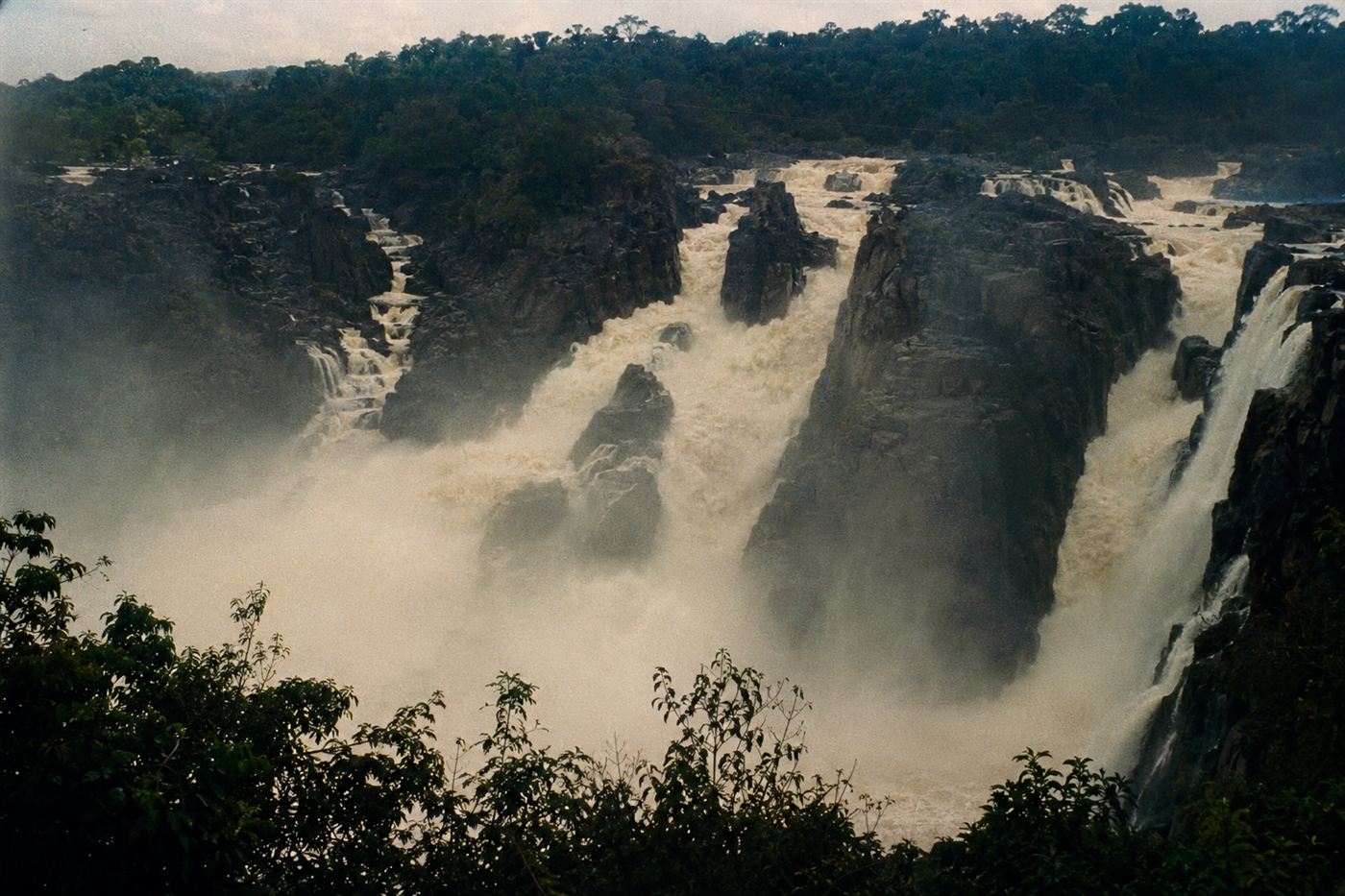
The Itaipu dam gates close in October 1982
The sluice gates of the Itaipu dam were closed in October 1982, and the reservoir began to fill.
The rising water reached Guaira Falls over the following weeks.
Brazilian authorities detonated explosives to blast away the remaining rock formations above the waterline, officially to prevent a navigational hazard but also to prevent any future effort to argue that the falls still existed in some form.
The decision to destroy the physical rock was controversial at the time and remains so.
The falls were gone.
The first generating unit at the Itaipu dam began producing power in May 1984.
The numbers and the treaty renegotiation
The Itaipu dam took until 1991 to reach full operational capacity with all 20 generating units running.
In 2016, it set a world record for annual hydroelectric dam generation, producing 103.1 terawatt-hours of electricity, surpassing the Three Gorges dam's output for that year.
Paraguay's 92-percent electricity share from Itaipu Binacional made it one of the most electrified countries in South America by household coverage, but the economic terms of that arrangement remained deeply contentious.
For decades, Paraguay sold its surplus Paraguay electricity to Brazil at a fixed price set by the 1973 treaty, which was far below what it could have earned selling the same power to other buyers.
Economists calculated that the cumulative subsidy Paraguay had provided to Brazil through below-market electricity sales ran into the tens of billions of dollars over the life of the treaty.
In 2009, the two governments signed an agreement adjusting the compensation Brazil paid for the surplus electricity, tripling the payment.
In 2023, Paraguay and Brazil opened formal renegotiations of the treaty itself, aiming to revise the pricing structure before the current terms expire in 2033.
The honest catch
The Itaipu dam is genuinely clean in the sense that it produces no carbon dioxide while generating power.
The reservoir does emit methane from decomposing organic matter, particularly in the first years after flooding, but the ongoing emissions are far below those of an equivalent coal or gas plant.
By CO2 accounting, Itaipu Binacional is a success.
What the CO2 accounting does not capture is Guaira Falls, which no longer exists.
It does not capture the 80,000 families whose land is now at the bottom of a reservoir.
It does not capture the Avá-Guaraní communities that were displaced without consultation or compensation.
It does not capture the around 80 people who died on a bridge trying to see a natural wonder one last time.
The hydroelectric dam industry often presents large-scale hydro as a benign alternative to fossil fuels, and in terms of atmospheric carbon it is.
The Itaipu dam case is a reminder that the footprint of a clean energy project can include a great deal that does not show up in a carbon balance sheet.
The treaty that governs Itaipu Binacional was also signed without any democratic mandate on either side, by governments that answered to no one who had to live with the consequences.
The people who came to watch Guaira Falls in January 1982 knew the consequences.
That is why they came.
The falls are gone permanently. What would you ask the engineers who designed this project if you could talk to them today?
Related reading: How Soviet engineers drained the world's fourth-largest lake to grow cotton, and left a fleet of ships rusting in the desert.