A US company says it brought back the dire wolf, extinct for 12,500 years, by rewriting 20 genes in a grey wolf, and the three white pups are real, though not quite what the name suggests
In April 2025 a Texas company unveiled three white wolf pups it called dire wolves, a predator that vanished from the Earth around 12,500 years ago, and billed it as dire wolf de-extinction. The animals are alive and healthy. But the story of how they were made is stranger, and more limited, than that word makes it sound.
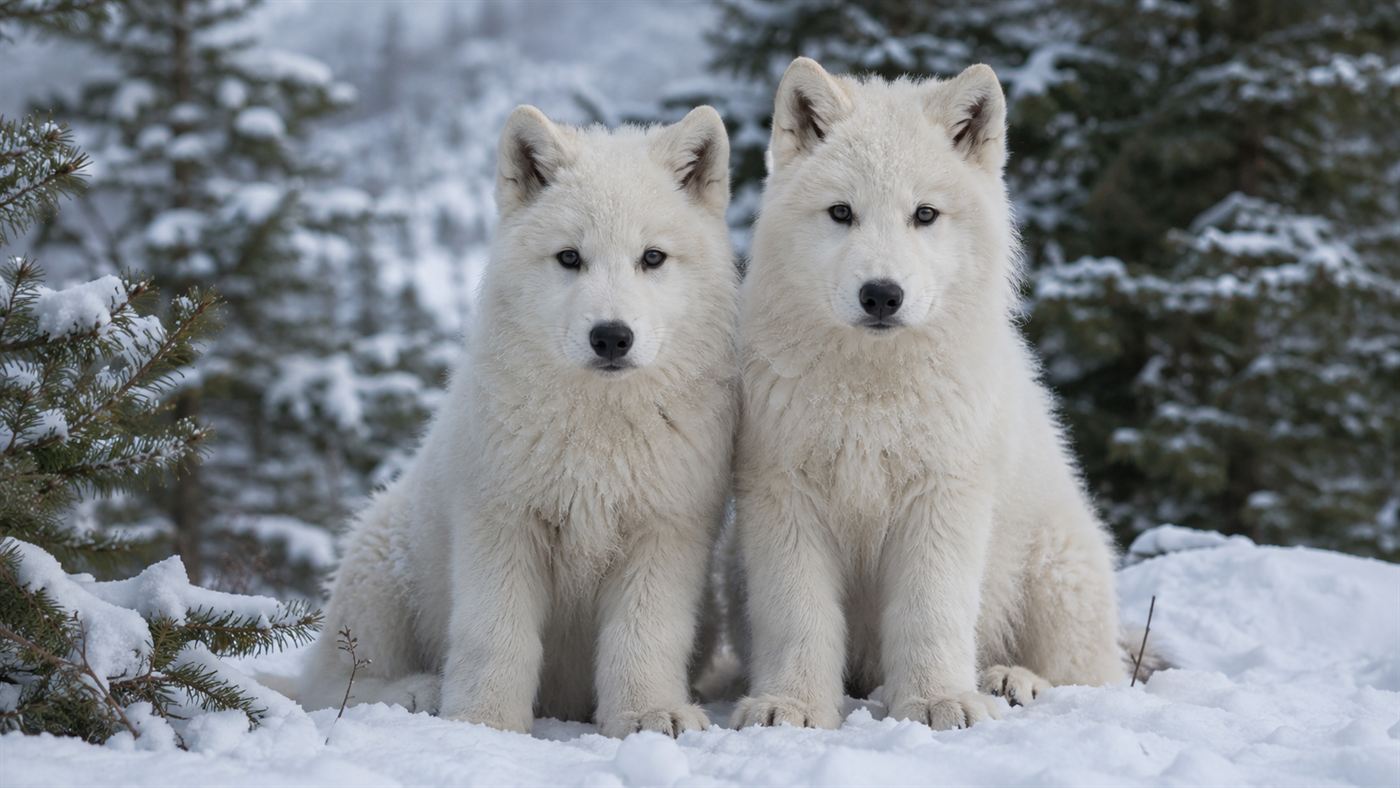
The pups are real, large and white, but what exactly they are is the harder question. Illustration: Watts & Wild.
The dire wolf was a real animal, a heavy, powerful predator that hunted across the Americas during the Ice Age and died out around 12,500 years ago. So when the biotech company Colossal Biosciences announced that it had brought one back to life, the news travelled fast. As TIME reported when it put the pups on its cover, Colossal had produced three animals it presented as dire wolves, two males named Romulus and Remus, born in October 2024, and a female called Khaleesi, born in early 2025.
They are not small, and they are not ordinary. The pups are pale, almost white, and growing fast. By six months the males already stretched nearly 1.2 metres and weighed about 36 kilograms, with the company projecting they will reach 1.8 metres and 68 kilograms full grown. To look at, they are exactly the kind of large, ghostly wolf the name promises. The complication is everything underneath.
How you "rebuild" an extinct wolf
Colossal did not find frozen dire wolf cells and clone them. Instead its scientists read DNA pulled from two ancient fossils, a 13,000-year-old tooth from Ohio and a 72,000-year-old ear bone from Idaho, and compared that genetic code with the genome of the living grey wolf, the dire wolf's distant relative.
They then used gene editing to rewrite a small set of letters in grey wolf cells so the resulting animals would carry features the fossils pointed to. According to the published account of the project, the team made 20 precise edits across 14 genes, and the edited embryos were carried to term by domestic dogs acting as surrogate mothers. The pups that resulted are, genetically, grey wolves with a handful of deliberate changes.
What the edits actually changed
Those 20 edits were chosen to flip the most visible dials. They gave the pups a white coat, a bigger body, broader shoulders, a wider head, larger teeth and jaws, more muscular legs, and even different vocalisations, the howls and whines that set them apart from an ordinary grey wolf. In other words, the changes were aimed at making the animals look and sound like the dire wolf of the fossil record.
That is a genuinely impressive piece of laboratory work, and the pups are healthy living proof that it can be done. But it is worth being precise about what was achieved: a grey wolf was edited until it resembled a dire wolf in a set of chosen traits. It was not rebuilt, gene for gene, into the lost species.
The honest catch about dire wolf de-extinction
This is the part the headlines tend to skip, and it matters. A real dire wolf differed from a grey wolf across a vast stretch of its genome, not 20 places, so changing 20 genes cannot recreate the species. The most striking admission came from Colossal's own chief scientist, Beth Shapiro, who said plainly that the three animals are "grey wolves with 20 edits" and that calling them dire wolves is a colloquialism, not a scientific claim. She has been clear that it is impossible to bring back an extinct organism identical to the original.
So the truthful description is not that the dire wolf walks again, but that a company has built a grey wolf engineered to resemble one. That is still remarkable, and it is also a long way from the resurrection the word de-extinction conjures. Several outside scientists pushed back hard on the framing for exactly this reason, and it is fair to hold both thoughts at once: the animals are real and the laboratory feat is real, and they are not, in the strict sense, dire wolves.
Why it matters anyway
Strip away the dire wolf branding and what is left is still significant. The tools Colossal used, reading ancient DNA, making precise edits, and bringing engineered embryos to term, are the same tools that could help species teetering on the edge right now. The company has pointed its technology at living animals too, including work to boost the dwindling, inbred population of the red wolf, where adding genetic diversity could be a real lifeline.
That is the more grounded promise here. Whether or not you can ever truly resurrect a lost species, the ability to edit and diversify the genomes of endangered ones could become a genuine conservation tool. The dire wolf pups are best understood as a spectacular demonstration of that capability, wrapped in a name chosen to make headlines.
Why three white wolves matter
The arrival of Romulus, Remus and Khaleesi is a strange and genuinely new thing in the world, three large, healthy, deliberately designed animals that did not exist a couple of years ago. Watching how they grow, how they behave, and whether engineered wolves can ever play a role beyond a guarded preserve will tell us a lot about where this technology is really heading.
What they are not is a time machine. The dire wolf is still extinct, and these pups are a modern grey wolf reshaped to wear its face. The science is dazzling and the marketing is slippery, and the most useful thing you can do is admire the first while keeping a clear eye on the second. Does editing a grey wolf to look like a dire wolf count as bringing a species back, or is it something else entirely? Tell us what you think in the comments.