In 1942 a fire tore through a packed Boston nightclub in minutes, and the Cocoanut Grove fire killed 492 people, then rewrote the safety rules that now protect everyone who walks into a public building
On a Saturday night in wartime Boston, the city's most glamorous club became a death trap in about ten minutes. Almost everything that killed the 492 victims is now illegal. The exit signs and outward-opening doors you never notice are their legacy.
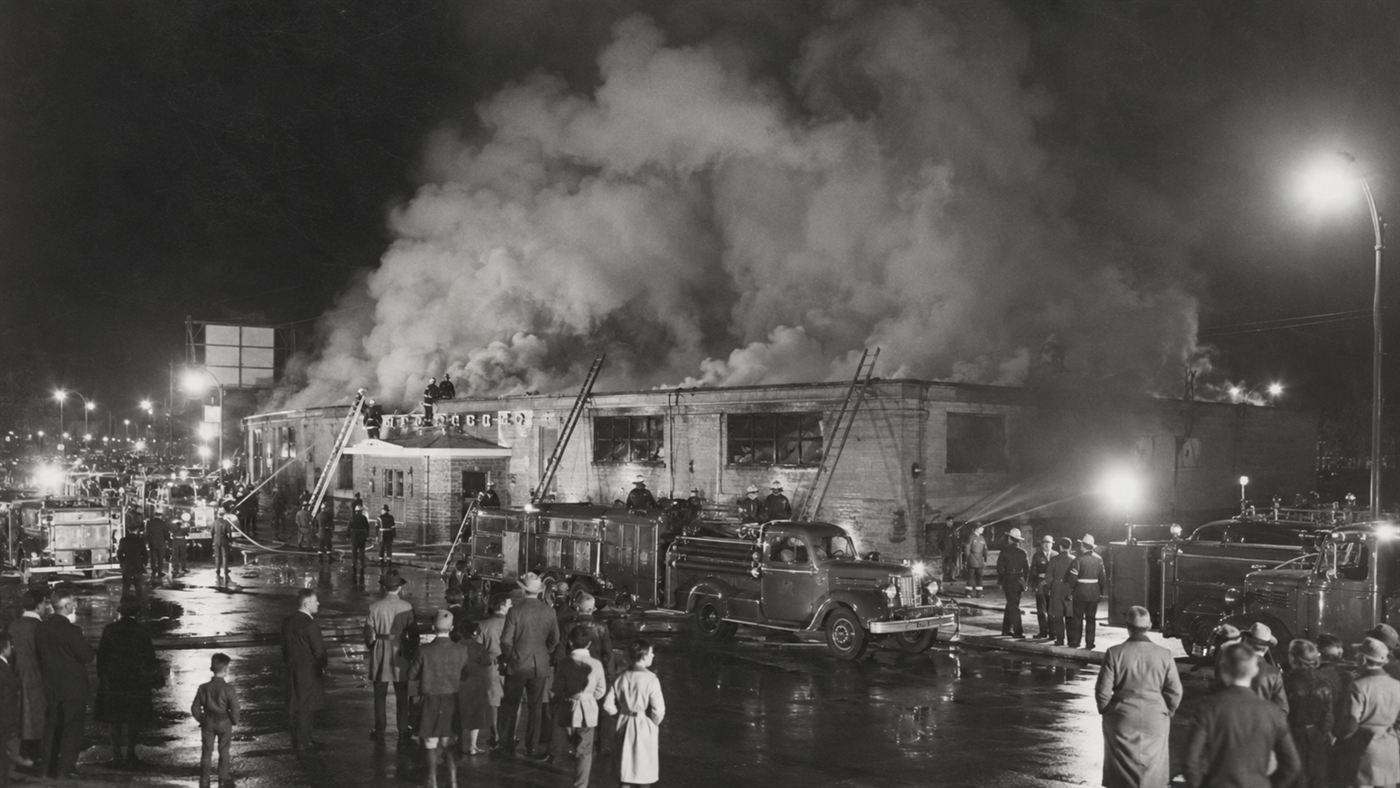
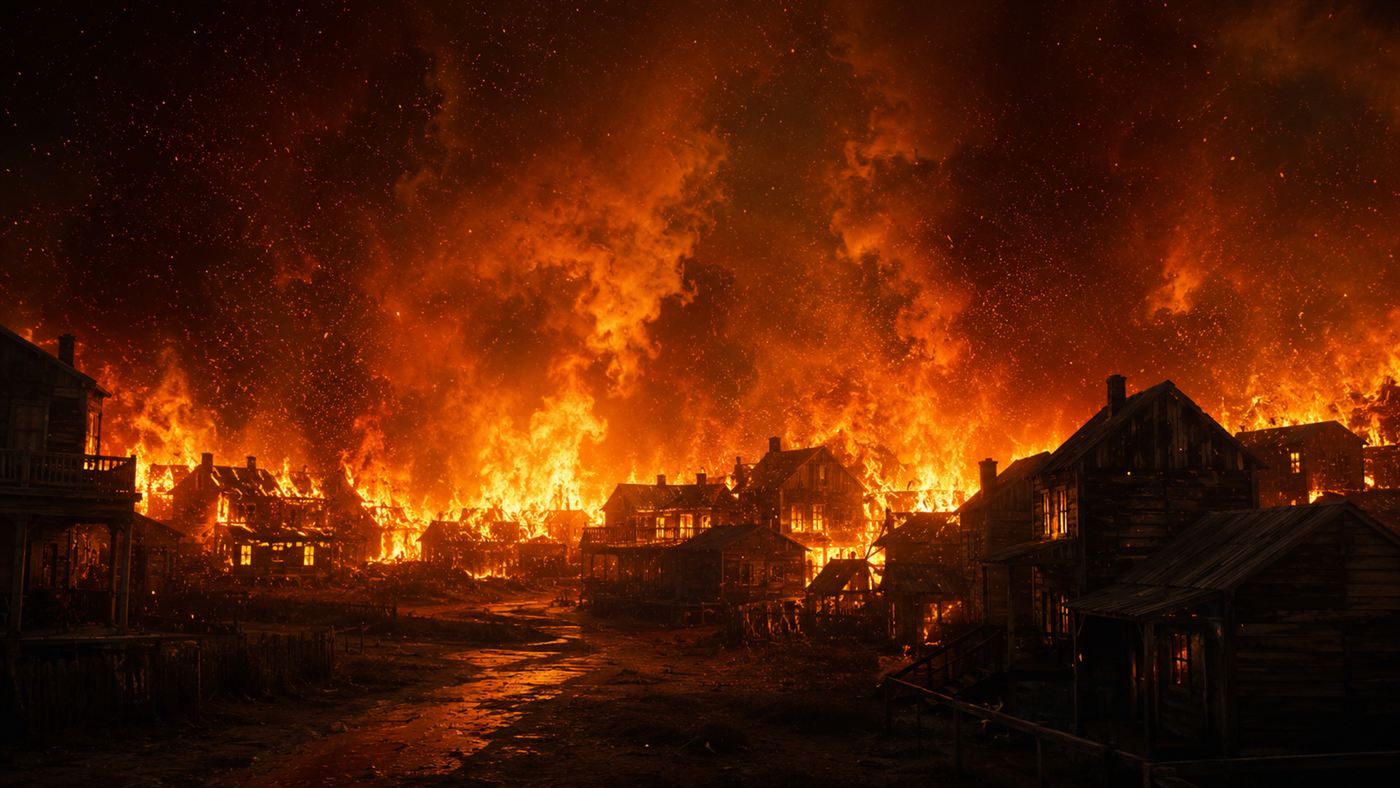
Firefighters worked the Cocoanut Grove in Boston on the night of November 28, 1942. Illustration: Watts & Wild.
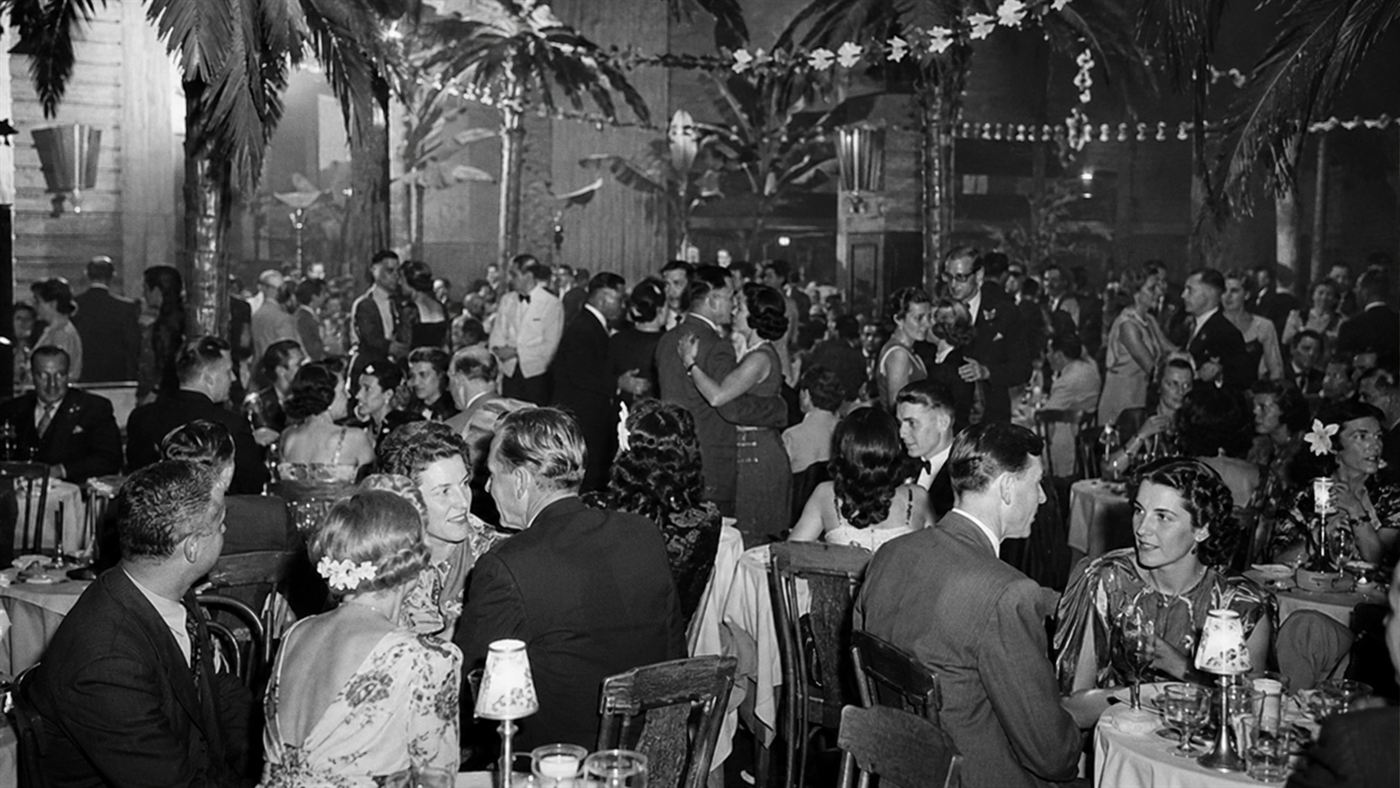
The Cocoanut Grove was the place to be in Boston in 1942. It was a sprawling, dimly lit nightclub done up like a tropical paradise, with fake palm trees, rattan, and satin draped across the ceilings, and on the night of November 28 it was jammed with soldiers on leave, couples, and a college football crowd drowning their sorrows. The legal capacity was 460 people. More than a thousand were inside.
In roughly ten minutes, that glamour became one of the deadliest fires in American history. As Britannica records, 492 people died in the Cocoanut Grove fire, making it the deadliest nightclub fire ever and one of the worst single-building fires the United States has known. Almost no one outside New England remembers it, and yet its fingerprints are on every public building you enter.
The short version: the Cocoanut Grove fire killed 492 people in a wildly overcrowded Boston nightclub in 1942, the deadliest nightclub fire in history, mostly because the exits were locked, hidden, or opened inward, and the main way out was a jammed revolving door. The horror of it forced sweeping fire safety codes and major advances in burn medicine that still protect and heal people today.
What caused the Cocoanut Grove fire?
The spark itself has never been settled. The fire started in the basement Melody Lounge, and the popular account is that a busboy lit a match while replacing a lightbulb in the dark, though investigators could never prove it and the official cause stayed undetermined. What is certain is that once something caught, the room was built to burn.
The tropical decor was a fire waiting to happen: paper and cloth palm fronds, cheap fabric, and, because wartime shortages had made nonflammable refrigerant scarce, an air-conditioning system reportedly charged with a flammable gas. Flames raced across the ceiling and a wall of superheated, toxic smoke rolled through the club in seconds. Many victims never had time to stand up. This was less a slow blaze than a flash of fire and poison gas through a crowded box.
Why so many could not get out
The death toll was not really about the flames. It was about the doors. The Cocoanut Grove's main entrance was a single revolving door, and when panicked crowds hit it from both sides at once, it jammed solid. Dozens of bodies were later found stacked behind it, so tightly packed that rescuers could not push it open from outside.
The other exits were worse. Some had been bricked or welded shut years earlier, back when the club was a Prohibition speakeasy. Others were locked to stop customers from skipping out on their tabs, and at least one important door opened inward, so the crush of people trying to flee pressed it shut instead of open. A building full of people who simply needed a way out found almost none. It is the single most important lesson the disaster taught.
How the Cocoanut Grove fire changed the rules
The response was fast and lasting. Within months, Boston and then jurisdictions across the country overhauled their building rules, and the tragedy became a cornerstone of modern fire safety codes, including the widely adopted Life Safety Code. If you have ever wondered why the rules are the way they are, the answer is often the Cocoanut Grove.
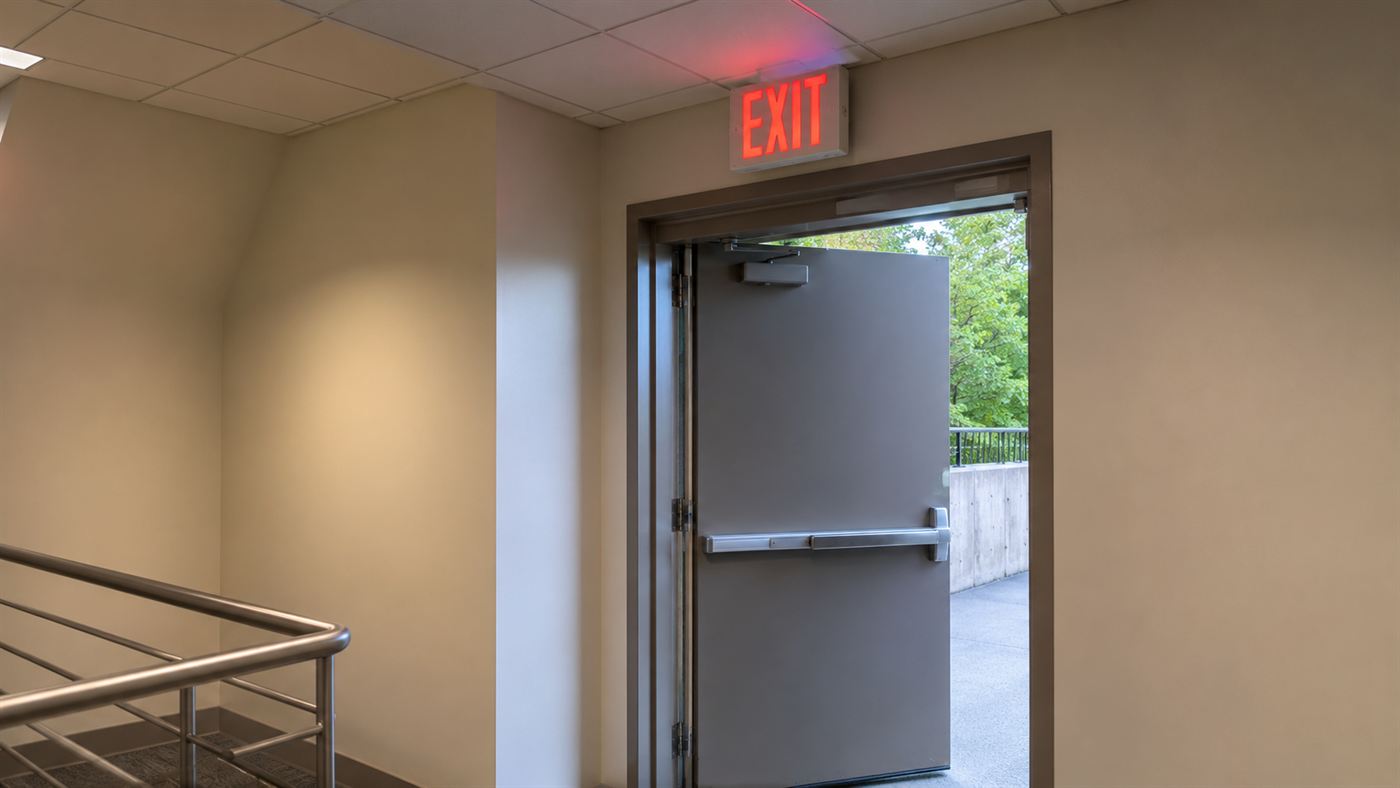
The reforms read like a checklist drawn directly from what went wrong. Emergency exits have to stay unlocked from the inside. Exit doors must swing outward, so a panicking crowd forces them open rather than shut. A revolving door can no longer be a required exit unless it is flanked by normal outward-opening doors. Flammable decorations were banned, and lit exit signs and emergency lighting became mandatory. Every one of those quiet features is a scar from that night.
The hospital breakthroughs nobody wanted
The disaster also pushed medicine forward, because Boston's hospitals were suddenly flooded with hundreds of severe burn cases at once. Doctors at Massachusetts General Hospital and Boston City Hospital had to improvise, and what they learned reshaped burn treatment for good, from gentler wound care to the management of shock and the first clear descriptions of smoke-inhalation injury.
Two wartime advances got a dramatic proving ground here. Newly organized blood banks supplied plasma to treat shock on a scale never tried before, and the fire became one of the first times penicillin was used on civilians, with the drugmaker Merck rushing a supply to Boston under police escort. Grim as it is to say, a lot of what modern hospitals know about burn treatment was learned from the people who did not make it out of that club.
The honest catch
It is easy to turn this into a tidy tale of lessons learned, but the details are uglier than that. Many of the safety rules that would have saved the crowd already existed on paper in 1942; they simply were not enforced, in a city where clubs and inspectors were often a little too friendly. The club's owner was convicted of manslaughter, but the busboy blamed in the press was cleared, a reminder of how quickly a disaster looks for a single scapegoat.
It is also worth resisting the neat image of the killer revolving door as the whole story. The door was a horror, but the deeper causes were overcrowding, locked and hidden exits, and decor and gases that made the air itself lethal within seconds. The Cocoanut Grove did not fail in one dramatic way; it failed in a dozen ordinary ones at the same time. That is exactly why the fix had to be a whole new rulebook, not a single repair.
Almost everything that made the Cocoanut Grove deadly is now against the law, which is why a fire that killed 492 people quietly protects millions more. Next time you notice an exit sign or a door that pushes open outward, do you think we should credit the disaster that put it there? Tell us what you think in the comments.
Related reading: how the Triangle Shirtwaist fire forced New York to rewrite its workplace laws, and how a Texas school explosion gave natural gas its warning smell. See also how the Donora smog of 1948 pushed America toward clean-air laws.