For five days in 1948, a poisonous fog settled over the mill town of Donora, Pennsylvania and killed 20 people, and the Donora smog shocked America into finally cleaning up its air
The people of Donora were used to smoke; the mills were the whole reason the town existed. Then one October weekend the air itself began to kill them. By the time it rained, 20 were dead and the country's view of pollution had changed for good.
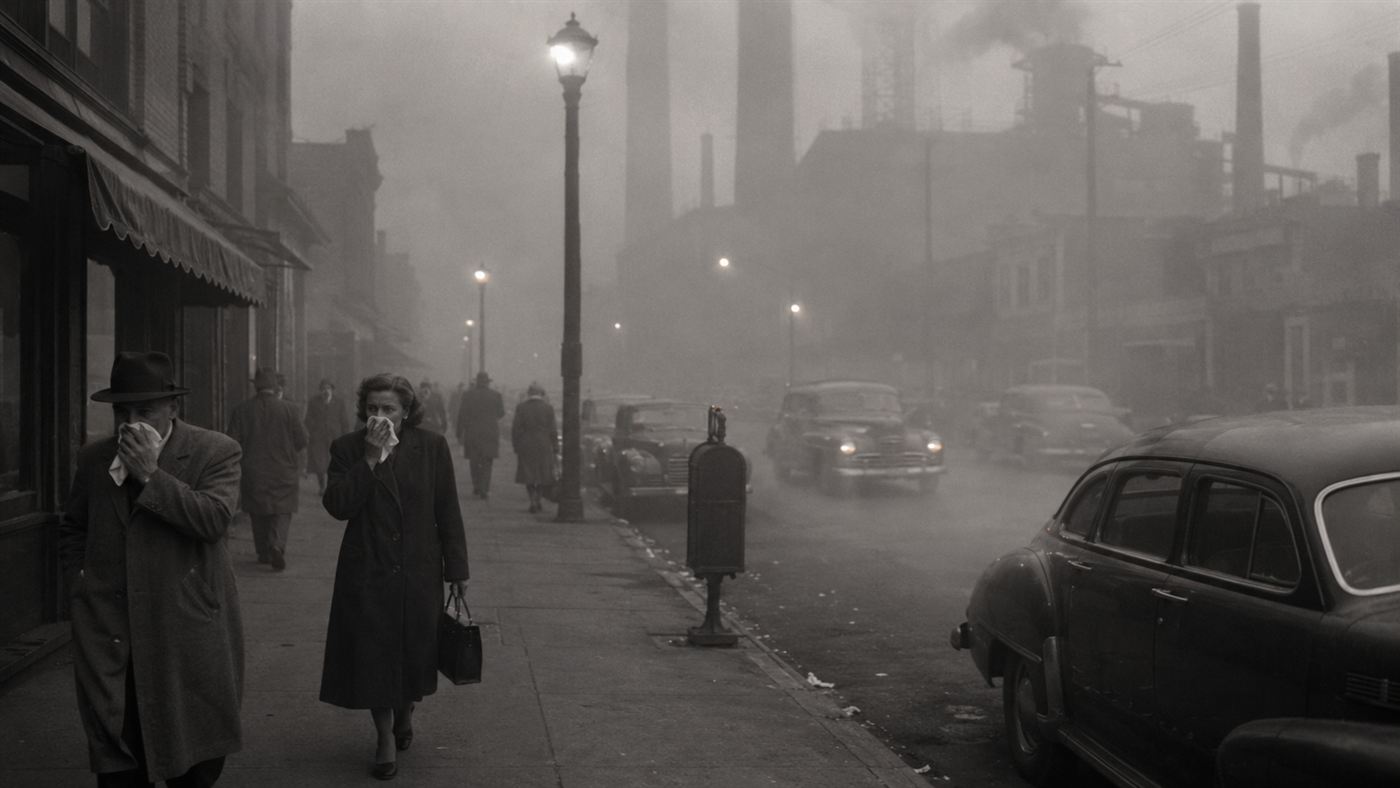
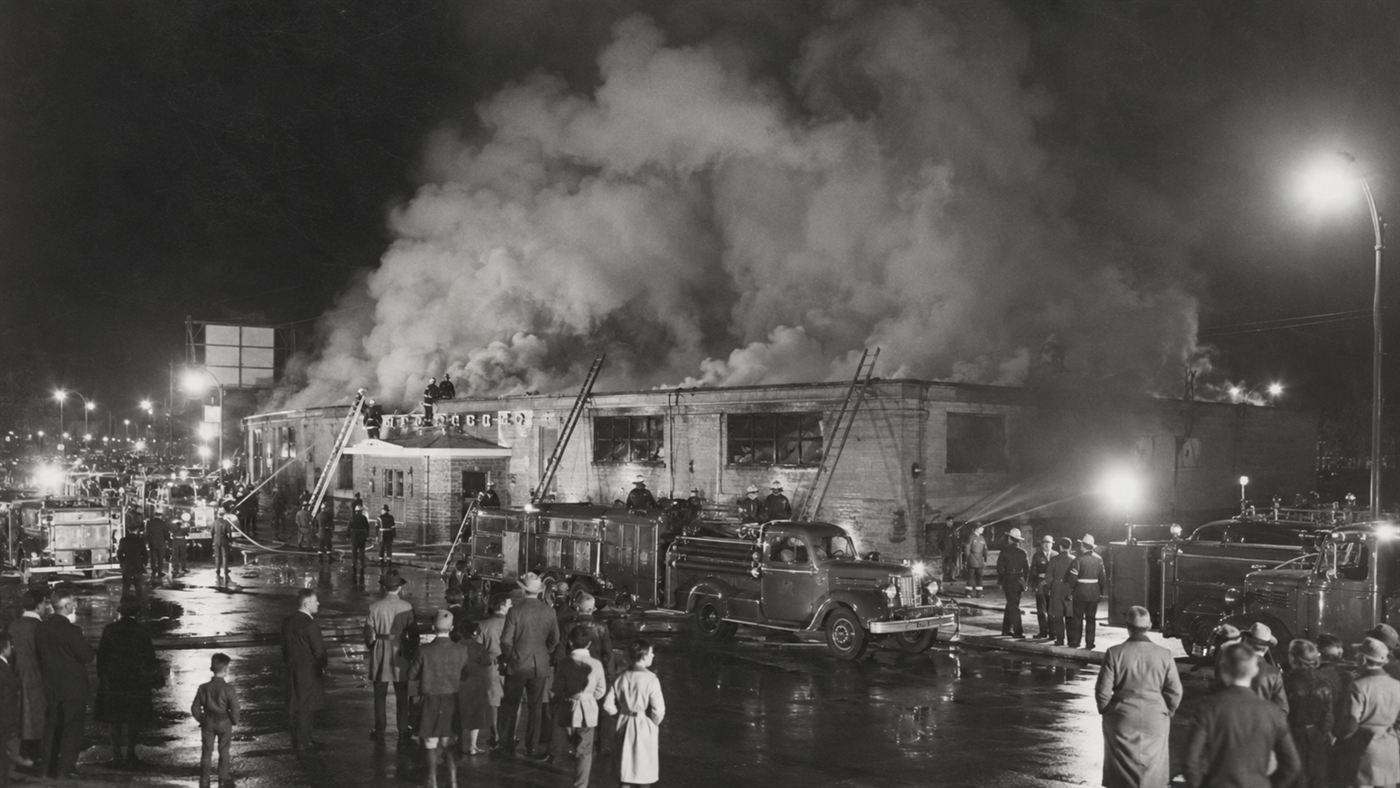
At midday during the 1948 Donora smog, drivers needed headlights to see the curb. Illustration: Watts & Wild.
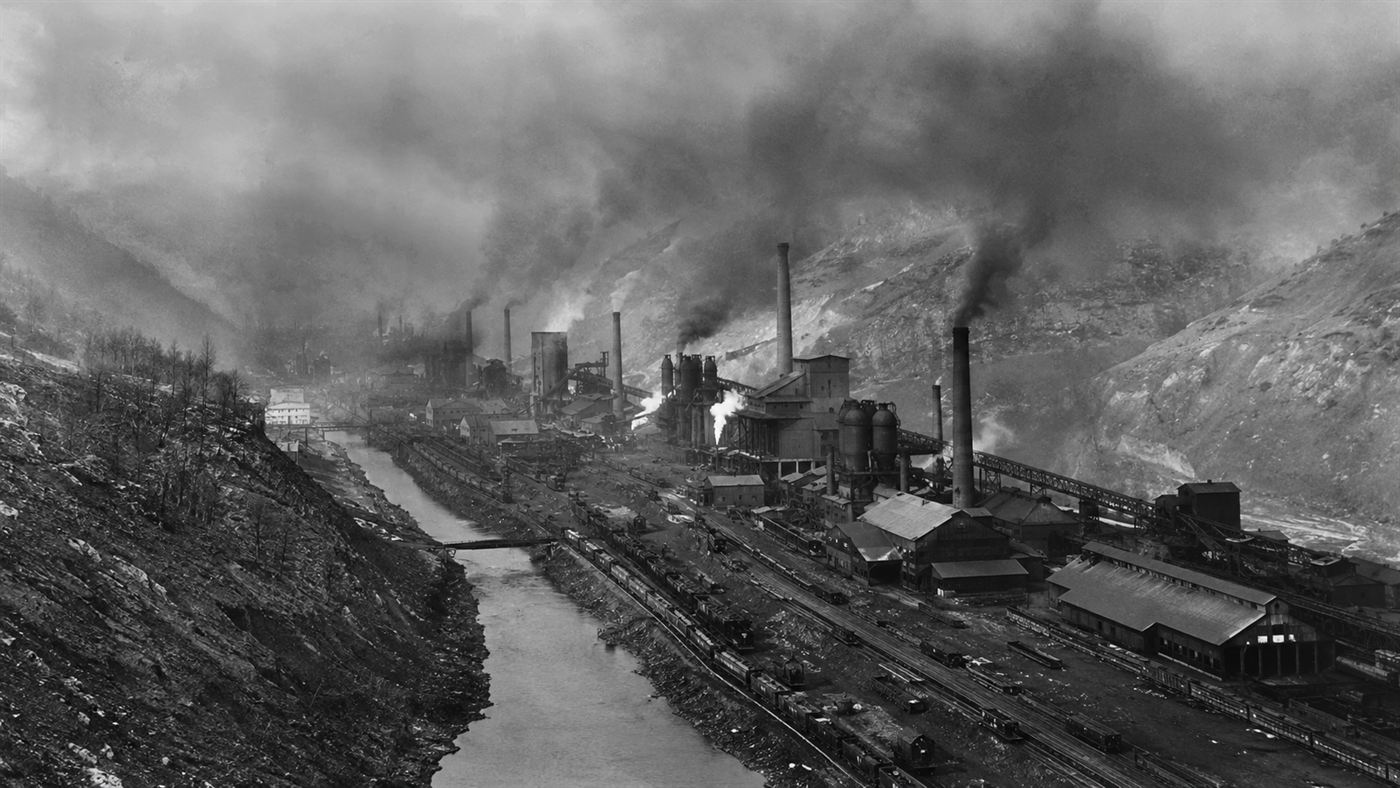
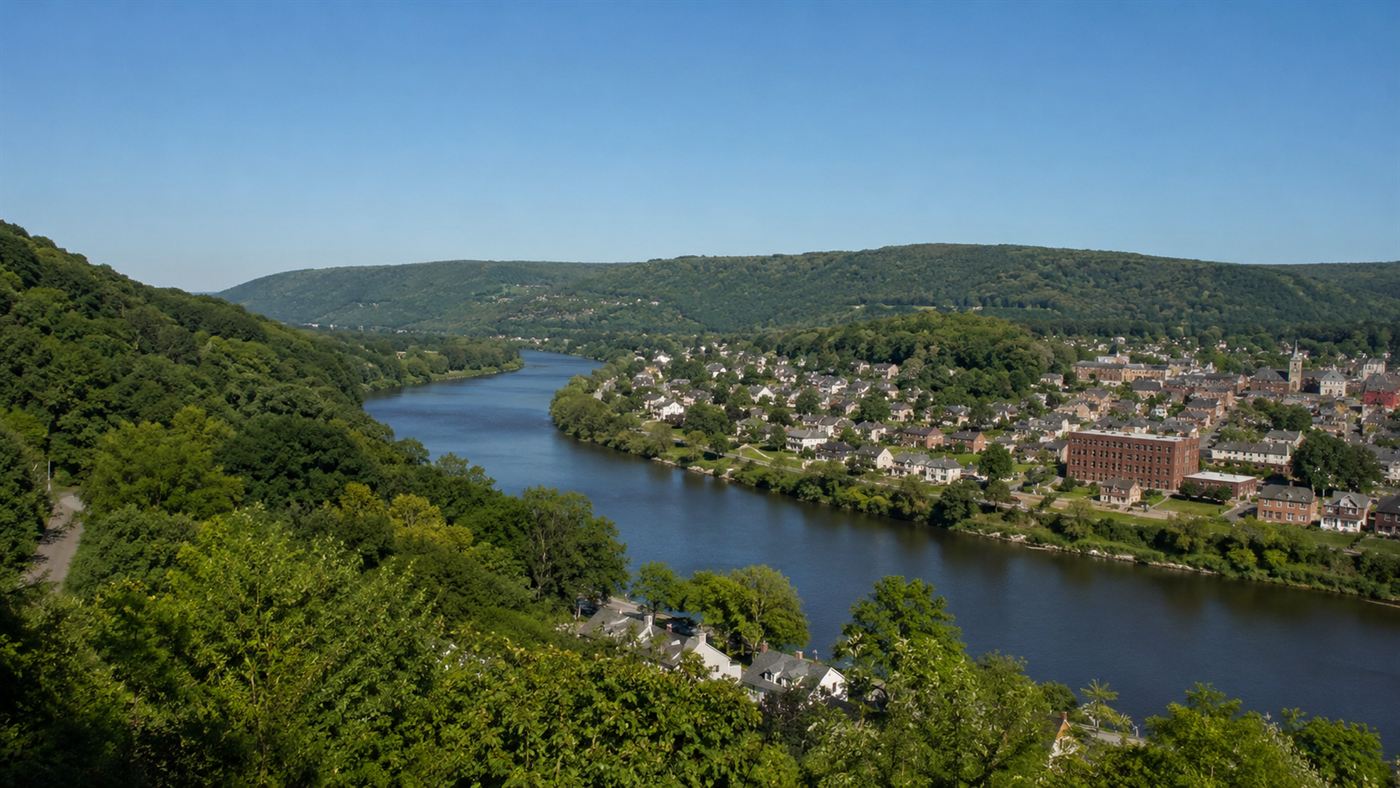
Donora, Pennsylvania, was a hardworking mill town of about 14,000 people, wedged into a horseshoe bend of the Monongahela River south of Pittsburgh. Its zinc works and steel mill ran day and night, and a haze of smoke was simply part of life there, the smell of paychecks. Nobody thought of the air as dangerous. That changed over five days at the end of October 1948, when the town's ordinary smoke turned into something that could kill.
On October 27, a weather pattern settled in and would not leave. As Smithsonian magazine has recounted, a temperature inversion trapped the mills' fumes in the valley, and the resulting smog killed around 20 people and sickened thousands before a Sunday rain finally broke it. It remains the worst air pollution disaster in American history, and it helped change how the whole country thinks about the air.
The short version: in late October 1948, a temperature inversion trapped poisonous fumes from Donora's zinc works over the town for five days. The Donora smog killed about 20 people and sickened up to half of the 14,000 residents. The shock helped launch the US clean-air movement that eventually produced the Clean Air Act and the EPA.
What caused the Donora smog?
The trigger was a quirk of weather meeting a quirk of geography. Normally air near the ground is warmer than the air above it, so smoke rises and disperses. In a temperature inversion, that flips: a lid of warm air sits on top of colder air near the surface and pins everything down, and Donora's steep river valley made a perfect bowl to hold the trapped air in place.
Underneath that lid, the mills kept running. The zinc smelter and steel works poured out hydrogen fluoride and sulfur dioxide, and with nowhere to go the pollutants concentrated hour after hour, day after day. By the second and third day the smog was so thick that people could not see across the street, and drivers crept along with headlights on at noon. The very thing that made the town prosper had become a slow-moving poison.
Five days that killed a town
At first people wrote off the coughing and burning eyes as a bad fog. But by the third day the elderly and those with weak lungs began to die in their homes, sometimes within hours of struggling to breathe. The town's doctors went house to house, the fire department handed out what little oxygen it had, and an emergency morgue was set up because the funeral homes could not keep up.
There is one detail people always remember. On that Saturday, a high-school football game went ahead in the murk, with players and fans unable to see the field clearly through the smog. By the time the rain arrived on Sunday, about 20 people were dead and something like a third to half of the town's 14,000 residents had been sickened. For a place that size, it was a catastrophe hiding in plain sight in the air itself.
Why the Donora smog changed America
Deaths from dirty air were not new, but they had always been diffuse, a cough here, a bad winter there. Donora was different because it was sudden, concentrated, and impossible to ignore, a whole town felled over a single weekend. It forced Americans to see clearly, for once, that air pollution was not just a nuisance but something that could kill quickly and in numbers. A whole town had been felled over a single weekend.
The disaster spurred the first serious federal attention to the problem, feeding into the Air Pollution Control Act of 1955 and, more importantly, the Clean Air Act, which grew into the main law governing American air quality and helped bring about the Environmental Protection Agency. Donora now hosts a small smog museum whose motto says it plainly: clean air started here. A town poisoned by its own mills became the reason the country finally wrote rules for the sky.
The honest catch
The tidy version, tragedy leads directly to reform, skips over how slow and contested it really was. Real federal clean-air laws did not arrive for years, and it arguably took London's far deadlier Great Smog of 1952, which killed thousands, to fully convince the world. Donora lit the fuse, but the change burned slowly.
The harder part is about blame. U.S. Steel, which owned the mills, never accepted responsibility, called the deaths an unforeseeable act of nature, and settled lawsuits for modest sums, and key records about exactly what was in the air went missing or stayed locked away. Meanwhile the town was trapped in an impossible bind, because the mills that poisoned the valley were also its livelihood, and speaking out could cost you your job. Donora is remembered as a turning point, but it is also a reminder of how much power a company can have over the truth about what it puts in the air.
A single trapped weekend of bad air killed 20 people and helped give a whole country the right to breathe. Do disasters have to happen before we take an invisible danger seriously? Tell us what you think in the comments.
Related reading: how the Cocoanut Grove fire rewrote safety codes, and how a Texas school explosion gave natural gas its warning smell.