China is about to run the world's fastest passenger train at 400 km/h, an all-electric machine that hit 453 km/h on test and can beat a plane on the trips most people actually take
A train that travels at 400 kilometres an hour sounds like a maglev fantasy, but the CR450 runs on ordinary steel rails. China unveiled it in early 2025, pushed it to 453 km/h in testing, and plans to put it into normal passenger service in 2026, making the CR450 the fastest train on Earth.
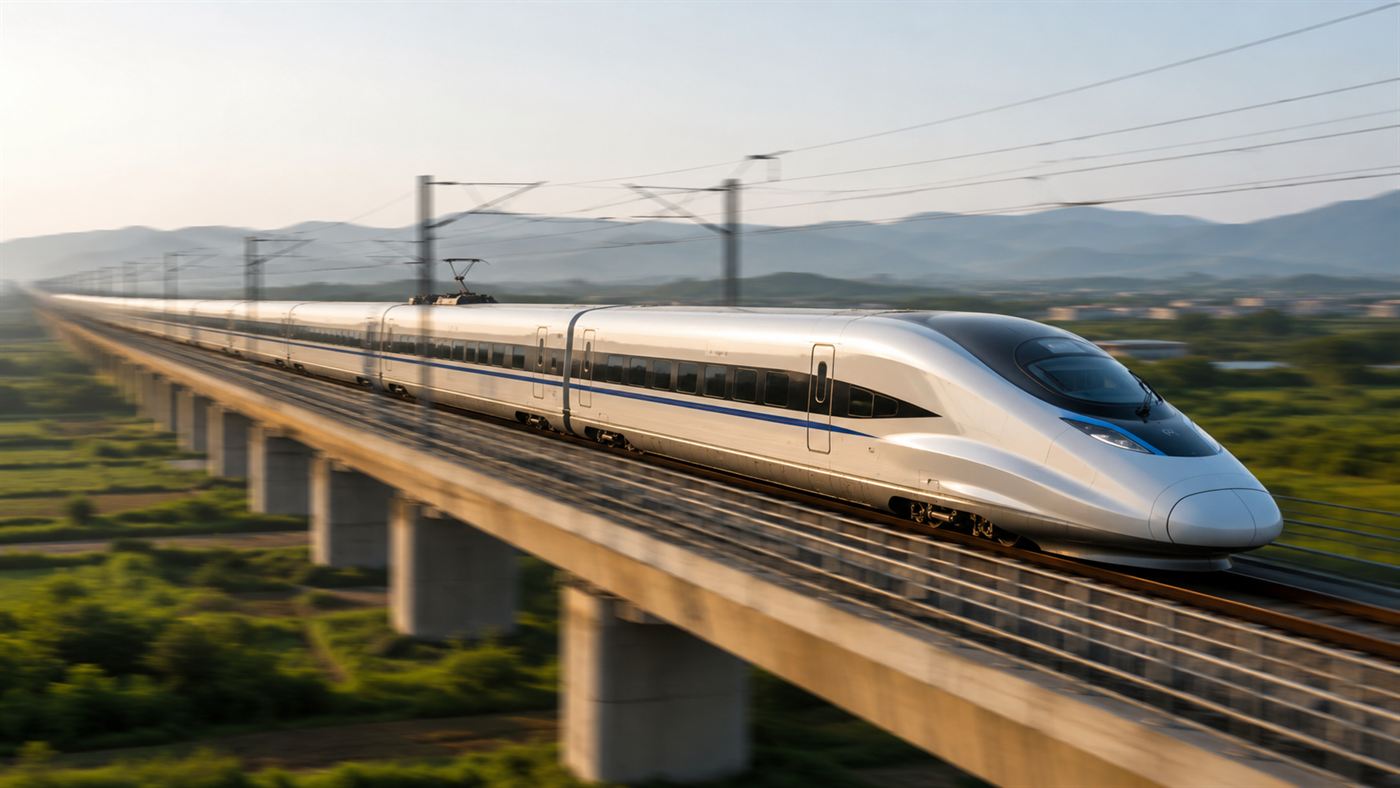
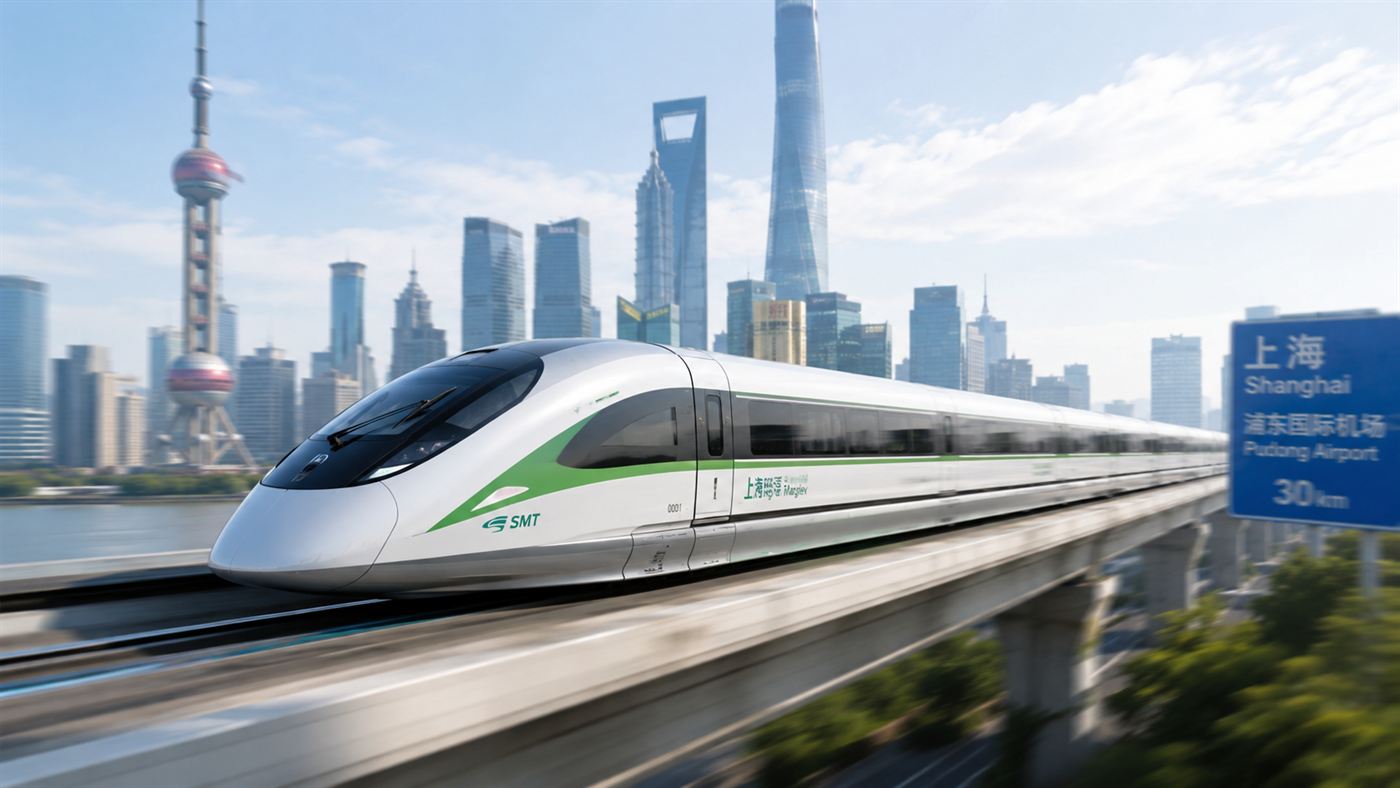
The CR450 is built to cruise at 400 km/h on the same kind of track ordinary trains use. Illustration: Watts & Wild.
Most of us have a top speed in our heads for a train, somewhere around the 300 km/h that the fast services in Europe, Japan and China already manage. The CR450 tears straight through that ceiling. Built by the Chinese manufacturer CRRC Qingdao Sifang, it is designed to carry paying passengers at a steady 400 kilometres per hour, and in testing it has gone faster still.
The numbers came out as the prototype was revealed. As RailTech reported when China unveiled the CR450 at the start of 2025, the train is built for a 400 km/h service speed and a 450 km/h design speed, and a test run later pushed it to 453 km/h. That makes it the fastest conventional wheel-on-rail passenger train ever built, and it is meant for everyday timetables, not record attempts.
The clever part is that it is not a maglev
There is already a faster way to move people on the ground, the magnetic-levitation train, which floats above its track on magnets and has hit far higher speeds. But maglev needs its own dedicated, hugely expensive guideway, which is why almost nobody has built it at scale. The CR450 does something more useful. It reaches these speeds on the same steel rails that ordinary high-speed trains already run on.
That distinction is the whole point. China has tens of thousands of kilometres of conventional high-speed track already in the ground, and a train that can run at 400 km/h on existing lines slots straight into that network without anyone laying a new kind of rail. A maglev is a separate, walled-off system. The CR450 is simply a faster train for the railway the country already has.
How you make a train go this fast
Pushing a train from 350 to 400 km/h is harder than it sounds, because the air fights back more fiercely the faster you go. The answer was to make the CR450 dramatically lighter and slipperier. According to the train's published specifications, each carriage is built from lightweight aluminium, carbon fibre and glass fibre and weighs around 10 tonnes, roughly 12 percent less than the previous CR400, which cuts both drag and energy use by about a fifth.
Under the floor it uses a permanent-magnet propulsion system, a more efficient cousin of the motors that drive electric cars, and it is studded with more than 4,000 sensors watching every bearing, brake and bogie in real time. Going faster safely is as much about monitoring and braking as it is about raw power, and a train travelling at 400 km/h needs to stop in a sensible distance and stay glued to the rail through every curve and crosswind.
Why a faster train beats a faster plane
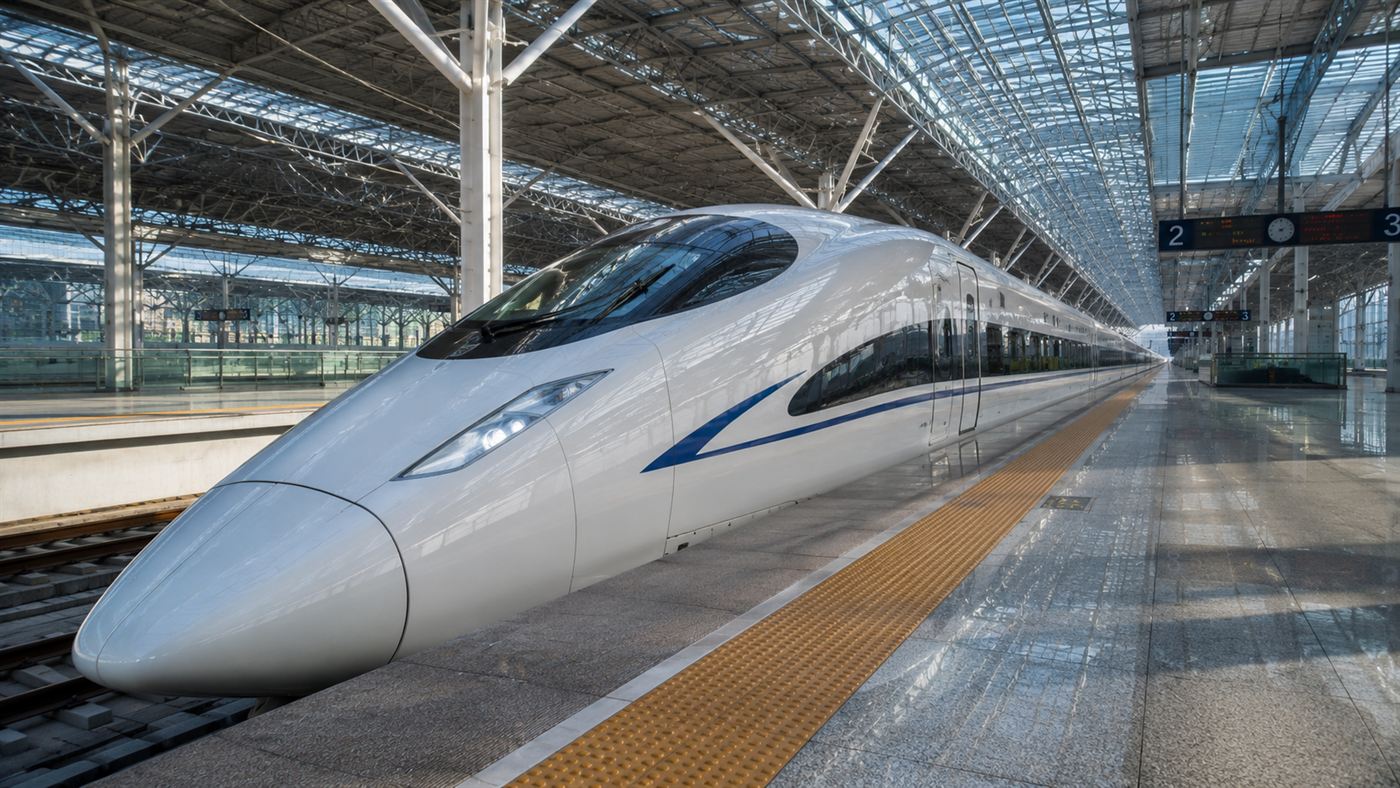
The reason 400 km/h matters is what it does to the competition with flying. For a trip of four or five hundred kilometres, the journey most people actually take, a train that fast can be quicker door to door than a plane once you add up getting to the airport, security, boarding and the trip back from a distant terminal at the other end. The train, by contrast, drops you in the centre of the city.
China plans to roll the CR450 out on busy intercity routes, including a line between Chengdu and Chongqing where it can hold its full speed. On a corridor like that, a 400 km/h electric train does not just compete with the plane, it can beat it outright, while running on clean electricity and carrying far more people per departure. That is the quiet revolution hiding behind the headline speed.
The honest catch
It is worth keeping the excitement in proportion. Squeezing the last 50 km/h out of a wheel-on-rail train is expensive, in track maintenance, in energy, and in the engineering of the train itself, and a lot of that cost only pays off on the busiest routes in a country with an enormous high-speed network already built. Most of the world does not have that, which is part of why the CR450 is a Chinese achievement first.
There is also a hard physical ceiling not far above this. The faster a wheel pushes against a rail, the more energy is lost to air and friction and the harder everything becomes, which is exactly why the truly extreme speeds belong to maglev. The CR450 is close to the practical limit of what a normal train can do, so it represents the top of one technology rather than the start of an open-ended race. The promise is real, but it is a record with a hard edge, not a stepping stone to 600 km/h on steel.
Why the CR450 fastest train matters
Strip away the speed-record bragging and what the CR450 really shows is how good ordinary high-speed rail has become. A clean, electric machine that carries hundreds of people between city centres at 400 km/h, on track that already exists, is one of the most effective ways yet found to move large numbers of people quickly without a runway or a tank of jet fuel.
For now it is a Chinese train on Chinese rails, but the technology inside it, lighter materials, permanent-magnet motors, smarter monitoring, will filter outward the way high-speed rail always has. The fastest train in the world is about to start its day job. Would you take a 400 km/h train over a short-haul flight if you had the choice, or does that kind of speed on the ground make you nervous? Tell us what you think in the comments.
Related reading: BYD's new megawatt platform charges an EV with about 400 km of range in just 5 minutes, roughly as fast as a petrol fill-up. The train that started it all was Japan's 1964 Shinkansen, the first bullet train.