Medellin was once the most dangerous city on Earth, so it strung electric cable cars up to the poorest barrios on the mountainside and let the people there finally ride down into the city
The same kind of gondola that carries skiers up a mountain now carries office workers and students out of some of the steepest, poorest neighbourhoods in Latin America. Medellin was the first city in the world to try it, and it changed far more than the commute.
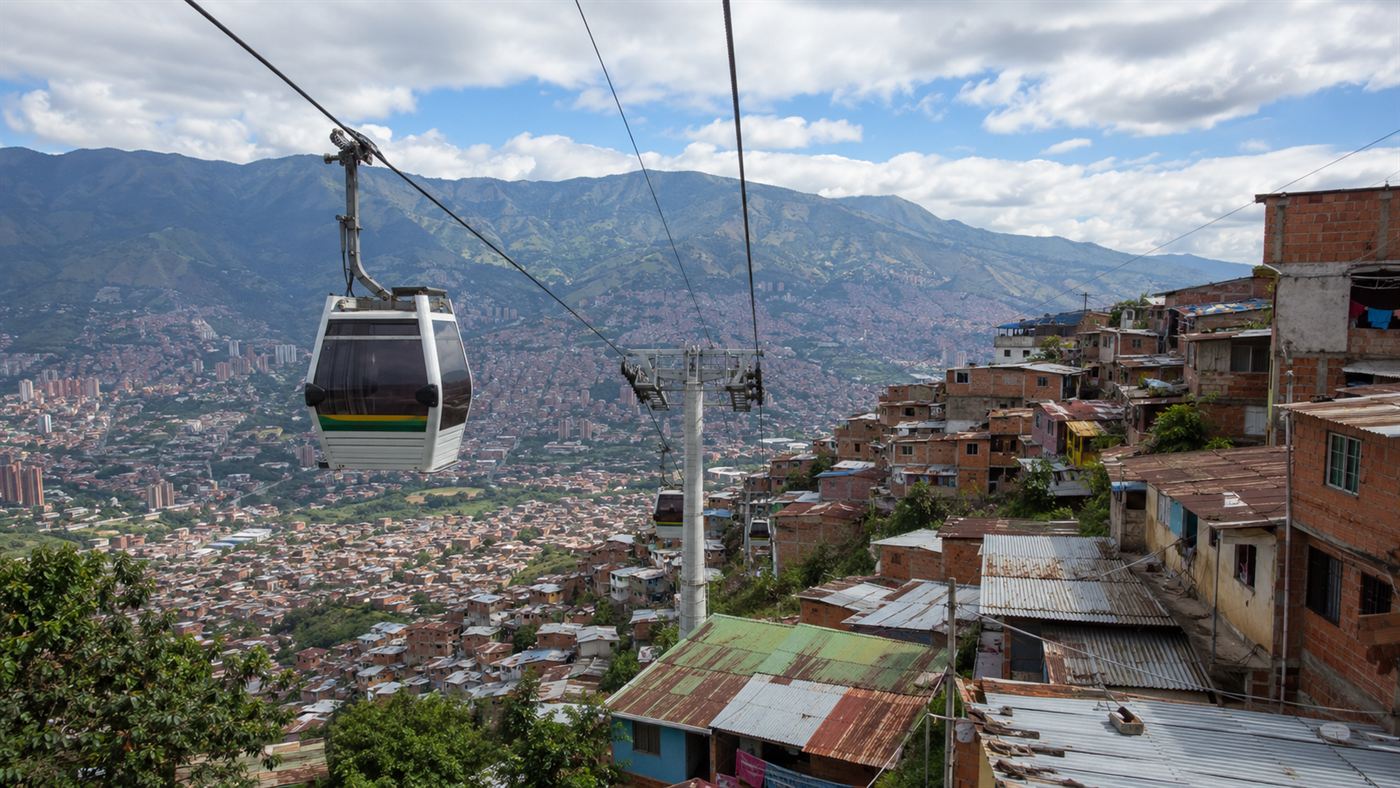
A Metrocable gondola climbing over the stacked brick houses of a Medellin hillside barrio. Illustration: Watts & Wild.
In 2004, the Colombian city of Medellin opened a cable car line it called the Medellin Metrocable. That sounds like a tourist gimmick until you realise what it was actually for. As the record of the Metrocable explains, this was the first time anywhere in the world that aerial gondolas were built as part of a mass public transport system rather than as a low capacity ride for sightseers, wired straight into the city's metro and aimed not at a viewpoint but at one of its poorest, most violent districts. The first line, Line K, climbed to the hillside barrios of the northeast and reached around 230,000 people.
To understand why a string of cable cars mattered so much, you have to remember what Medellin was at the time.
The most dangerous city in the world
Through the late 1980s and early 1990s, Medellin was the home turf of Pablo Escobar's cartel and carried the grim title of the most dangerous city on the planet, with one of the highest murder rates ever recorded. The worst of the violence was concentrated in the comunas, the informal neighbourhoods of brick and concrete that climb the impossibly steep slopes around the valley, built by people the formal city had largely ignored.
Those slopes were the problem in miniature. A person living high in the hills might be only a couple of kilometres from the centre as the crow flies, but getting down meant a long, exhausting trudge through streets no bus could climb, cut off from the jobs, schools and services in the valley below. The geography itself trapped people in place.
A ski lift for the city
The fix Medellin reached for was, on the face of it, absurd. Take the gondola technology that hauls skiers up an Alp, and use it to haul commuters out of a barrio. Cable cars do not care how steep the ground is, they make almost no noise, they run on electricity, and they can be slung over rooftops and ravines where no road could ever go. Strung between a handful of towers and plugged into a metro station at the bottom, they could lift a whole neighbourhood off the mountain.
As the Centre for Public Impact recorded, the line roughly halved the journey from the barrios to the centre, turning a trek that could take around two hours into a ride of well under one, for the price of an ordinary metro fare. For people whose day had always started with a punishing climb, a quiet glass cabin gliding down the mountain was close to miraculous.
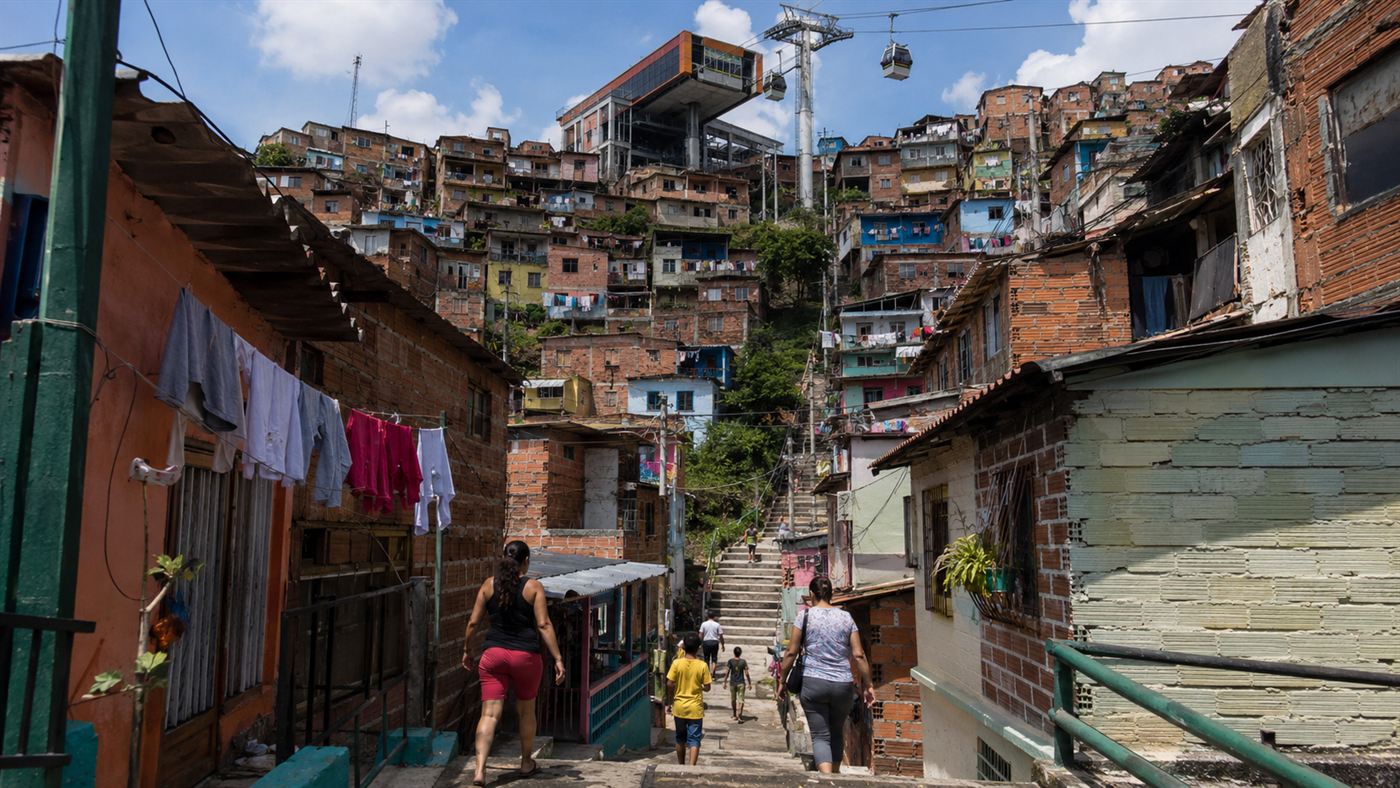
The Medellin Metrocable became more than a way down the hill
What made Medellin's experiment famous was that the city did not stop at the transport. Under mayor Sergio Fajardo, the gondolas became the spine of an approach the city called social urbanism: wherever a cable car station landed, the municipality poured investment into the surrounding barrio, building schools, public spaces, sports areas and striking new library parks meant to give the poorest districts the kind of architecture usually reserved for the rich.
The bet was that connecting a neighbourhood, and visibly investing in it, would do more than move people around. As Next City reported in tracing Medellin's path from danger capital to a celebrated model of urban mobility, the areas around the cable car lines saw striking drops in violence and real gains in everyday life, and the city went from a global byword for murder to a place planners flew in to study.
The idea that climbed the world
Medellin proved a point that now seems obvious but was radical then: that the best transport solution for a steep, poor, tangled hillside might not be a road at all, but a line in the sky. The model spread fast. La Paz in Bolivia built an entire network of urban cable cars that is now one of the longest in the world, and cities from Rio de Janeiro to Mexico City to La Paz and beyond have strung gondolas over their own hillside districts, all following the trail Medellin cut first.
The honest catch
It would be a fairy tale to say a cable car ended the violence, and it did not. Medellin's turnaround came from a tangle of forces at once, the fall of the Escobar era, national policy, the demobilisation of armed groups, years of social spending and plain luck, and the Metrocable was one thread in that knot rather than the cause of it. Crediting gondolas alone for peace flatters the engineering and ignores the politics, and parts of the comunas are still poor and still contested by gangs.
There are sharper ironies too. The fame brought tourists, and with them a trade in barrio tours that can tip into treating people's hard lives as a spectacle, along with the familiar pressure of rising prices in newly connected neighbourhoods. The flagship Biblioteca Espana, the dramatic black library that became the symbol of the whole project, was later shut after its stone cladding began to fail, a literal monument to social urbanism standing empty. A cable car carries a few thousand people an hour, far fewer than a busy bus corridor, so it is no universal answer either. None of that erases what Medellin showed the world. It just means the real lesson is humbler and more useful than the postcard. Give the people a city has forgotten a fast, dignified, electric way into the rest of it, and you change what is possible for them, even if you cannot fix everything at once.
A city the world had written off as a murder capital strung electric cable cars up its poorest mountainsides and gave hundreds of thousands of people a fast, dignified ride into the rest of the city. Could a line of cable cars work over the steep or cut-off parts of your own city, or is it a fix only Medellin could pull off? Tell us what you think in the comments.