A cattle rancher shot Chico Mendes dead on his porch in Brazil's Amazon in 1988, and the murder backfired so completely that 35 million acres the killers wanted to clear are still forest today
On December 22, 1988, a hired gunman shot Chico Mendes at his kitchen door in Xapuri, Acre, Brazil. The cattle ranchers who ordered the killing thought it would silence the rubber tappers' resistance to Amazon deforestation. They were wrong about almost everything that followed.
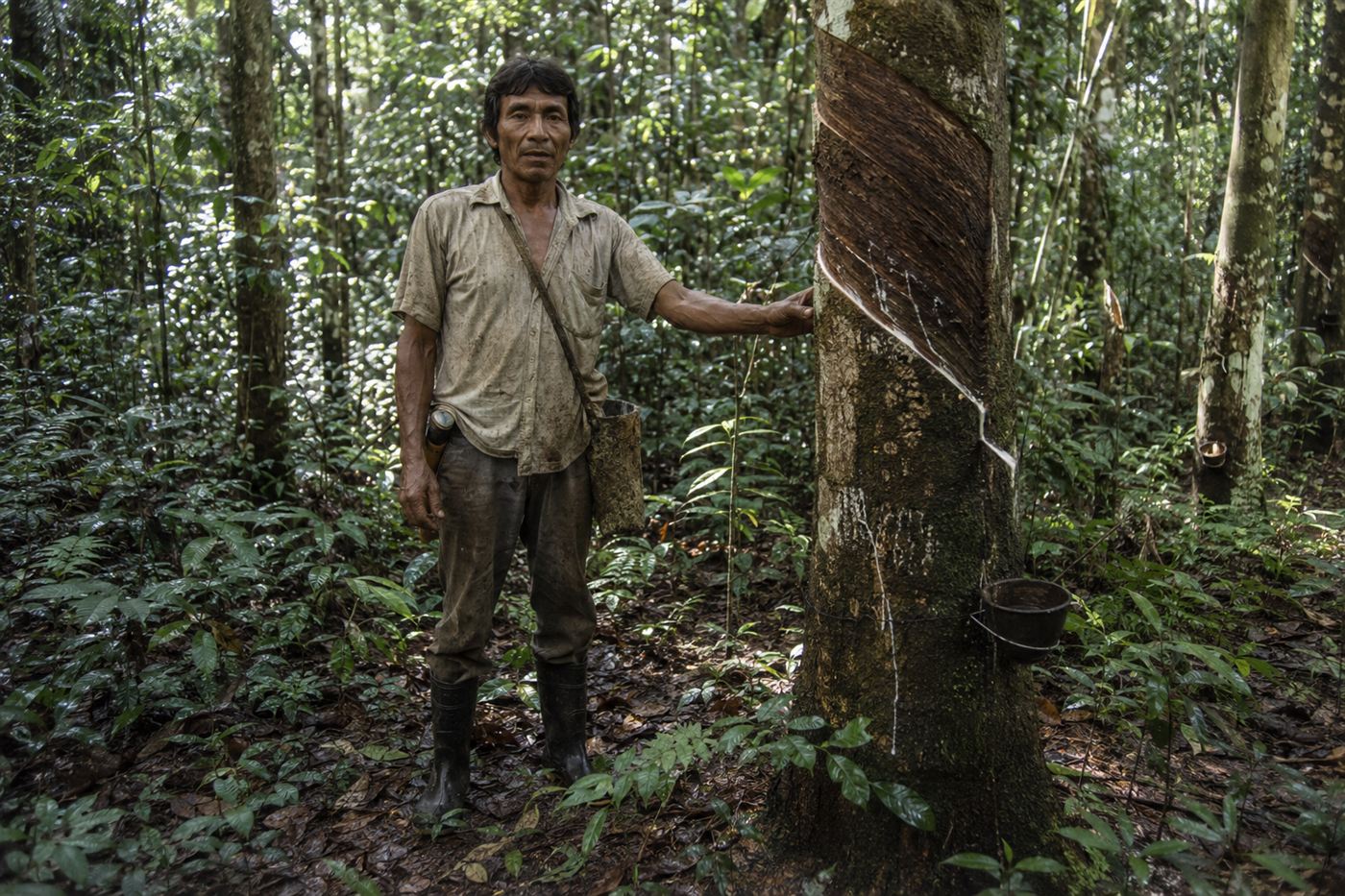
Chico Mendes in the Acre rainforest in the late 1980s. He organized rubber tappers into a resistance movement that staged peaceful stand-offs between workers and loggers' chainsaws. A cattle rancher had him killed in December 1988. Illustration: Watts & Wild.
Chico Mendes was a rubber tapper in the Brazilian Amazon, a man who made his living cutting diagonal lines into rubber trees before dawn and collecting the white latex that seeped from the bark. He learned to read at the age of 24, taught by a communist organizer named Euclides Fernandes Távora who had been hiding in the Acre jungle since Brazil's 1964 military coup. Over the following two decades, Mendes turned that education into a movement. He organized the rubber tappers of Acre into a union, built coalitions with indigenous communities and the Catholic Church, and invented a form of nonviolent resistance he called the empate: when news reached him that cattle ranchers had hired loggers to clear a section of Amazon rainforest, Mendes would lead workers, women, and children to stand directly in front of the chainsaws and refuse to leave. Between 1976 and 1988, those stand-offs saved dozens of patches of forest across Acre. In 1987, he testified before the United States Congress about a road loan that would accelerate Amazon deforestation, the kind of state-directed project that has destroyed irreplaceable ecosystems from Acre to the Aral Sea. The loan was restructured. The same year, the United Nations gave him its Global 500 Award.
The cattle ranchers decided he had to die. On December 22, 1988, a gunman hired by Darli Alves da Silva, a rancher with a long history of violence in Acre, shot Chico Mendes once in the chest as he stepped out of his back door. He was 44 years old. Within months of his death, the international pressure on Brazil's government was so intense that the Sarney administration created a new legal category of protected land that had not previously existed anywhere in the world: the reserva extrativista, the extractive reserve. Today, Brazil has 47 extractive reserves across the Amazon rainforest. They cover more than 14 million hectares, roughly 35 million acres. That is more forest than Chico Mendes could have protected by living to be a hundred years old.
What rubber tapping in the Amazon looked like before Chico Mendes
The rubber tree, Hevea brasiliensis, is native to the Amazon rainforest.
Seringueiros, the rubber tappers, would walk trails through the forest before sunrise, cutting v-shaped grooves in the bark and hanging small cups beneath the cuts to collect the latex that flowed out.
A skilled tapper might work 150 trees on a single morning, covering ten kilometers of trail in the dark before the heat of the day made the sap thicken too quickly to collect.
The Amazon rainforest rubber trade had powered a legendary economic boom at the turn of the 20th century, making cities like Manaus briefly wealthier than most of Europe and filling their centers with opera houses and tiled mansions.
By the 1970s, that boom was long over, undone by British-smuggled rubber tree seeds planted in the plantations of Malaysia, which could produce latex at a fraction of the cost of wild-harvested Amazon rainforest sap.
But tens of thousands of seringueiro families were still living in the forest, and their livelihoods depended on keeping the trees standing.
Then the military government in Brasília decided to develop the Amazon as a national project.
It offered cheap land and subsidized credit to ranchers who would clear the forest and run cattle.
Land was worth ten times more to a rancher if it was cleared than if it was forested.
rubber tappers and indigenous communities had lived in those forests for generations, but they had no legal title to the land.
Between 1978 and 1988, roughly 330,000 square kilometers of the Amazon rainforest were cleared, an area larger than the United Kingdom, according to Brazilian government data compiled by Wikipedia's survey of Amazon deforestation records.
In Acre, the chainsaws arrived in force in the late 1970s.
Chico Mendes and the empate: how rubber tappers stopped the chainsaws
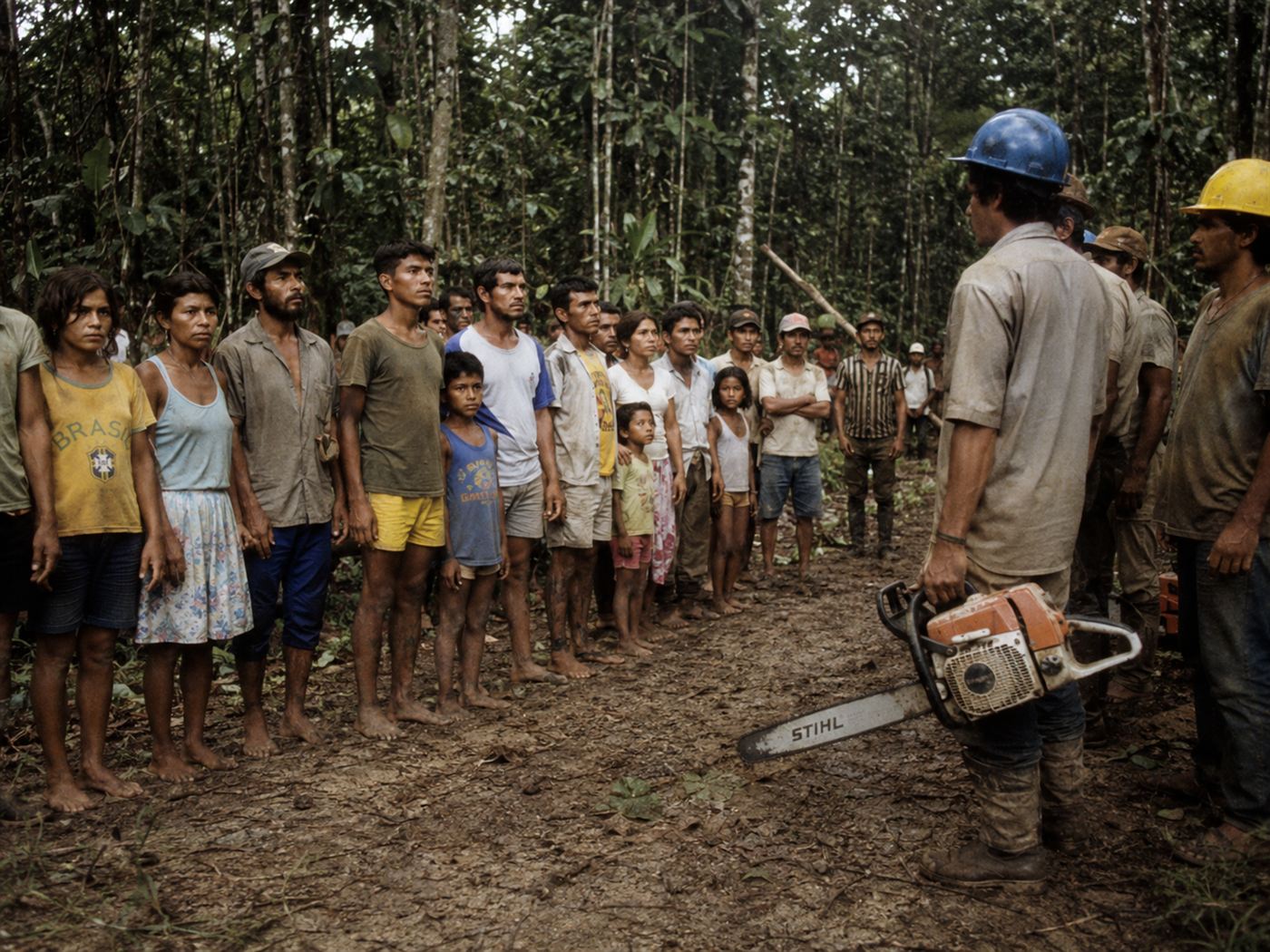
Chico Mendes began organizing the rubber tappers' union in Xapuri in the mid-1970s, working alongside the Partido dos Trabalhadores, the Workers' Party.
The empate was his invention.
When he received word that ranchers had sent logging crews to clear a section of forest, Mendes would organize as many people as he could find and march them to the site before the chainsaws started.
The crowd would stand in a line between the machines and the trees.
Logging crews were typically poor rural workers themselves, hired hands rather than the ranchers who employed them.
They rarely wanted to assault unarmed families.
Most of the time they backed off, returned to the ranchers without having cleared anything, and the forest stayed standing for another season.
Chico Mendes organized 45 successful empates between 1976 and 1988, saving thousands of rubber trees from being felled and keeping hundreds of families' livelihoods intact.
He also understood that local stand-offs alone could not stop the scale of Amazon deforestation that was underway.
In 1987, he traveled to Washington, D.C., where the Inter-American Development Bank was considering a large infrastructure loan to the state of Acre that would have opened new areas of the Amazon rainforest to clearing.
Mendes testified before the US Congress about what the project would do to the rubber tappers who lived along the road's path.
American legislators who controlled the US vote on the bank's board were persuaded.
The loan's conditions were revised to include environmental and social protections.
That same year, Chico Mendes received the UN Global 500 Award and the Better World Society Prize, two of the highest environmental honors of the decade.
The cattle ranchers of Acre had been watching all of this.
The ranchers decide to kill Chico Mendes
Darli Alves da Silva was not an ordinary Acre rancher.
He had left the state of Paraná under suspicion of multiple killings before acquiring land near Xapuri, according to contemporaneous court and press records documented in Wikipedia's profile of Chico Mendes.
In 1987, Chico Mendes and local unions organized an empate that blocked Darli's plan to clear a section of forest the family had acquired near Xapuri.
The forest was an area called the Seringal Cachoeira, where dozens of rubber tapper families still made their living.
Darli had intended to turn it into a cattle pasture.
The empate stopped him.
Darli's response was a series of escalating threats against Chico Mendes.
Mendes reported the threats to the federal police in Xapuri more than once.
No protection was provided.
On the evening of December 22, 1988, Chico Mendes walked to the back of his house in Xapuri to reach a sink in the small yard.
Darci Alves da Silva, Darli's son, was waiting on the other side of the fence with a shotgun.
Mendes was hit once in the chest.
He died within a few minutes, in the arms of his wife Ilônde.
He was 44 years old and had been receiving death threats for at least a year.
What Chico Mendes' murder triggered: 35 million acres of protection
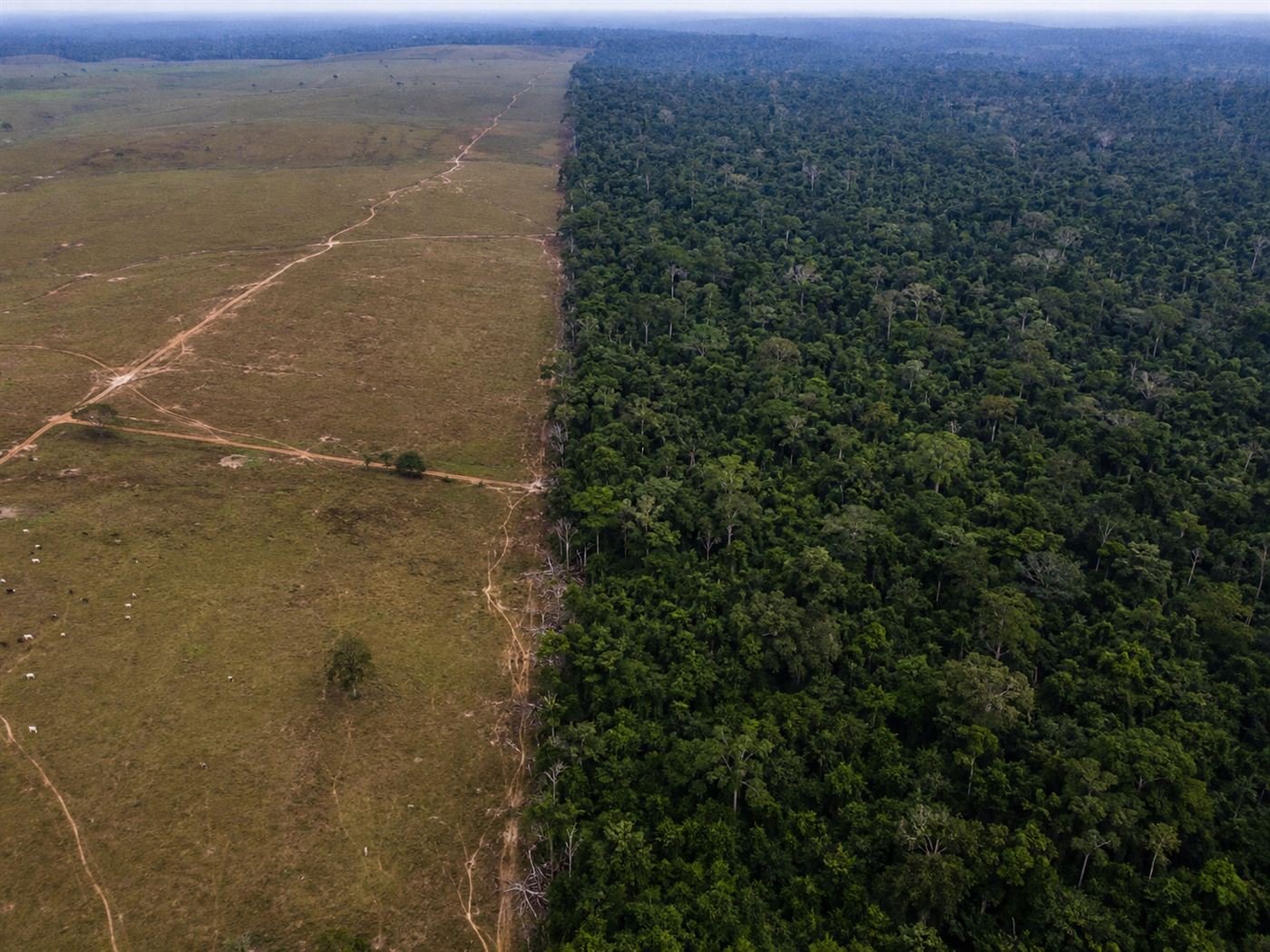
The murder of Chico Mendes became international news within days.
The New York Times, the BBC, and newspapers across Europe ran front-page stories.
The musician Sting, who had spent much of 1987 and 1988 campaigning for the Amazon alongside Kayapó leader Raoni Metuktire, held press conferences in Washington and London.
The World Bank, which was financing major infrastructure projects in the Brazilian Amazon, came under intense pressure from governments and environmental groups in its member countries.
The Brazilian government of President José Sarney, already dealing with a fragile return to democracy after 21 years of military rule, could not ignore the international pressure.
In early 1989, the Sarney government began creating a new legal framework for the Brazilian Amazon.
The framework established the reserva extrativista, a category of protected area where the land could not be sold, cleared, or converted, but where rubber tappers and other traditional communities could continue to live and work in the forest as they always had.
The first extractive reserve created under the new law was the Reserva Extrativista Chico Mendes, carved out of the land in Xapuri that Mendes had spent his life defending.
It covers 970,570 hectares, roughly 2.4 million acres, and is still managed by the families of the rubber tappers who live inside it.
Brazil now has 47 extractive reserves across the Amazon rainforest and other biomes, covering more than 14 million hectares in total.
That is roughly 35 million acres of land that cannot be legally deforested, managed in perpetuity by the communities that live there.
Darli Alves da Silva and his son Darci were convicted of the murder of Chico Mendes in December 1990 and sentenced to 19 years in prison.
They escaped from prison in 1993 and remained at large for three years before being recaptured.
What the extractive reserves actually protect
An extractive reserve is not a nature park where people are excluded.
It is the opposite: a zone where the people who have always lived in the forest retain their legal right to stay there, which gives them both a reason and a legal mandate to resist outsiders who want to clear it.
Inside the Reserva Extrativista Chico Mendes, families still tap rubber tappers' trails before dawn, still collect Brazil nuts and a The forest is worth more to them standing than cleared. When humans leave land alone, whether by choice or by disaster, the Amazon rainforest and other ecosystems begin to recover with surprising speed: the Chernobyl exclusion zone became an accidental wildlife refuge for the same reason Acre's extractive reserves work, which is that removing the economic pressure to convert land gives nature space to persist. The extractive reserves in Brazil are among the most studied examples in conservation science of how tying human livelihoods to intact ecosystems can be more durable than simply fencing land off. Satellite data analyzed by Brazil's National Institute for Space Research (INPE) consistently shows lower deforestation rates inside extractive reserves than on surrounding lands without protected status. Amazon deforestation did not stop when Chico Mendes died. It accelerated through the 1990s and peaked in 2004, when Brazil lost more than 27,000 square kilometers of Amazon rainforest in a single year, according to INPE data. The extractive reserves protected land inside their boundaries, but the land outside them continued to disappear. Between 2019 and 2022, illegal invasions of protected areas, including extractive reserves, increased sharply during a period of weakened enforcement under the Bolsonaro government. Illegal loggers entered the Reserva Extrativista Chico Mendes itself on multiple occasions. The rubber tappers' economic position has also weakened since Mendes' time, because synthetic rubber produced in factories now undercuts natural latex on global markets, making forest-based livelihoods harder to sustain financially. Some families have left the extractive reserves for towns and cities, and some sections of reserved land are managed less actively than others. The system Chico Mendes' death created is real and it has protected tens of millions of acres of Amazon rainforest that would otherwise have been cleared. But it requires ongoing political will to enforce, and that will has proven uneven. What it does not require, at this point, is the life of the man who started it. That part is already paid. Would the empate have eventually forced a legal solution even without the murder, or did it take an assassination to make the world pay attention? Leave a comment below.The honest catch
More from Watts & Wild
 Wangari Maathai planted 51 million trees and ended up in jail for it
 Jaguars went extinct in Argentina. Then a private ranch brought them back
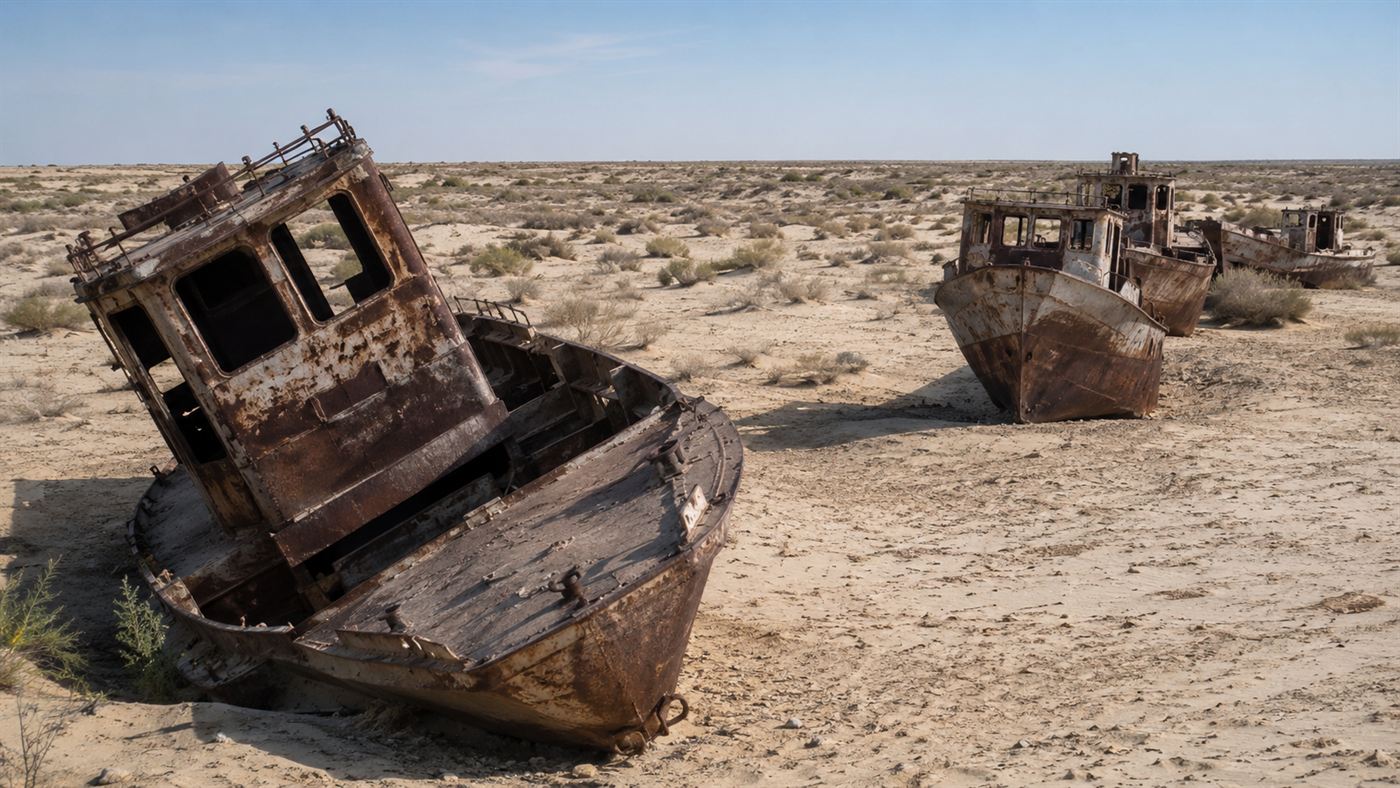 The Soviet cotton project that drained the fourth-largest lake on earth
 A Sussex farm stopped farming and storks nested in England for the first time in 600 years
 Mozambique's civil war killed 90 percent of Gorongosa's elephants. What evolved next stunned scientists