A civil war that killed 90% of Gorongosa's elephants for their ivory forced evolution in real time, and the daughters of survivors are now being born without tusks at twice the normal rate
Mozambique's fifteen-year civil war ended in 1992. When scientists returned to Gorongosa National Park, they found fewer than 200 elephants where 2,200 had lived. The ones that survived shared something: many of the females had no tusks. Their daughters are inheriting that trait at a rate that should not exist in nature.
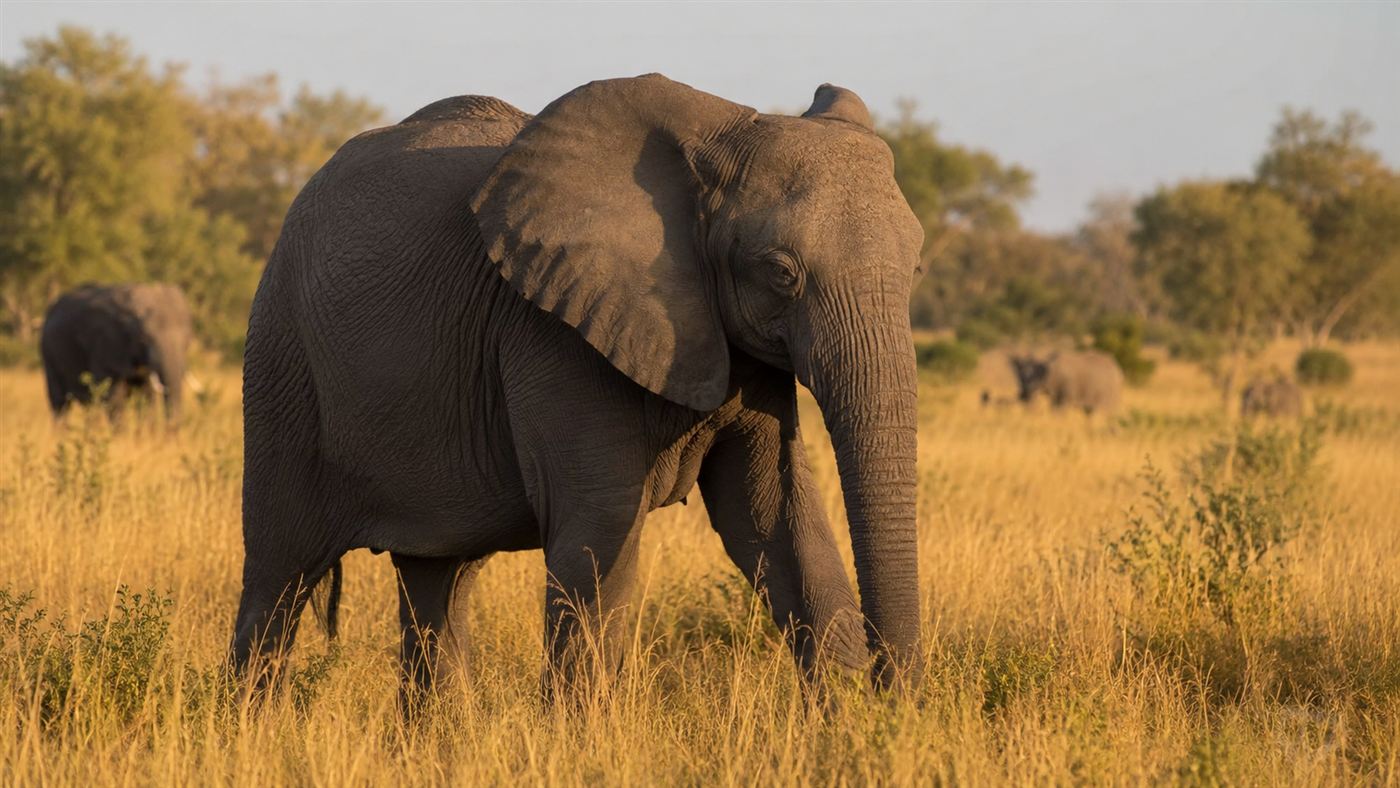
Tuskless female elephants now make up roughly half of Gorongosa's surviving population, a direct genetic signature of the civil war. Illustration: Watts & Wild.
In September 2021, a team of researchers from Princeton University and the University of Pretoria published a study in Science that answered a question wildlife biologists had watched with dread for decades: when humans hunt animals selectively for a heritable trait, can they drive evolution in real time? At Gorongosa National Park in Mozambique, they found the answer written into the genetics of every female elephant born since the war. The study, led by evolutionary biologist Shane Campbell-Staton of Princeton, showed that ivory poaching during Mozambique's civil war had selected for tusklessness so powerfully that roughly half of the female elephants surviving today were born without tusks, compared to a background rate of about two to four percent in undisturbed African elephant populations.
In historical populations of African elephants, tuskless females are rare genetic outliers. At Gorongosa, tusklessness in females born after the war stands at approximately 51 percent. The difference is not chance. It is the direct genetic signature of fifteen years of war, during which armed factions on both sides of Mozambique's conflict shot elephants for ivory to fund their operations. The animals with the largest tusks died first. The animals born without tusks survived. And tusklessness passed to their daughters.
Gorongosa National Park covers roughly 4,000 square kilometres in central Mozambique and was once one of the richest wildlife reserves in Africa. Its elephant population, estimated at more than 2,200 before the civil war, was reduced to fewer than 200 by the time fighting ended in 1992. The large mammal population across the park, including lions, buffaloes, zebras, wildebeest and hippos, collapsed by 90 percent or more. A park that had drawn wildlife researchers from around the world became effectively empty. The tuskless elephants who survived did so partly because no one had reason to shoot them, and what happened to their genetics afterward became one of the most dramatic documented cases of human-driven rapid evolution in a wild population.
How fifteen years of war emptied one of Africa's greatest wildlife parks
Gorongosa had been a showcase reserve since the colonial period.
Under Portuguese administration and then in the early years of Mozambican independence, it attracted tourists, researchers and documentary filmmakers drawn by its extraordinary density of wildlife on the floodplains of the Rift Valley.
The civil war between FRELIMO (the ruling party) and RENAMO (the rebel movement) began in 1977 and did not end until the Rome General Peace Accords of 1992.
Both sides moved through the park and used it.
Elephants were shot for ivory, which could be sold to fund ammunition and supplies.
Other large mammals were shot for meat to feed soldiers.
By the early 1990s, the park's lion population had fallen to near zero.
Hippo numbers had dropped by more than 95 percent.
The buffalo herds that had once numbered in the tens of thousands were gone.
The Gorongosa that scientists returned to after 1992 was a ghost of the ecosystem it had been.
The elephants who survived were, on average, smaller-tusked or tuskless females and their young.
The largest-tusked males and females had been selectively eliminated.
What the researchers who returned after the war did not yet know was that the survivors were passing something permanent into the next generation.
The genetics behind tusklessness and why war made it spread
Tusklessness in African elephants is a naturally occurring genetic variant, but in undisturbed populations it occurs in females at a rate of roughly two to four percent.
It is linked to genes on the X chromosome, which is why it affects females far more than males: in males, the version of the gene linked to tusklessness appears to be lethal, meaning males carrying it do not survive to birth.
This X-linked pattern explains a striking observation that Campbell-Staton's team confirmed at Gorongosa: among the calves of tuskless mothers, male calves died at approximately twice the rate of female calves.
The gene responsible appears to be AMELX, which in humans is associated with tooth development.
When a tuskless female elephant passes the trait to her offspring, her daughters survive without tusks, but some proportion of her sons do not survive at all.
The ivory poaching of the war years acted as a powerful selection filter.
Tuskless females had a survival advantage so large that, over fifteen years of sustained hunting pressure, the frequency of the tuskless trait in the surviving population rose from roughly two to four percent to more than fifty percent.
That is evolution by natural selection, compressed into a human lifetime, driven by human violence.
Greg Carr and the restoration that brought Gorongosa back from empty
The recovery of Gorongosa National Park as an ecosystem is, in parallel with the tusklessness story, one of the most ambitious wildlife restoration projects in Africa.
Greg Carr is an American entrepreneur who made his fortune in the early internet era, founding a voicemail technology company and later an internet services business.
In 2004, he visited Gorongosa and saw what it had been and what it had become.
In 2008, he signed a twenty-five-year co-management agreement with the Mozambican government, committing the Gorongosa Restoration Project to rebuilding the park's wildlife and supporting the communities that live around it.
The restoration work Carr funded was not only about animals.
He hired Mozambican scientists to lead the research.
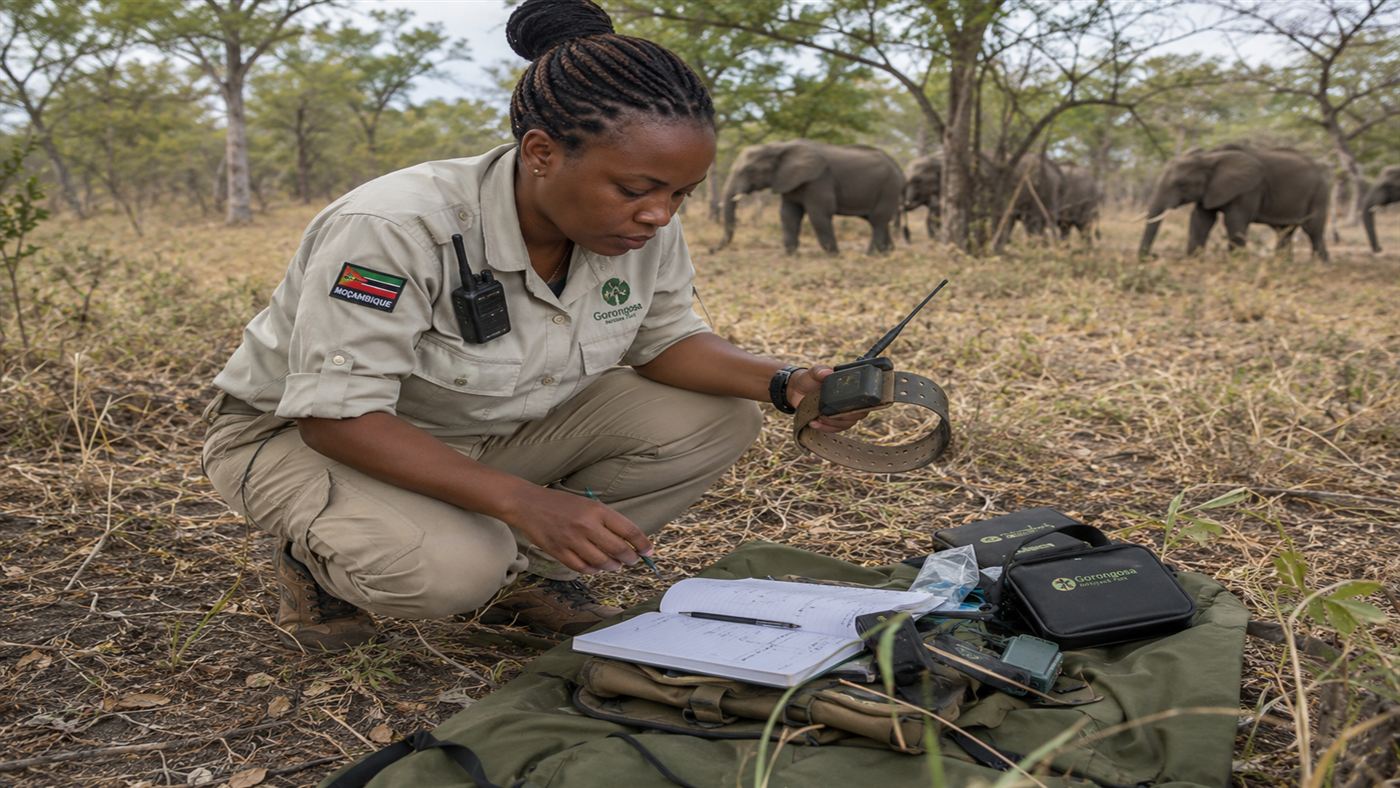
Dominique Goncalves, a Mozambican ecologist who grew up near the park, became the head of elephant research and a leading voice in the scientific community studying Gorongosa's wildlife.
Paola Bouley led the lion recovery programme, which reintroduced lions from South Africa to rebuild a predator population that had been hunted to functional extinction during the war.
The investment also went into schools, health clinics, and agricultural training for the ~200,000 people who live in the buffer zone around Gorongosa National Park.
Carr's argument, which has since become something of a model for African conservation, was that wildlife recovery and human development in the surrounding communities had to happen together or neither would stick.
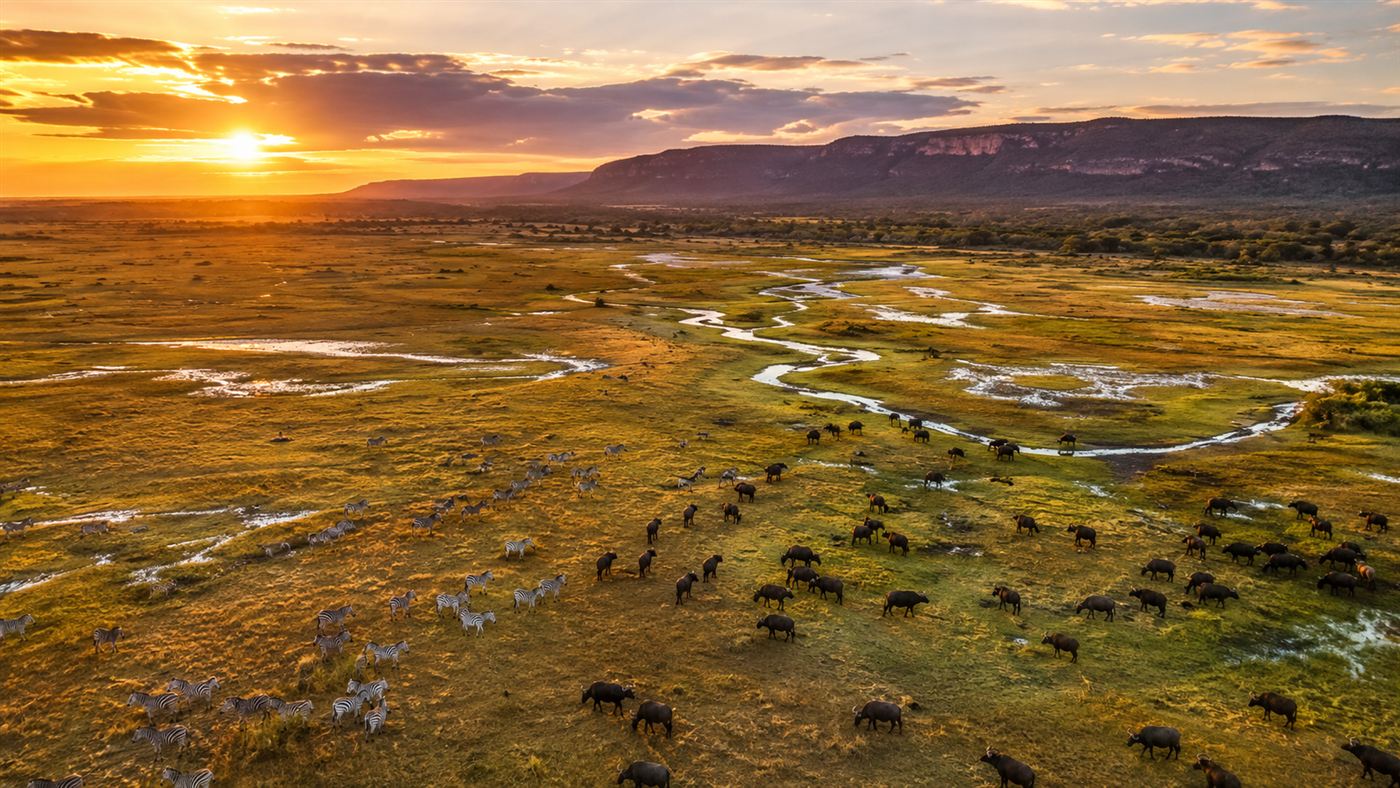
By 2023, Gorongosa's large mammal populations had recovered to extraordinary levels.
Elephant numbers had climbed past 800.
Buffalo returned in herds of thousands.
Hippos multiplied from near-zero to hundreds.
Lions established territories across the park's floodplains.
The Gorongosa Restoration Project estimated in 2024 that the park now holds more than 100,000 large mammals, a number that would have been unimaginable when scientists first returned after the war.
What tusklessness means for the elephants going forward
Tusks are not decorative.
Elephants use them to strip bark from trees, dig for water and minerals in dry riverbeds, move fallen logs, and defend themselves against predators.
A female elephant born without tusks does most of these things anyway, because elephants are adaptive and intelligent, but there are costs.
Tuskless females eat a different diet from tusked ones, because some of the food sources that tusks help access are harder to reach without them.
In a drought, when elephants need to dig waterholes in dry streambeds, tuskless animals have a harder time.
The long-term ecological consequence of a population where half the females lack tusks is not fully understood yet.
But the impact does not stop at individual animals.
Elephants are ecosystem engineers: they push over trees, create clearings, dig waterholes that other species use, and move seeds across vast distances.
A population with different tusk genetics is a population that interacts with the landscape differently.
Gorongosa's ecosystem is recovering around a herd of tuskless elephants that would never have existed without the war, and the downstream effects of that on plants, soils, and other animals will take decades to trace.
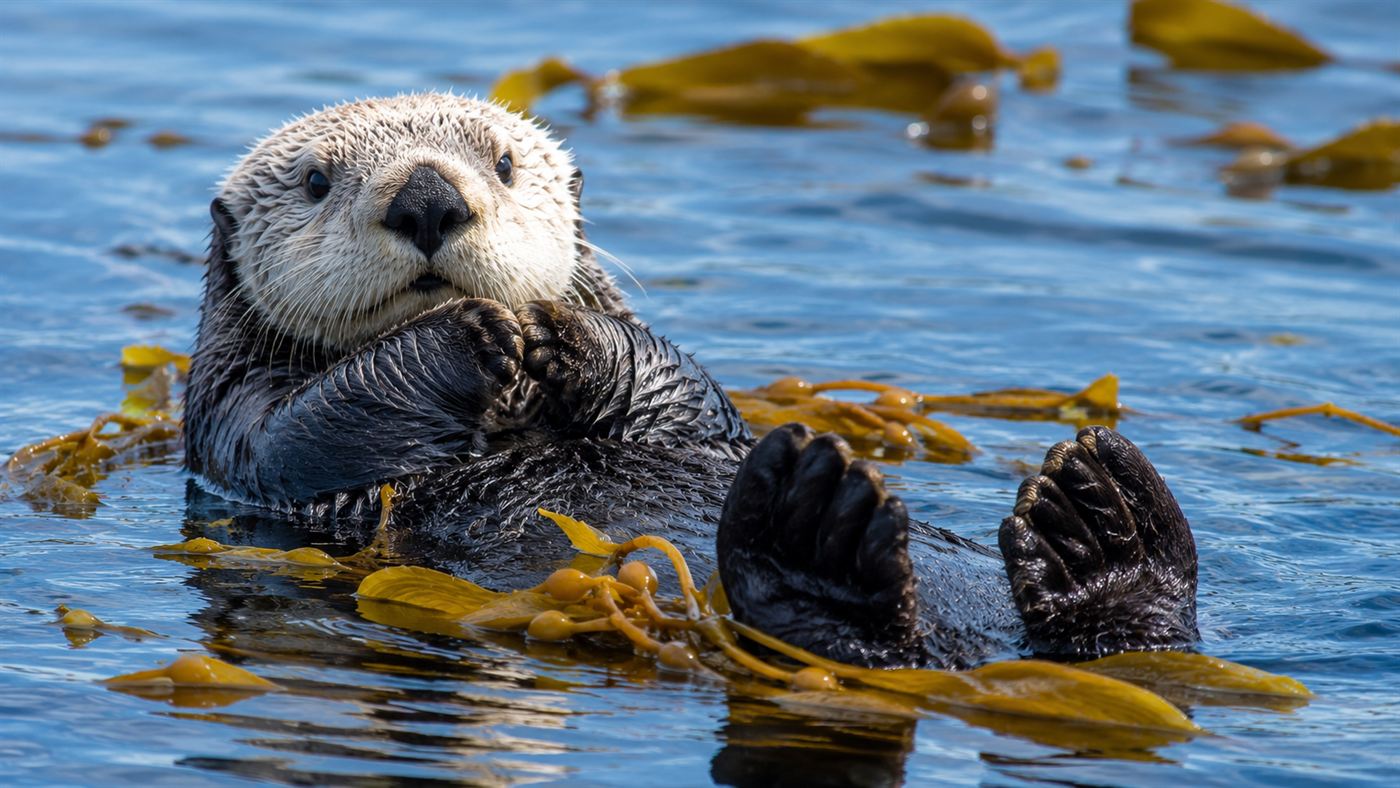
The same dynamic of human pressure accelerating animal evolution plays out in other parks too: sea otters hunted nearly to extinction and then recovering reshape entire kelp ecosystems in ways that take generations to stabilize.
At Gorongosa, the park that nearly disappeared is now a living laboratory for what happens when war becomes a selection pressure strong enough to rewrite the genome of a species within a single human lifetime.
The honest catch
The recovery of Gorongosa National Park is real and remarkable, but it comes with a set of uncomfortable truths.
The park's restoration depends almost entirely on Greg Carr's personal wealth and the Gorongosa Restoration Project's external funding.
Mozambique is one of the world's poorest countries, and without sustained outside investment, maintaining the predator control programmes, ranger patrols, and community development work that underpin the recovery would be impossible.
The "success" is fragile in exactly the way all privately funded conservation is fragile: it depends on the continued commitment of a single donor and the stability of a political agreement with a government that has changed several times since 2008.
Poaching pressure around Gorongosa National Park has not ended.
Armed groups still operate in parts of Mozambique, and the park's boundaries are not impermeable.
The tuskless elephant trait, meanwhile, may solve one survival problem while creating others.
Geneticists studying the long-term implications of a 51-percent tuskless population are still working out what it means for the herd's ability to cope with drought, disease, and the tree-stripping behaviour that keeps certain woodland species in check.
The war changed Gorongosa in ways that will not undo themselves even if the park runs perfectly for the next century.
The tuskless elephants are not a tragedy reversed.
They are a permanent record of what happened, walking on the floodplains.
Gorongosa's elephants carry the genetic mark of a civil war in their bodies, and the park has come back from near-zero to one of Africa's great wildlife spectacles. Do you think privately funded conservation projects like Greg Carr's model are sustainable, or is there a better way to protect places like Gorongosa long term?
Share your thoughts in the comments below.