In 1907 a chemist named Leo Baekeland cooked up Bakelite, the first material never found in nature, and without quite meaning to he launched the age of plastic
Look around and almost everything you see contains a substance that did not exist before the 20th century. The whole plastic world traces back to one hard, shiny brown material and one restless chemist. Bakelite was the first of its kind, and it changed what things are made of forever.
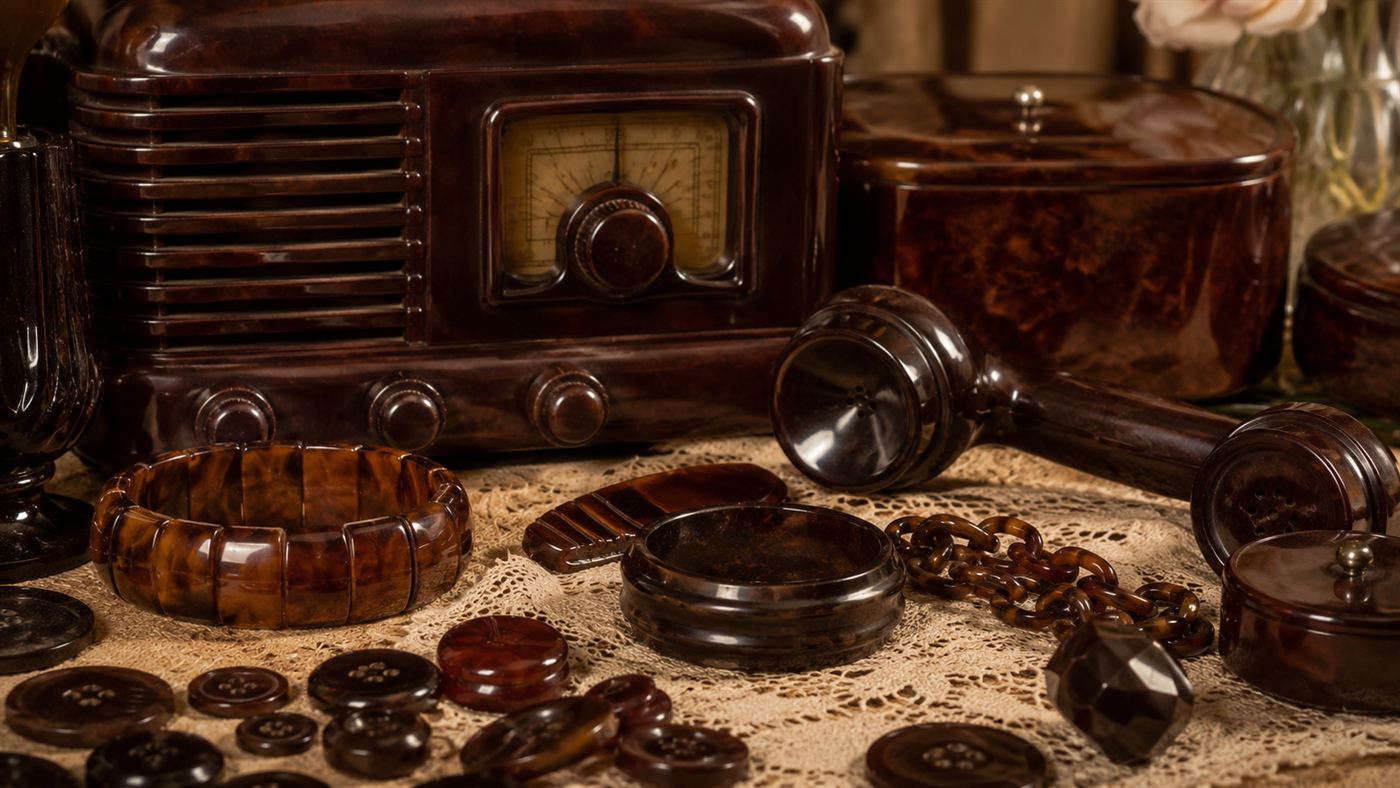
Vintage Bakelite objects, the first products of the plastic age. Illustration: Watts & Wild.
Bakelite does not sound like a world-changing invention. It is a hard, glossy, usually dark brown material, the stuff of old telephones, radio cabinets and clunky light switches, the kind of thing you find at the back of a junk shop. But when the chemist Leo Baekeland created it in 1907, he did something no one had ever done before. He made a material that had never existed anywhere in nature, conjured entirely out of chemistry, and in doing so he opened the door to the plastic world we now live inside.
As the Science History Institute describes, Leo Baekeland's Bakelite was the first fully synthetic plastic, and it launched the modern plastics industry. Before it, everything humans built was shaped from what the world provided: wood, metal, stone, glass, bone, rubber. After it, we could invent our own materials to order. That is a bigger leap than the humble brown object suggests.
The short version: In 1907 the chemist Leo Baekeland invented Bakelite, the first fully synthetic plastic, by reacting phenol and formaldehyde. Hard, cheap, heat-resistant and moldable, it became the material of the electrical age, used for telephones, radios and switches, and it launched the plastics industry. That triumph also opened the door to the plastic pollution that now troubles the whole planet.
A world before plastic
It is hard to imagine now, but at the start of the 20th century there were no true synthetic plastics. Everyday objects were made from natural materials, and the fast-growing electrical industry had a particular headache: it desperately needed a cheap, reliable insulator to wrap around wires and mould into switches and sockets, something that would not conduct electricity and would not catch fire.
The best option at the time was shellac, a resin secreted by an insect in Asia and painstakingly harvested, which made it expensive and limited. Chemists across the world were hunting for an artificial substitute, tinkering with the sticky, useless goo that formed when certain chemicals were mixed. Most gave up on the mess. Baekeland decided to master it, and he had one big advantage that let him keep trying: money.
The chemist who could afford to gamble
Leo Baekeland was a Belgian-born chemist who had emigrated to the United States, and before Bakelite he had already struck gold once. He invented a photographic paper called Velox that could be developed in artificial light, and he sold the business to George Eastman of Kodak for a small fortune. That windfall left him wealthy and, crucially, free. He no longer needed a salary, so he could set up his own laboratory and chase difficult problems for years without anyone rushing him.
He turned that freedom toward the shellac problem, focusing on the reaction between two chemicals, phenol and formaldehyde, that other researchers had found produced only an intractable tarry mess. Where they saw failure, Baekeland saw a material waiting to be controlled, and he set about learning exactly how to tame it with heat and pressure.
Cooking up a brand new substance
The key was control. Baekeland built a heavy pressurised vessel he called the Bakelizer, which let him run the phenol-formaldehyde reaction at carefully managed temperature and pressure. Under those conditions, instead of a useless goo, he got a hard, dense, amber-to-brown solid that could be moulded while soft and then, once heated and set, would hold its shape permanently and never melt again.
That last property was revolutionary. Bakelite was what chemists call a thermoset: cure it once and it is locked forever, unbothered by heat that would soften other materials. It resisted electricity, chemicals and fire, it could be dyed and moulded into any form, and it was cheap to make. Baekeland had not found a better version of something in nature. He had created a genuinely new substance, the first material that was entirely a product of human invention.
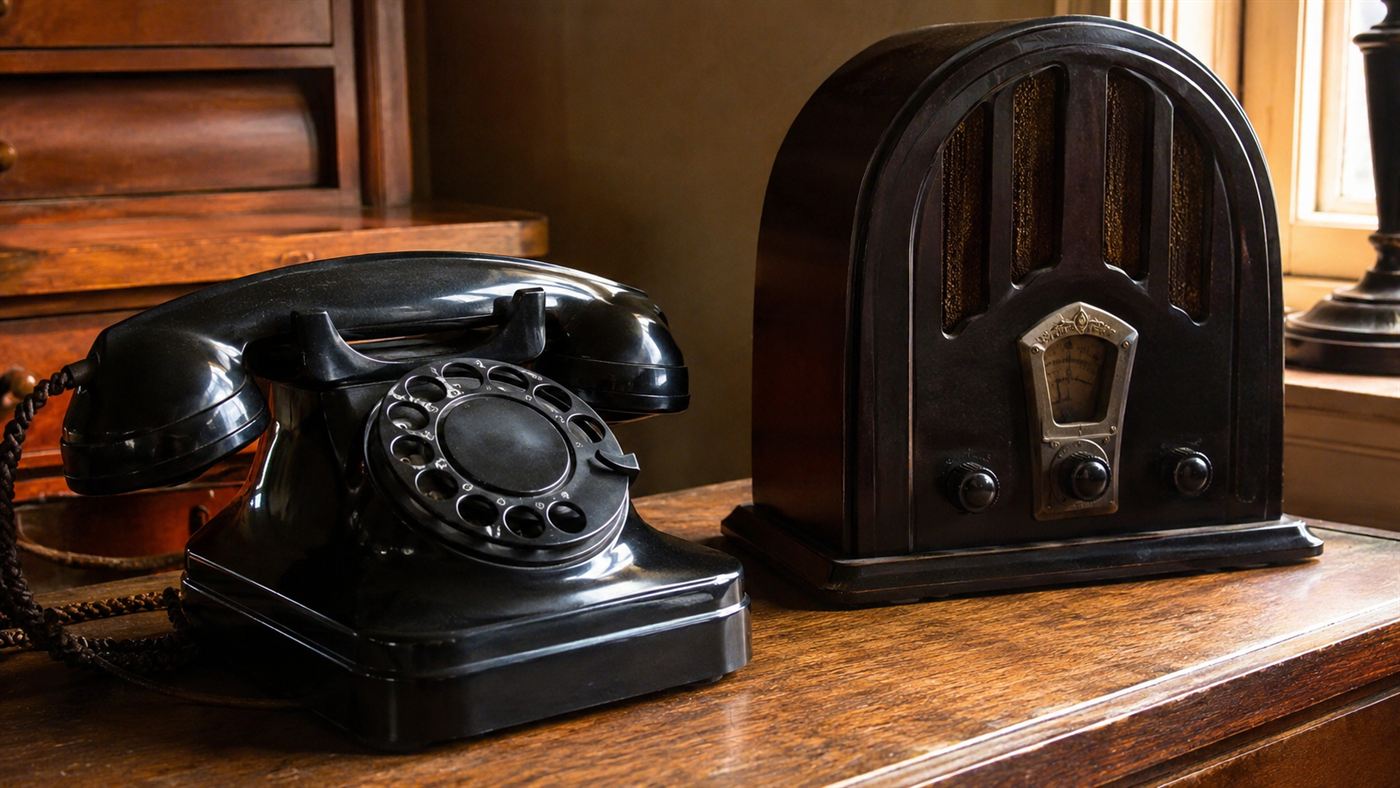
Bakelite, the material of a thousand uses
The timing could not have been better. The electrical and consumer age was exploding, and Bakelite was exactly the material it needed. It was marketed as the material of a thousand uses, and that was barely an exaggeration. It went into telephone handsets, radio housings, electrical plugs, switches and insulators, and then into a flood of everyday goods: kitchenware, buttons, jewelry, camera bodies, pens, clocks, even billiard balls.
Its glossy, moulded look became the very style of the 1920s and 1930s, the face of modernity. And its success proved something profound: that materials no longer had to be discovered, they could be designed. That idea launched the entire plastics industry, and Baekeland was hailed as its father, his face on the cover of magazines. He had shown the world that chemistry could conjure the stuff of everyday life out of a chemical reaction.
The genie out of the bottle
Once Baekeland had proved a material could be invented from scratch, the floodgates opened. Chemists set out to design plastics with whatever properties they wanted, and over the following decades they produced a torrent of them, nylon, polyethylene, PVC, polystyrene and the rest, especially after the Second World War turbocharged the industry.
These new plastics were lighter, cheaper and more versatile than almost anything before them. They gave us modern electronics, safe food packaging, medical equipment, lightweight vehicles and countless conveniences, transforming daily life across the world. Bakelite was the first drop, but what followed was a flood, a century-long tide of synthetic materials that reshaped manufacturing, and reshaped the planet along with it.
The honest catch
A couple of corrections keep the story straight. Bakelite was the first fully synthetic plastic, but not the first plastic outright, that honour goes to earlier materials like celluloid, which were made by chemically modifying natural cellulose rather than building a substance from scratch. Baekeland's achievement was making something wholly artificial, which is a real and important first, just not quite the only first the legend sometimes claims.
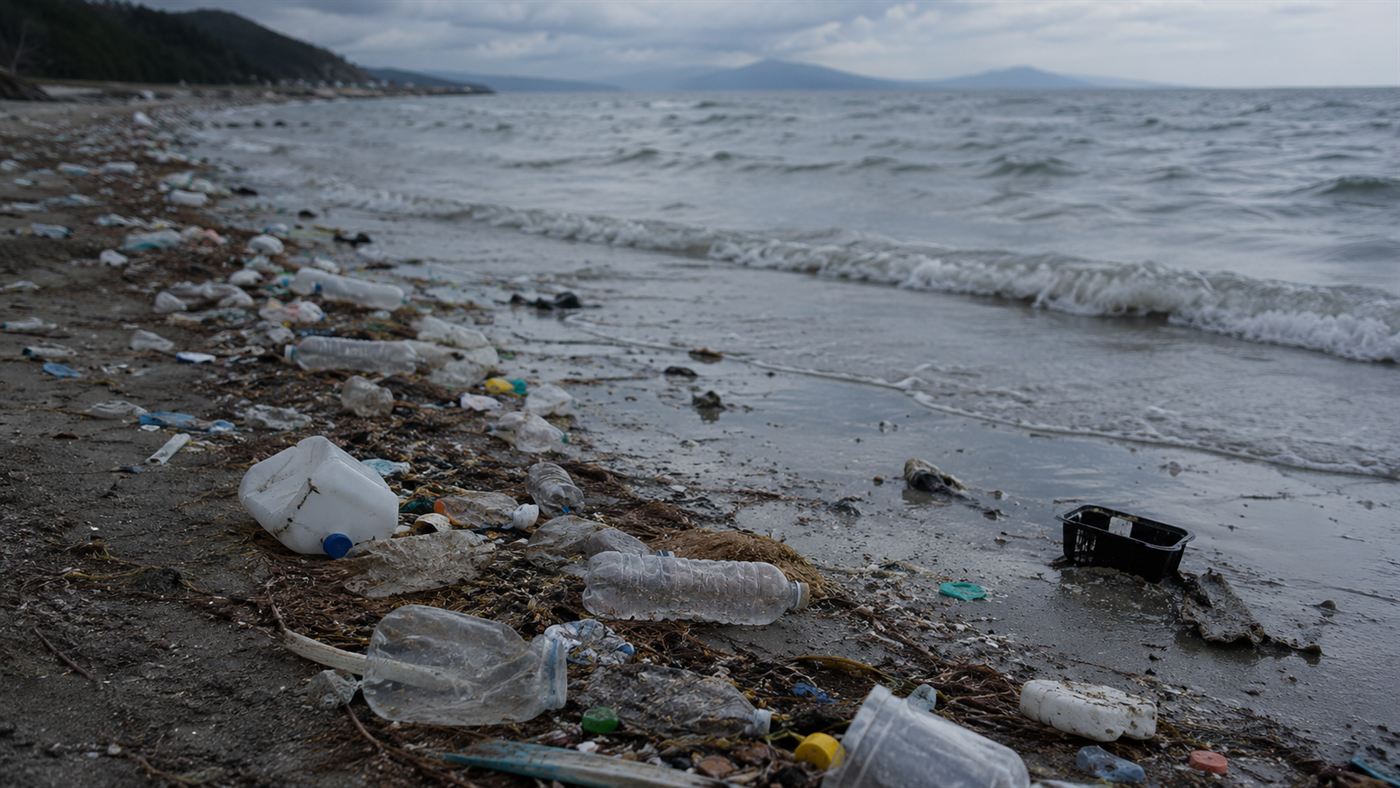
The larger reckoning is with what the plastic age became. The very qualities that made these materials miraculous, that they are cheap, durable and almost indestructible, are exactly what makes their waste such a curse. The world now drowns in discarded plastic, oceans choke on it, and tiny fragments turn up in the soil, the air and even our own blood. It would be unfair to blame Leo Baekeland for a crisis driven mostly by the cheap, disposable plastics that came long after his sturdy brown resin. But his invention is where the whole story starts. He gave humanity the astonishing power to invent its own materials, and like most powers that size, it has proved to be a gift and a burden at once.
One chemist gave humanity the power to invent brand new materials, and the world has never looked the same. Was Bakelite one of the greatest inventions of the modern age, or the first step onto a path that buried the planet in plastic? Tell us what you think in the comments.
Related reading: Charles Goodyear, whose struggle to tame rubber was another chapter in the story of new materials.
More from Watts & Wild
More in Science & Tech →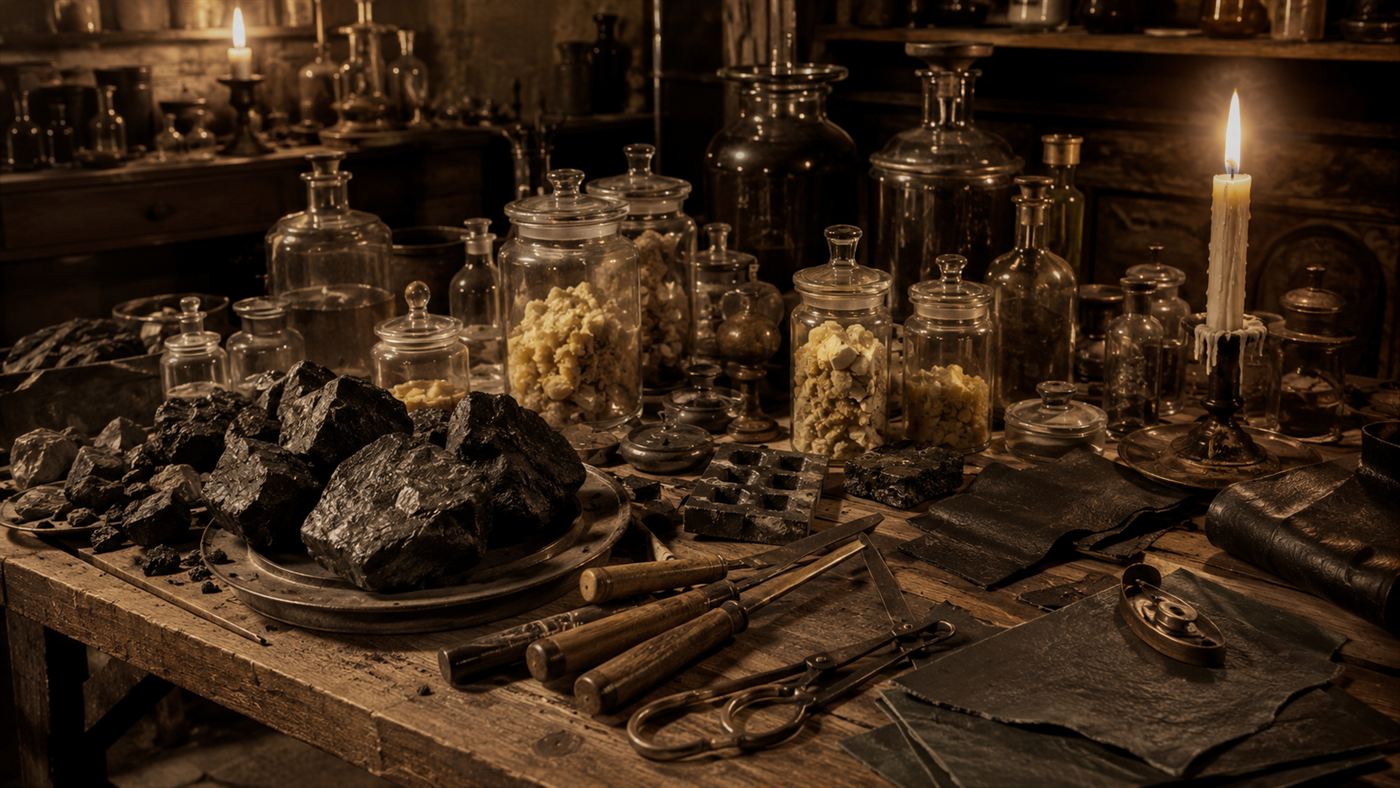


Bruno writes about energy history, industrial disasters, and the people who shaped the technologies we take for granted. He is based in Brazil.