In 1888 Charles Brush lit his Cleveland mansion with a giant backyard windmill, the first automatic wind turbine to make electricity, decades before anyone called it wind power
Long before wind farms marched across the horizon, a wealthy inventor quietly ran his entire house on the breeze. Charles Brush built a windmill the size of a house behind his mansion in 1888 and kept the lights on with it for twenty years, and almost nobody remembers he did it.
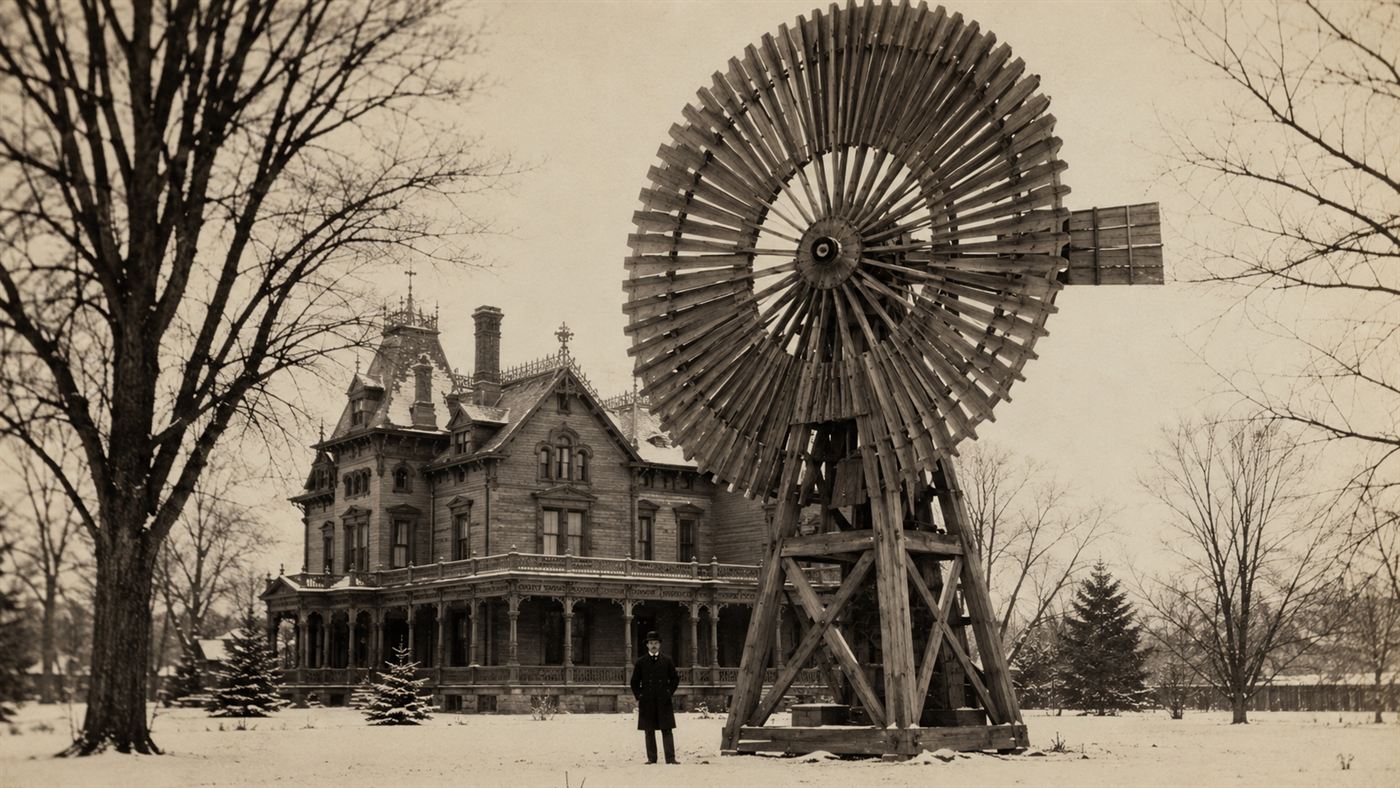
The first wind turbine to make electricity was a 17-metre wheel of 144 cedar blades in a Cleveland back yard. Illustration: Watts & Wild.
We tend to think of wind power as a modern idea, something that arrived with the climate era. But the first machine to turn wind into electricity automatically was switched on in 1888, in the back garden of a mansion, by a man named Charles Brush. While the world was still arguing about how to light cities, he had already built a private power station that ran on nothing but the weather.
Brush was no hobbyist tinkerer. He was one of the giants of early electricity, the man whose Brush Electric arc lamps lit American streets and squares and made him a fortune. The wind turbine in his yard was the private experiment of someone who genuinely understood power, which is part of why it worked so well and lasted so long.
Charles Brush built the first automatically operating wind turbine generator in 1888, in the back yard of his mansion in Cleveland, Ohio. Its 17-metre rotor with 144 cedar blades charged a bank of batteries that powered the home's lights and motors for about 20 years, the earliest machine to turn wind into usable electricity.
The man who lit the streets: Charles Brush
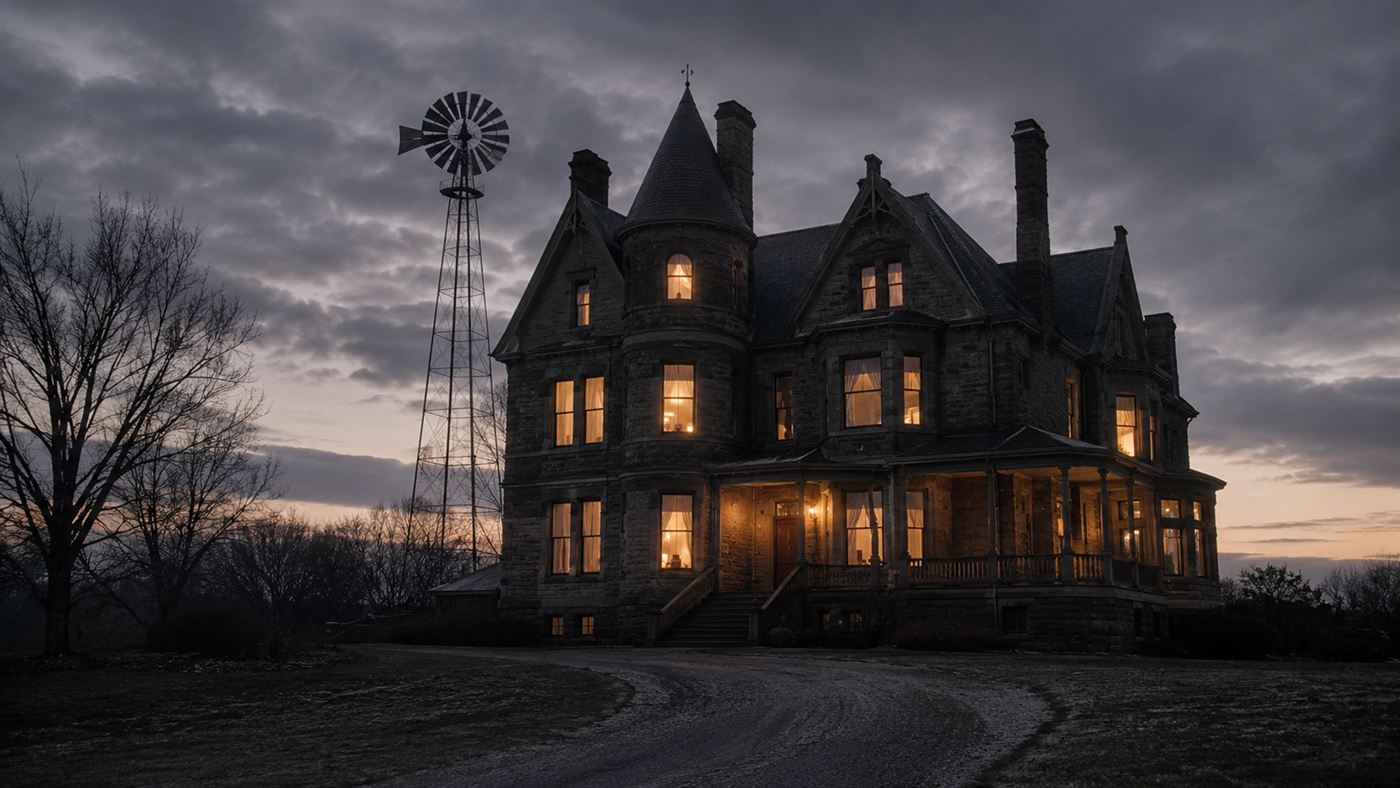
To understand the windmill you have to understand its builder. Charles Brush was an Ohio inventor who, in the 1870s and 1880s, perfected the arc light, a blindingly bright lamp that cities used to illuminate streets and public spaces before the softer incandescent bulb took over indoors. His company, Brush Electric, lit up places from Cleveland to San Francisco, and the wealth Brush Electric generated built the grand mansion on Cleveland's Euclid Avenue, then known as Millionaire's Row.
That fortune gave him the freedom to experiment. Brush Electric had made him an authority on generators, dynamos, and the storage of electricity, the exact toolkit you would need to tame something as fickle as the wind. So when he turned his attention to the breeze blowing across his Cleveland estate, he was not guessing; he was applying hard-won expertise to a brand new problem.
A windmill the size of a house
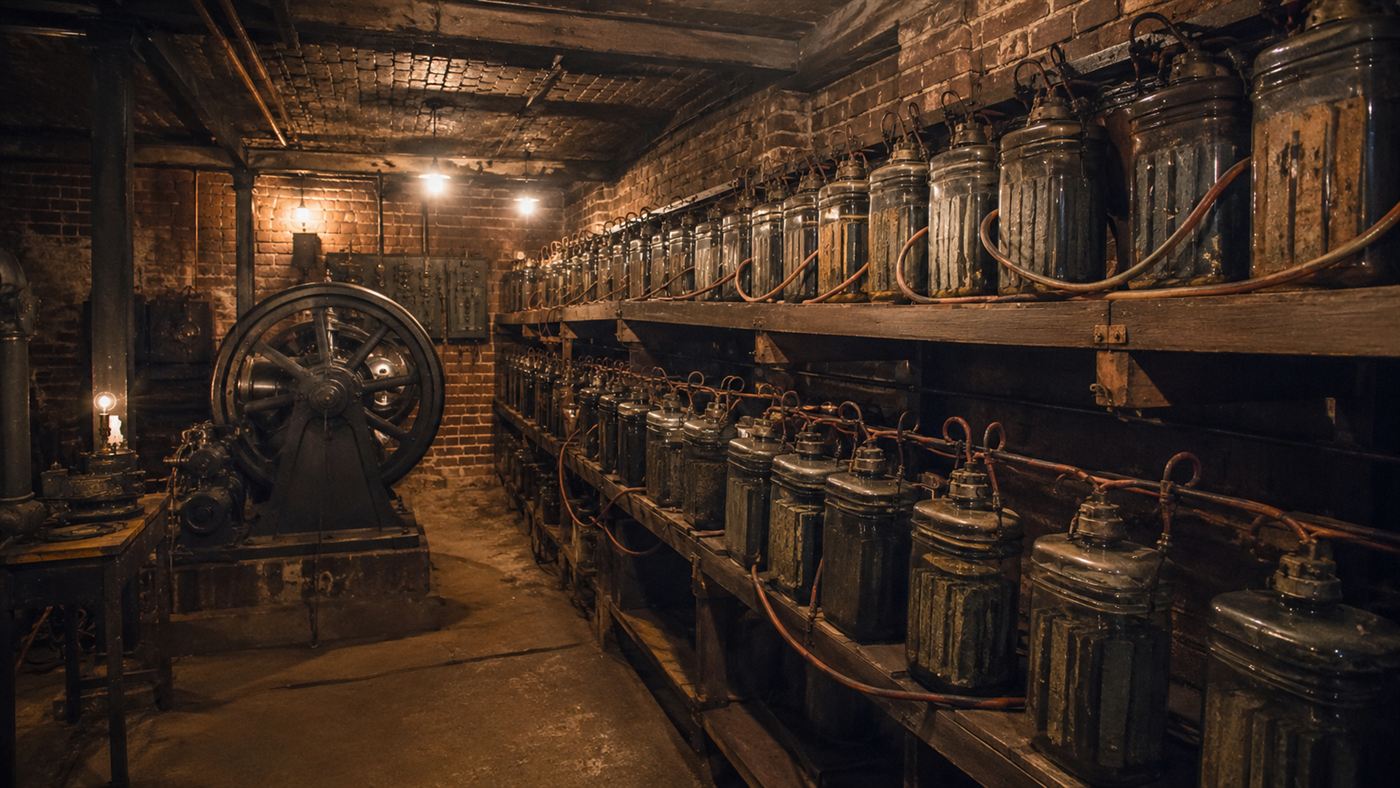
The machine he built in 1888 was monumental, as CleanTechnica has described. It stood on a tower about 56 feet tall and carried a rotor roughly 17 metres across, a great wheel fitted with 144 thin blades of cedar wood, the whole thing weighing many tonnes. In the base sat a dynamo that the spinning wheel drove to generate electricity, feeding a bank of a dozen batteries in the cellar of the house.
The cleverest part was that it looked after itself. Brush fitted the wind turbine with an automatic system that turned the huge wheel out of the wind when a gale blew too hard, so it would not tear itself apart, and swung it back when conditions eased. This self-regulation is why it counts as the first true automatic wind turbine generator rather than just a big windmill: it could run unattended, day after day, turning Cleveland weather into stored power without anyone standing over it.
Twenty years of running a house on the wind
This was not a demonstration that ran for a week and was dismantled. Brush's wind turbine powered his mansion for about two decades, charging the batteries that ran the lights, and reportedly motors and other devices, throughout the house. For roughly twenty years, one of the grandest homes in Cleveland drew much of its electricity from the sky.
It is a startling thing to sit with. At a time when most American homes had no electric power at all, and the few that did relied on city generating stations just being built, a private house was quietly running on renewable energy stored in batteries, the same basic idea behind a modern home with solar panels and a battery wall. The concept we treat as cutting edge was being lived out in a Victorian back garden.
Why the giant turbine was a quiet dead end
For all its boldness, the machine had a humbling flaw. That enormous 17-metre wheel produced only about 12 kilowatts, barely enough for a large house and laughably little for its size. The problem was the design: a slow wheel crowded with 144 blades is far less efficient than it looks, capturing only a fraction of the wind's energy despite its bulk.
The breakthrough that made wind power practical came later and elsewhere. In Denmark, the scientist Poul la Cour showed that a turbine with just a few long, fast-moving blades captures far more energy than one with many slow ones, the insight that every sleek modern wind turbine is built on, and la Cour went on to lay the foundation of Denmark's wind industry. Brush had proved that wind could make and store electricity, but the shape of the future turned out to look nothing like his magnificent wooden wheel. Even the next great leap, the 1941 Smith-Putnam megawatt turbine in Vermont, ended in a broken blade.
The honest catch
It is tempting to crown Charles Brush the father of wind power, but that overstates it. His turbine was a one-off built for one rich man's house, not a product he tried to sell, and its feeble output for such a vast structure showed the design was a dead end rather than a blueprint. He made his name and money through Brush Electric and arc lighting, and the windmill was a brilliant side project, not a movement.
What he genuinely deserves is the credit for being first. Charles Brush proved, in iron and cedar and glass batteries, that you could harvest the wind, store it, and live off it reliably for years, decades before anyone thought of wind as a serious source of electricity. The world had to wait for better blades and a warming climate to take the idea seriously, but the proof of concept had been quietly humming in a Cleveland back yard since 1888.
A man ran his whole house on a backyard windmill in 1888, and then the world forgot about it for a century. Why do you think wind power had to be reinvented decades later instead of growing from where Brush left off? Tell us in the comments.
Related reading: The world's biggest wind turbine is now so large that a single blade is longer than a football pitch. See also how Greensburg, Kansas rebuilt on wind power after an EF5 tornado wiped it off the map.