In 1941 a giant two-bladed wind turbine on a Vermont hilltop fed a megawatt of power into the grid, decades ahead of its time, until a blade snapped off and killed the dream
Picture a wind turbine the size of the ones on hills today, feeding power into the grid, in 1941. It really happened, on a Vermont mountaintop, and the Smith-Putnam machine worked, right up until the morning one of its eight-tonne blades tore loose and flew into history.
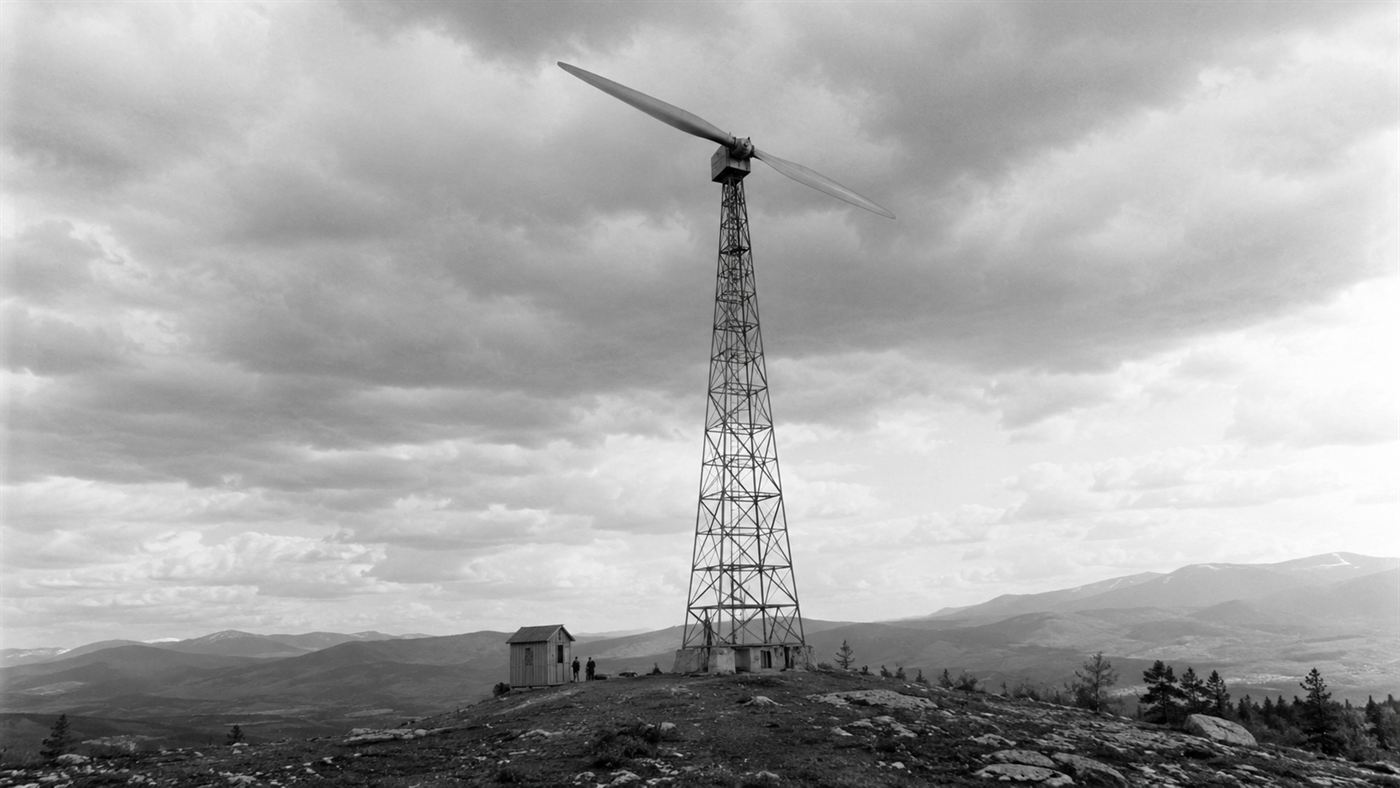
The Smith-Putnam turbine on Grandpa's Knob was the world's first megawatt wind machine, built when wind power was barely an idea. Illustration: Watts & Wild.
The Smith-Putnam wind turbine is one of the most astonishing might-have-beens in the history of energy. In 1941, when almost nobody took wind seriously as a power source, a giant experimental machine on a hill in Vermont became the world's first wind turbine rated at a full megawatt, and the first ever to pump electricity into a utility grid. It was, in scale and ambition, something the world would not see again for about forty years.
And then it broke. The story of how a 1940s machine leapt so far ahead, and why it was abandoned rather than built upon, is a lesson in how good ideas can arrive long before the world is ready to pay for them. It begins, of all places, with one man's irritation at his electricity bill.
The Smith-Putnam wind turbine was the world's first megawatt-scale wind turbine, built on Grandpa's Knob in Vermont in 1941. Rated at 1.25 megawatts, it was the first wind machine to feed power into a utility grid, decades before commercial wind power existed, until a blade failed in 1945.
Palmer Putnam's expensive idea
The man behind it was Palmer Putnam, an engineer who, in the 1930s, built himself a house on Cape Cod and was promptly annoyed by two things: the high cost of electricity, and the relentless wind that battered the place. It occurred to him that the second problem might solve the first, and he began to wonder whether the wind could be harnessed at a serious, useful scale rather than just to pump water on a farm.
Palmer Putnam took the idea to the S. Morgan Smith Company, a maker of hydroelectric turbines looking to branch out, and they agreed to fund it. Palmer Putnam assembled a remarkable brain trust to design the machine, drawing on top engineers and aerodynamicists of the day, including the legendary Theodore von Kármán, to work out how a wind turbine that big could survive the forces acting on it. Nobody had ever built one at this scale, so much of it had to be invented from scratch.
A megawatt on Grandpa's Knob
The site they chose was a bare summit in Vermont with the wonderful name of Grandpa's Knob, near Castleton. There, in 1941, they erected something that would look almost familiar today: a two-bladed steel rotor 175 feet across, about 53 metres, mounted on a lattice tower some 120 feet high. Each stainless-steel blade weighed around eight tonnes, and the whole machine was rated at 1.25 megawatts.
On the evening of 19 October 1941, the Smith-Putnam turbine on Grandpa's Knob was synchronised with the local power network and began feeding electricity into it. That moment is easy to skate past, but it was historic: for the first time anywhere, a wind turbine was generating utility-scale power and putting it onto a grid alongside conventional plants. In the middle of the Second World War, a mountaintop in Vermont was quietly running on the wind.
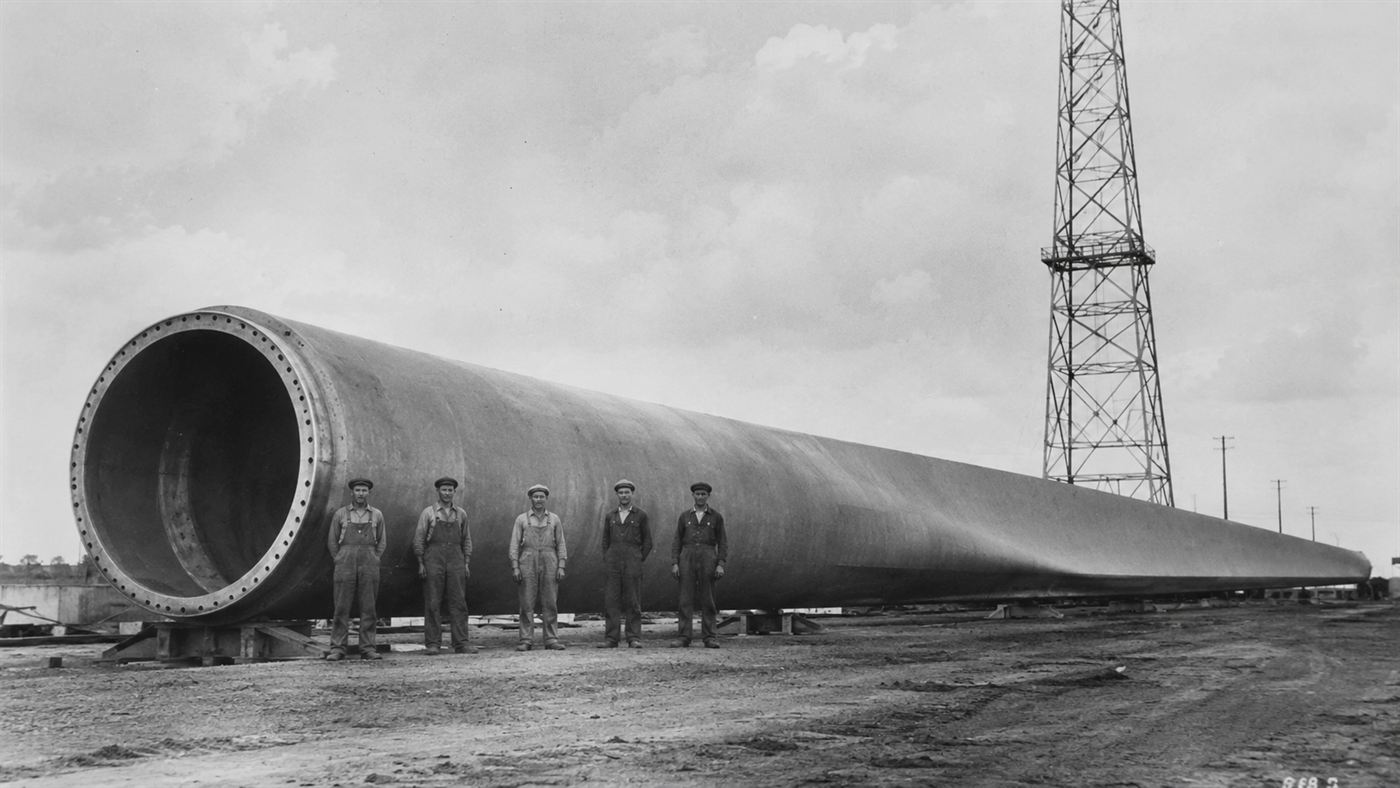
The blade that ended the Smith-Putnam dream
The machine never had an easy life. It ran for only about 1,100 hours in total, often stopped for adjustments, and in February 1943 a main bearing failed. Here the war intervened in the cruellest way: with materials and machine shops devoted to the fight, it took roughly two years to get the giant part repaired and the Smith-Putnam turbine running again.
It did not run for long. In the early hours of 26 March 1945, one of the eight-tonne blades broke off at the root and was hurled clear of the tower. Crucially, the engineers had known about a weak point at that spot but had not been able to reinforce it, again because of wartime shortages, so in a sense they had run the machine knowing the risk. With that, the most advanced wind turbine on Earth fell silent for good.
Why nobody rebuilt it
A broken blade did not have to be the end; it could have been a lesson on the way to a better machine. What really killed the Smith-Putnam project was money. A study in 1945 estimated that a set of similar turbines could be built in Vermont for around 190 dollars per kilowatt, but the electricity they produced was only worth about 125 dollars per kilowatt to the utility, against the cheap coal and oil of the era.
The S. Morgan Smith Company had poured more than 1.25 million dollars of its own money into the prototype, an enormous private bet, and concluded there was no realistic path to profit. So the wreck on Grandpa's Knob was dismantled in 1946, leaving only concrete footings and, eventually, a small plaque. The world had glimpsed utility-scale wind power and then, for economic reasons, simply put it back in the box.
The honest catch
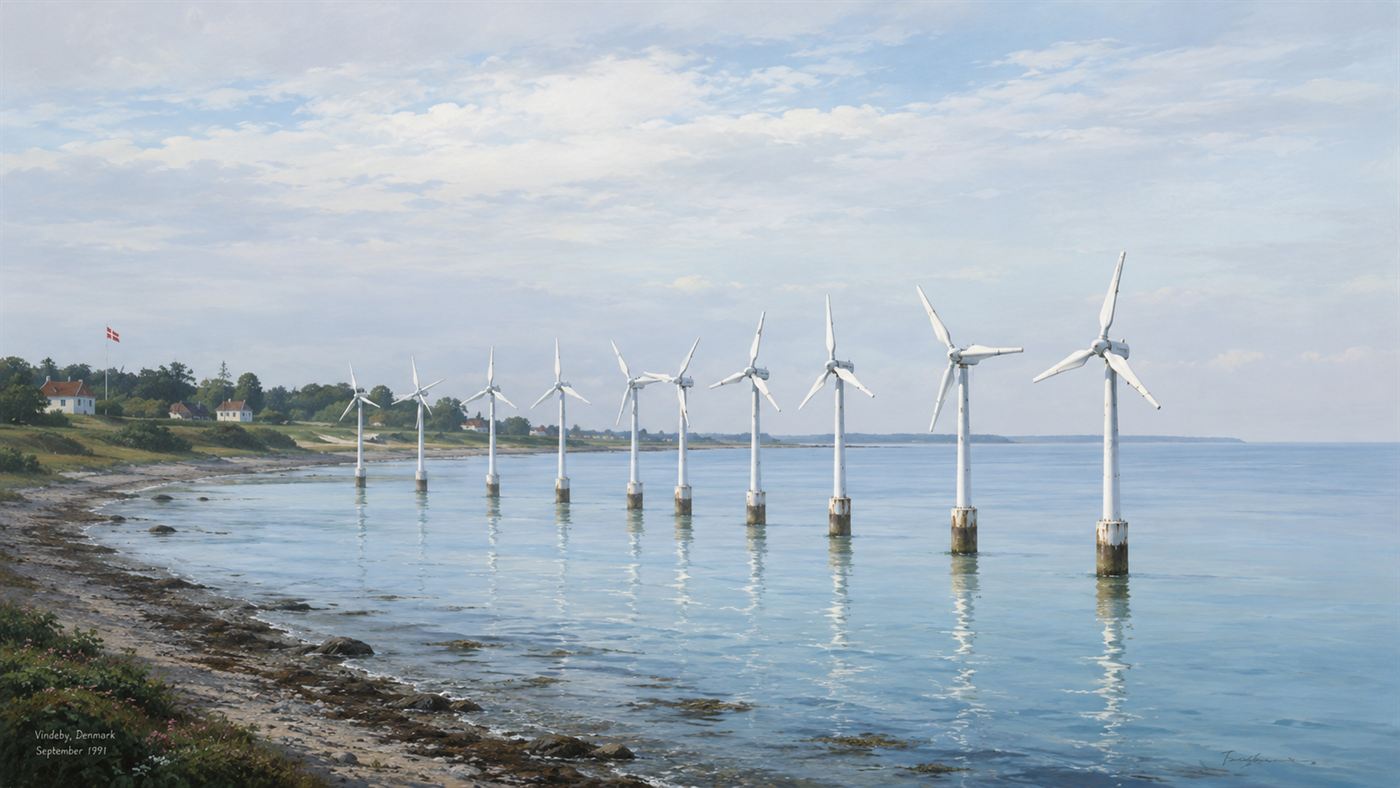
It is tempting to call the Smith-Putnam turbine the grandfather of modern wind power, but that is not quite right. It was a magnificent dead end, a top-down leap to giant scale that broke and was not copied, while the wind turbine industry that actually took off in the 1970s and 80s grew instead from small, sturdy Danish machines refined step by step. Today's giants are descendants of those, not of the Vermont colossus.
What the Smith-Putnam machine really proved was possibility. In the depths of the war, a private company and a determined engineer showed that you could build a megawatt wind turbine and tie it into a grid, something the experts of the day were far from sure of. The economics were wrong and the timing was worse, but the idea was sound, and it had to wait half a century and a very different energy world before anyone was willing to try it again. Palmer Putnam was simply early.
A megawatt wind turbine fed the grid in 1941 and then was scrapped because coal was cheaper. How different might our energy story be if the world had kept building on the Smith-Putnam machine instead of shelving it? Tell us in the comments.
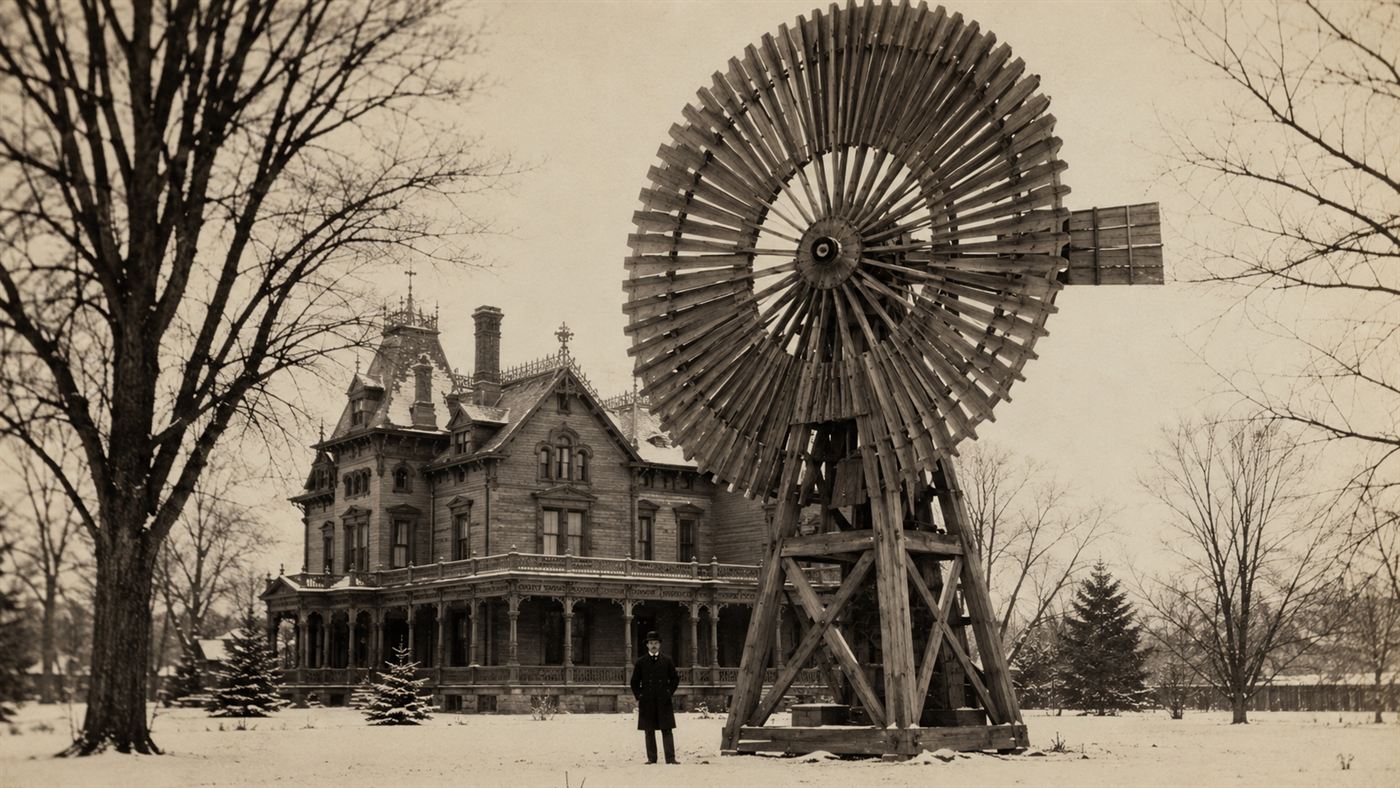
Related reading: In 1888 Charles Brush lit his Cleveland mansion with a giant backyard windmill, the first to make electricity.