An EF5 tornado flattened 95 percent of Greensburg, Kansas and killed eleven people in 2007, and the town rebuilt itself as the greenest in America, now powered entirely by the wind that destroyed it
On May 4, 2007, one of the most violent tornadoes ever recorded erased Greensburg, Kansas in about ten minutes. The town could have rebuilt exactly what it lost. Instead it chose to come back as the greenest small town in America, and today the same prairie wind that killed it powers every light in it.
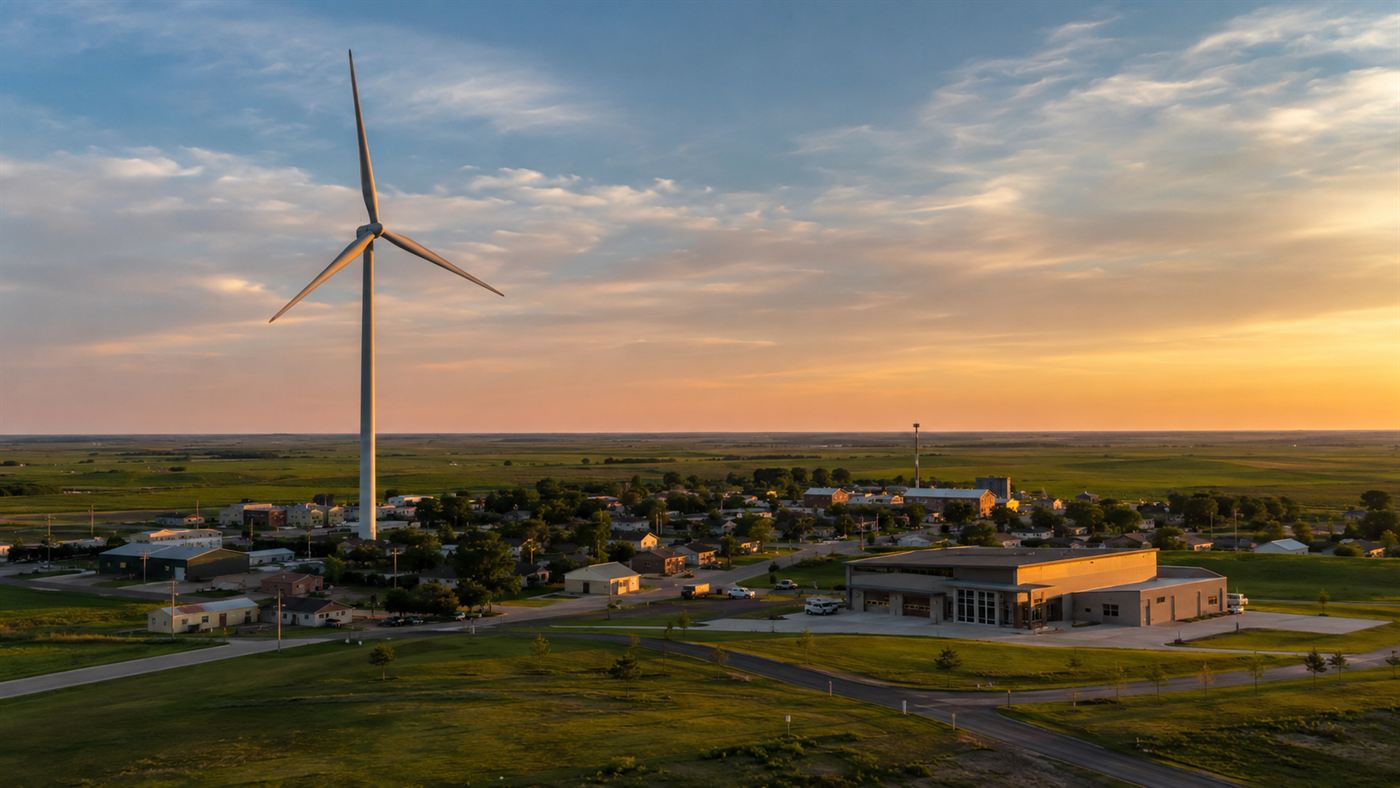
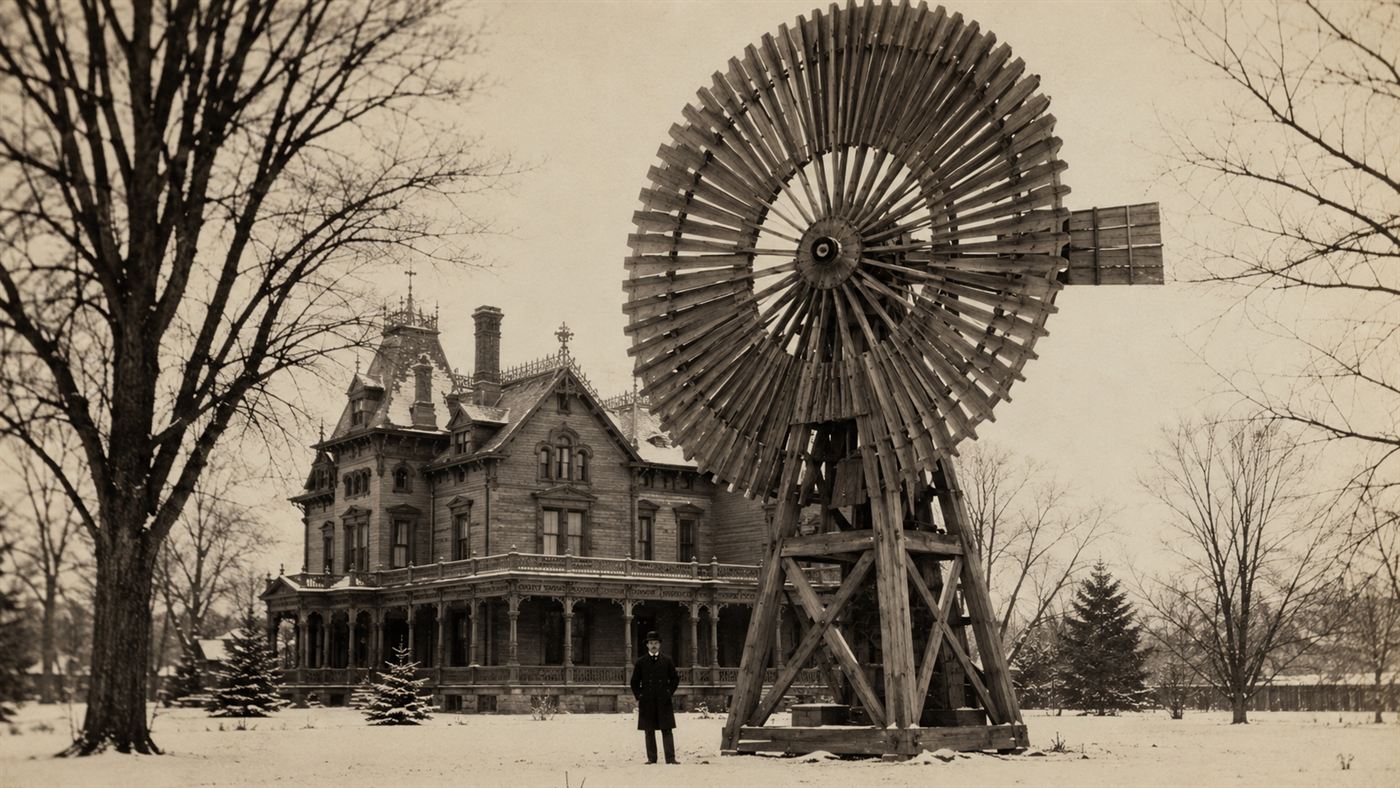
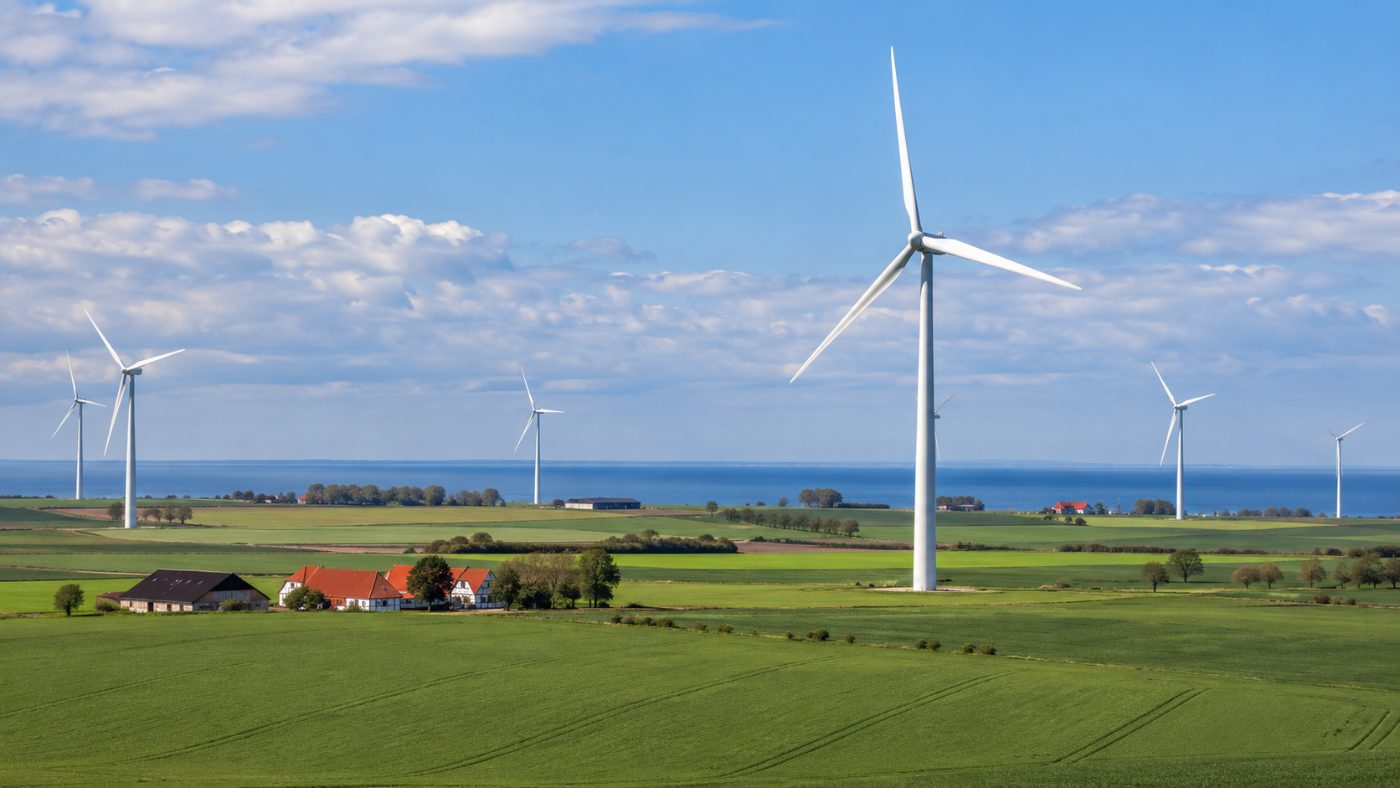
Greensburg, Kansas rebuilt around the wind that once destroyed it. Illustration: Watts & Wild.
Greensburg is a small farming town in Kiowa County, out on the flat wheat country of southwest Kansas, the kind of place most Americans would never have a reason to name. That changed on the night of May 4, 2007, when a tornado nearly two miles wide walked straight through the middle of it and left almost nothing standing. Ninety-five percent of the town was gone by morning, and eleven of its roughly 1,400 people were dead.
What happened next is the reason Greensburg is worth knowing about. As The Washington Post has documented, the survivors decided not simply to rebuild the town but to rebuild it as the greenest town in America, running on renewable power and built to standards no American city had attempted at that scale. The wind that had destroyed everything became the thing they built the new town around.
The short version: in 2007 an EF5 tornado destroyed almost all of Greensburg, Kansas and killed eleven people. Rather than restore what was lost, residents rebuilt every city building to the strictest green standard and wired the town to a nearby wind farm. Today Greensburg counts as running on 100 percent renewable wind power.
What happened to Greensburg, Kansas on May 4, 2007?
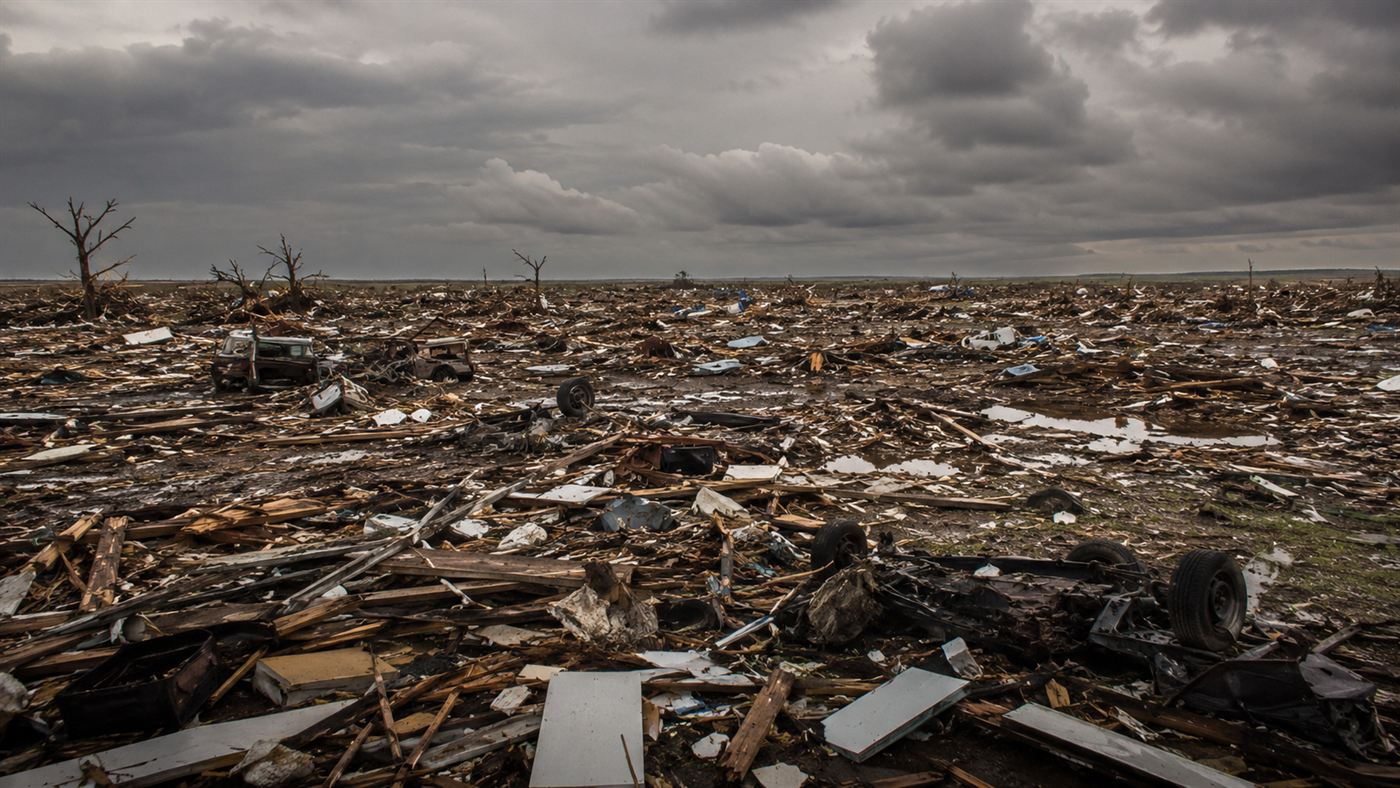
The storm that hit Greensburg was a monster even by Kansas standards. According to the National Weather Service, the tornado was about 1.7 miles wide with winds estimated near 205 mph, and it was the first storm in the country to be rated EF5 on the Enhanced Fujita scale, which had only replaced the old Fujita scale that February. For a few minutes, Greensburg sat under one of the strongest winds the atmosphere can produce.
Warning sirens gave the town roughly twenty minutes of lead time, and there is little doubt that margin saved dozens of lives. Even so, the toll of an EF5 tornado hitting a town head-on was staggering. Homes were not just damaged but swept clean off their foundations, mature trees were stripped to bare trunks, and the grain elevator was one of the only landmarks left to navigate by. In a single pass, a community that had stood for more than a century effectively ceased to exist.
The decision to rebuild green, not just rebuild
In the raw weeks afterward, with residents living in trailers on the edge of a debris field, the obvious move was to put back what had been there. A different idea won out. Then-mayor Bob Dixson, who had lost his own home, argued that stewardship and thrift were not city-slicker environmentalism but old prairie values, the same instinct that made his grandparents waste nothing. A local nonprofit, Greensburg GreenTown, founded by resident Daniel Wallach, pushed the vision from the ground up.
State and federal help arrived with the same ambition. Kansas governor Kathleen Sebelius said she wanted Greensburg to be the greenest town in the state, and the U.S. Department of Energy sent its National Renewable Energy Laboratory to help plan the rebuild. The town council passed a resolution requiring every city-owned building to meet the highest green-building standard in the country. It was a remarkable bet for a place that had just lost everything, and it stuck.
How does Greensburg run on wind power?
The centerpiece is the Greensburg Wind Farm, just south of town. As POWER magazine has reported, the project is ten 1.25-megawatt turbines, 12.5 megawatts in all, developed by John Deere and enough to power around 4,000 homes. That is far more electricity than the shrunken town actually uses. Greensburg draws roughly a third of the output and the surplus flows onto the regional grid, which is how a town on the open plains can honestly claim to run on wind power.
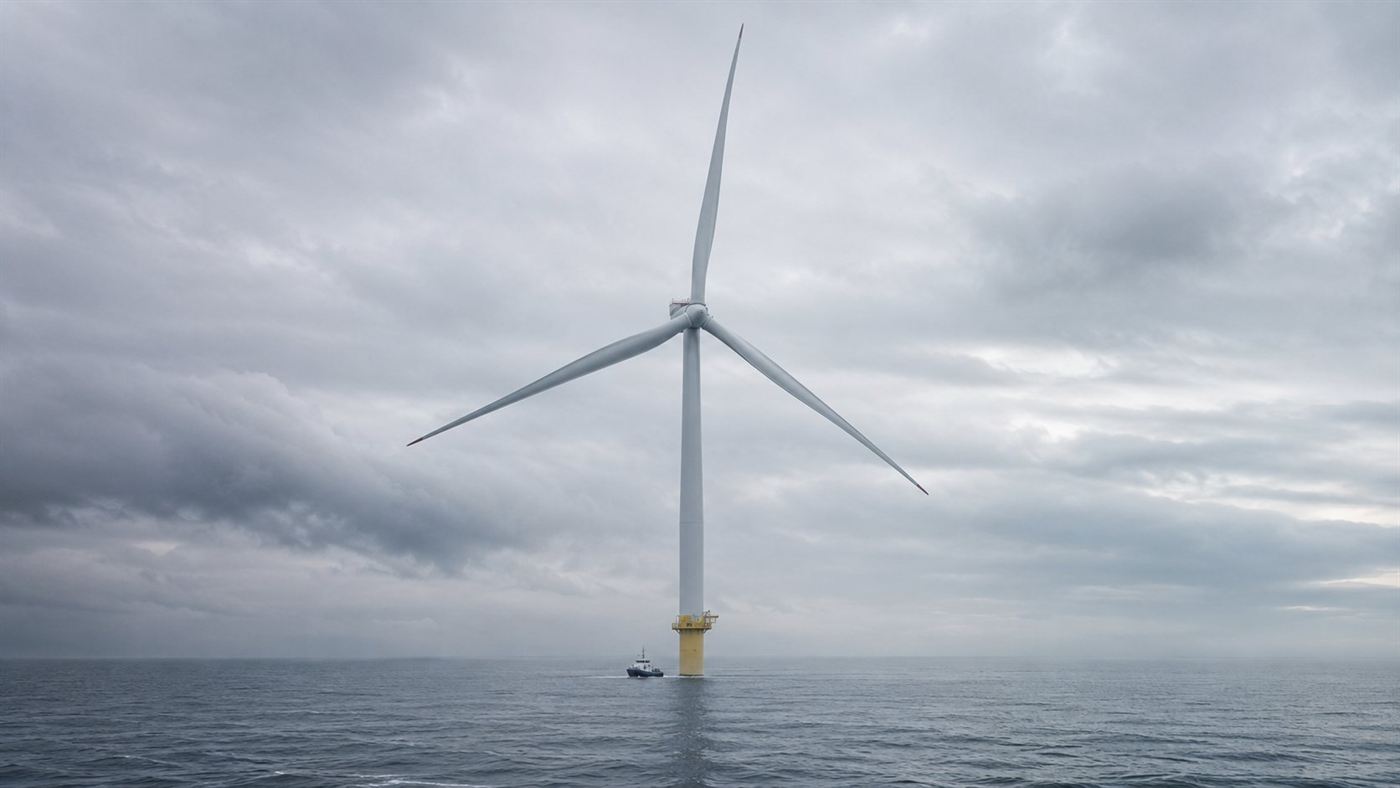
It is a fitting technology for the place. Kansas sits in one of the windiest corridors in North America, the same resource that pioneers first tried to harness for electricity more than a century ago and that today's giant offshore turbines have pushed to enormous scale. Greensburg simply took the wind that had nearly killed it and put it to work, turning the region's defining hazard into its power supply.
The greenest town in America, by the numbers
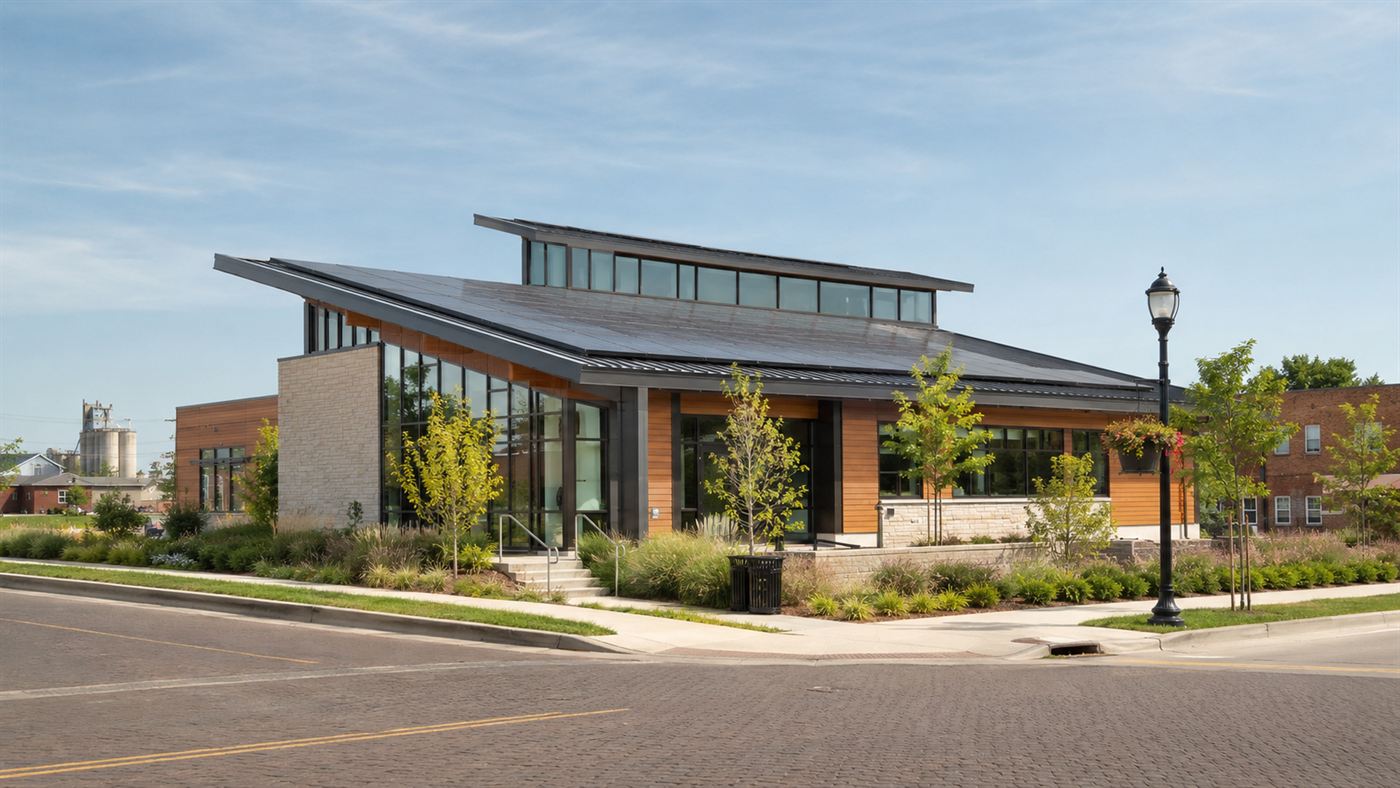
The rebuild went far beyond the turbines. Every municipal building, the city hall, the hospital, the school, the business incubator, was rebuilt to LEED Platinum, the top rung of the U.S. Green Building Council's rating system. The result is that a town of a few hundred people now holds the highest number of LEED Platinum buildings per capita of any city in the United States, and it was the first American city to light all its streets with LED lamps.
Those choices show up on the ledger. According to figures from the rebuild, the green municipal buildings run about 42 percent more efficiently than standard construction, and a cluster of 13 community buildings saves a combined 200,000 dollars a year in energy costs. For a cash-strapped rural town, the greenest town in America label turned out to be less a slogan than a budgeting strategy that quietly pays for itself every year.
Why the wind that killed it now saves it
There is a hard symmetry to Greensburg's story that the town leans into rather than hides. The wind is the villain and the hero of the same tale, the force that flattened the place and the one that now keeps its lights on. That reframing is why disaster researchers and clean-energy planners keep flying to a tiny dot in Kansas, treating it as a working model of what recovery can look like when a community rebuilds forward instead of backward.
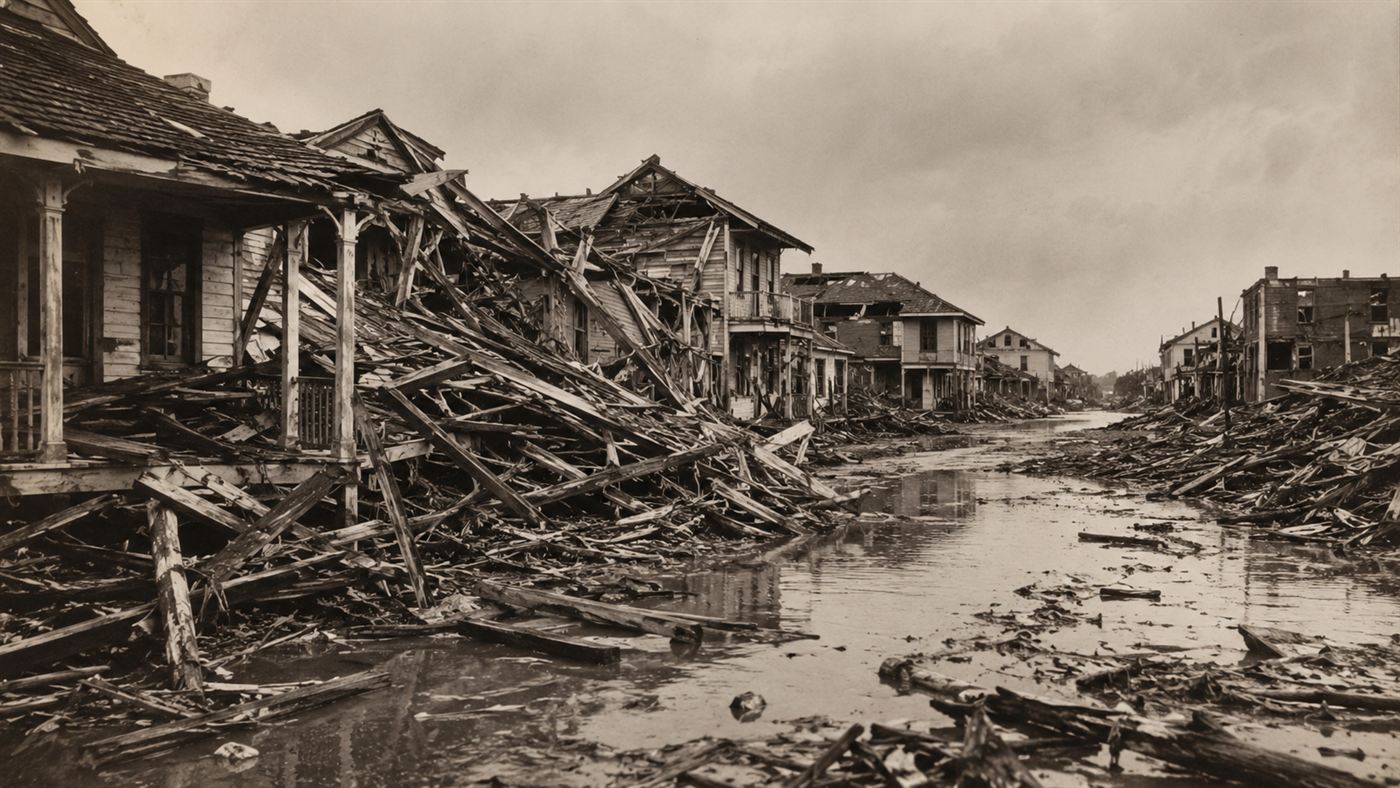
Other places have taken hard lessons from catastrophe and turned them into engineering, from Galveston raising its whole grade after the 1900 hurricane to a Danish island that went fully renewable on purpose. Greensburg belongs in that company, with the difference that it never chose the disaster, only the response. And its bet on wind looks sharper every time the grid is tested, as it was when the Texas system collapsed in the 2021 freeze.
The honest catch
The comeback is real, but it is not a fairy tale, and Greensburg would be the first to say so. Not everyone came back. The town that had about 1,400 people before the storm has settled at closer to 800 or 900, and some blocks that were rebuilt green still sit half empty. A green rebuild does not automatically bring the people home, and for many families the tornado was simply the end of their life in Kiowa County.
It is also worth being clear about how the recovery was funded. Greensburg got a flood of federal money, expert attention and donated design work that ordinary disaster-struck towns never see, which makes it more of an inspiring exception than a template any place can copy. And the 100 percent renewable claim runs through grid credits and a privately owned wind farm, not a literal cord from the turbines to the town. The achievement is genuine. It just came with help and asterisks that are easy to forget.
A town that was wiped off the map chose to come back as the cleanest small town in the country, powered by the very wind that destroyed it. If a disaster gave your town the chance to rebuild from scratch, would you put it back the way it was, or build it for the next hundred years? Tell us in the comments.
Related reading: how Galveston survived the deadliest disaster in U.S. history by raising an entire city, and why a Danish island quietly went 100 percent renewable.